





































































Taking Train from inland China to Tibet
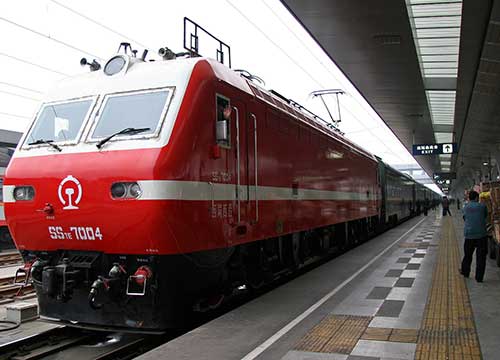
Trains run to Lhasa from seven cities in China: Beijing, Shanghai, Guangzhou, Chengdu, Chongqing, Lanzhou and Xining. The Qinghai–Tibet Railway itself starts in Xining, and all the other routes join it there for the climb to Lhasa.
The 7 Major Tibet Train Routes
| From | Journey time (approx.) | How often |
|---|---|---|
| Beijing | about 40 hours | daily |
| Shanghai | about 46 hours | daily |
| Guangzhou | about 53 hours | daily |
| Chengdu | about 36 hours | every other day |
| Chongqing | about 35 hours | every other day |
| Lanzhou | about 24 hours | several trains a day pass through |
| Xining | about 21 hours | several trains a day |
Timetables change every year. We check the current trains when you book.
Choosing the Best Starting City
Starting from Xining
Pros: the shortest journey (one night on the train), the most trains and the best chance of getting a ticket, and Xining’s 2,275 m altitude helps you start adjusting.
Cons: you need to get to Xining first, by plane or high-speed train.
Best for: travellers who want the easiest tickets and a gentler climb.
Starting from Chengdu
Pros: a great city to visit first (pandas, food), with direct flights from many countries.
Cons: the train runs only every other day, and tickets are hard to get in summer.
Best for: international travellers who want to see Chengdu as well as Tibet.
Starting from Beijing
Pros: a daily train, and a natural start for a wider China trip.
Cons: about 40 hours on board, and tickets are hard to get in summer.
Best for: travellers combining Beijing and Tibet.
Important Ticket Booking Notices
- Tickets go on sale about two weeks before departure, and the best berths sell out quickly in summer.
- You need a Tibet Travel Permit to buy and use a ticket to Tibet, so book your tour first.
- We book train tickets for guests who travel with us, together with their tour.
- Tickets are electronic and linked to your passport. You show your passport at the station.
We answer within 12 hours, Monday to Saturday.