Private tour — on your dates
16 Days Mt. Kailash Pilgrimage + Guge Kingdom — Exit Tibet via the G219 into Xinjiang
16 Days $1,290 per person Overview Itinerary Tips & FAQ Lhasa Potala Palace Tashilunpo Monastery Everest Base Camp Lake Manasarovar Mt. Kailash Kora Guge Kingdom Ali Xinjiang Border Most Kailash pilgrimage tours end at Darchen…
- 16 Days / 15 Nights
- Lhasa → Potala Palace → Tashilunpo Monastery → Everest Base Camp → Lake Manasarovar → Mt. Kailash Kora → Guge Kingdom → Ali → Xinjiang Border
- Challenging pace
- Best: May to mid-October (the Kora is snowed in through winter)
- No Deposit — Ever
- Cancel Free Before Permit Issued
- Full Refund except $100 Permit Fee
- Bring 7, Your Spot Is Free
- Our Own Office in Lhasa, Since 1999
The trip at a glance
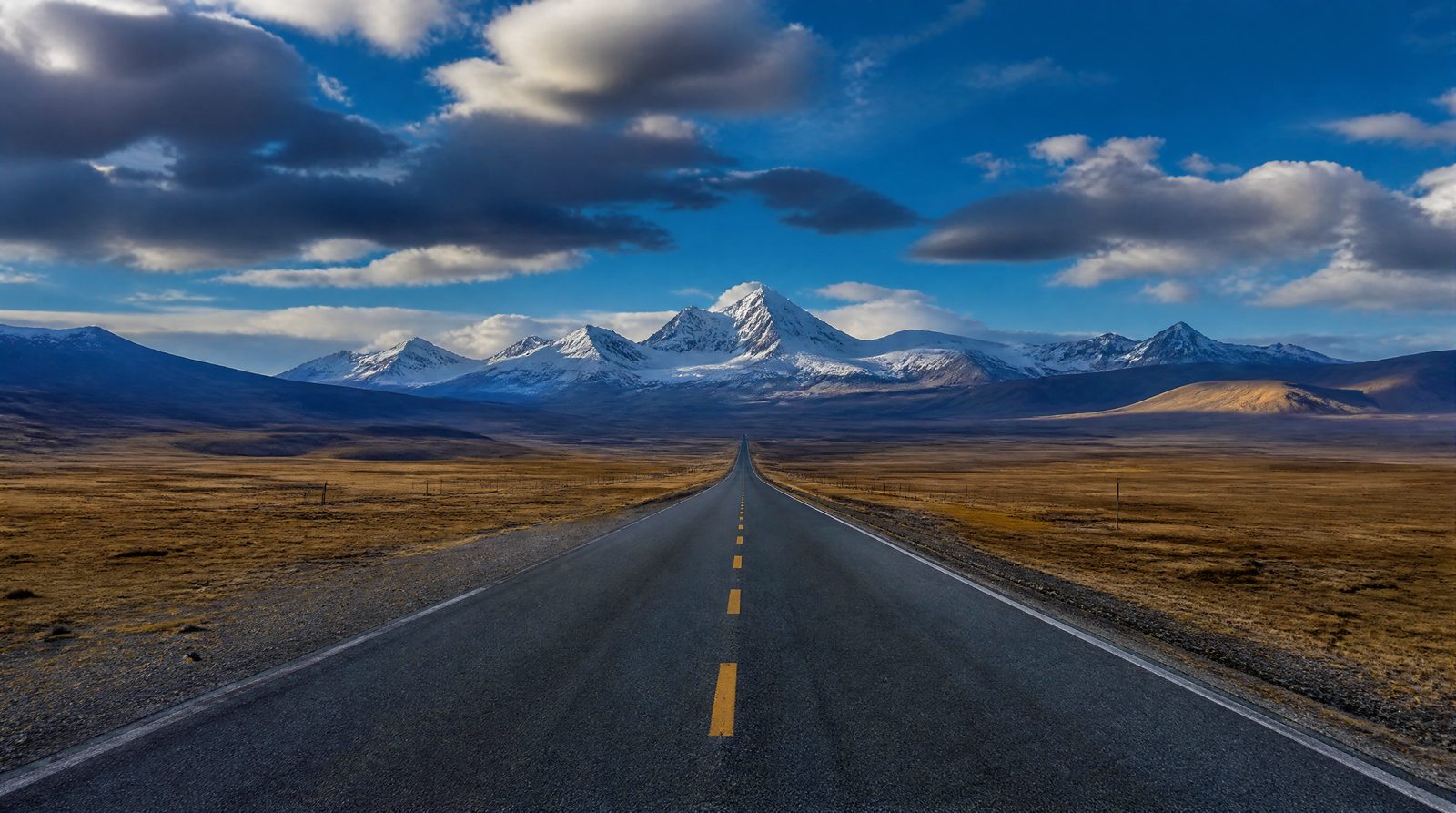
The G219 — the Xinjiang-Tibet Highway — is one of the world’s highest and most remote roads. It runs for nearly 2,800 kilometres from Kashgar in the west to Lhasa in the east, crossing an average altitude of over 4,500 metres for much of its length. The section north of Ali (Shiquanhe) passes through the Aksai Chin plateau: a landscape so remote, so flat, and so silent that the occasional roadside guesthouse feels like a minor miracle. The Kunlun Mountains rise on the horizon as the plateau shifts from Tibetan brown to the bleached yellow of Central Asian steppe.
At the journey’s end stands Kashgar — one of the great Silk Road cities of Asia. The contrast with Lhasa could not be more complete. Where Lhasa is Buddhist, Tibetan and Han, Kashgar is Muslim, Uyghur and deeply Central Asian. The ancient Id Kah Mosque dominates the city centre; the vast Sunday Grand Bazaar fills entire streets with traders from across the Tarim Basin; the old city is a dense labyrinth of mud-brick lanes unchanged in its basic character for centuries. Arriving in Kashgar after two weeks on the Tibetan plateau is one of the most striking cultural transitions possible anywhere in Asia.
This tour also includes the Guge Kingdom ruins and Zanda Earth Forest — two days at one of the most haunting and least-visited archaeological sites in the world — before the northward drive begins. The best seasons are from May through at most end of September. All travel permits concerning this kind of tour are arranged by our team — all you need is a valid Chinese visa if you are not from China visa exempt countries.
- Lhasa → Potala Palace, Jokhang Temple, Barkhor Street
- Lhasa → Sera Monastery, Drepung Monastery
- Lhasa → Yamdrok Lake → Gyantse → Shigatse
- Shigatse → Everest Base Camp
- EBC → Saga
- Saga → Lake Manasarovar → Darchen
Day by day
Lhasa → Potala Palace → Tashilunpo Monastery → Everest Base Camp → Lake Manasarovar → Mt. Kailash Kora → Guge Kingdom → Ali → Xinjiang Border
Day1
Arrive Lhasa
Arrive at Lhasa airport and transfer to hotel. Rest and acclimatize.
Day2
Lhasa — Potala Palace, Jokhang Temple, Barkhor Street
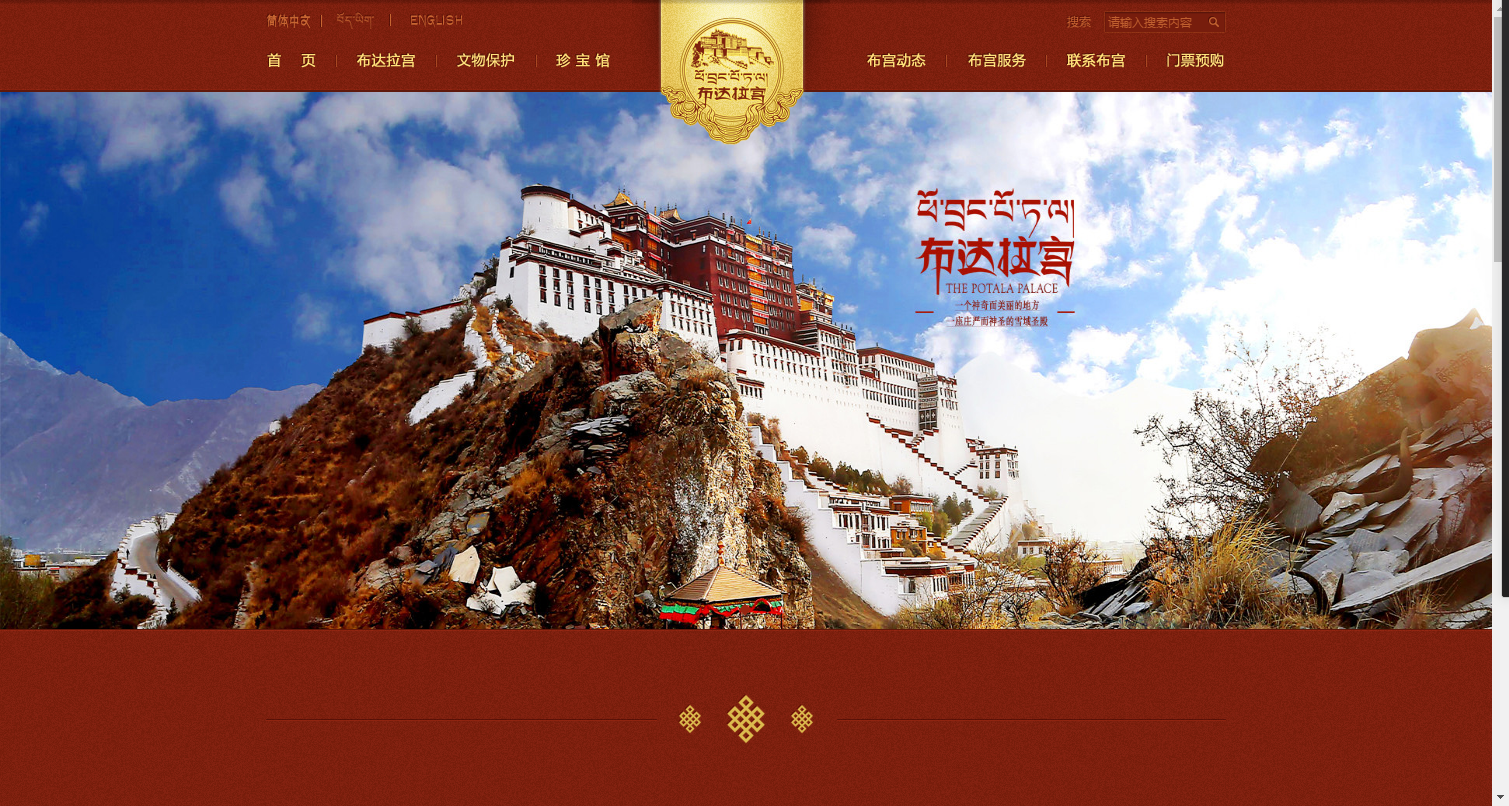
Visit the Potala Palace, Jokhang Temple and Barkhor Street pilgrim circuit.
Day3
Lhasa — Sera Monastery, Drepung Monastery
Visit Drepung and Sera Monasteries, including the famous monk debates at Sera (15:00–17:00).
Day4
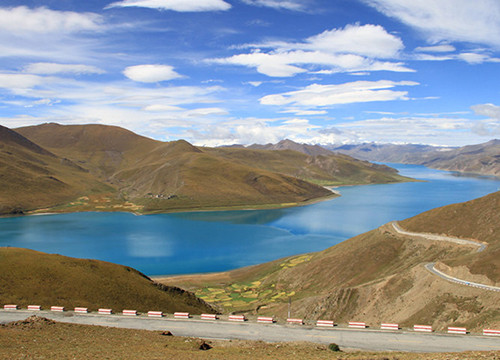
Lhasa — Yamdrok Lake — Gyantse — Shigatse
Drive over Kampala Pass for views of Yamdrok Lake and the Karola Glacier. Visit Gyantse Kumbum then continue to Shigatse and Tashilunpo Monastery.
Day5
Shigatse — Everest Base Camp
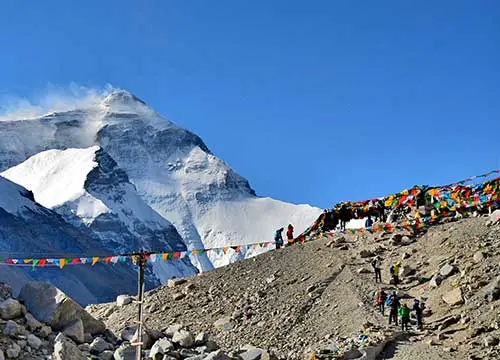
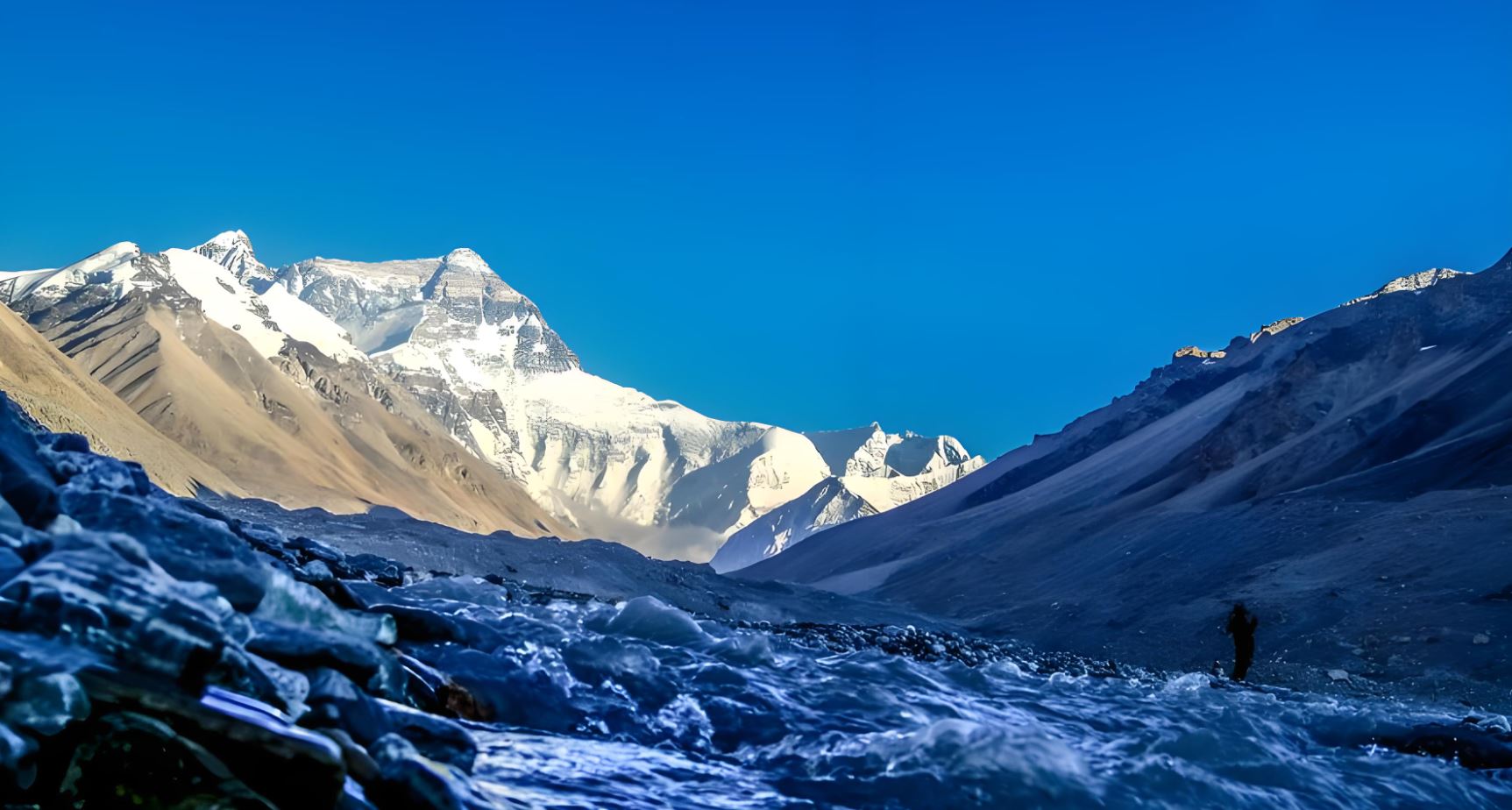
From Shigatse the road heads west through Lhatse and Tingri before a dramatic turn south toward Everest. The route climbs through checkpoints to Rongbuk Monastery at 4,980m — the highest monastery in the world — its courtyard facing the north face of Everest in a view that photographs consistently fail to reproduce.
Everest Base Camp at 5,200m is reached by electric shuttle bus. The north face rises more than 3,000 vertical metres above the valley floor in one unbroken sweep. Spend the night here — the experience is quieter and more powerful than most travellers expect.
Day6
EBC — Saga
Sunrise at EBC. Drive west past Mt. Shishapangma and the cobalt-blue Pelkhu-tso Lake to Saga county.
Day7
Saga — Lake Manasarovar — Darchen
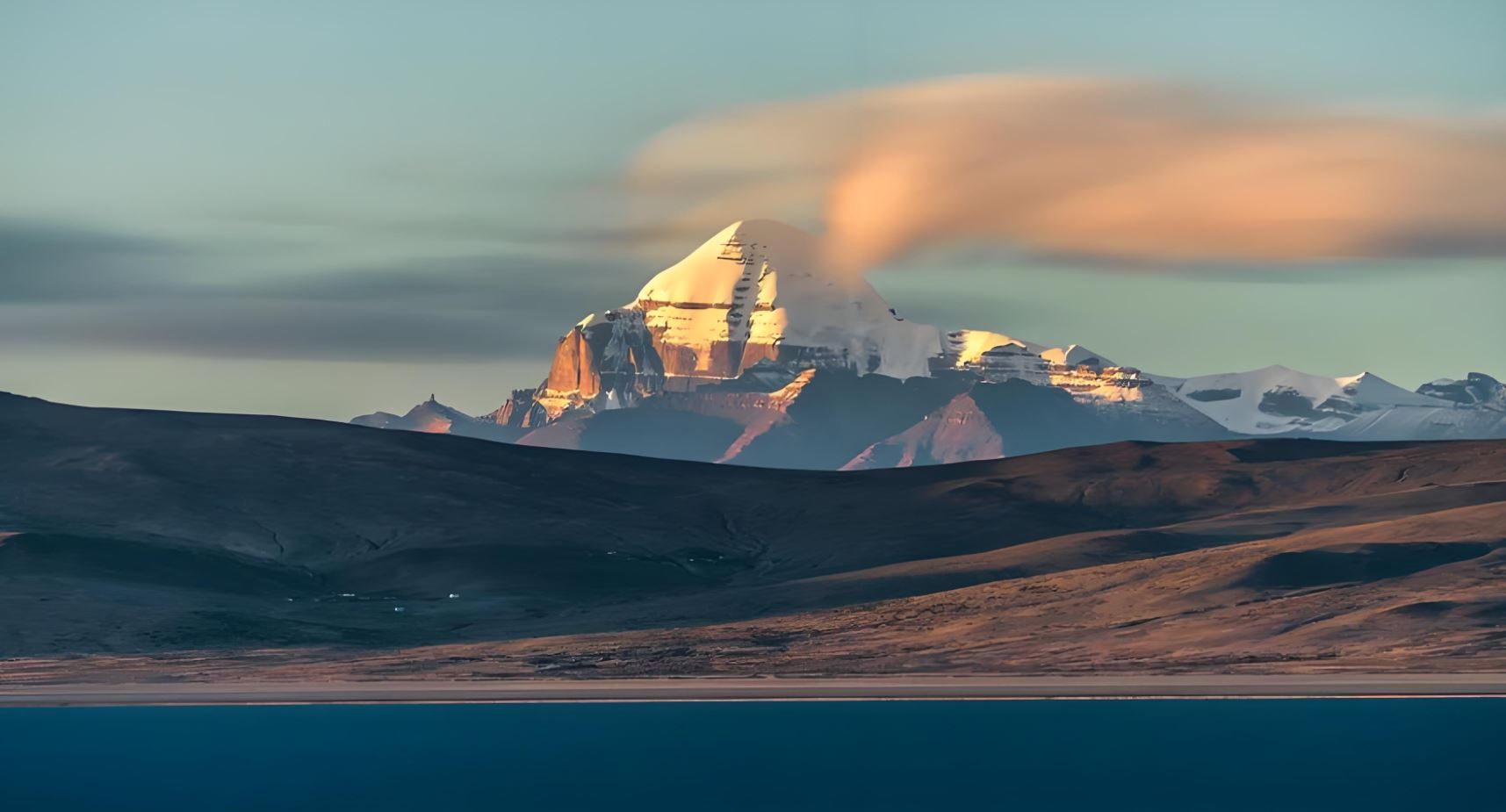
Drive west to the sacred Lake Manasarovar (4,588m) — regarded as the holiest lake in Asia by Hindus, Buddhists and Jains alike. Continue to Darchen at the foot of Mt. Kailash.
Day8
Kailash Kora Day 1 — Darchen to Driapuk (4,920m)
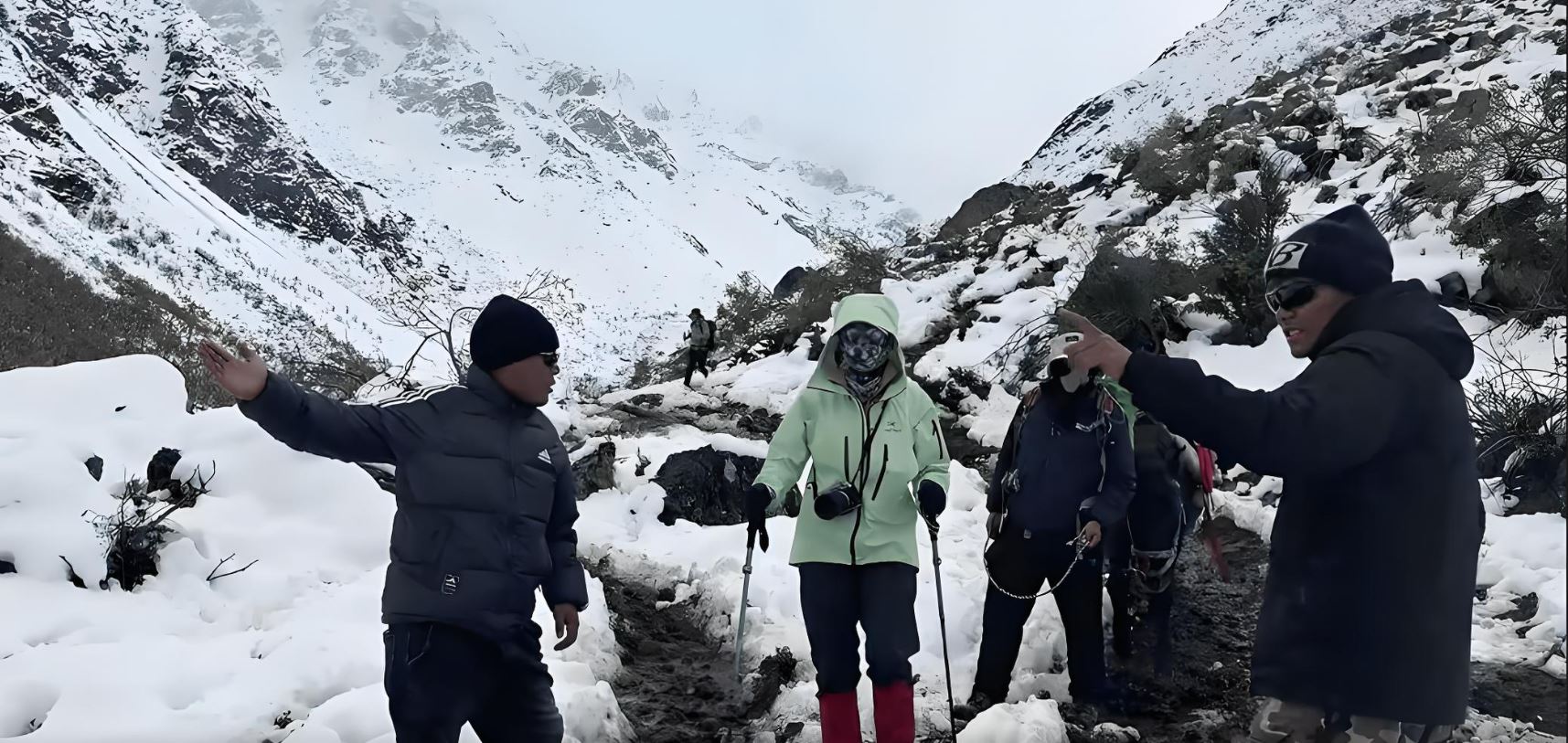
Begin the 52km sacred circumambulation of Mt. Kailash. Trek through the Sarshung valley, passing pilgrims and nomads, to Driapuk Monastery guesthouse.
Day9
Kailash Kora Day 2 — Driapuk to Dolma La (5,630m) to Dzultripuk
The toughest day: ascend to the highest pass of the Kora, the Dolma La at 5,630m, with extraordinary views of the sacred mountain. Descend to Dzultripuk (Milarepa’s Cave).
Day10
Kailash Kora Day 3 — Dzultripuk to Darchen
Complete the final leg of the Kailash Kora, visiting caves and sacred sites, and walk back to Darchen. Drive on toward Zanda.
Day11
Guge Kingdom — Zanda Earth Forest — Tholing Monastery
The Guge Kingdom was founded in the 10th century after the collapse of the Tibetan Empire — a royal prince fled west to Ngari and established a new Buddhist domain. For six centuries it was a centre of scholarship and art, its capital city carved into a dramatic clay hill above the Sutlej River. Then in the 17th century it vanished — a Ladakhi siege and disputed internal events — leaving tens of thousands of rooms empty and silent.
What survives is extraordinary: cave chambers and surviving temples with 15th-century murals still on the walls, reached by steep paths cut into the eroding cliff face. Tholing Monastery nearby is one of the oldest standing Buddhist sites in Tibet. The surrounding Zanda Earth Forest — millions of years of ancient lake sediment eroded into spires, mesas and ochre-gold canyon formations — is one of the most surreal geological spectacles in all of western Tibet. Sunset here rarely disappoints.
Day12
Zanda — Ali (Shiquanhe)
Drive north to Ali — the administrative centre of the remote Ngari Prefecture — across the windswept Tibetan plateau.
Day13
Ali — G219 Highway North — Into the Uninhabited Zone
Leaving Ali, the G219 National Highway points north — and the landscape changes almost immediately. The plateau opens into an immensity of space that makes even Ngari seem populated. The G219 runs at an average elevation of over 4,500 metres for hundreds of kilometres through terrain that is effectively uninhabited: no towns, no fuel stations beyond scattered military outposts, minimal mobile signal. Your driver is experienced on this road and carries spare fuel.
The landscape is hypnotic in its austerity — vast plains the colour of bleached bone, the Kunlun Mountains hardening the northern horizon, a sky so clear it seems to belong to a different planet. Roadside guesthouses are sparse concrete buildings with a kerosene stove. Arriving here for the night feels genuinely remote in a way that the Kailash circuit, for all its wildness, does not.
Day14
G219 — Aksai Chin Plateau — Approaching Xinjiang
The second day on the G219 continues north across the Aksai Chin plateau — one of the highest and most desolate tablelands on earth, disputed territory between China and India, essentially uninhabited. The Kunlun Mountains grow taller as you approach Xinjiang, and the ground gradually shifts from Tibetan red-brown to the lighter yellows and greys of the Central Asian steppe.
The air thickens almost imperceptibly as the altitude eases. You may not notice the oxygen improving until you realise you have stopped monitoring your breathing quite so carefully. The last guesthouse before the Xinjiang entry point is basic beyond description — and likely one of the most remote places you will ever sleep.
Day15
Entering Xinjiang — Drive to Kashgar
Crossing into Xinjiang, the transformation is immediate and total. Architecture changes — whitewashed mosques with minarets replace monastery walls and prayer flags. Script on shopfronts shifts from Tibetan and Chinese to Uyghur. The faces, the food, the sounds of the street: everything changes. After two weeks in the Tibetan Buddhist world, the arrival in Kashgar — the great Silk Road city of Central Asia — is one of the most striking cultural transitions possible anywhere on earth.
Kashgar’s Id Kah Mosque is the largest in China; the Grand Bazaar fills entire city blocks with traders from across the Tarim Basin; the old city is a labyrinth of mud-brick lanes and craft workshops unchanged in character for centuries. Walking it in the evening, it is easy to forget entirely that you were on a sacred mountain just a week ago.
Day16
Kashgar — Departure
Free morning in Kashgar before your flight or onward journey. The Sunday Grand Bazaar — one of the largest open-air markets in Asia — is worth an early rise if your schedule allows. The old city alleys reward a final slow wander: coppersmith workshops, silk traders, dried fruit sellers and tea houses serving the same families for generations. Your guide transfers you to Kashgar Airport or the train station for the journey home.
Meals: Breakfast Tibet Permit — Required for All Visitors Every visitor to Tibet must hold a Tibet Tourism Bureau (TTB) permit. It is mandatory, cannot be obtained on arrival, and differs by nationality. We handle the full application once you book — please allow at least 15 days before your departure date.
What is included
Included
- Tibet Entry Permit and Alien’s Travel Permit
- Special Restricted Area Permit for the Mt. Kailash region
- All entrance fees for tourist sites listed in the itinerary
- Professional English-speaking local tour guide
- Private vehicle with experienced driver
- All accommodation listed in the itinerary
- Shared oxygen tank in the vehicle
- Tourist accident/casualty insurance and first aid kit
Not included
- Single room supplement — free of charge for any group booking 5 rooms or travelling with 10 or more.
- Flights or trains to/from Tibet
- Meals not specified in the itinerary (approximately USD 3–15 per meal)
- Yak/porter hire during the Kailash Kora (optional, arranged locally)
- Tips for tour guide and driver
- Personal expenses (laundry, snacks, optional activities)
Photos from this route
Questions travellers ask
This tour ends in Kashgar, not Lhasa — what does that mean for return logistics?
This is a one-way transit across the Tibetan plateau — you enter Tibet from Lhasa and exit from the far north-western corner into Xinjiang. Your return flight, train or onward journey needs to be booked from Kashgar (or from Ürümqi, Xinjiang’s capital, which has more international connections and is reachable by domestic flight from Kashgar).
For most travellers, this actually simplifies things: you do not need to backtrack to Lhasa. From Kashgar you can connect to Central Asia (Kyrgyzstan, Pakistan via the Karakoram Highway), the rest of China, or international destinations via Ürümqi. We strongly recommend planning your post-tour travel before booking this itinerary and discussing logistics with us in advance.
What is the G219 highway — and what makes it so remarkable?
The G219 (National Highway 219) is the Xinjiang-Tibet Highway — a road running approximately 2,800 kilometres from Kashgar in the west to Lhasa in the east. Its average elevation exceeds 4,500 metres for much of its length, making it one of the highest roads in the world. The section from Ali (Shiquanhe) north to Xinjiang passes through the Aksai Chin plateau: effectively uninhabited terrain with disputed sovereignty between China and India.
For overland travellers, the G219 has near-legendary status — it has been on the bucket list of adventurers, motorcyclists and 4×4 drivers for decades. Completing this section by vehicle is an achievement quite apart from the Kailash pilgrimage that precedes it.
What is Kashgar like — how different is it from Lhasa?
The contrast between Lhasa and Kashgar is one of the most striking possible without crossing an international border. Lhasa is Tibetan and Han Chinese, Buddhist, at 3,650m. Kashgar is Uyghur, Muslim, Central Asian in character, at roughly 1,200m — almost sea level by the standards of the previous two weeks.
Kashgar’s Id Kah Mosque is the largest in China. The Grand Bazaar is one of the great open-air markets of the Silk Road. The old city’s mud-brick lanes and craft workshops have been inhabited continuously for centuries. The food — lamb skewers, naan bread, hand-pulled noodles, pomegranate juice — is entirely different from anything on the Tibetan plateau. Most travellers find the arrival genuinely disorienting, in the best possible way.
Do I need special permits to enter Xinjiang from Tibet?
No separate visa is required — your standard Chinese visa covers Xinjiang as well as Tibet. For the purposes of this tour (arriving in Kashgar and departing from there) no special Xinjiang permits are required beyond your Chinese visa. All Tibet documentation — Tibet Travel Permit, Alien’s Travel Permit, and Ngari Military Restricted Area Permit — is arranged entirely by TibetTravel.com. Note that Xinjiang requires tourist registration with local police within 24 hours of arrival; your guide handles this.
Is it possible to do this tour in reverse — starting in Kashgar and ending in Lhasa?
Logistically possible, and some travellers prefer arriving at Kailash from the wilderness rather than from Lhasa. However, the standard direction (Lhasa → Kailash → G219 → Kashgar) has two practical advantages: it allows proper acclimatization in Lhasa before the high-altitude sections, and permit processing for Tibet is significantly more straightforward for groups entering from Lhasa than from Xinjiang. If you wish to do the reverse direction, contact us to discuss the specific requirements — it is doable but needs more planning lead time.
Before you send your inquiry
- No deposit — ever. Your dates are held with a free inquiry, and nothing is due until we confirm. On fixed group departures, book early to secure your seats.
- Cancel free before your Tibet Travel Permit is issued — full refund, every dollar.
- After the permit is issued: the USD $100 permit fee is non-refundable, everything else is refunded. Refunds within 7 business days.
- Bring a group of 7 and your spot is free (7+1).
- Single room supplement — free of charge for any group booking 5 rooms or travelling with 10 or more.
- Tell us your dates and route on the form below — you will have a written itinerary and an item-by-item quote within 12 hours, with no obligation to book.
- Prices depend on group size, hotel standard, season and how you travel into Tibet, so we quote each trip individually rather than from a price list.
- Hotel details — the exact hotels we use — come with your quote. Ask below for the standard you would like and we will match it.
- A Lhasa-based Tibet tour operator since 1999 — our own guides, vehicles and office in Lhasa, 7,200+ travellers from 40+ countries, 4.9★ on TripAdvisor.