


2006 In-Depth Meditation & Cultural Tibet Tour
- Duration
- 11 nights / 12 days
- Pace
- Moderate
- Group size
- Private, on your dates
- Best season
- April to October
The trip at a glance
Stillness inside the most sacred places on earth — from the Great Wall to the heart of Lhasa.
Beijing · Juyongguan Great Wall · Xi’an · Lhasa · Drepung · Yamdrok Lake · Tashilhunpo · Qinghai-Tibet Railway
- Beijing
- Juyongguan Great Wall
- Xi'an
- Lhasa
 Drepung
 Yamdrok Lake
 Tashilhunpo
 Qinghai-Tibet Railway
Your Journey Designer
John
United Kingdom
His Tours
Meditation Tour — Beijing to Lhasa 2006
This tourJohn practised as an ordained Buddhist monk in India for more than thirty years. His spiritual formation is not biographical background — it shapes every decision in the tours he designs. His groups do not sightsee in the conventional sense; they bring their practice into each environment, sitting in meditation where others might spend five minutes taking photographs.
His partnership with our agency is built on shared spiritual values rather than commercial convenience. Our founder — a devout lay Buddhist who has received personal empowerment from the 17th Karmapa Living Buddha and holds full Bodhisattva precepts — shares the same foundation. The result is a collaboration that has produced some of the most genuinely contemplative Tibet journeys ever operated.
How This Tour Came to Be
John from the United Kingdom is not simply a tour operator — he is a man of profound spiritual formation. Ordained and practised as a Buddhist monk in India for more than thirty years, John designs travel experiences shaped entirely by the rhythms of contemplation. His groups do not hurry past places of importance; they pause within them. They sit with the space. They bring their practice to the land itself.
The partnership between John and our travel agency rests on something deeper than commercial interest. Our founder is himself a devout lay Buddhist — one who has received head-touching empowerment and personal blessings from the 17th Karmapa Living Buddha, the third-highest lineage of successive living Buddhas in Tibetan Buddhism, and who was formally bestowed a Dharma name. He has taken and fully maintains the lay Bodhisattva precepts. When John and our founder first met, they met as spiritual equals. That shared ground has sustained a genuine, decades-long partnership that no contract alone could have created.
This particular journey — organised in 2006 — carries an added significance beyond its spiritual design. It was operated one year before the official opening of the Qinghai-Tibet Railway, during the period of preliminary trial services. John’s group travelled into Tibet by air and departed by the cross-plateau train — and in doing so, they unwittingly provided us with one of the most practically valuable discoveries in our operational history: ascending to the plateau gradually by train worsens altitude sickness progressively; but descending from the high plateau toward inland China by train causes virtually no altitude reaction at all. This finding has since been incorporated into the standard design of all our group itineraries.
What made this tour exceptional was its meditation-first philosophy. At the Juyongguan section of the Great Wall in Beijing, the group sat in outdoor meditation for ninety uninterrupted minutes. At the Mausoleum of Qin Shi Huang in Xi’an, they found stillness beside the tomb of China’s first emperor for over an hour. At Jokhang Temple — the holiest shrine in all of Tibetan Buddhism — they meditated inside one of the most spiritually charged interiors in Asia. They sat at the shore of Yamdrok Lake while snow peaks watched over the silence. They practised inside the great halls of Tashilhunpo Monastery in Shigatse. And at Drepung Monastery — once the largest monastery in the world — they spent more than an hour in seated meditation on the open square before its main hall. This was not touring with a spiritual veneer. It was a genuine pilgrimage.
What You Will See & Do
- Ninety minutes of outdoor meditation at Juyongguan Great Wall — one of the most storied passes on the entire Wall
- Over one hour of seated meditation beside the Mausoleum of Qin Shi Huang — China’s first emperor
- Group meditation inside Jokhang Temple — the holiest site in all of Tibetan Buddhism
- Over one hour of open-air meditation on the great square before Drepung Monastery’s main hall
- Lakeside contemplation at the sacred shore of Yamdrok Lake — one of Tibet’s three great holy lakes
- Silent meditation inside Tashilhunpo Monastery — the traditional seat of all Panchen Lamas
- Peking Duck dinner and classical Peking Opera performance in Beijing
- Xi’an Dumpling Feast and Tang Dynasty Music and Dance performance
- First-hand discovery: the Qinghai-Tibet Railway descent causes no altitude sickness — now standard in all our tour designs
- The legendary 23-hour through-train from Lhasa to Beijing — one of the great rail journeys on earth
Three Immersive Pillars
Meditation as the Spine of Every Day
Most tours with a ‘spiritual’ label offer incense and monastery photographs. This journey was designed differently from the first morning. At Juyongguan, the group did not simply look at the Great Wall — they sat within it for ninety uninterrupted minutes of practice. At the Mausoleum of Qin Shi Huang, while other visitors walked the perimeter, John’s group sat in silence for over an hour beside the resting place of the emperor who unified China. Inside Jokhang Temple, at the shore of Yamdrok Lake, within the halls of Tashilhunpo, and on the open square at Drepung — the practice was consistent throughout the journey. Each meditation was shaped by the energy of its location: ancient imperial power, sacred Buddhist ground, high-altitude lake silence. The practice and the place were inseparable.
The Altitude Discovery That Changed Our Itinerary Design
John’s 2006 group flew into Lhasa and returned to inland China on the Qinghai-Tibet Railway — one of the first times we operated this combined format during the railway’s trial-service period, before its official public opening in 2007. What we observed changed our operational thinking permanently. Guests who ascended toward the plateau gradually by train experienced a progressive accumulation of altitude symptoms. But the same guests, returning from Lhasa by the cross-plateau railway, felt no altitude reaction at all — because the body descends from altitude far more readily than it climbs toward it. From this first-hand observation, we standardised the fly-in / train-out structure for all suitable group itineraries, adopting the legendary 23-hour Lhasa-to-inland-China through-train as the preferred farewell to the plateau.
A Spiritual Partnership Across Decades
What makes this page different from a standard tour description is that we do not describe John’s background at arm’s length. Our founder has walked the same path — as a lay Buddhist who has taken full Bodhisattva precepts, received direct empowerment from the 17th Karmapa Living Buddha, and been given a formal Dharma name. The shared spiritual ground between John and our team is not a marketing construct. It is the reason this collaboration has lasted decades, the reason John entrusts his groups to our local knowledge, and the reason his meditation sessions — at the Great Wall, inside Jokhang Temple, at the sacred lakeshore, within the monastery halls — receive the kind of on-the-ground support that transforms a scheduled activity into genuine practice inside some of Asia’s most sacred spaces.
Trip at a Glance
- Tour Leader John
- Year 2006
Where you go, and how high you sleep
The route, stop by stop
Beijing → Juyongguan Great Wall → Xi'an → Lhasa → Drepung → Yamdrok Lake → Tashilhunpo → Qinghai-Tibet Railway
- Beijing — Juyongguan Great Wall & Evening CultureDay 1
- Beijing City — Forbidden City, Summer Palace, Lama Temple & Overnight TrainDay 2
- Xi'an — Terra-Cotta Warriors & Meditation at the Imperial MausoleumDay 3
- Xi'an Historic City Tour & Tang Dynasty EveningDay 4
- Xi'an → Lhasa by Air — Full Acclimatisation DayDay 5
- Lhasa — Drepung Meditation & Sera Monk DebateDay 6
- Lhasa — Potala Palace, Jokhang Temple Meditation & BarkhorDay 7
- Lhasa → Yamdrok Lake Meditation → Karola Glacier → Gyantse → ShigatseDay 8
- Shigatse — Tashilhunpo Monastery Meditation & Return to LhasaDay 9
- Lhasa — Board the Qinghai-Tibet Through-TrainDay 10
- Full Day on the Qinghai-Tibet RailwayDay 11
- Arrive Beijing — Depart for HomeDay 12
Day by day
Beijing — Juyongguan Great Wall & Evening Culture
- Transfer from Beijing airport to hotel. Brief refreshment and rest.
- Afternoon excursion to Juyongguan — one of the most storied sections of the Great Wall, built in a narrow mountain pass north of Beijing, where armies, traders and pilgrims have passed for centuries.
- Rather than a conventional sightseeing visit, the group settled in for ninety minutes of open-air group meditation on the Wall itself — the ancient stone, mountain air and layered history forming the natural backdrop for a sustained period of contemplative practice.
- Evening in central Beijing: Quanjude Peking Duck dinner at one of Beijing’s most celebrated traditional restaurants, followed by a classical Peking Opera performance.
Dinner: Quanjude Peking Duck — Beijing’s most celebrated culinary tradition
Overnight: Beijing hotel (Night 1)
Beijing City — Forbidden City, Summer Palace, Lama Temple & Overnight Train
- Full-day immersive cultural tour of Beijing’s landmark sites: the Forbidden City, where twenty-four emperors lived and governed across five centuries; the Summer Palace, with its vast lake, covered walkways and imperial garden design; and Yonghegong Lama Temple — the largest and most important Tibetan Buddhist temple in Beijing, a spiritually resonant visit given the group’s meditation focus.
- Evening: spectacular Chinese Acrobatic Show — a performance tradition extending over two thousand years.
- Following the performance, transfer to the railway station and board the overnight express train bound for Xi’an.
Dinner: Restaurant dinner in central Beijing
Overnight: Overnight express train to Xi’an
Xi'an — Terra-Cotta Warriors & Meditation at the Imperial Mausoleum
- Arrive Xi’an in the early morning. Hotel refreshment and short rest.
- Full-day eastern-route excursion: two and a half hours inside the Terra-Cotta Warriors and Horses Museum — one of the defining archaeological discoveries of the twentieth century, with thousands of individual life-size warrior figures arranged in battle formation before the burial complex of China’s first emperor.
- Lunch inside the scenic area.
- After lunch, the group moved to the exterior of the Mausoleum of Qin Shi Huang — the great earthen pyramid that still conceals the emperor’s burial chamber, undisturbed since 210 BC. Here John led the group in over one hour of silent seated meditation beside the oldest imperial tomb in Chinese history, with the burial mound rising directly before them.
- Afternoon visit to Huaqing Hot Spring — the legendary imperial bathing palace in the foothills of Mount Lishan, known since the Zhou dynasty.
- Return to downtown Xi’an.
Dinner: Local Xi’an cuisine
Overnight: Xi’an hotel (Night 3)
Xi'an Historic City Tour & Tang Dynasty Evening
- Full-day tour of Xi’an’s most distinguished cultural sites: Giant Wild Goose Pagoda, built in 652 AD to house the Buddhist scriptures brought back from India by the pilgrim monk Xuanzang; Shaanxi History Museum, one of China’s premier provincial museums; the Stele Forest Museum, housing thousands of stone inscriptions spanning two millennia; the Ancient City Wall, one of the most complete surviving city walls in China; and the Drum Tower at the city centre.
- Evening: traditional Xi’an Dumpling Feast — a banquet of dozens of varieties of hand-made dumplings, a northern Chinese culinary tradition unique to this city — followed by a splendid Tang Dynasty Music and Dance performance.
Dinner: Xi’an Dumpling Feast — a multi-course traditional banquet
Overnight: Xi’an hotel (Night 4)
Xi'an → Lhasa by Air — Full Acclimatisation Day
- Morning flight from Xi’an to Lhasa Gonggar Airport. Arrival at 3,650 metres above sea level.
- Transfer to hotel in Lhasa. Full-day rest — no sightseeing is arranged on arrival day. Altitude acclimatisation is the only priority.
- Light walking only. Drink plenty of water. Avoid strenuous activity. The body needs unhurried time to adjust to the thin air of the Tibetan plateau.
- John used the afternoon for personal meditation practice — something many experienced high-altitude travellers have noted is itself beneficial during the adaptation period.
Dinner: Light Tibetan welcome dinner at the hotel
Overnight: Lhasa hotel (Night 5)
Lhasa — Drepung Meditation & Sera Monk Debate
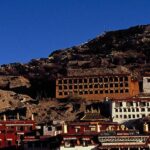
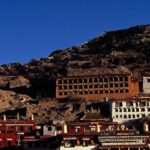
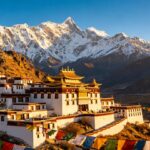
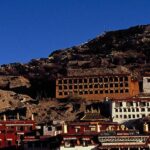
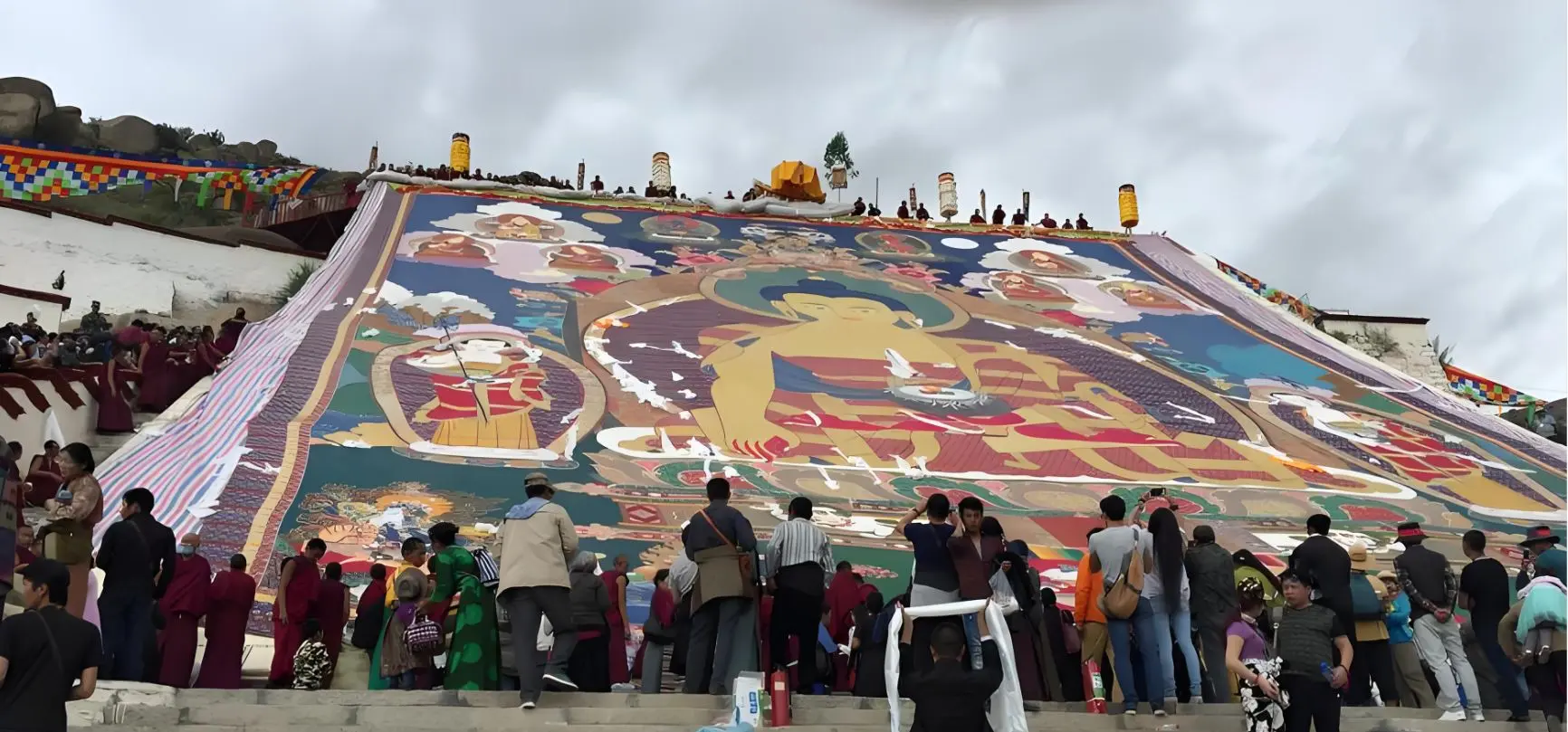
- Morning visit to Drepung Monastery — one of the three great Gelug monasteries of Tibet and, at its historical peak, the largest monastery in the world with over ten thousand resident monks. The vast whitewashed complex climbs the hillside west of Lhasa like a small, self-contained city.
- On the spacious open square before the monastery’s main assembly hall, the group settled into over one hour of seated group meditation — conducted in the open air, at high altitude, before one of Tibetan Buddhism’s most significant monastic institutions, with the Himalayan skyline above and the valley of Lhasa spread below. It was one of the defining experiences of the journey.
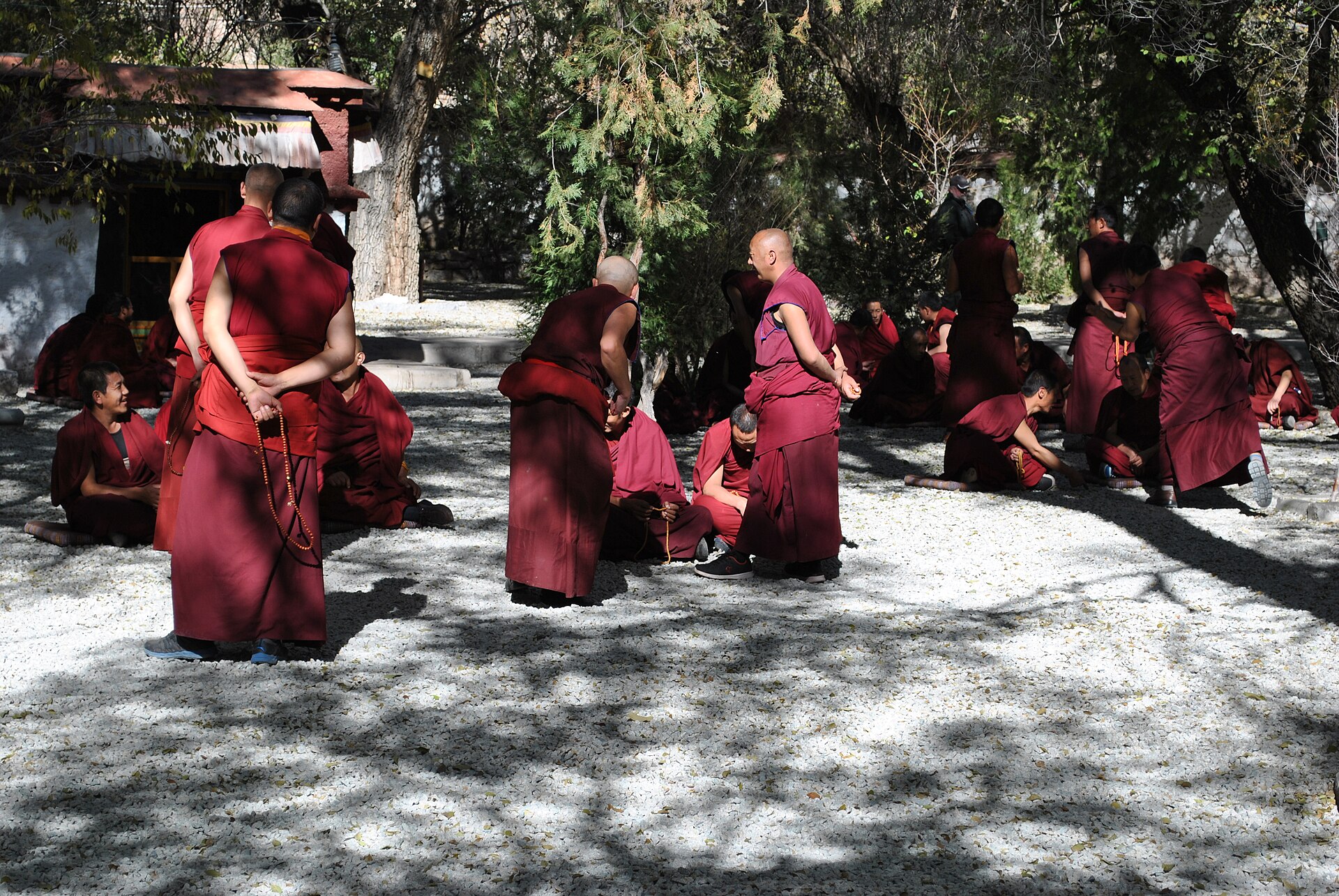
- Afternoon: Sera Monastery — one of the three great Gelug monasteries. At approximately 3 p.m., the courtyards fill with monks engaged in the traditional debate ceremony: one monk stands, claps sharply, and poses a philosophical challenge; the seated monk must respond. The ceremony is neither performance nor spectacle — it is live intellectual and spiritual training, conducted every afternoon for centuries without interruption.
Dinner: Tibetan restaurant in Lhasa
Overnight: Lhasa hotel (Night 6)
Lhasa — Potala Palace, Jokhang Temple Meditation & Barkhor
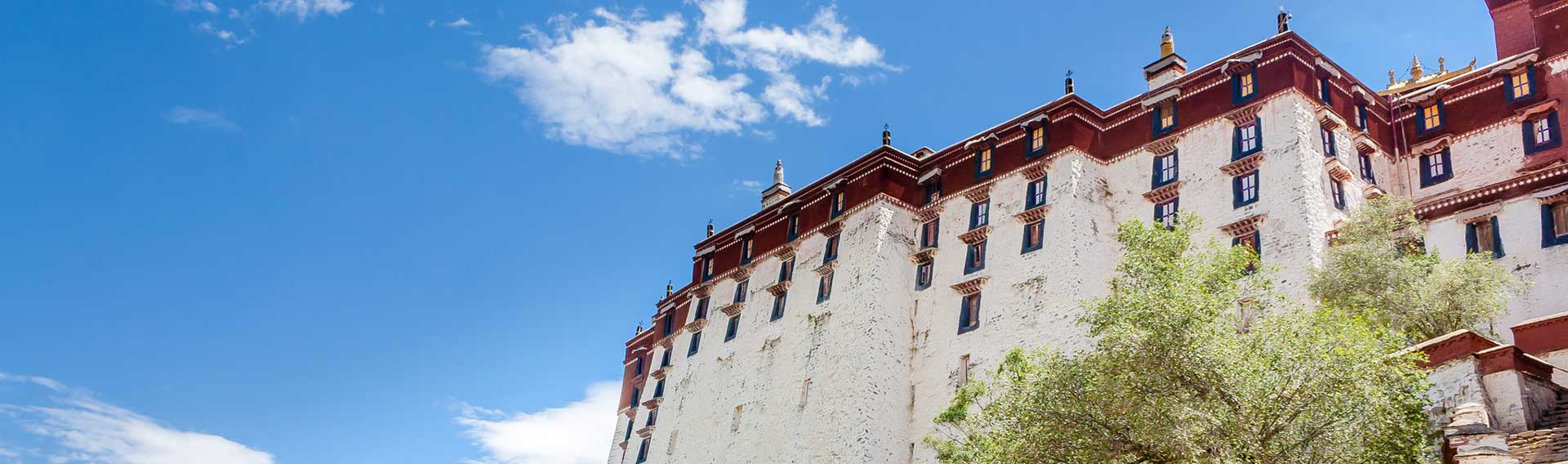
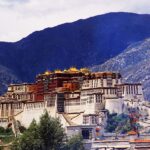
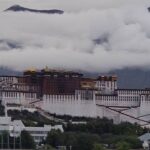
- Morning ascent of the Potala Palace — the thirteen-storey winter palace of the Dalai Lamas, rising 117 metres above Red Hill and containing over a thousand rooms, ten thousand shrines, and the jewelled tombs of eight Dalai Lamas. Entry is timed and controlled; the group moved slowly and with full attention through its chapels and sacred corridors.
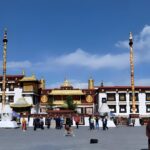
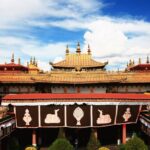
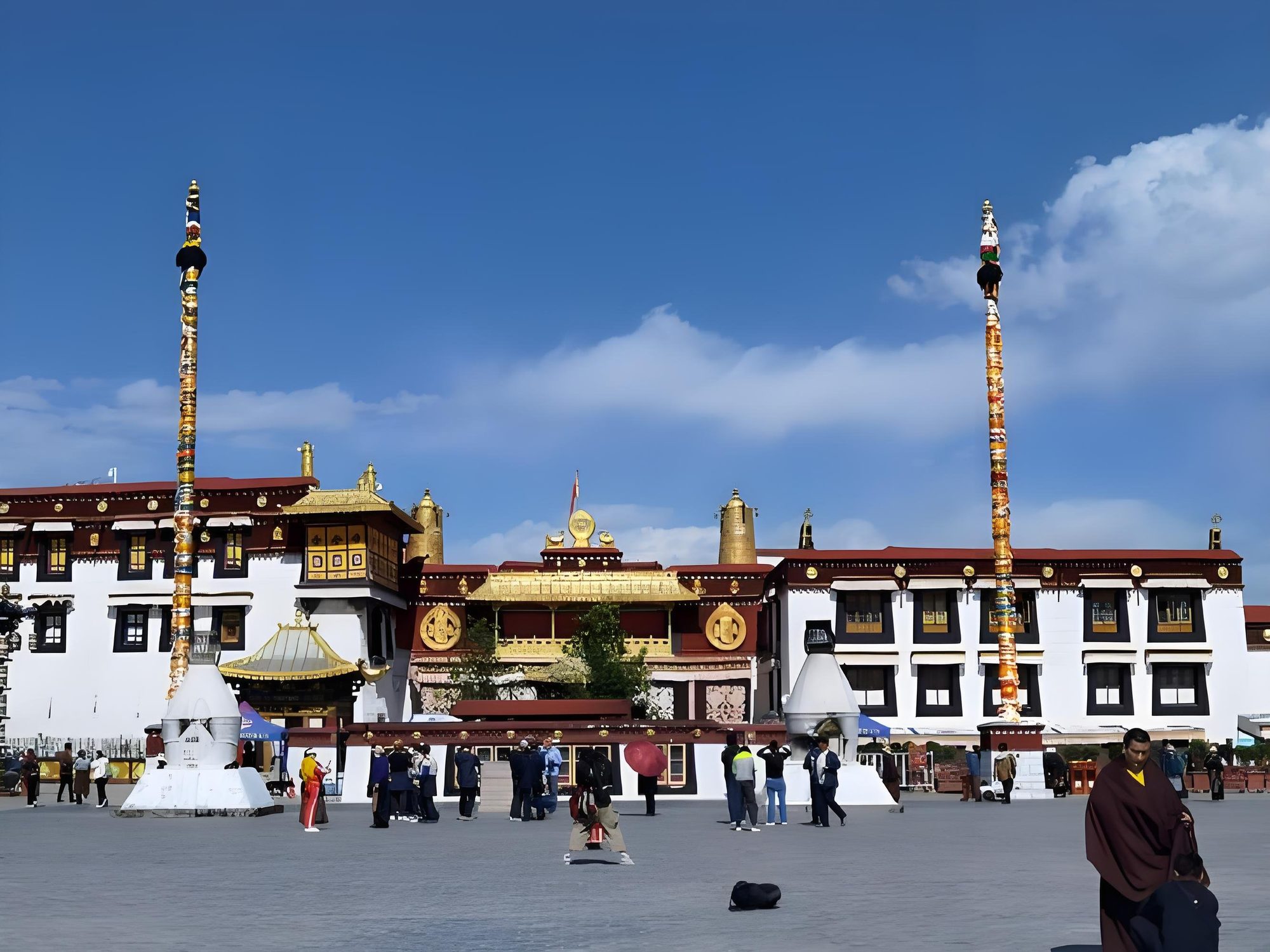
- Afternoon: Jokhang Temple — the holiest shrine in all of Tibetan Buddhism, founded in the 7th century by King Songtsen Gampo, housing the Jowo Rinpoche statue considered the most sacred image of the Buddha in the Tibetan world. Before this image — before which millions of pilgrims have prostrated over more than thirteen centuries — John led the group in a period of silent seated meditation inside the temple itself. It was among the deepest and most spiritually concentrated meditation sessions of the entire journey.
- Following the meditation, the group walked the Barkhor — the sacred circumambulation circuit surrounding Jokhang Temple, perpetually filled with pilgrims spinning prayer wheels, prostrating on flat stones, and carrying butter-lamp offerings.
- Tibet Museum: cultural and historical context for everything experienced on the plateau.
Dinner: Restaurant dinner in central Lhasa
Overnight: Lhasa hotel (Night 7)
Lhasa → Yamdrok Lake Meditation → Karola Glacier → Gyantse → Shigatse
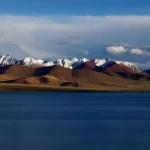
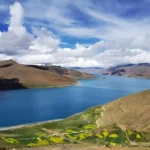
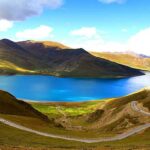
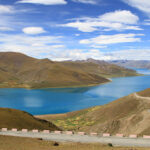
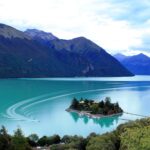
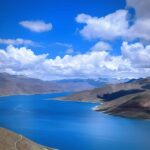
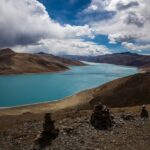
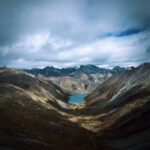
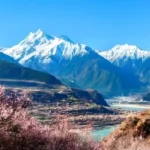
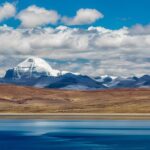
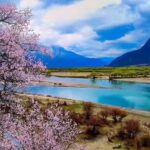
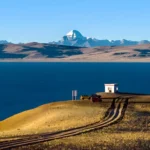
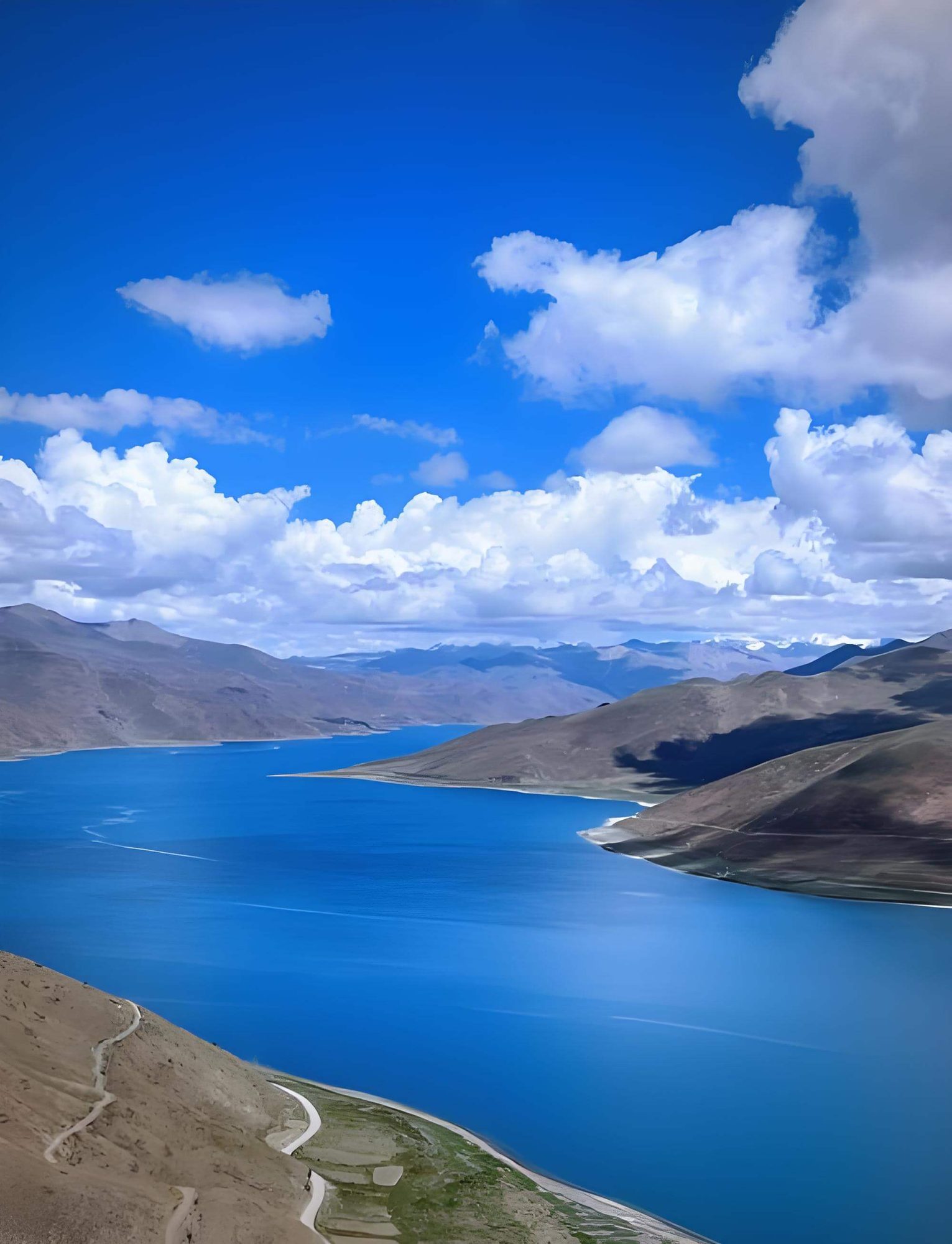
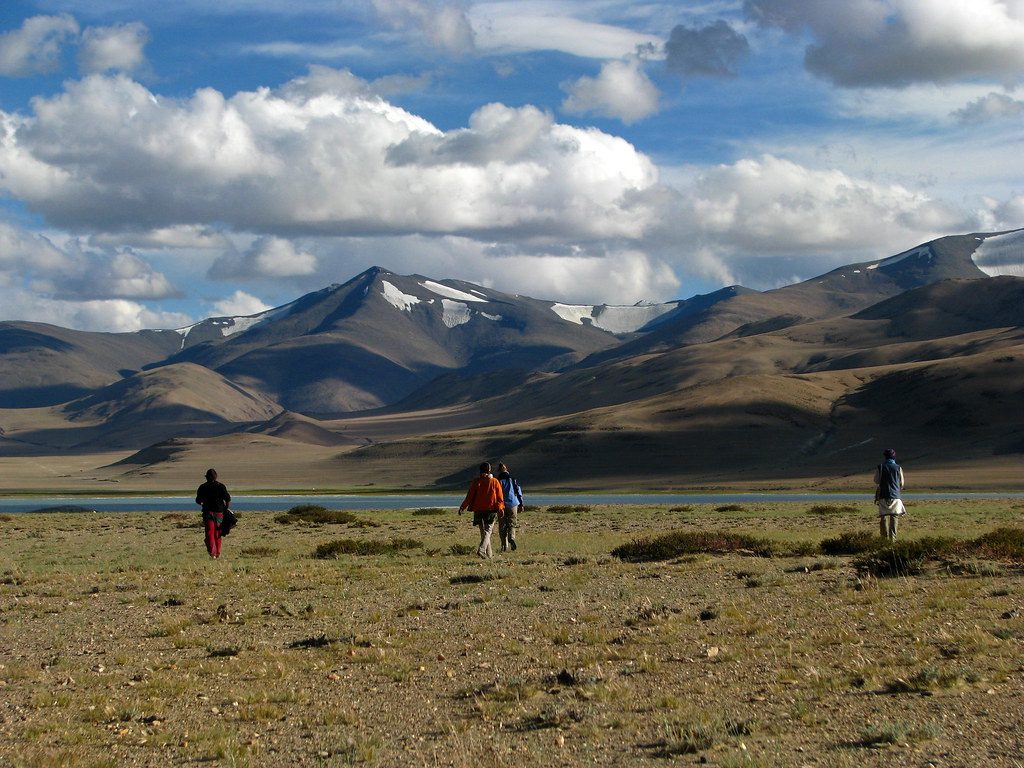
- Depart Lhasa westward over the Kamba La pass. From the ridge, Yamdrok Lake appears below in its full sacred immensity — a vast turquoise crescent stretching across the high valley floor, one of Tibet’s three great holy lakes.
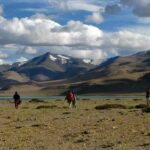
- The group descended to the lakeshore. Here, at the water’s edge at nearly 4,400 metres, they spent a period of quiet contemplative meditation — sitting with the silence of the lake, the snow peaks reflected in its surface, and the almost total absence of sound except wind and the occasional call of a waterbird. The setting required no preparation.
- Continue westward to the Karola Glacier — one of the few glaciers in Tibet directly visible and accessible from the road, its blue-white ice face descending almost to the roadside.
- Gyantse: Gyantse Dzong fortress, Pelkor Chode Monastery, and the Kumbum Stupa — a unique nine-storey multi-chapelled stupa whose design is found nowhere else in Tibetan Buddhist architecture.
- Continue to Shigatse for the evening.
Dinner: Shigatse hotel dinner
Overnight: Shigatse hotel (Night 8)
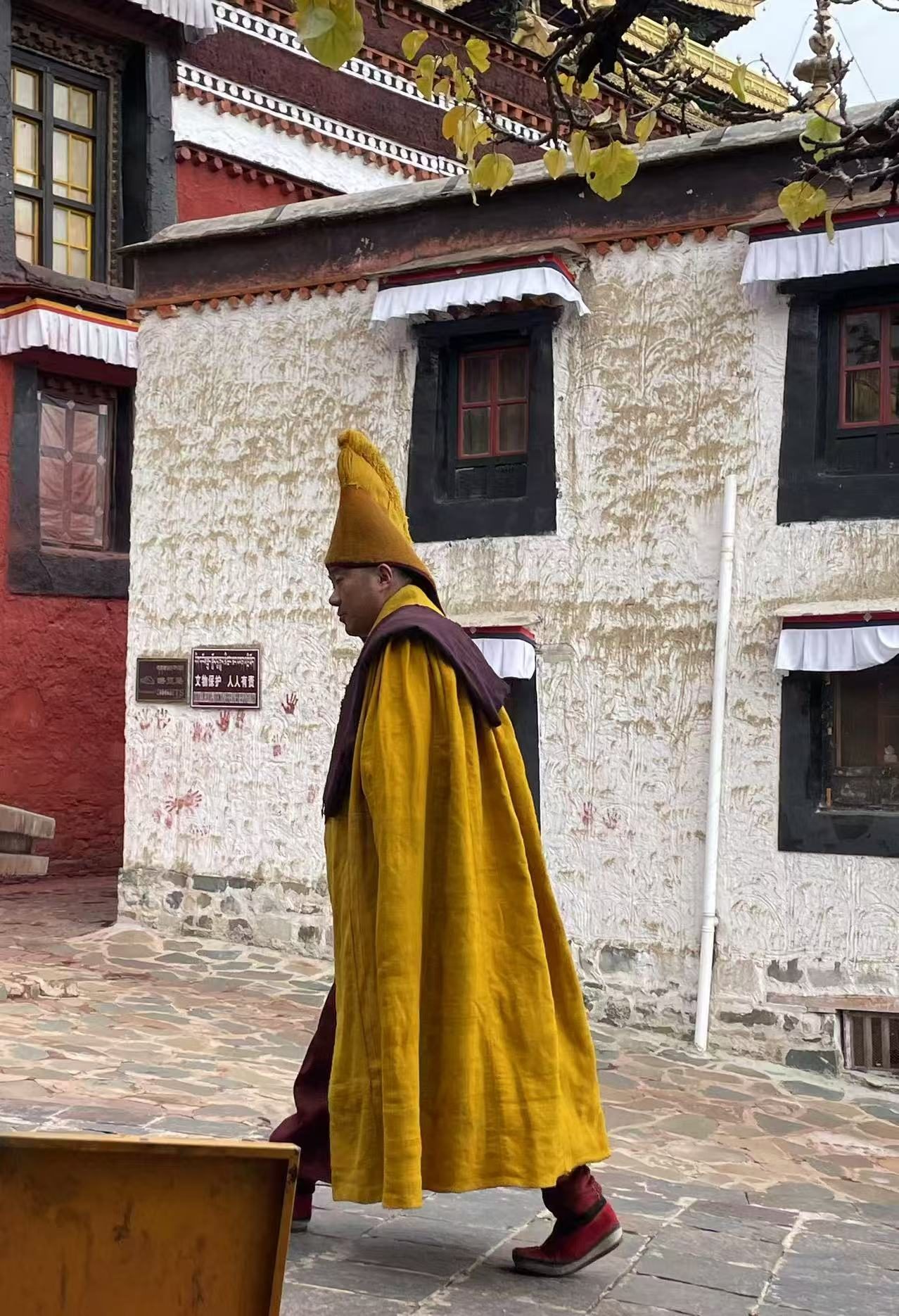
Shigatse — Tashilhunpo Monastery Meditation & Return to Lhasa
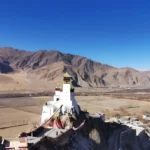
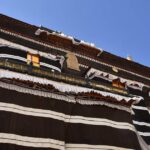
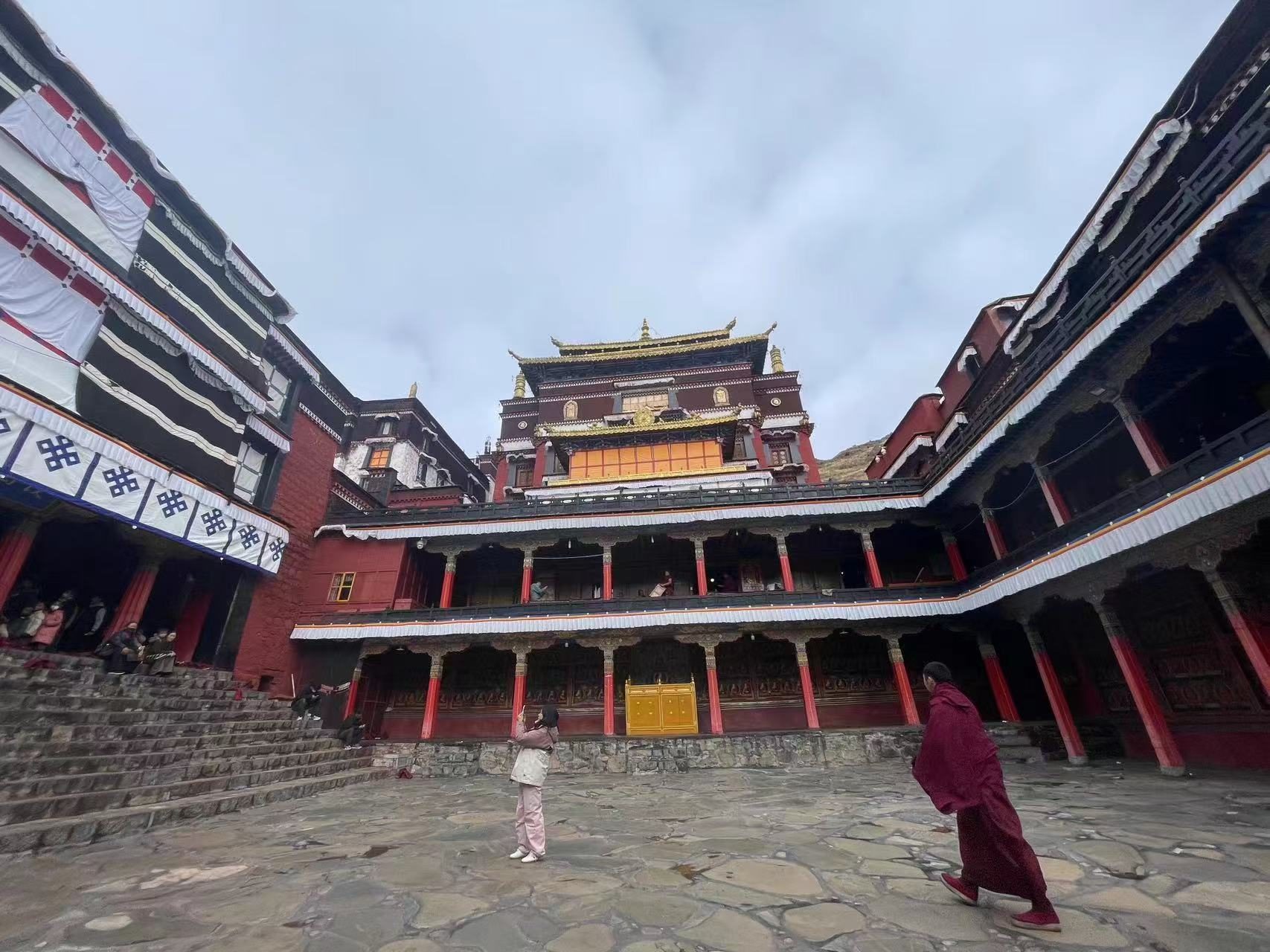
- In-depth morning visit to Tashilhunpo Monastery — founded in 1447 by the first Dalai Lama and the traditional residence of all subsequent Panchen Lamas, second in the Gelug lineage only to the Dalai Lama himself.
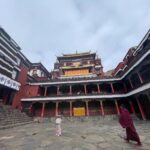
- Inside the monastery’s great assembly halls and chapels — including the magnificent hall housing the 26-metre gilded statue of Maitreya Buddha, one of the largest gilded statues in the world — the group conducted a period of seated meditation. The butter lamps, the accumulated centuries of devotion, the gold-encrusted altars and the deep quiet of the interior made the space among the most naturally conducive meditation environments encountered on the entire journey.
- Afternoon: drive back to Lhasa along the Yarlung Tsangpo valley. Arrive Lhasa in the evening.
- Final evening dinner in Lhasa. Preparation for early departure the following morning.
Dinner: Farewell dinner in Lhasa
Overnight: Lhasa hotel (Night 9)
Lhasa — Board the Qinghai-Tibet Through-Train
- Early morning check-out. Transfer to Lhasa Railway Station.
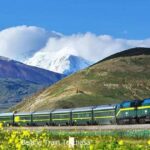
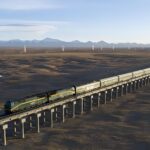
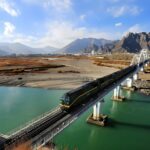
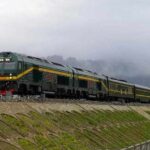
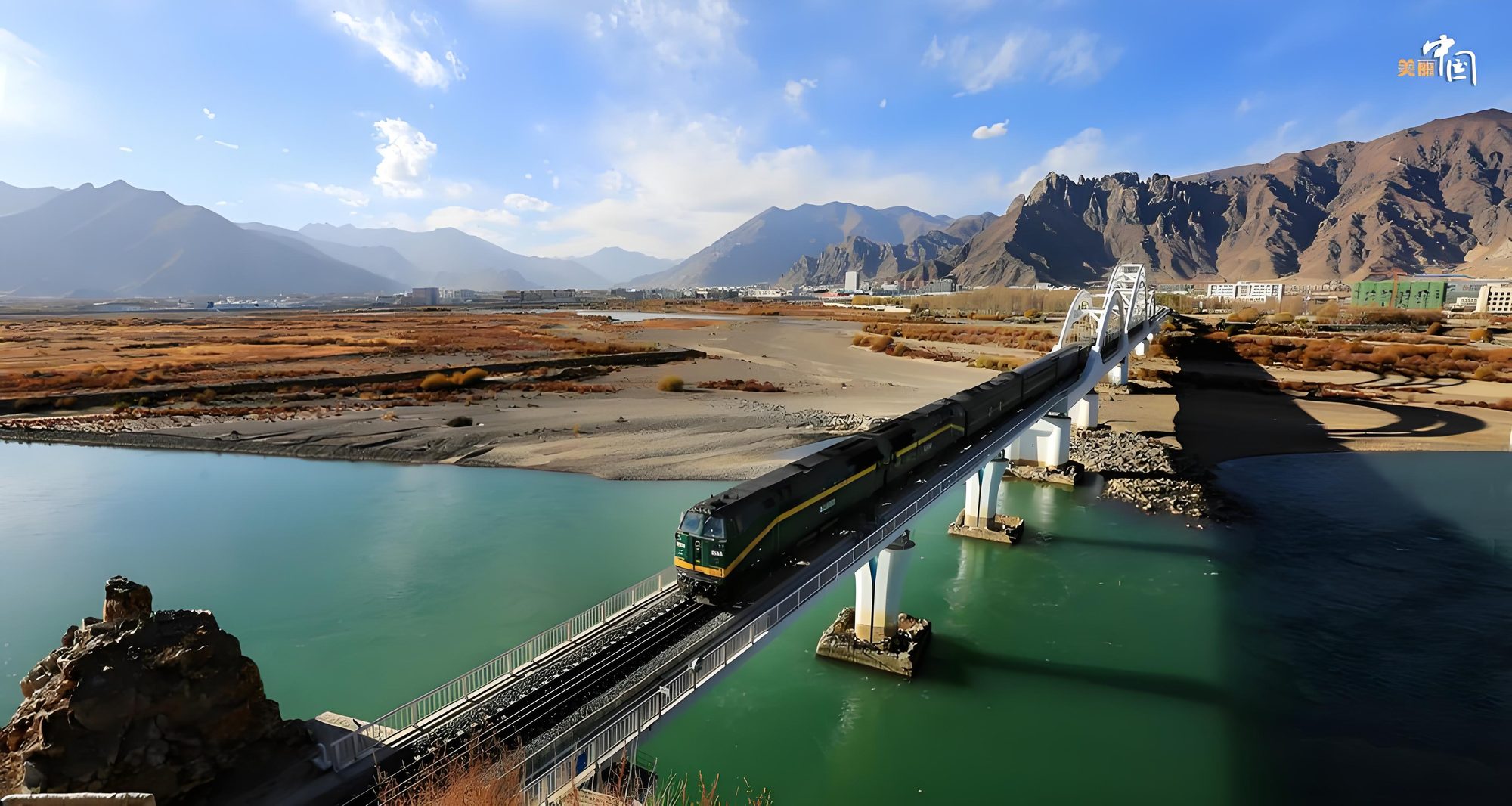
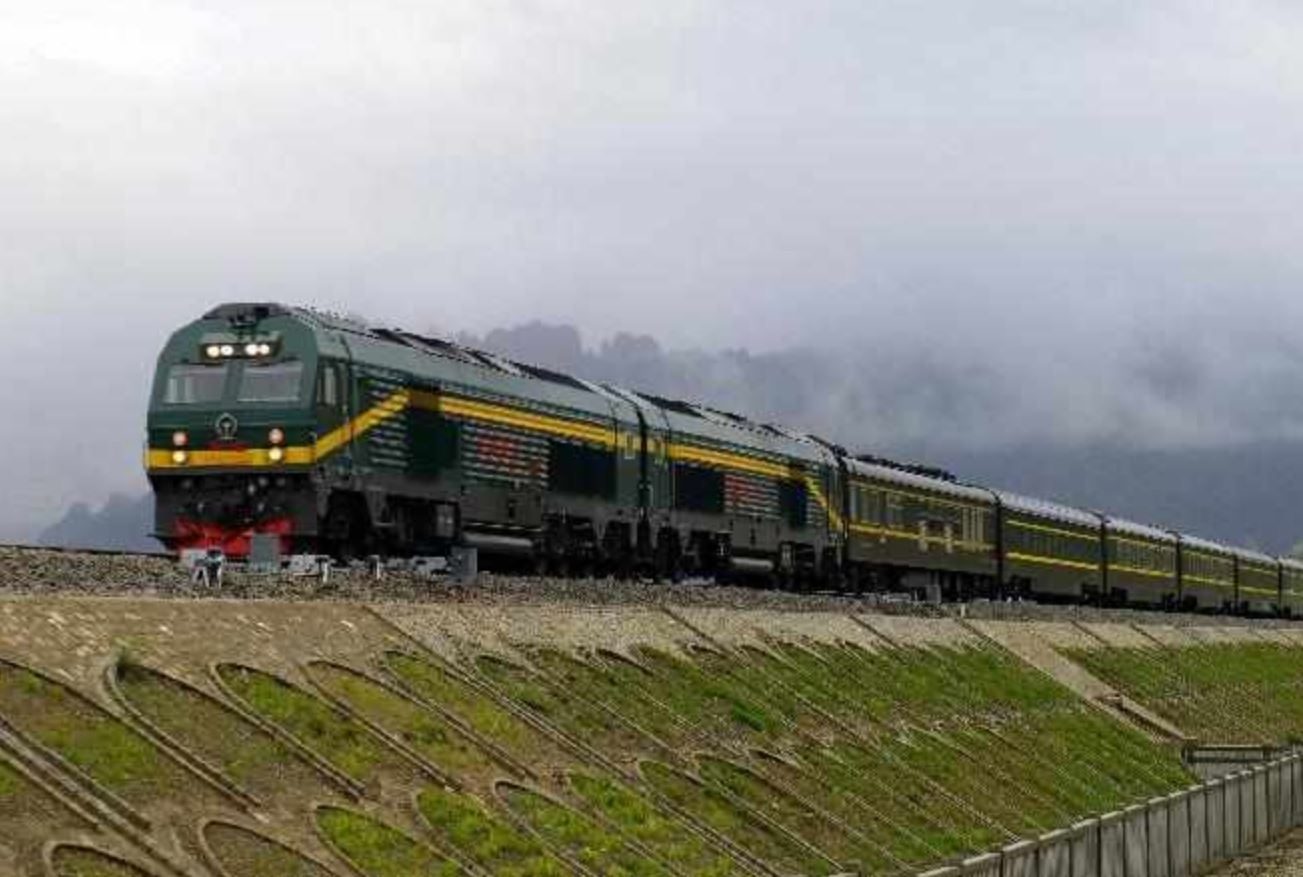
- Board the through-train to Beijing — one of the great rail journeys on earth, climbing over the Tanggula Pass at 5,072 metres above sea level, the highest railway pass in the world, before descending across the vast Qinghai plateau toward inland China.
- The year was 2006. The Qinghai-Tibet Railway had not yet been officially opened to the public — John’s group travelled during the trial-service period, among the earliest international visitors ever to complete this cross-plateau rail journey.
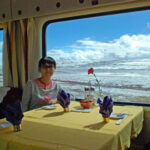
Dinner: Train dining car
Overnight: Qinghai-Tibet Railway (Night 10)
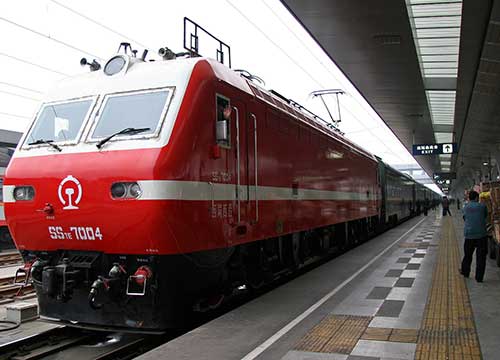
Full Day on the Qinghai-Tibet Railway
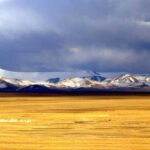
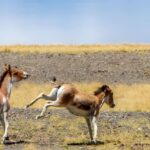
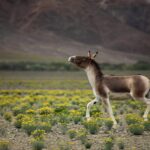
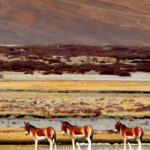
- A full day crossing the Roof of the World by train — wide-windowed carriages with supplemental oxygen, passing Namtso Lake glittering in the distance, herds of wild Tibetan antelope crossing the open plateau, nomadic tents, and the vast unpeopled grasslands of Qinghai.
- A critical observation from this descent: despite some group members having experienced mild altitude discomfort during the approach to Lhasa, not one reported any altitude symptoms on the downward rail journey. The body acclimatises downward effortlessly and completely. This confirmed what has since become standard guidance in all our tour designs: descent by train is entirely safe and symptom-free, and the through-train is the finest possible farewell to the plateau.
Dinner: Train dining car
Overnight: Qinghai-Tibet Railway (Night 11)
Arrive Beijing — Depart for Home
- Morning arrival at Beijing Railway Station after the 23-hour cross-continent journey from Lhasa.
- Transfer to Beijing Capital International Airport.
- Depart for the United Kingdom — carrying with them twelve days of meditation practice conducted at the Great Wall, beside an imperial tomb two thousand years old, inside the holiest temple of Tibetan Buddhism, at the shore of a sacred Himalayan lake, within a great monastery’s innermost halls, and across the highest railway on earth.
Photos from this route
Questions travellers ask
How large will my group be?
This is a private tour — your party travels alone on your own dates, with your own guide and vehicle throughout. The group is only the people you bring; solo travellers, couples and families all travel this way. If you would rather join a fixed small-group departure (usually 3–8 travellers) on one of the classic routes, tell us on the form and we will suggest departures that fit your dates.
Which permits does this tour need?
We arrange every permit this trip needs as part of your booking — you only need a valid passport. This route needs one: the Tibet Travel Permit, which every foreign visitor needs to enter Tibet. It is included in your quote.
How do I get to the starting point of the tour?
The tour starts in Beijing. Fly into Beijing on any international or domestic flight — your guide meets you at the airport or station and your transfer is included. We are happy to advise on flights as part of your booking.
Can this tour be customized?
Yes — every tour on this site can also run as a private departure with your own dates and pace, arranged by our own office in Lhasa. Send us your dates, group size and interests and we will adapt the itinerary around you.
Similar tours you may like