Small group or private
13 Days Nyingchi Everest Base Camp Namtso Tour
13 Days $1,800 per person Overview Itinerary Tips & FAQ Nyingchi Peach Blossom Yarlung Tsangpo Canyon Potala Palace Yamdrok Lake Everest Base Camp Namtso Lake No other itinerary on this site covers Tibet this comprehensively.…
- 13 Days / 12 Nights
- Nyingchi Peach Blossom → Yarlung Tsangpo Canyon → Potala Palace → Yamdrok Lake → Everest Base Camp → Namtso Lake
- Moderate pace
- Best: March to April and September to October
- No Deposit — Ever
- Cancel Free Before Permit Issued
- Full Refund except $100 Permit Fee
- Bring 7, Your Spot Is Free
- Our Own Office in Lhasa, Since 1999
The trip at a glance
The tour opens with two days in Lhasa, the spiritual capital of Tibet at 3,650 metres, covering the Potala Palace, Jokhang Temple, Barkhor Street pilgrim market, the famous monk debates at Sera Monastery, and the summer palace gardens of Norbulingka. From Lhasa, the route turns east — a direction most Tibet tours never take — to Nyingchi Prefecture, known as Tibet’s Jiangnan for its extraordinary lushness. Two full days here explore the famous Peach Blossom Valley, the Yarlung Tsangpo Grand Canyon (the deepest canyon on earth), and panoramic views of Namcha Barwa, one of the most dramatic hidden peaks in the Himalayas.
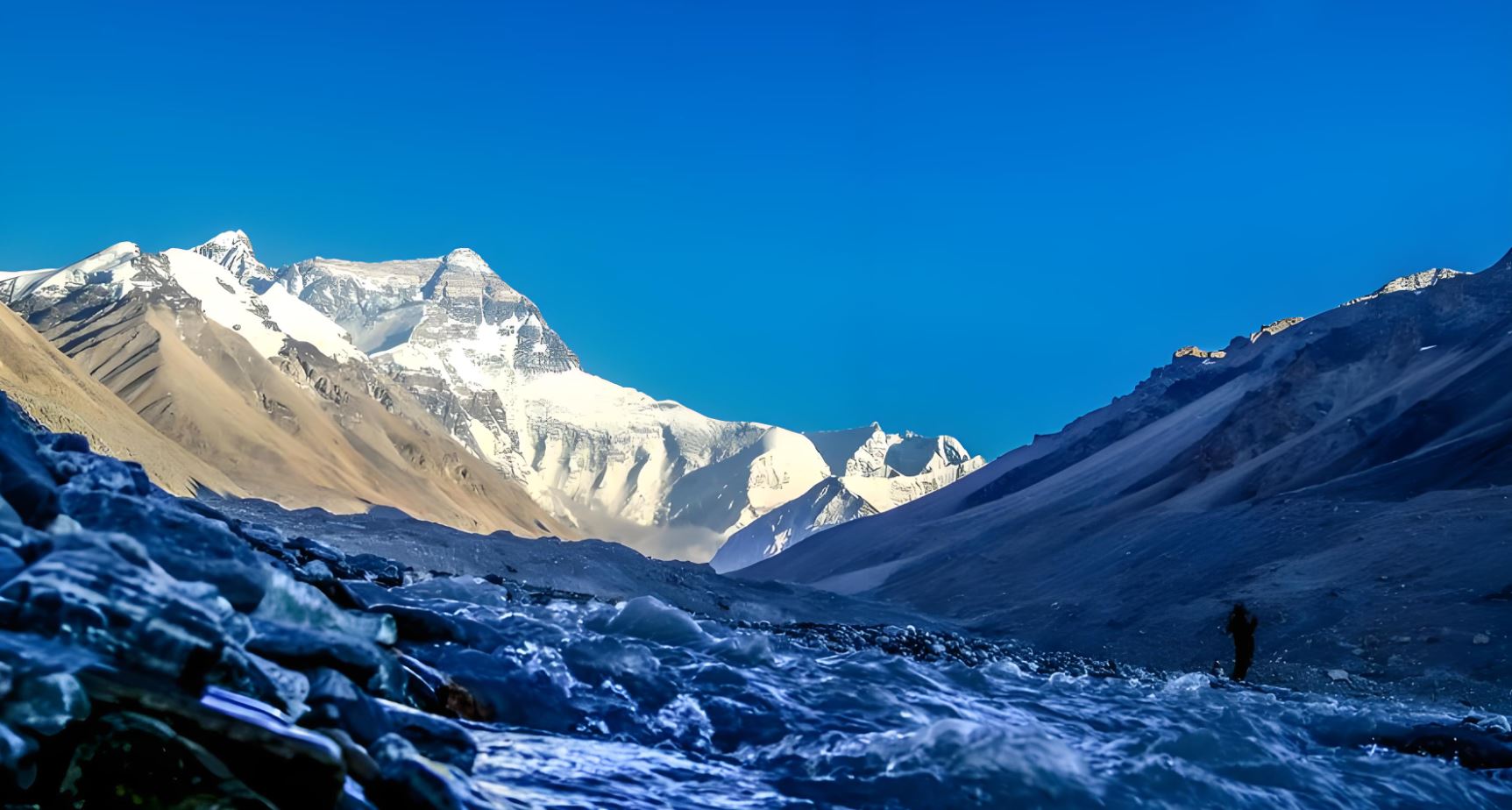
Returning to Lhasa, the journey then pivots west along the legendary Sino-Nepal Friendship Highway — the classic plateau traverse through Yamdrok Lake, Karola Glacier, the medieval architecture of Gyantse Kumbum, and the city of Shigatse. The emotional centrepiece arrives at Everest Base Camp at 5,200 metres: a night beneath the north face of the world’s highest mountain, followed by a pre-dawn sunrise over the entire Himalayan massif.
The final act is a full-day excursion to Namtso Lake at 4,718 metres — one of the largest high-altitude lakes in the world — a vast expanse of crystal blue water beneath the Nyenchen Tanglha mountain range and one of the most serene landscapes in all of Tibet.
This tour is ideal for first-time Tibet visitors with enough time to see it properly, and for repeat visitors adding Nyingchi and Namtso to routes they have travelled before. Best seasons: spring (March to June, when Nyingchi’s wild peach blossoms are in full bloom) and autumn (September to October).
- Lhasa → Potala Palace → Jokhang Temple → Barkhor Street
- Lhasa → Basum Lake → Nyingchi
- Nyingchi → Peach Blossom Valley → Yarlung Tsangpo Grand Canyon
- Nyingchi to Lhasa
- Lhasa → Sera Monastery → Norbulingka Palace
- Lhasa → Yamdrok Lake → Karola Glacier → Gyantse
Day by day
Nyingchi Peach Blossom → Yarlung Tsangpo Canyon → Potala Palace → Yamdrok Lake → Everest Base Camp → Namtso Lake
Day1
Arrival in Lhasa – The Journey of 13 Days Begins
At the arrivals hall of Lhasa Gonggar Airport, your Tibetan guide greets you with a white silk kata — the traditional welcome scarf that Tibetans extend as a gesture of respect and good fortune. With that simple ceremony, one of the most comprehensive Tibet journeys available begins. Over the next 13 days, you will travel east through the forests of Nyingchi, west across the plateau to Everest Base Camp, and north to the sacred shores of Namtso Lake — more of Tibet than most visitors see in a lifetime.
For now, the only task is rest. Lhasa sits at 3,650 metres above sea level, where the air carries roughly 35% less oxygen than at sea level. Most arrivals feel at least some effect on the first day — mild headache, unusual fatigue, or slight breathlessness are all normal and typically resolve within 24–48 hours. Drink considerably more water than usual, eat lightly, move slowly, and get to bed early.
Tip: Avoid taking a shower on your first night in Tibet. The exertion and temperature change at altitude increases your risk of catching a cold, and even a mild cold becomes significantly more serious at high elevation.
Day2
Lhasa – Potala Palace – Jokhang Temple – Barkhor Street
The Potala Palace comes into view long before you reach it — its thirteen white and red storeys stacked against the deep Tibetan blue sky are among the most recognisable images in all of Asia. But standing at its base and preparing to climb the stone steps worn smooth by generations of pilgrims, the reality of the place is larger than any photograph. Built in the 17th century by the 5th Dalai Lama, the Potala served for three centuries as both the spiritual and political heart of Tibet — the residence of the Dalai Lamas and the seat of the Tibetan government. Inside, the White Palace (the secular and administrative quarters) and the Red Palace (the sacred religious core) hold hundreds of chapels, gilded stupas, and an accumulated treasury of Tibetan art and history spanning five hundred years.
From the Potala, the route leads into the old quarter of Lhasa and the Jokhang Temple. Before entering, you pass through an outer courtyard where pilgrims prostrate on carved wooden boards worn smooth with use. Inside, the air is heavy with the warm, ancient smell of burning yak butter — an atmosphere found in sacred spaces across Tibet. At the temple’s spiritual centre stands the Jowo Rinpoche, a precious image of Shakyamuni Buddha at the age of twelve, brought to Tibet as a diplomatic gift from Tang Dynasty China over 1,300 years ago. It remains the most venerated object in Tibetan Buddhism.
The day concludes on Barkhor Street — not merely a shopping street but a living pilgrim circuit encircling the Jokhang. Streams of devotees circle clockwise, spinning prayer wheels and murmuring mantras; between them, stalls spill across the paving stones with thangka paintings, turquoise jewellery, aromatic incense bundles, and Tibetan handicrafts. It is the most authentic corner of old Lhasa.
Day3
Lhasa – Basum Lake – Nyingchi
Today’s drive heads east from Lhasa — a direction most Tibet tours never take. From the moment you leave the city, the landscape begins to change. The bare brown plateau gives way to rolling alpine meadows, then to dense forests of pine and fir as the road descends toward the warmer, moister valleys of Nyingchi Prefecture.
En route, the road passes Basum Lake — an emerald green high-altitude lake at 3,700 metres, surrounded by ancient spruce forest and reflecting the snow peaks above in its still surface. It is a beautiful and peaceful stop, often missed by travellers who rush directly to Nyingchi.
By the time you arrive in Nyingchi — known among Chinese travellers as Tibet’s Jiangnan, a reference to the lush river valleys of southern China — the landscape has transformed completely. Rivers run fast and clear through forested gorges, the air smells of earth and pine resin, and the temperature is noticeably warmer than Lhasa. This is one of the most biodiverse corners of the Tibetan Plateau, where subtropical and alpine ecosystems collide.
Tip: The descent from Lhasa (3,650m) to Nyingchi (around 2,900m) is actually beneficial — the lower altitude gives your body a genuine physiological rest before you return to higher elevations on the western route later in the tour.
Day4
Nyingchi – Peach Blossom Valley – Yarlung Tsangpo Grand Canyon
A full day devoted to Nyingchi’s two defining natural landmarks — and among the most visually distinctive days of the entire 13-day journey.
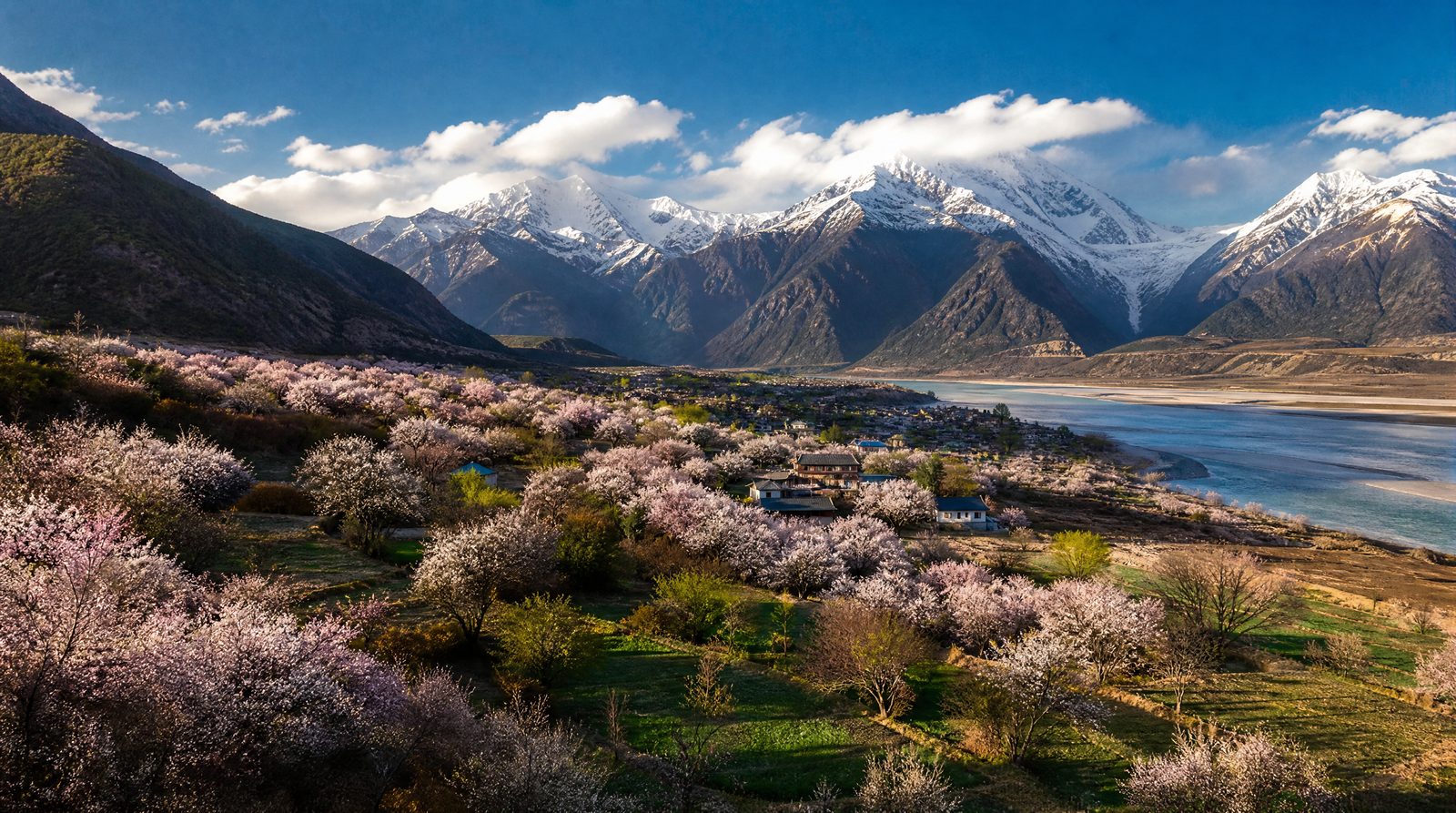
The morning brings a visit to Peach Blossom Valley, where thousands of wild peach and cherry trees line the banks of the Yarlung Tsangpo River. In peak season (mid-March to early April), the valley turns soft pink and white against a backdrop of snow-capped peaks — one of the most celebrated natural spectacles in China. Outside blossom season, the valley remains deeply scenic: a deep river gorge of terraced farmland and forested slopes, with the hidden peak of Namcha Barwa — one of Tibet’s most dramatic and sacred mountains — rising in the background.
The afternoon takes you to the Yarlung Tsangpo Grand Canyon — the deepest and longest canyon on earth, significantly deeper than the Grand Canyon of the United States. The Yarlung Tsangpo River drops nearly three vertical kilometres through this canyon system before emerging on the Indian side of the Himalayas as the Brahmaputra. From the viewpoints along the canyon rim, the scale is almost incomprehensible: the river appears as a turquoise ribbon far below, hemmed in by sheer walls of forested rock stretching to the horizon in both directions.
Return to your Nyingchi hotel at dusk, with the evening free to explore the town or rest.
Day5
Nyingchi to Lhasa – The Plateau Returns
The return drive from Nyingchi to Lhasa retraces yesterday’s route in reverse — but with fresh morning light falling on the eastern slopes and a different perspective on familiar mountain ridges. Several planned stops allow for photography and a slower look at the pastoral Tibetan village life you may have driven through too quickly on the eastbound journey.
As the road climbs back toward the plateau, the vegetation thins, the valleys widen, and the wide open sweep of highland Tibet reasserts itself. The air grows thinner and cleaner. Arriving in Lhasa in the late afternoon, the rest of the evening is yours — a good opportunity to rest, explore the streets around the hotel, or revisit the Barkhor market with fresh eyes.
Tip: The altitude gain on the return to Lhasa (from approximately 2,900m back to 3,650m) means your body will notice the change. Drink plenty of water and take the evening at a slow pace. Tomorrow’s sightseeing in Lhasa requires energy.
Day6
Lhasa – Sera Monastery – Norbulingka Palace
A full day in Lhasa devoted to two of the city’s most rewarding cultural sites — both within the city, neither requiring a long drive, and both quite different in character from the Potala and Jokhang visited on Day 2.
The morning begins at Sera Monastery, one of the three great Gelug monasteries of Tibet, established in 1419. Its assembly halls, courtyard murals, and gilded chapels reward careful exploration — but the experience that almost every visitor to Sera remembers most is the afternoon monk debate. In a walled courtyard beneath ancient trees, junior monks challenge each other on Buddhist philosophy using a system of stylised hand gestures, sharp clapping, and stamping feet that transforms doctrinal argument into something closer to theatrical performance. The energy is intense and joyful simultaneously. The session runs on weekday afternoons and is completely open to visitors.
The afternoon moves to Norbulingka — the summer palace complex of the Dalai Lamas and a UNESCO World Heritage Site alongside the Potala and Jokhang. Where the Potala is imposing and fortress-like, Norbulingka is intimate and garden-like: a sprawling park of manicured lawns, weeping willows, and ornate palace buildings set within a walled estate. The highlight is the New Summer Palace of the 14th Dalai Lama, whose upper floor is covered in extraordinary murals depicting the entire history of humanity from its origins to the modern era, rendered in intricate Tibetan style.
Day7
Lhasa – Yamdrok Lake – Karola Glacier – Gyantse – Shigatse
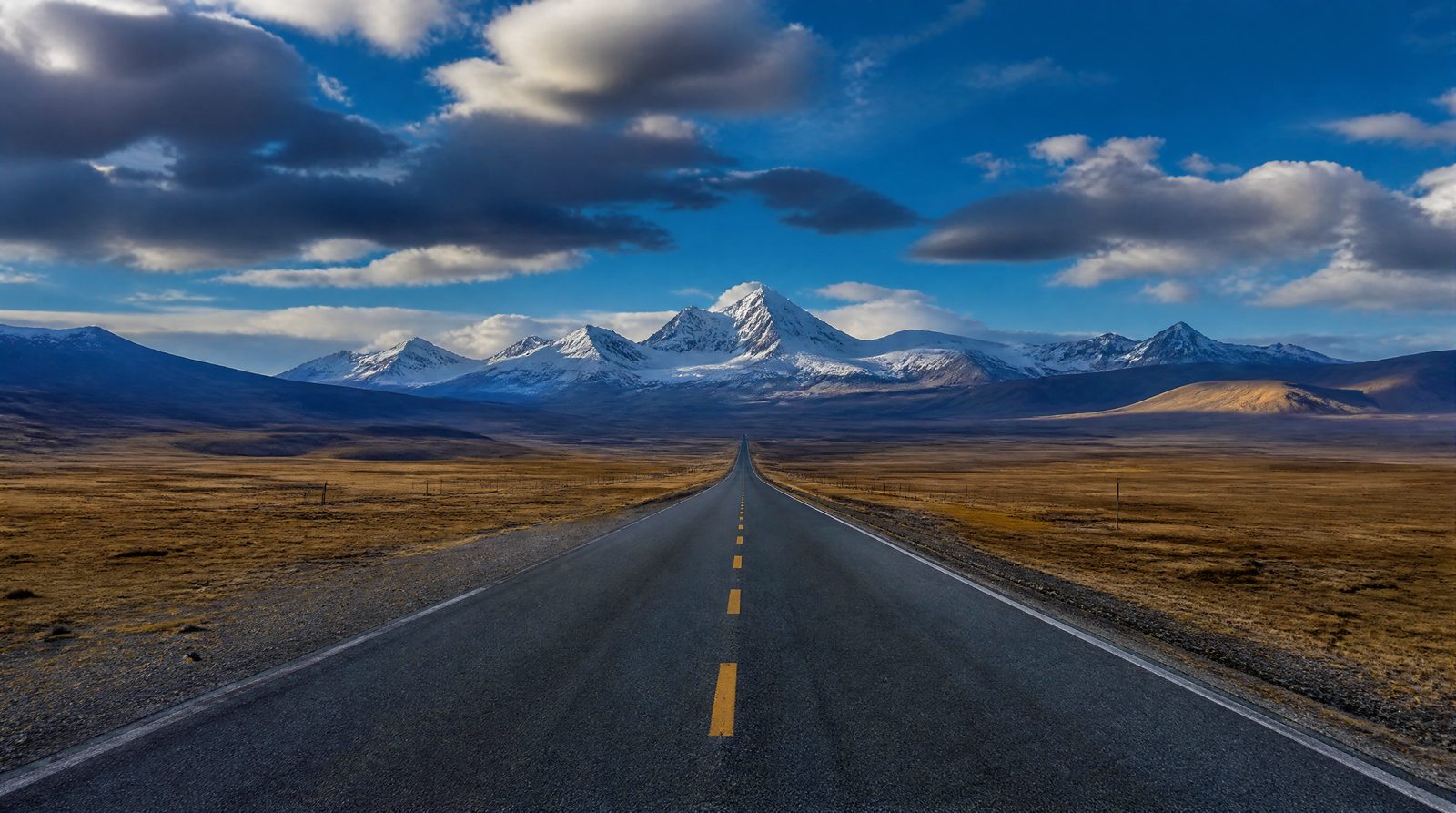
Today’s drive west from Lhasa to Shigatse is one of the great scenic journeys of the Tibetan Plateau — a day that packs more visual drama per kilometre than almost any road on earth.
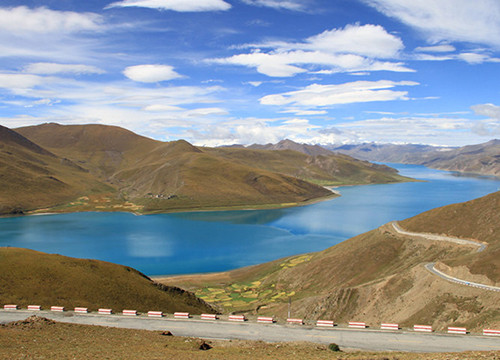
The first landmark is the climb over Kampala Pass (4,797m), where Yamdrok Lake appears below you suddenly and completely — a vast expanse of vivid turquoise water stretching beneath the snow peaks. The name Yamdrok means ‘turquoise’ in Tibetan, and the colour of the water shifts between sapphire blue and jade green depending on the light. Yamdrok is one of Tibet’s three sacred lakes and is considered the life-force of the Tibetan nation in local tradition. The panoramic viewpoint above the lake is one of the most photographed spots in Tibet — and justifiably so.
Further west, the road passes directly below Karola Glacier — a wall of ancient blue ice descending from the flanks of Nojin Kangtsang peak, close enough to the roadside to photograph in striking detail. This is one of the most accessible glaciers in Tibet and gives an immediate, powerful sense of the scale of the high-altitude ice fields that dominate the western plateau.
In Gyantse, the Pelkor Chode Monastery and its famous Kumbum Pagoda are the central stop. The Kumbum is a unique structure in Tibetan architecture — a multi-storey pagoda containing over seventy chapels, each decorated with distinct murals and Buddha figures, blending Tibetan, Nepali, Indian, and Chinese artistic traditions into a single building that is itself a pilgrimage route from base to summit.
Day8
Shigatse – Tashilunpo Monastery – Lhatse
Shigatse’s most important site — and one of the most magnificent monasteries in all of Tibet — is Tashilunpo, the traditional seat of the Panchen Lamas. Founded in 1447 by the 1st Dalai Lama, it expanded across five centuries into a monastery city of gilded rooftops, assembly halls, and sacred golden stupas. At its centre stands the Maitreya Chapel, housing one of the largest gilt bronze statues in the world — a 26-metre image of the future Buddha whose face alone measures nearly five metres across. Standing before it inside the chapel, the scale is startling.
Beyond the Maitreya Chapel, Tashilunpo rewards slow exploration. The golden-roofed stupas of past Panchen Lamas, the chanting monks in the assembly hall, the murals lining every courtyard wall — this is a monastery that remains genuinely alive with religious practice, not merely preserved as a heritage attraction.
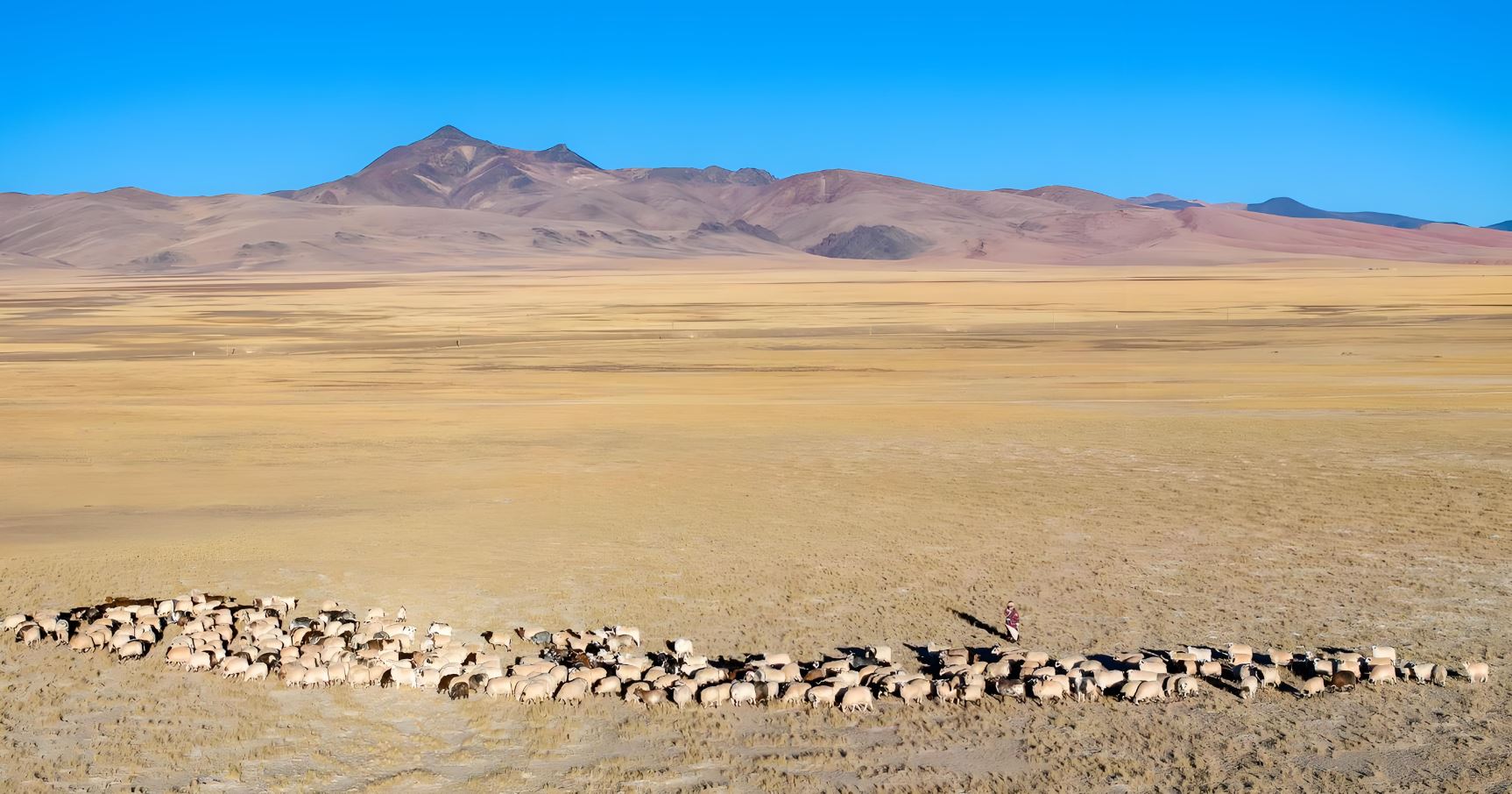
After the monastery, the journey continues southwest toward Lhatse — a small plateau town serving as the staging point for tomorrow’s drive to Everest. The landscape opens into some of the most unobstructed plateau scenery of the entire tour: wide river valleys, nomad settlements scattered across the grasslands, and distant snow ranges catching the afternoon light.
Day9
Lhatse – Tingri – Rongbuk Monastery – Everest Base Camp
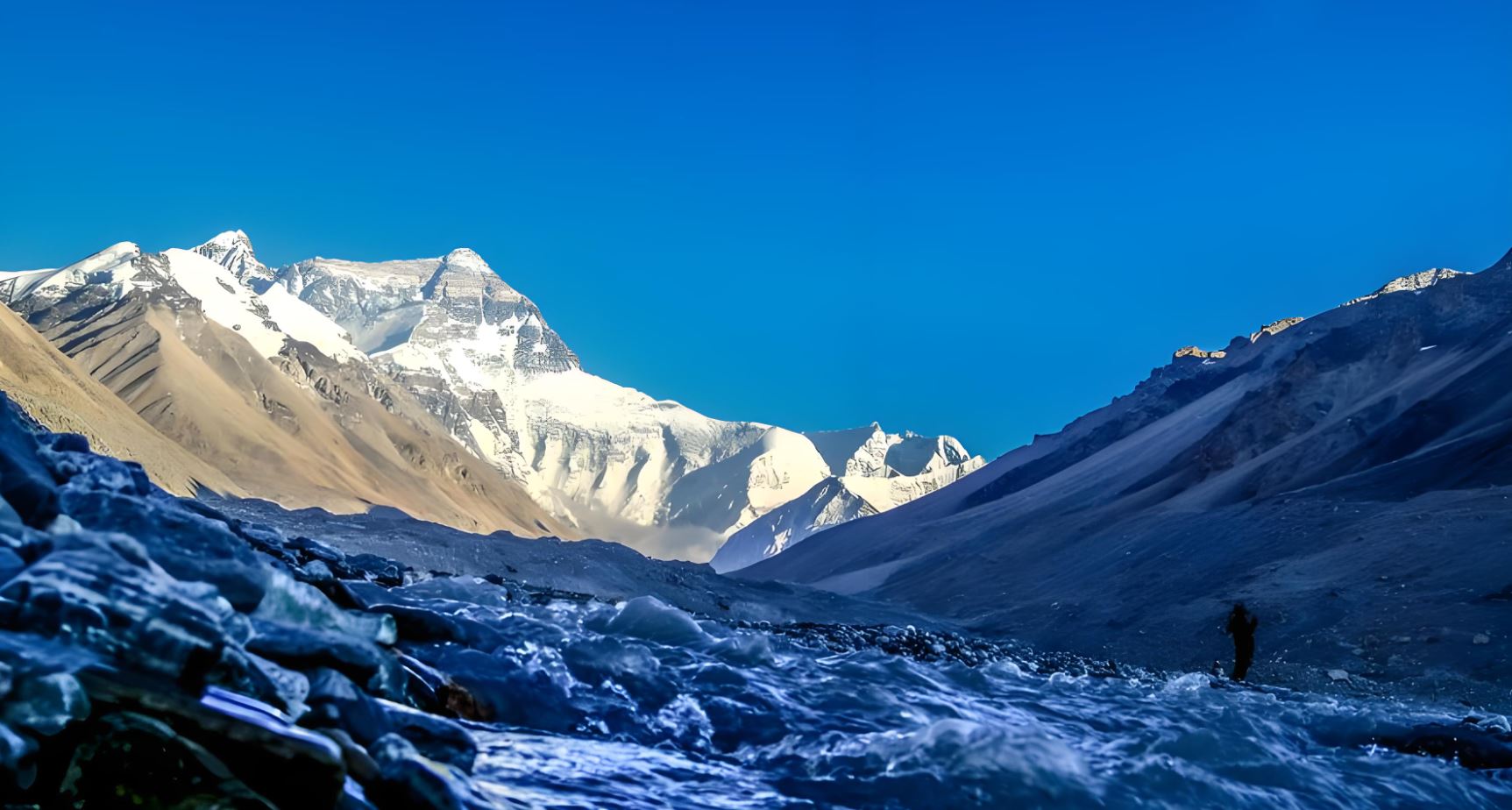
This is the day the entire tour has been building toward. After breakfast, the road heads south toward the Himalayan chain, climbing steadily as the plateau gives way to increasingly dramatic mountain terrain. Through Tingri — a small highland village that offers the first distant view of Everest’s distinctive triangular summit on a clear morning — the road rises further to Pang La Pass at 5,200 metres. On clear days, the panorama from Pang La is extraordinary: five of the world’s highest peaks visible simultaneously along the white wall of the horizon — Everest, Lhotse, Makalu, Cho Oyu, and Shishapangma.
Descending from the pass, Rongbuk Monastery comes into view — the highest monastery in the world at 4,980m, perched directly facing Everest’s north face. The monastery has served pilgrims and mountaineers for centuries; Sir Edmund Hillary and Tenzing Norgay passed through here before their 1953 summit. The combination of ancient monastery walls and the mountain towering directly behind them is one of the most powerful landscape compositions in Tibet.
From Rongbuk, a short journey on eco-friendly local transport (private vehicles are not permitted beyond this point) delivers you to Everest Base Camp at 5,200 metres. The air here holds roughly half the oxygen of sea level. Move slowly, breathe deliberately, and let the scale of what surrounds you absorb gradually. Spend the evening watching the last light fade on Everest’s summit — a moment that reduces many experienced travellers to a long and grateful silence.
Tip: Pack all your warmest layers for tonight. Temperatures drop well below zero after dark and the wind at EBC can be fierce.
Day10
Everest Base Camp – Sunrise – Shigatse
Before first light, wrap up in every warm layer you have and step outside. In the cold pre-dawn darkness, Everest’s silhouette is barely distinguishable from the night sky. Then the horizon begins to grey, the summit emerges first — catching the earliest sunlight while the valleys below remain in deep shadow. The colours move fast: violet to deep rose to warm amber to gold, each shift washing across the north face in a matter of minutes. For those who have travelled far and high to reach this moment, it is a kind of arrival — the full realisation of where you are and what you are looking at.
After the sunrise, the long return drive east begins. The plateau scenery from a different emotional vantage point — the destination is no longer ahead but already accomplished. Photo stops along the route capture the landscapes of the high Tibetan steppe: nomad tents, yak herds drifting across grasslands, distant glacier peaks receding as the altitude drops. Arrive in Shigatse in the early evening for a comfortable overnight stay at a lower and more restful elevation.
Day11
Shigatse to Lhasa – The Return
The drive from Shigatse back to Lhasa follows the Friendship Highway east — the same route as Day 7 but in reverse, and at a different time of day, so the light falls differently on familiar landmarks. Gyantse Fort and the Kumbum catch the morning sun from the opposite angle; Yamdrok Lake appears at a different hour when its colour holds a different quality.
Several stops along the route offer final photography opportunities and a last unhurried look at the plateau landscape that has been the backdrop to the past week of travel. Arrive in Lhasa in the late afternoon. The evening is free — a natural moment to find a quiet Tibetan teahouse, visit Barkhor Street one last time, or simply sit and rest before tomorrow’s lake excursion.
Day12
Lhasa – Namtso Lake – The Sacred Heavenly Lake
The last full day of the tour brings one more extraordinary natural sight — and in some ways the most serene of the entire journey. Namtso Lake sits at 4,718 metres above sea level, approximately 250 kilometres north of Lhasa, at the foot of the Nyenchen Tanglha mountain range. It is one of the largest saltwater lakes in China and one of Tibet’s three sacred lakes.
The drive north from Lhasa crosses the Nyenchen Tanglha range via a high pass at around 5,190 metres, from which the first glimpse of the lake — a vast sheet of electric blue water set in the valley far below — stops the breath. Descend to the lakeshore and the scale becomes apparent: Namtso stretches over 1,900 square kilometres, its distant southern shore barely visible across the water.
Walk along the lakeside where small shrines and prayer-flag-draped rocks mark this as a place of pilgrimage as much as natural wonder. Nomad yaks and sheep graze the surrounding grasslands; nomad tents dot the slopes above. On a still morning, the Nyenchen Tanglha peaks reflect in the lake’s surface with almost photographic precision. This is Tibet distilled into a single landscape — vast, cold, clear, and luminously beautiful.
Return to Lhasa in the evening for your final night.
Day13
Lhasa Departure
Thirteen days ago, a guide met you at Lhasa airport with a white silk kata. Since then, you have stood in forested Nyingchi canyons, watched monk debates in Sera’s courtyard, driven across the open plateau to the foot of the world’s highest mountain, and sat beside the mirror-still waters of Namtso Lake at 4,718 metres. It has been, by any measure, a remarkable journey.
A leisurely final breakfast leaves time for last-minute souvenir shopping in the streets around the hotel or a final walk around the Barkhor pilgrim circuit. Our team will transfer you to Lhasa Gonggar Airport or Lhasa Train Station in good time for your onward flight or train.
We hope every day of this tour has exceeded your expectations — and we look forward to welcoming you back to Tibet.
Meals: Breakfast Tibet Permit — Required for All Visitors Every visitor to Tibet must hold a Tibet Tourism Bureau (TTB) permit. It is mandatory, cannot be obtained on arrival, and differs by nationality. We handle the full application once you book — please allow at least 15 days before your departure date.
What is included
Included
- Tibet Entry Permit and Alien’s Travel Permit
- All ground transportation
- Environment-friendly local bus between Rongbuk and EBC
- Hot water bottle and sleeping bag provided in winter while travelling to EBC
- Oxygen provided while travelling to EBC
- Professional Tibetan English-speaking tour guide
- Travel agency service charge
- Accommodation as listed in the itinerary
- One welcome dinner in Lhasa
Not included
- Single room supplement — free of charge for any group booking 5 rooms or travelling with 10 or more.
- China visa, international air tickets and train tickets to/from Tibet
- Sightseeing not listed in the itinerary
- Meals not listed in the itinerary (all lunches and dinners unless specified)
- Personal expenses such as laundry, drinks, telephone calls and optional activities
- Gratuities and tips to guides, drivers and hotel staff
- Excess baggage charges
Photos from this route
Questions travellers ask
What makes this 13-day tour different from the shorter Tibet Everest tours?
The shorter tours (7, 8, and 10 days) focus on the western route: Lhasa, the plateau highway, and Everest Base Camp. This 13-day itinerary does all of that and adds two destinations that no other tour on this site includes.
The first is Nyingchi — a region of lush forests, wild peach blossom valleys, and the world’s deepest canyon, located east of Lhasa. Most visitors to Tibet never go east; this tour does, and the contrast between Nyingchi’s green mountain landscape and the bare Tibetan plateau is genuinely striking.
The second is Namtso Lake — one of the world’s largest high-altitude lakes, sitting at 4,718 metres north of Lhasa with the Nyenchen Tanglha peaks reflected in its surface. It is one of the most beautiful natural sights in Tibet and rounds out the tour with a day of serene, open-sky scenery after the intensity of Everest.
If you have 13 days and want to see Tibet as broadly and deeply as possible, this is the itinerary.
What is Nyingchi, and why is it worth including in a Tibet tour?
Nyingchi is a prefecture in southeastern Tibet that is often described as Tibet’s Jiangnan — a reference to the lush, green river regions of southern China. At around 2,900 metres altitude, it sits significantly lower than Lhasa and has a mild, moist climate that supports dense conifer forests, river gorges, and an extraordinary diversity of plant and animal life.
For Tibet visitors used to images of bare plateau and snow-capped summits, Nyingchi is a revelation. The Peach Blossom Valley (spectacular in March and April but scenic year-round), the Yarlung Tsangpo Grand Canyon — the deepest canyon on earth — and the hidden peak of Namcha Barwa are sights found nowhere else in Tibet. The lower altitude also gives your body a welcome rest before the higher elevations of the western route.
When is the best time to visit for the Nyingchi peach blossoms?
The Nyingchi Peach Blossom Festival typically falls in mid to late March, when thousands of wild peach trees along the Yarlung Tsangpo River burst into bloom simultaneously. The valley fills with soft pink and white blossoms against a backdrop of snow-capped mountains — one of the most photogenic natural events in China.
The exact timing varies by a week or two each year depending on the winter. By early April the blossoms begin to fall. If the peach blossom season is your primary motivation for this tour, we recommend booking for late March and being flexible by a few days either side.
Outside of blossom season, Nyingchi remains highly scenic. Autumn (September to October) brings golden forest colours, clear skies, and excellent visibility across the canyon. Summer is green and lush but can bring afternoon rain. This tour operates year-round.
What is Namtso Lake, and how high is it?
Namtso Lake sits at 4,718 metres above sea level, about 250 kilometres north of Lhasa, at the foot of the Nyenchen Tanglha mountain range. It is one of the largest saltwater lakes in China, covering over 1,900 square kilometres, and is considered one of the three sacred lakes of Tibet.
The drive from Lhasa crosses a high mountain pass at around 5,190 metres, from which the first view of the lake — an immense sheet of electric blue water stretching across the valley floor — is genuinely breath-taking. At the lakeshore, the combination of crystal-clear water, nomad settlements, grazing yaks, and perfectly reflected snow peaks creates a scene of complete Tibetan tranquillity. It is a powerful contrast to the intensity of Everest Base Camp three days earlier — and the ideal final full day before departure.
Will I get altitude sickness on this 13-day tour?
Altitude sickness is a possibility any time you travel to Tibet, but this 13-day itinerary is specifically structured to minimise the risk in a way that shorter tours cannot match.
Days 1–2 in Lhasa (3,650m) give your body its initial adjustment. The visit to Nyingchi on Days 3–5 actually drops your altitude to around 2,900m — a genuine physiological rest — before you return to Lhasa and then continue west to higher elevations. This ‘dip and return’ acclimatization pattern is one of the most effective ways to prepare the body for the demands of Everest Base Camp.
Common mild symptoms (headache, fatigue, breathlessness) are normal on Days 1–2 and usually resolve on their own. We recommend drinking significantly more water than usual, avoiding alcohol for the first two days, and consulting your doctor about Diamox before departure. If you have heart, lung, or blood pressure conditions, please inform us before booking.
What permits do I need for Tibet, and how long does the application take?
Foreign visitors to Tibet require the Tibet Travel Permit (TTP), the Aliens’ Travel Permit (for western Tibet and the EBC area), and a valid Chinese visa. All permits are arranged entirely by our team — you do not need to visit any government office or handle any paperwork yourself.
The Tibet Travel Permit takes approximately 10–15 working days to process. You will need to provide a clear scan of your passport and your Chinese visa. Please note: the TTP must be arranged through a licensed Tibet travel agency and cannot be applied for independently.
Because this tour covers both Nyingchi (east) and the western plateau including EBC, a broader set of area permits applies. Our team handles all of this as a standard part of the booking process.
How physically fit do I need to be for this tour?
This tour is rated Moderate. No trekking experience or athletic training is required — all travel between destinations is by vehicle. The main physical demands are walking at high altitude, where reduced oxygen makes even gentle movement more tiring than at sea level.
The 13-day format is well-suited to a wide range of travellers, including those in their 40s, 50s, and 60s, thanks to the built-in altitude variation (the Nyingchi portion provides genuine physiological recovery time). The extra days also mean a more relaxed overall pace compared to the 7 or 8-day tours.
Travellers with heart conditions, high blood pressure, or lung disease should consult their doctor before booking. If you have an active cold or respiratory illness at departure time, we strongly advise postponing — altitude makes these conditions significantly more serious.
Where do I sleep at Everest Base Camp?
Accommodation at Everest Base Camp is in basic guesthouses or traditional tent camps in the Rongbuk valley, a short distance from EBC itself. Facilities are simple — shared rooms, basic bedding, limited electricity, and no hot showers. This is standard at EBC and is part of the experience; the discomfort is far outweighed by the setting.
Temperatures at 5,200m drop sharply after dark and wind can be fierce. Packing a high-quality sleeping bag and full thermal layers is essential. Our team will send a detailed packing list when your booking is confirmed.
The nights immediately before and after EBC are spent in Shigatse and Lhatse at comfortable guesthouses, giving your body a proper rest on either side of the high-altitude night.
How do I get to Lhasa — by train or by flight?
Both are excellent options. The right choice depends on your time, budget, and travel style.
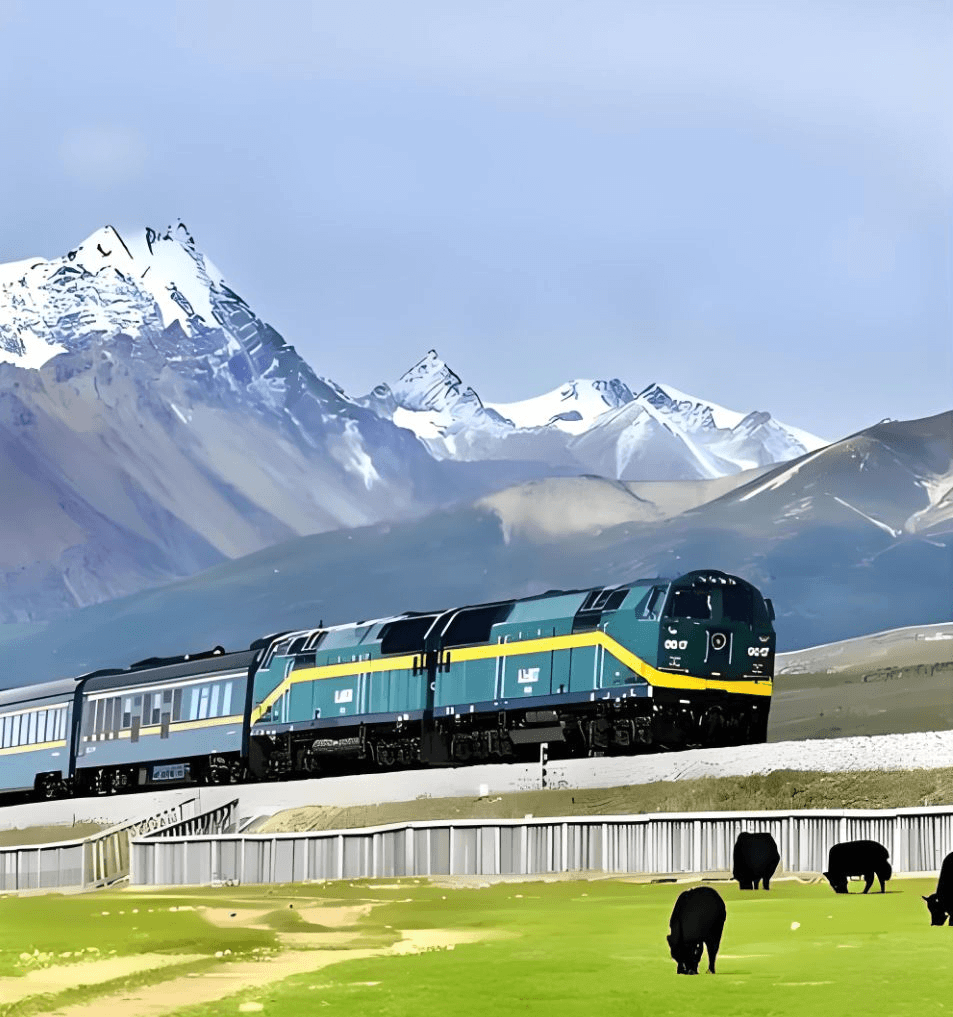
The Qinghai–Tibet Railway is the world’s highest railway and one of the great train journeys on earth. From Chengdu, the journey takes approximately 36 hours. The train climbs gradually over the Tanggula Pass at over 5,000 metres, giving your body a natural, gentle introduction to altitude — a genuine advantage at the start of a 13-day high-altitude tour. The plateau scenery through the train windows is extraordinary in its own right.
Flights from most major Chinese cities to Lhasa take 2–3 hours — fast and convenient, though altitude hits more suddenly on arrival. Our guide will meet you at either Lhasa station or the airport. For this 13-day tour, we recommend the train if your schedule allows.
Is this tour suitable for first-time visitors to Tibet?
Yes — in fact, it is the ideal first Tibet tour for anyone who has the time for it. The 13-day structure covers more ground and more landscape variety than any shorter itinerary, giving first-time visitors a truly complete picture of what Tibet is.
The acclimatization sequence is also better designed than on shorter tours. The opening two days in Lhasa, followed by a drop in altitude to Nyingchi, followed by the gradual return to higher elevations, gives first-time high-altitude travellers the most forgiving possible introduction to the plateau environment.
For travellers with only 7, 8, or 10 days available, the shorter tours work well. But if the question is ‘which tour gives the fullest first impression of Tibet?’, this 13-day itinerary is the answer.
Before you send your inquiry
- No deposit — ever. Your dates are held with a free inquiry, and nothing is due until we confirm. On fixed group departures, book early to secure your seats.
- Cancel free before your Tibet Travel Permit is issued — full refund, every dollar.
- After the permit is issued: the USD $100 permit fee is non-refundable, everything else is refunded. Refunds within 7 business days.
- Bring a group of 7 and your spot is free (7+1).
- Single room supplement — free of charge for any group booking 5 rooms or travelling with 10 or more.
- Tell us your dates and route on the form below — you will have a written itinerary and an item-by-item quote within 12 hours, with no obligation to book.
- Prices depend on group size, hotel standard, season and how you travel into Tibet, so we quote each trip individually rather than from a price list.
- Hotel details — the exact hotels we use — come with your quote. Ask below for the standard you would like and we will match it.
- A Lhasa-based Tibet tour operator since 1999 — our own guides, vehicles and office in Lhasa, 7,200+ travellers from 40+ countries, 4.9★ on TripAdvisor.