Small group or private
8 Days Classic Tour from Lhasa to Everest Base Camp
8 Days $1,050 per person Overview Itinerary Tips & FAQ Potala Palace Jokhang Temple Sera Monastery Yamdrok Lake Gyantse Kumbum Tashilunpo Monastery Everest Base Camp The 8-day Lhasa to Everest Base Camp tour is the most popular…
- 8 Days / 7 Nights
- Potala Palace → Jokhang Temple → Sera Monastery → Yamdrok Lake → Gyantse Kumbum → Tashilunpo Monastery → Everest Base Camp
- Moderate pace
- Best: April – June, September – November
- No Deposit — Ever
- Cancel Free Before Permit Issued
- Full Refund except $100 Permit Fee
- Bring 7, Your Spot Is Free
- Our Own Office in Lhasa, Since 1999
The trip at a glance
Your first two days are spent entirely in Lhasa, the spiritual capital of Tibet at 3,650 metres altitude. Day one of sightseeing takes you through the Potala Palace, the sacred Jokhang Temple, and the vibrant Barkhor Street pilgrim market. Day two deepens the cultural immersion with a morning at Sera Monastery — where the afternoon monk debates are one of the most animated and memorable spectacles in all of Tibet — alongside a visit to Drepung Monastery, once the largest monastery in the world. These two Lhasa days are not simply about seeing more sights; the extra time at lower elevation before heading west is the single most effective preparation for the higher altitudes ahead.
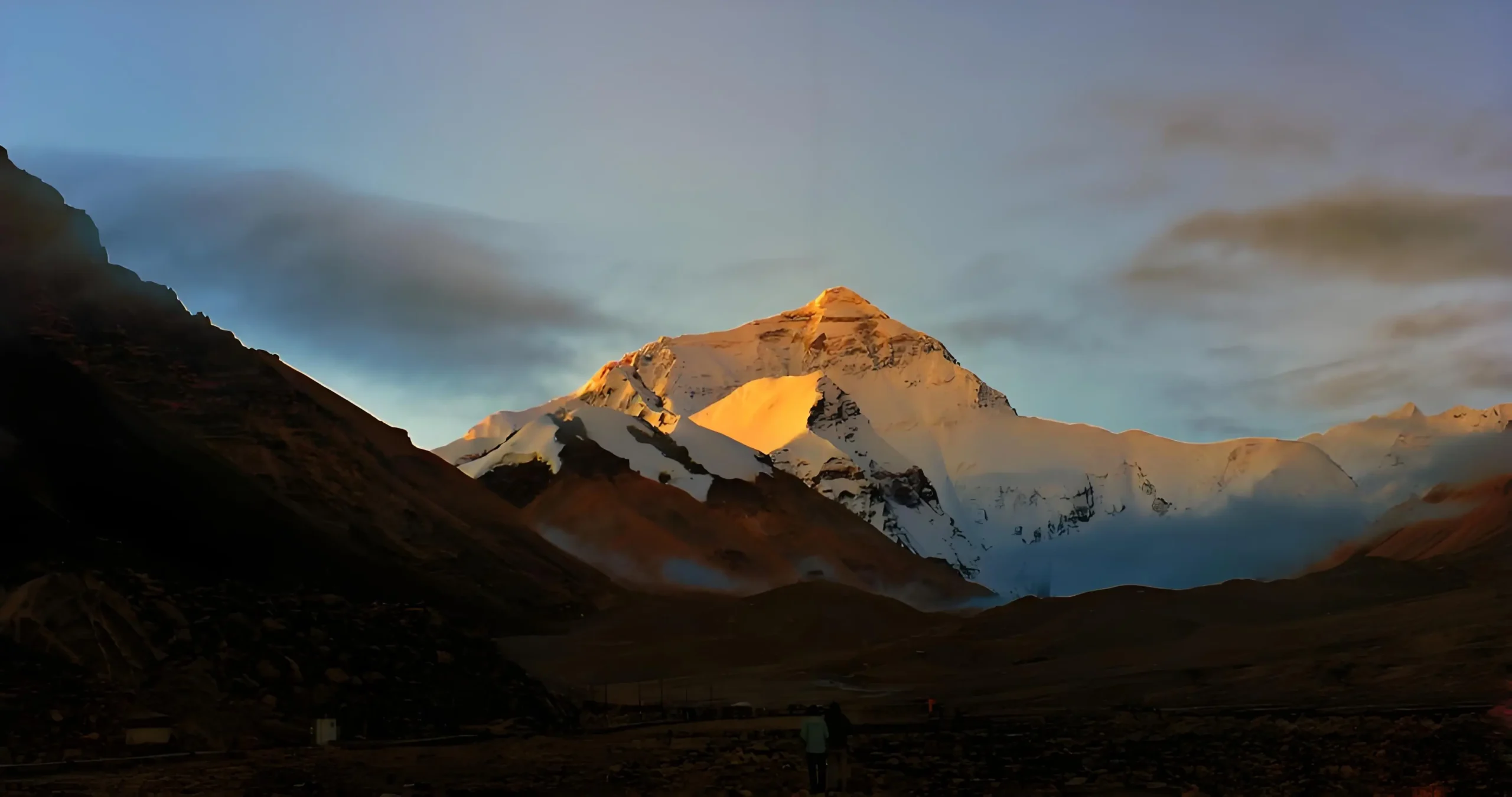
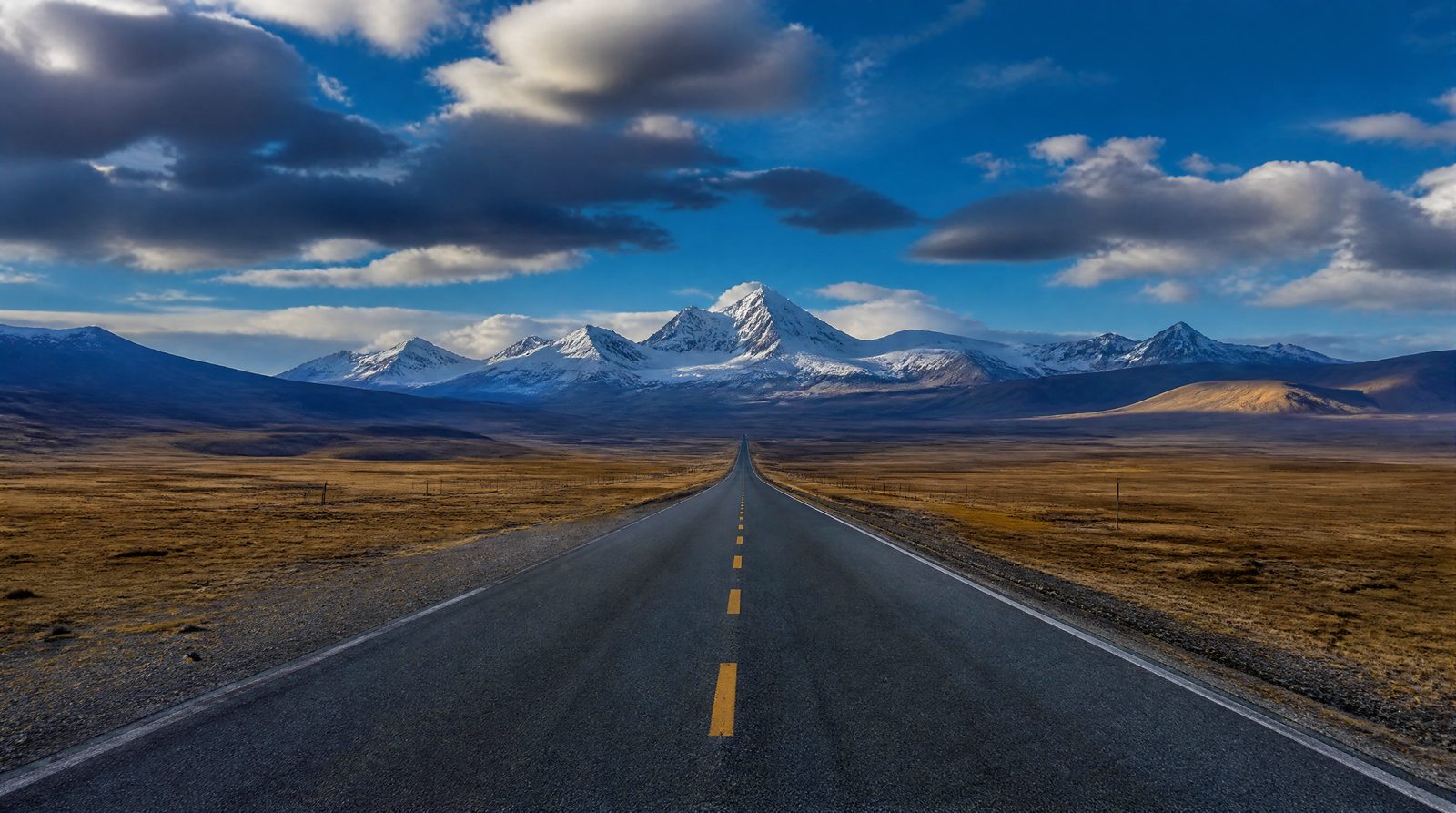
From Lhasa, the journey follows the legendary Sino-Nepal Friendship Highway across the Tibetan plateau. The route pauses at the turquoise waters of Yamdrok Lake, the dramatic Karola Glacier, and the medieval Gyantse Kumbum before reaching Shigatse — home to Tashilunpo Monastery, the traditional seat of the Panchen Lamas. The emotional centrepiece of the tour is the night spent at Everest Base Camp at 5,200 metres, followed by a sunrise over the north face of the world’s highest mountain.
This is the format that works for the widest range of travellers: couples, solo adventurers, small groups, and those making their first visit to Tibet. The best seasons are April to June and September to October.
- Potala Palace with a local Tibetan guide
- Jokhang Temple and the Barkhor pilgrim circuit
- Monk debates at Sera Monastery
- Yamdrok Lake and Karola Glacier
- Gyantse Kumbum Pagoda
- Tashilunpo Monastery, seat of the Panchen Lamas
- A night at Everest Base Camp (5,200 m)
- Sunrise over Everest’s north face
Day by day
Potala Palace → Jokhang Temple → Sera Monastery → Yamdrok Lake → Gyantse Kumbum → Tashilunpo Monastery → Everest Base Camp
Day1
Arrival in Lhasa – Airport Pick Up
At Lhasa Gonggar Airport, situated on the plateau floor at 3,600 metres above sea level, your Tibetan guide greets you with the traditional white silk kata — a gesture of welcome and good fortune that marks the beginning of eight extraordinary days.
The drive from the airport into Lhasa city crosses a wide river valley beneath a sky so deeply blue it appears almost unreal. This is your first encounter with Tibet’s famous high-altitude light — intense and clear, unlike anything at sea level. The Yarlung Tsangpo River glints beside the road as the distant form of the Potala Palace gradually materialises on the horizon.
Your sole task today is rest. The reduced oxygen at this elevation means your body must work harder for every breath. Drink significantly more water than usual, eat lightly, move slowly, and sleep early. The rewards of this tour — the Potala, Sera’s debating monks, Everest Base Camp — are best experienced by a body given proper time to adjust.
Day2
Lhasa – Potala Palace – Jokhang Temple – Barkhor Street
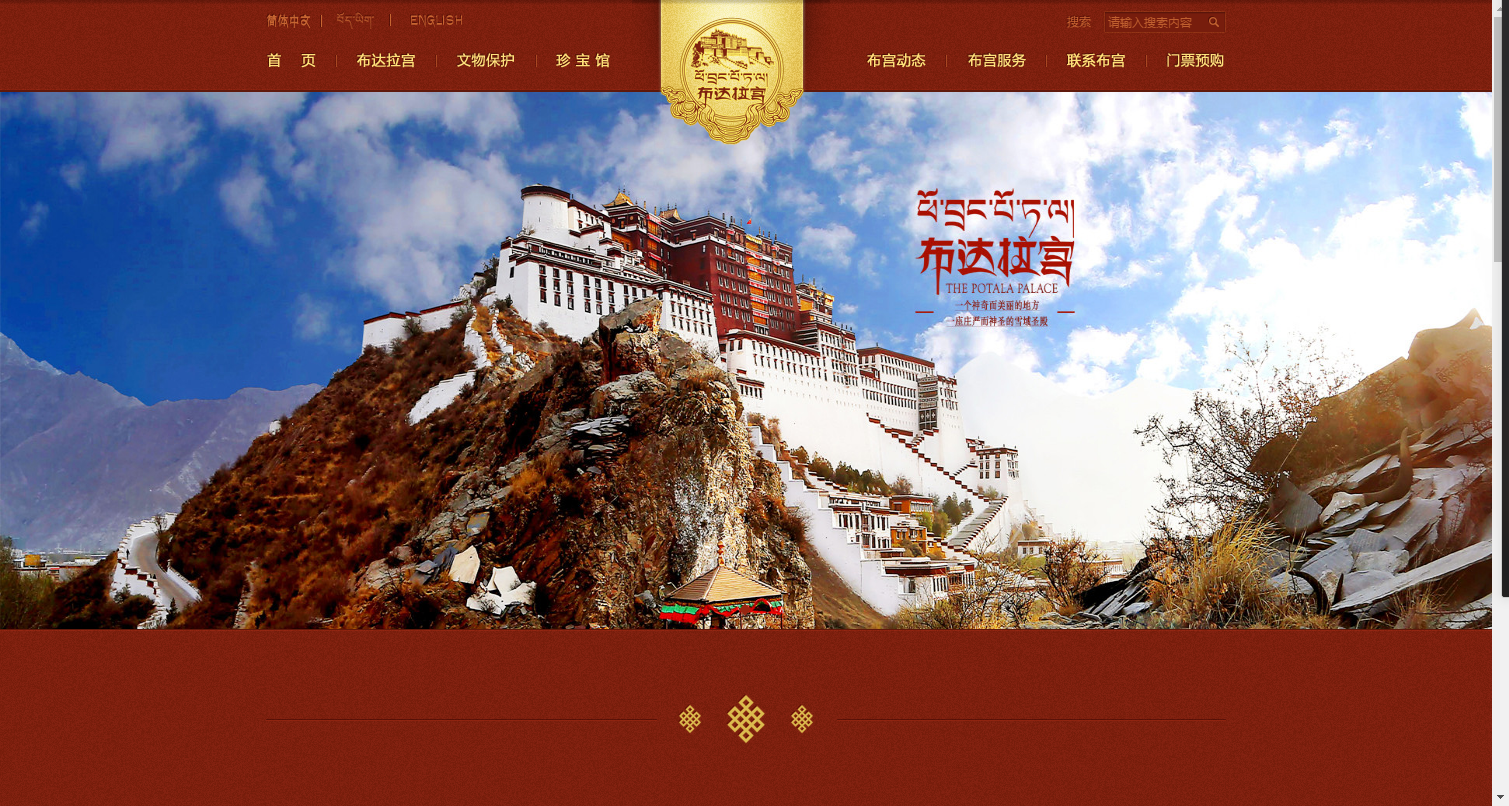
The Potala Palace requires the first part of the day, and justifiably so. Rising thirteen storeys above Red Hill — the ancient foundation rock on which the palace has stood since the 7th century — it is one of the largest palace-monastery complexes ever built. The White Palace served as the living and administrative quarters of the Dalai Lamas; the Red Palace is the sacred religious heart, housing hundreds of gilded chapels, precious thangka paintings, and the jewel-encrusted gold stupas of past Dalai Lamas. Climbing the worn stone steps with pilgrims and visitors, you feel the weight of history in a way photographs cannot convey.
From the Potala, the route leads into the old quarter and Jokhang Temple — the holiest site in Tibetan Buddhism, drawing pilgrims from across the Himalayan world every day of the year. Before entering, devotees prostrate on wooden boards worn smooth by generations of bodies. Inside, the air is warm with the fragrance of yak butter lamps. At the temple’s centre stands the Jowo Rinpoche, a precious image of the twelve-year-old Shakyamuni Buddha, brought from Tang Dynasty China over 1,300 years ago. It remains the most venerated object in all of Tibetan Buddhism.
The day closes on Barkhor Street — the living pilgrim circuit encircling the Jokhang. Streams of devotees circle clockwise, murmuring mantras and spinning prayer wheels. Between them, stalls spread across the stone paving with thangka paintings, turquoise jewellery, incense cones, and Tibetan handicrafts of every kind. This is the most authentic corner of old Lhasa — a place where the sacred and the everyday have coexisted unchanged for centuries.
Day3
Lhasa – Drepung Monastery – Sera Monastery Monk Debates
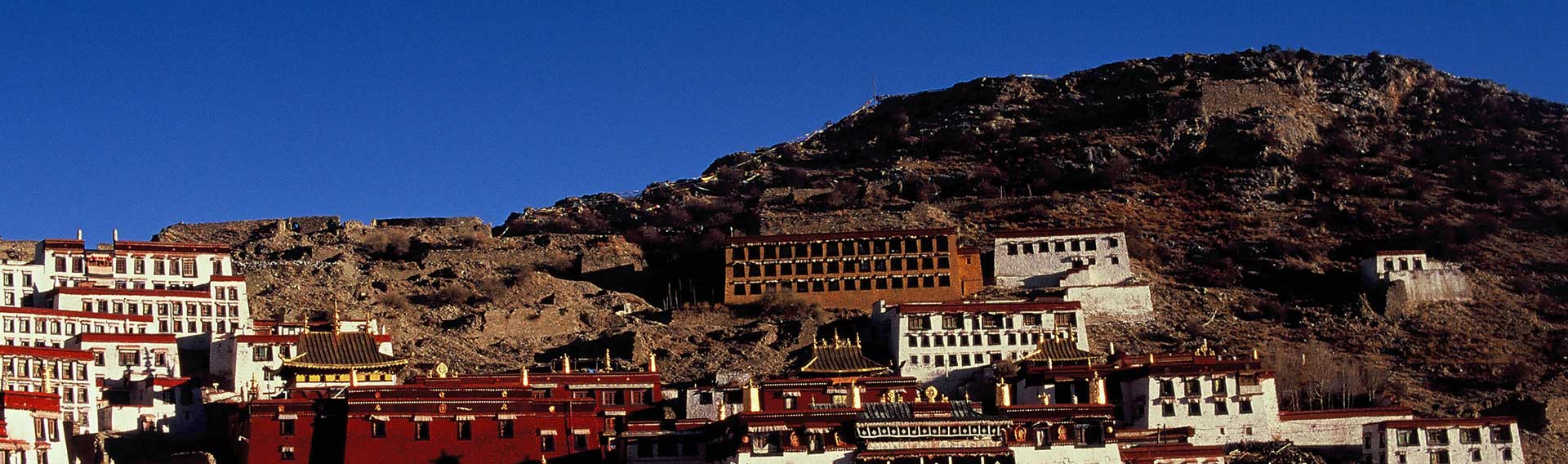
Your second full day in Lhasa begins with a morning visit to Drepung Monastery — one of the great monasteries of the Gelug school of Tibetan Buddhism and, at its height, the largest monastery in the world with over ten thousand resident monks. Today it remains a vast complex of whitewashed buildings, assembly halls, and intricate chapels spread across the hillside west of Lhasa. Walking through its winding lanes and courtyards gives you a genuine sense of the scale and depth of Tibetan monastic life — very different from the palace-like grandeur of Potala or the busy pilgrim energy of Jokhang.
The afternoon brings what many travellers describe as the single most memorable cultural experience of their entire Tibet journey: the monk debating session at Sera Monastery. In a shaded courtyard beneath ancient trees, junior monks gather to debate Buddhist philosophy under the watchful eye of their seniors. What makes it extraordinary is not just the content of the debate but the physical theatre of it — monks clap sharply, stamp their feet, and thrust a palm forward with each challenge, using gesture and timing as part of the argument itself. The energy is remarkable — intense, joyful, and utterly unlike any religious ceremony you are likely to have encountered before. The session runs on weekday afternoons (monks take Sundays off) and is open to visitors.
This second day in Lhasa serves a purpose beyond sightseeing. The extra 24 hours at 3,650 metres altitude — before the journey rises further west — significantly reduces the risk of altitude-related discomfort at Everest Base Camp. This is the core reason the 8-day format has become the standard recommendation for most first-time Tibet visitors.
Day4
Lhasa – Yamdrok Lake – Karola Glacier – Gyantse – Shigatse
Today’s westward drive is one of the great scenic journeys of the Tibetan Plateau — a day that packs more visual drama per kilometre than almost any road on earth.
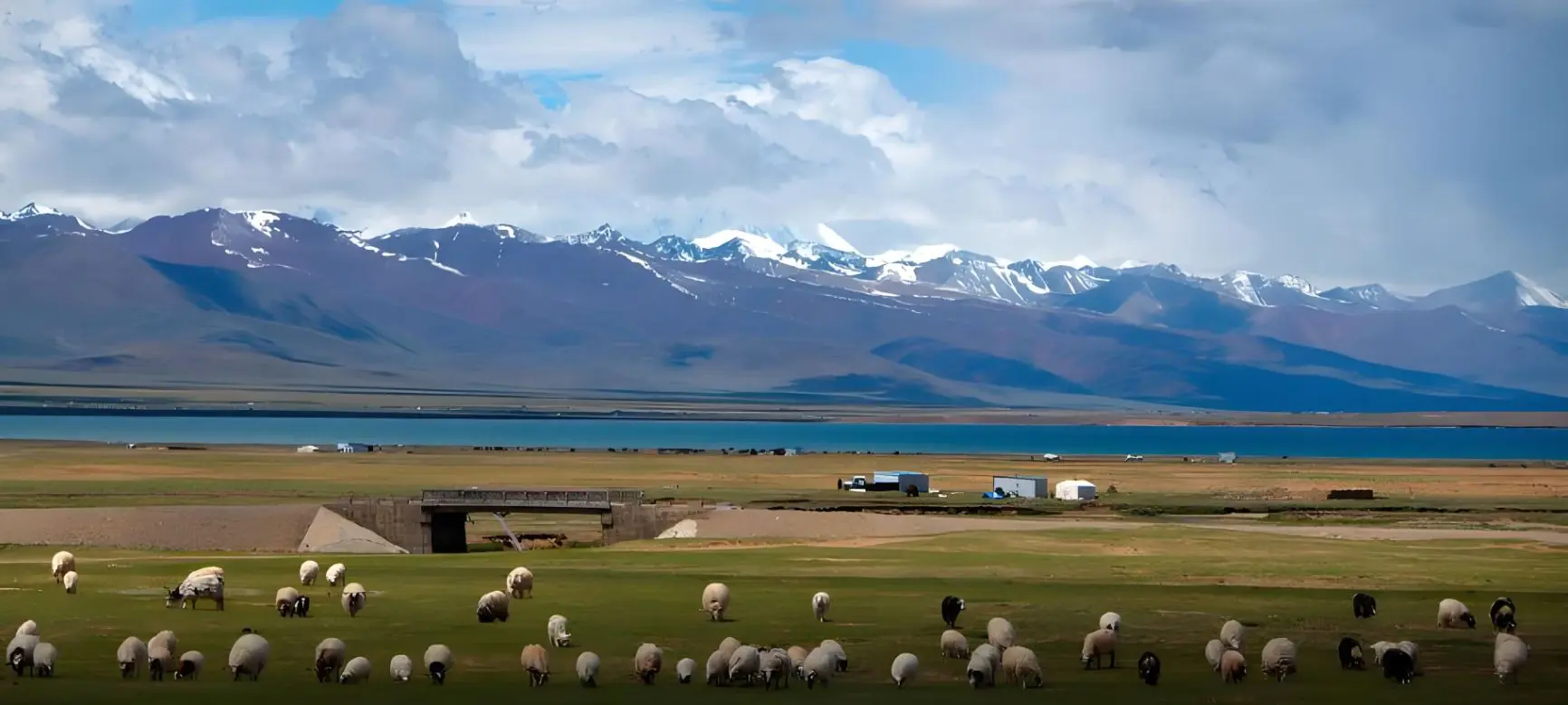
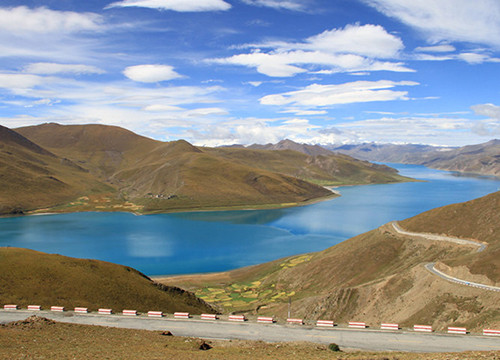
The first act is the climb over Kampala Pass at 4,797 metres, where Yamdrok Lake appears below you suddenly and completely — a vast sheet of vivid turquoise water stretching to the horizon beneath snow-capped peaks. Yamdrok means ‘turquoise’ in Tibetan, and on a clear day the water truly earns its name: luminously blue, shifting between jade and sapphire with the light, ringed by rolling brown hills. It is one of Tibet’s three sacred lakes and in local tradition is held to be the life-force of Tibet itself.
Further west, the road passes directly beneath Karola Glacier — a tongue of ancient blue-white ice descending from the flanks of Nojin Kangtsang peak to within metres of the highway, and one of the most dramatically accessible glaciers in the world.
In Gyantse, the Kumbum Pagoda rewards a careful visit: a multi-storey structure containing over seventy chapels, each decorated with distinct murals blending Tibetan, Nepali, Indian, and Chinese artistic traditions into one extraordinary building. The day ends in Shigatse — Tibet’s second-largest city — where comfortable hotel accommodation awaits after the long day’s drive.
Day5
Shigatse – Tingri – Rongbuk Monastery – Everest Base Camp
This is the day the entire tour has been building toward. Leaving Shigatse after breakfast, the road heads southwest through Lhatse and across the open high plains toward Tingri — a small highland village where, on a clear morning, the first distant view of Everest’s triangular summit appears above the Himalayan chain on the southern horizon.
The route rises to Pang La Pass at 5,200 metres — one of the most celebrated viewpoints in the entire Himalayan world. On clear days, five of the planet’s highest peaks are visible simultaneously along the southern skyline: Everest, Lhotse, Makalu, Cho Oyu, and Shishapangma — a wall of white summits that silences every conversation.
Descending from the pass, Rongbuk Monastery comes into view — the highest monastery in the world at 4,980 metres, perched directly facing Everest’s north face. Edmund Hillary and Tenzing Norgay passed through here before their 1953 summit. From Rongbuk, eco-friendly local transport carries you to Everest Base Camp at 5,200 metres.
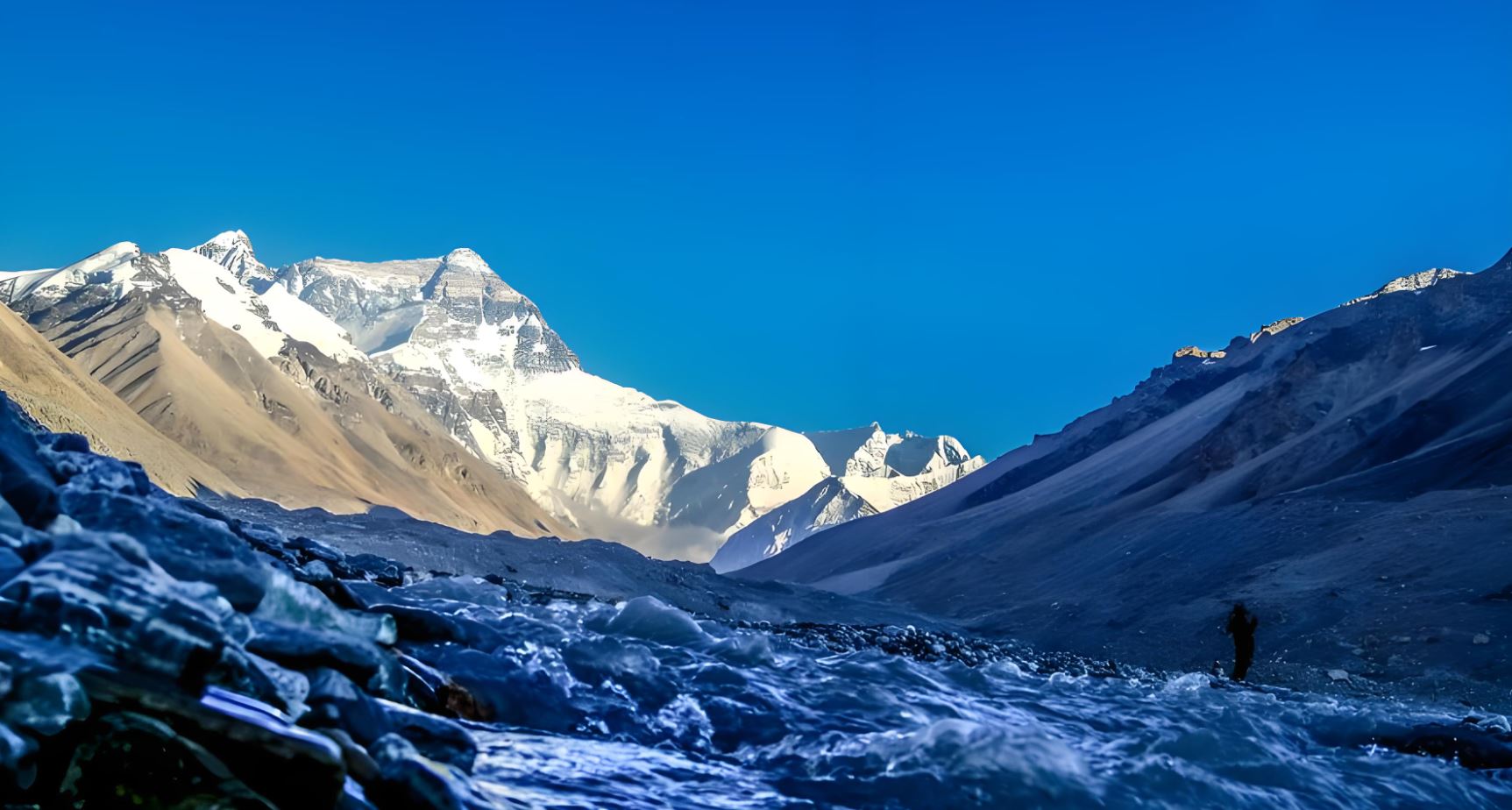
The air here holds roughly half the oxygen of sea level. Move deliberately and slowly. Let the scale of the north face — immense, white, and completely vertical above the moraine — absorb gradually as the afternoon light shifts on the summit ice.
Day6
Everest Base Camp – Sunrise – Shigatse
Before first light, step outside in every warm layer you have. The cold is absolute at this altitude before dawn — well below zero even in summer. In the darkness, Everest is barely a silhouette against the deeper black of the sky. Then the eastern horizon begins to pale. The summit — the highest point on earth — catches the day’s first light while the valleys below remain in complete darkness. The colours move fast: deep indigo to violet, rose, then a brief brilliant amber-gold as the sunlight races down the north face. Many travellers who have come a long way to reach this moment find they have no words for it.
After the sunrise, the long return drive east begins — the destination accomplished, the emotional register shifted. Photo stops along the plateau revisit landscapes that looked different in yesterday’s direction of travel. Arrive in Shigatse in the early evening, at a lower and more restful altitude, for a comfortable night.
Day7
Shigatse – Tashilunpo Monastery – Lhasa
The morning brings a visit to Tashilunpo Monastery — one of the greatest living monastic sites in Tibet and the traditional seat of the Panchen Lamas since its founding in 1447. Where the Potala Palace is imposing and fortress-like, Tashilunpo is a monastery city: a sprawling complex of gilded rooftops, whitewashed assembly halls, and winding internal lanes that rewards slow, unhurried exploration.
At its heart stands the Chapel of the Maitreya — housing one of the largest gilt bronze statues in the world, a 26-metre seated image of the future Buddha. Standing before it inside the chapel, the scale is both humbling and extraordinary. Beyond the Maitreya Chapel, the golden stupas of past Panchen Lamas, the chanting monks in the main assembly hall, and the murals covering every courtyard wall make this a place of genuine, living devotion rather than a preserved heritage attraction.
After the monastery, the journey returns east to Lhasa — by road through familiar plateau landscapes or aboard the Qinghai–Tibet Railway, which glides through the river valley at a pace that allows the scenery to settle quietly into memory. Arriving in Lhasa in the afternoon, the Potala Palace glowing in the last light feels like a homecoming after the high and remote days at Everest.
Day8
Lhasa Departure
Eight days ago, a guide met you at Lhasa airport with a white silk kata. Since then you have walked the pilgrim lanes of Barkhor Street, watched monks debate in Sera’s courtyard, stood at the foot of the world’s highest mountain, and seen the sunrise paint Everest’s north face in rose and gold. It has been, by any measure, a complete journey.
A final breakfast in Lhasa leaves time for one last walk — perhaps a return to Barkhor Street in the quiet morning, before the market stalls fully open and the pilgrim crowd builds. Your guide will transfer you to Lhasa Gonggar Airport or the train station in good time for your departure.
Meals: Breakfast Tibet Permit — Required for All Visitors Every visitor to Tibet must hold a Tibet Tourism Bureau (TTB) permit. It is mandatory, cannot be obtained on arrival, and differs by nationality. We handle the full application once you book — please allow at least 15 days before your departure date.
Want to make it a group trip?
Bring a group of 7 and your spot is free (7+1). Single room supplement — free of charge for any group booking 5 rooms or travelling with 10 or more. Tell us who is coming and we will tailor the dates, rooms and pace to your party.
What is included
Included
- Tibet Entry Permit and Alien’s Travel Permit
- All ground transportation
- Environment-friendly local bus between Rongbuk and EBC
- Hot water bottle and sleeping bag provided in winter while travelling to EBC
- Oxygen provided while travelling to EBC
- Professional Tibetan English-speaking tour guide
- Travel agency service charge
- Accommodation as listed in the itinerary
- One welcome dinner in Lhasa
Not included
- Single room supplement — free of charge for any group booking 5 rooms or travelling with 10 or more.
- China visa, international air tickets and train tickets to/from Tibet
- Sightseeing not listed in the itinerary
- Meals not listed in the itinerary (all lunches and dinners unless specified)
- Personal expenses such as laundry, drinks, telephone calls and optional activities
- Gratuities and tips to guides, drivers and hotel staff
- Excess baggage charges
Photos from this route
Questions travellers ask
Why is 8 days the recommended duration for a Lhasa to Everest Base Camp tour?
Eight days has become the standard format for this route because it strikes the right balance between cultural depth and physical preparation. The crucial difference from the 7-day version is not which places you visit — it is the pace at which you visit them.
With two full days in Lhasa before heading west, your body has significantly more time to begin adjusting to 3,650 metres altitude before reaching elevations above 5,000m at Everest Base Camp. The second Lhasa day also adds Drepung Monastery and the famous Sera monk debates — making your experience of the city genuinely complete rather than condensed.
For most first-time visitors to Tibet, the 8-day format is the one our team recommends. The 7-day version is available for those with genuine time constraints, but if you have the flexibility, the extra day makes the entire tour more comfortable and more memorable.
Will I get altitude sickness on this tour?
Altitude sickness is a possibility any time you travel to Tibet, but the 8-day format is specifically structured to reduce this risk. The two-day Lhasa stay at 3,650m gives your body a meaningful head start before you encounter the higher elevations of the western plateau and Everest Base Camp at 5,200m.
Mild symptoms — a slight headache, fatigue, or breathlessness on the first day or two — are normal and typically resolve on their own as acclimatization progresses. Key precautions: drink significantly more water than usual, avoid alcohol for the first two days, eat lightly, and walk slowly. We also recommend consulting your doctor before departure about Acetazolamide (Diamox), which many travellers use preventatively.
If you have a history of heart conditions, high blood pressure, or respiratory illness, please inform our team before booking. Travellers with an active cold or respiratory infection should postpone their trip, as these conditions become significantly more serious at high altitude.
What permits do I need for Tibet, and how long does the application take?
Foreign visitors to Tibet require two key documents in addition to a valid Chinese visa: the Tibet Travel Permit (TTP) and, for the Everest Base Camp area, the Aliens’ Travel Permit. Both are arranged entirely by our team on your behalf — you do not need to visit any government office or handle any application paperwork yourself.
The Tibet Travel Permit typically takes 10–15 working days to process. To apply, you simply need to send us a clear scan of your passport biographical page and your Chinese visa. We then handle everything. Please note: the TTP cannot be applied for independently by travellers — it must go through a licensed Tibet travel agency, which we are.
Your Chinese visa must be obtained before the TTP application begins, so please plan your travel timeline accordingly.
What is the best time of year for this tour?
The best months for the 8-day Lhasa to EBC tour are April to June and September to October. During these windows, weather conditions on the plateau are at their most stable, skies are clear for mountain views, and the road to Everest Base Camp is fully open.
July and August coincide with the monsoon season. Cloud cover and rain can reduce visibility at higher elevations, and occasional road closures are possible — though the tour continues to operate. Winter months (November to February) are cold, with possible snow on high-altitude passes, and are better suited to experienced travellers who are comfortable with more demanding conditions.
For first-time visitors, spring and autumn are the strongly recommended seasons — and the period from late September to mid-October is particularly beautiful, with golden light on the plateau and excellent mountain clarity.
What is the monk debate at Sera Monastery, and is it worth seeing?
The monk debate at Sera Monastery is, for many travellers, the single most memorable cultural experience of their entire Tibet journey — and it is one of the key reasons the 8-day tour includes a second full day in Lhasa rather than rushing straight to the plateau.
Every afternoon on weekdays, junior monks gather in Sera’s courtyard to debate Buddhist philosophy under the guidance of senior monks. What makes it extraordinary is not just the content of the debate but the physical performance of it: monks clap sharply, stamp their feet, and thrust a palm forward with each challenge — using gesture, timing, and voice as integral parts of the argument. The energy is intense, theatrical, and joyful all at once. It runs daily except Sundays and is completely open to visitors. Most travellers describe it as unlike anything they have ever witnessed in a religious or cultural setting.
How physically fit do I need to be for this tour?
This tour is rated Moderate and does not require athletic training or trekking experience. All travel between destinations is by vehicle — there is no multi-day hiking. The main physical demand is walking at altitude, where reduced oxygen makes even gentle activity feel more tiring than at sea level.
This 8-day format is suitable for a wide range of travellers, including those in their 40s, 50s, and 60s, provided they are in reasonable general health. The two-day Lhasa acclimatization period makes the higher elevations ahead considerably more manageable.
Travellers with heart conditions, high blood pressure, or lung disease should consult their doctor before booking. If you currently have a cold or any respiratory illness, we strongly recommend postponing your visit — such conditions become significantly more serious at altitude and could affect your entire group.
Where do I sleep at Everest Base Camp?
Accommodation at Everest Base Camp is in basic guesthouses or traditional tent camps in the Rongbuk valley. The facilities are simple — shared rooms, basic bedding, limited electricity, and no hot showers. This is part of the authentic EBC experience and is included in your tour price.
Temperatures at 5,200m drop sharply after dark — well below zero — so packing a high-quality sleeping bag and full thermal layers is essential. Our team will provide a detailed packing list when your booking is confirmed.
The nights before and after EBC are spent in Shigatse at a comfortable 3-star hotel, giving you a proper rest on either side of the high-altitude night.
Can I extend this tour to Namtso Lake or into Nepal?
Yes. After returning to Lhasa at the end of the tour, one or two additional days can be added to visit Namtso Lake — a breathtakingly beautiful sacred lake at 4,718m, set against a stunning backdrop of snow-capped mountains. It is one of Tibet’s most iconic destinations and is not included in this itinerary by default.
If you prefer to continue westward into Nepal after visiting EBC rather than returning to Lhasa, we also offer combined Tibet–Nepal overland tours using either the Gyirong or Zhangmu border crossings. Speak to our team before your departure and we will design the right extension for your schedule and budget.
How do I get to Lhasa — by train or by flight?
Both are excellent and the right choice depends on your time and travel style.
The Qinghai–Tibet Railway is the world’s highest railway and a spectacular journey in its own right, departing from Chengdu, Xining, Beijing, Shanghai, and Guangzhou. The journey from Chengdu takes approximately 36 hours and provides a gradual, natural gain in altitude — beneficial for acclimatization, even on the 8-day tour. The scenery through the plateau is extraordinary.
Flights to Lhasa Gonggar Airport from most major Chinese cities take 2–3 hours — fast and convenient, though the sudden arrival at altitude means your body has less time to adjust before sightseeing begins on Day 2. Our guide will meet you at whichever point of arrival you choose.
Will I be able to see Mount Everest clearly from Base Camp?
On a clear day, the north face of Mount Everest is visible in full, breathtaking detail from Everest Base Camp — and also from the Pang La Pass viewpoint en route, where five of the world’s eight-thousanders can be seen at once on a clear morning.
Visibility depends on the season and daily weather. April to June and September to October offer the most reliably clear skies. Early morning — just before and after sunrise — typically provides the sharpest views before atmospheric haze develops. The EBC itinerary is specifically structured to include an early sunrise viewing session to maximise your chances.
On overcast days, cloud cover can obscure the upper mountain — this is beyond anyone’s control. But even in such conditions, Everest Base Camp itself — the atmosphere, the surrounding peaks, the Rongbuk Monastery in the foreground — is a profound and unforgettable experience.
Before you send your inquiry
This itinerary covers the Tibet section only; we are happy to help plan the China-side connections around it.
- No deposit — ever. Your dates are held with a free inquiry, and nothing is due until we confirm. On fixed group departures, book early to secure your seats.
- Cancel free before your Tibet Travel Permit is issued — full refund, every dollar.
- After the permit is issued: the USD $100 permit fee is non-refundable, everything else is refunded. Refunds within 7 business days.
- Bring a group of 7 and your spot is free (7+1).
- Single room supplement — free of charge for any group booking 5 rooms or travelling with 10 or more.
- Tell us your dates and route on the form below — you will have a written itinerary and an item-by-item quote within 12 hours, with no obligation to book.
- Prices depend on group size, hotel standard, season and how you travel into Tibet, so we quote each trip individually rather than from a price list.
- Hotel details — the exact hotels we use — come with your quote. Ask below for the standard you would like and we will match it.
- A Lhasa-based Tibet tour operator since 1999 — our own guides, vehicles and office in Lhasa, 7,200+ travellers from 40+ countries, 4.9★ on TripAdvisor.