Private tour — on your dates
11 Days Classic Mt. Kailash & Manasarovar Pilgrimage — The Standard Kora Circuit
11 Days $1,200 per person Overview Itinerary Tips & FAQ Lhasa Potala Palace Jokhang Temple Tashilunpo Monastery Yamdrok Lake Lake Manasarovar (4,588m) Mt. Kailash Kora (52km) Dolma La Pass (5,630m) Mt. Kailash stands alone. At…
- 11 Days / 10 Nights
- Lhasa → Potala Palace → Jokhang Temple → Tashilunpo Monastery → Yamdrok Lake → Lake Manasarovar (4,588m) → Mt. Kailash Kora (52km) → Dolma La Pass (5,630m)
- Challenging pace
- Best: May to mid-October (the Kora is snowed in through winter)
- No Deposit — Ever
- Cancel Free Before Permit Issued
- Full Refund except $100 Permit Fee
- Bring 7, Your Spot Is Free
- Our Own Office in Lhasa, Since 1999
The trip at a glance
The tour opens with three days in Lhasa — the Tibetan capital at 3,650 metres — giving your body the time it needs to adjust to altitude before the much higher elevations ahead. You visit the majestic Potala Palace, the spiritually charged Jokhang Temple, the vivid Barkhor Street market, and the twin monastic universities of Drepung and Sera, where afternoon monk debates have continued unbroken for six hundred years. Day 4 turns the journey west along the Friendship Highway, passing Yamdrok Lake’s extraordinary turquoise waters, Karola Glacier, Gyantse’s famed Kumbum Pagoda, and Shigatse — home to the great Tashilunpo Monastery, seat of the Panchen Lama.
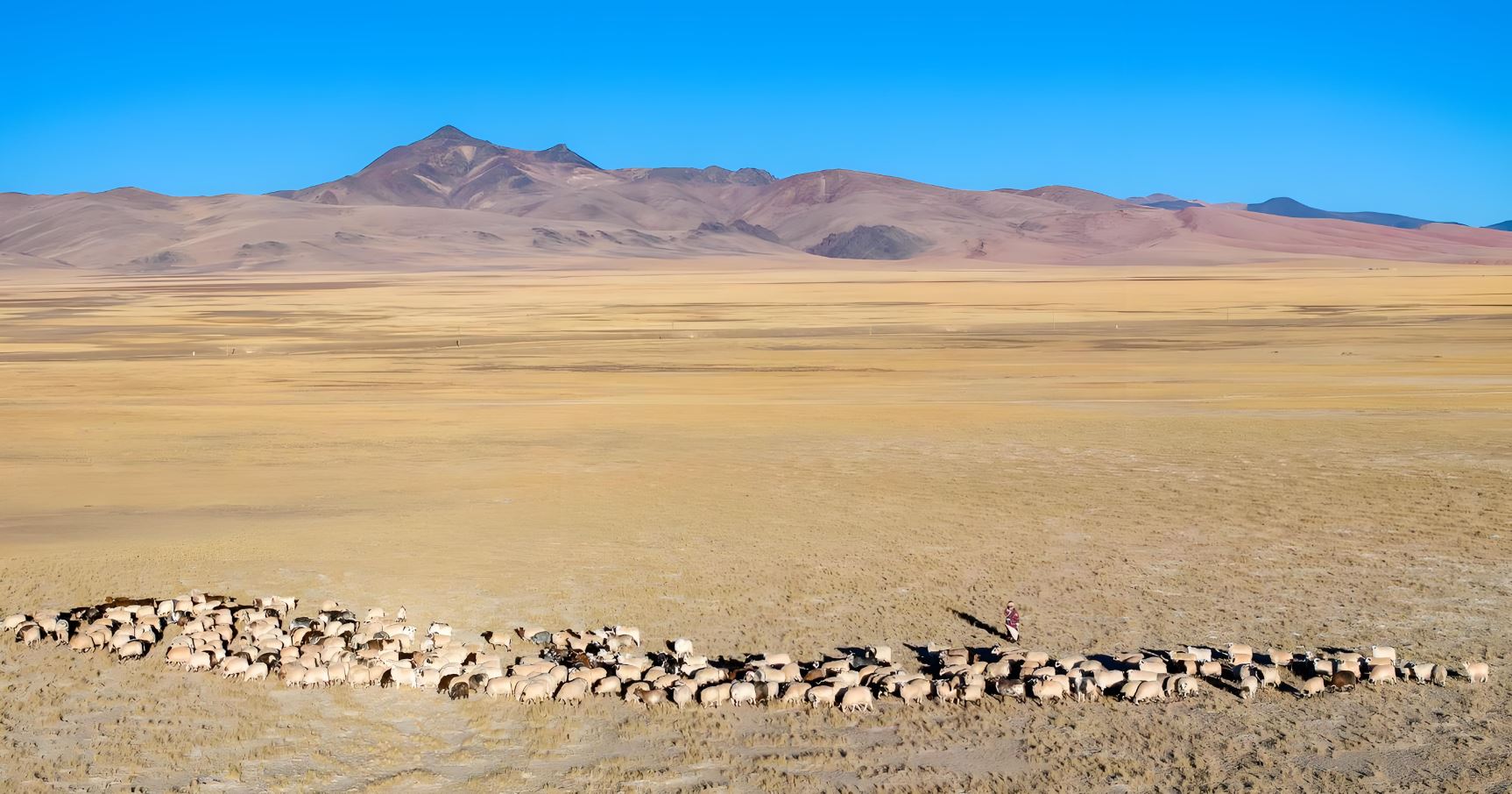
Days 5 and 6 push into the remote Ngari plateau. The first sight of Lake Manasarovar — shimmering at 4,588 metres, one of the highest freshwater lakes on earth — is one of the most quietly overwhelming moments of the entire tour. Then Kailash itself appears on the horizon. From Darchen, the three-day Kora begins.
Over three extraordinary days you walk through the Sarshung valley, cross the sacred Dolma La pass at 5,630 metres — the highest and most sacred point of the circuit — descend into the Lhachu valley, and complete the full circumambulation of the world’s holiest mountain. For many travellers, it is the most meaningful walk of their lives.
The best seasons are from May through at most end of September. All travel permits concerning this kind of tour are arranged by our team — all you need is a valid Chinese visa if you are not from China visa exempt countries.
- Lhasa → Potala Palace, Jokhang Temple, Barkhor Street
- Lhasa → Drepung Monastery & Sera Monastery (Monk Debates)
- Lhasa → Yamdrok Lake → Gyantse → Shigatse
- Shigatse → Lhatse → Saga → Into the Remote West
- Saga → Lake Manasarovar (4,588m) → Darchen → The Holy Lake Appears
- Kailash Kora Day 1 → Darchen → Driapuk Monastery (4,920m) | ~20km | ~6 → 7 hours trekking
Day by day
Lhasa → Potala Palace → Jokhang Temple → Tashilunpo Monastery → Yamdrok Lake → Lake Manasarovar (4,588m) → Mt. Kailash Kora (52km) → Dolma La Pass (5,630m)
Day1
Arrive Lhasa (3,650m) — First Day on the Roof of the World
Your journey to one of the world’s holiest places begins at Lhasa’s Gonggar Airport, set in the broad Yarlung Tsangpo valley some 60 kilometres east of the city. Your guide meets you at arrivals with a traditional white kata — the silk welcome scarf of Tibet — and transfers you to your hotel through your first Tibetan landscape: a wide brown valley, a vast blue sky, and distant snow peaks on every horizon.
At 3,650 metres, Lhasa is already high — and the Kailash plateau, which awaits later in this journey, will take you considerably higher. Today asks only one thing of you: rest. Drink plenty of water, eat lightly, avoid alcohol, and give your body the full 24 hours it needs to begin adjusting. Mild headaches and light-headedness in the first hours are completely normal and usually pass by the following morning. The hotel has supplemental oxygen available if needed.
In the evening your guide will brief you on the full journey ahead — the route, the Kora, the permits, the altitude profile, and what to expect day by day. This is also a good time to raise any questions. A quiet dinner and an early night: the real journey begins tomorrow.
Day2
Lhasa — Potala Palace, Jokhang Temple, Barkhor Street
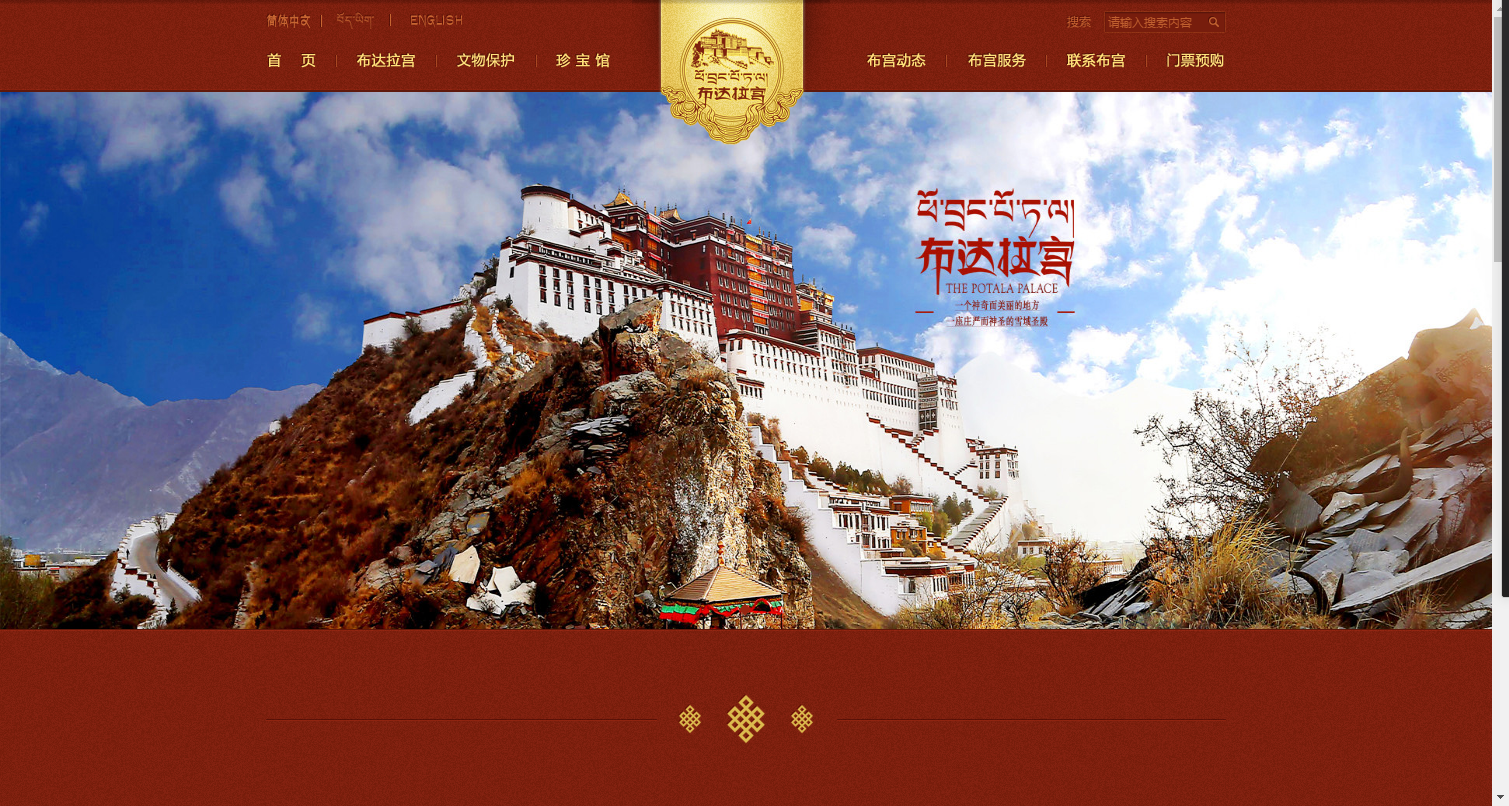
Lhasa means ‘Place of the Gods’ — and when the golden rooftops of the Potala Palace catch the morning light above the old city, it is easy to understand why. Rising 13 storeys and 117 metres above Red Hill, the Potala was built by the Fifth Dalai Lama in the 17th century and served as both the winter palace of the Dalai Lamas and the political capital of Tibet for three hundred years. Its 1,000 rooms, 10,000 shrines, and 200,000 statues encompass the full arc of Tibetan Buddhist civilisation. The climb to the upper chapels — where the golden stupas of past Dalai Lamas stand in the half-dark — is unlike anything else in Asia.
A short walk through the old city leads to Jokhang Temple, the spiritual heart of Tibet. Pilgrims arrive from every direction: some have walked for months, prostrating their full body length along the road; others spin prayer wheels in a clockwise circuit. Inside, the air is thick with the smell of burning yak butter lamps and the low hum of prayer. At the centre sits the Jowo Rinpoche — a gilded image of the young Buddha — which draws more devoted reverence than almost any other object in the Buddhist world.
Barkhor Street, Jokhang’s outer pilgrim circuit, has evolved over a thousand years into one of Asia’s most vibrant street markets. Monks in saffron robes walk shoulder to shoulder with Tibetan nomads in traditional dress, traders from across the plateau, and travellers from every continent. The stalls sell prayer flags, silver jewellery, hand-woven textiles, and dried yak meat. Spend the afternoon at your own pace here — it is one of the great people-watching spots on earth.
Day3
Lhasa — Drepung Monastery & Sera Monastery (Monk Debates)
The morning is spent at Drepung Monastery, a vast white complex climbing the wooded hillside west of Lhasa. Founded in 1416, Drepung was once the largest monastery on earth, housing over 10,000 monks in its 16th-century prime. Today it is quieter but no less magnificent — whitewashed buildings rise in tiers up the slope, and the great assembly hall contains some of the finest thangka paintings and gilded statues in all of Tibet. Drepung belongs to the Gelug school, the same lineage as the Dalai Lamas, and remains one of its most important surviving centres.
The afternoon belongs to Sera Monastery and one of Lhasa’s most unforgettable experiences: the daily monk debates, held in the shaded courtyard from 3:00 to 5:00 p.m. (except Sundays). What appears at first as pleasant chaos — monks shouting, slapping their hands, leaning over seated opponents — is in fact a rigorous pedagogical tradition developed over six centuries. Each clap is deliberate: a challenge issued, a point emphasised, an argument concluded. The topics are Buddhist philosophy and logic, and the debates proceed with a precision that only becomes clear when you watch long enough to understand the form. It is one of the most extraordinary living intellectual traditions in the world.
This second day in Lhasa also serves a medical purpose. Two full nights and days at 3,650 metres significantly improves your body’s acclimatization before the far higher elevations ahead — the Kailash plateau averages over 4,500 metres, and Dolma La Pass reaches 5,630 metres.
Day4
Lhasa → Yamdrok Lake → Gyantse → Shigatse
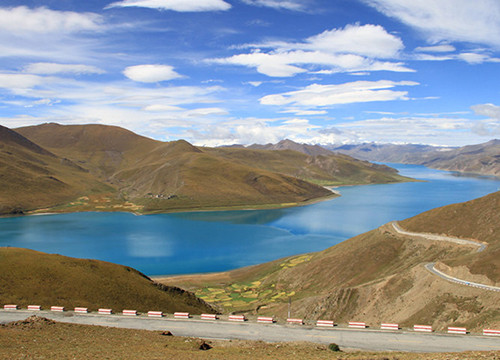
Leaving Lhasa this morning, the road climbs almost immediately to the Khamba La pass at 4,794 metres — and at the crest, Yamdrok Lake appears below like a jewel dropped onto the plateau. One of Tibet’s three holy lakes, Yamdrok stretches over 638 square kilometres at 4,441 metres in one of the most vivid shades of turquoise found anywhere in nature. The light at this altitude strips all haze from the air; the lake’s colour seems almost impossibly bright against the pale brown mountains behind it. This is the first of many moments on this journey where the only useful response is to stop and look.
The road continues through mountain scenery and descends to Gyantse, where the Kumbum Pagoda demands a visit. Built in 1427, the Kumbum — meaning ‘One Hundred Thousand Images’ — is a nine-storey mandala rendered in stone and plaster, each level decorated with Newar-style murals that represent one of the most complete surviving examples of 15th-century Tibetan Buddhist art. The artistry is extraordinary and unhurried; few visitors spend as long here as it deserves.
From Gyantse it is a short drive to Shigatse — Tibet’s second city and home to Tashilunpo Monastery, founded in 1447 and the traditional seat of the Panchen Lama. Its most extraordinary sight is the Maitreya Hall, where a 26-metre gilded statue of the Future Buddha rises through multiple floors in the dim interior, serene and vast. After exploring Tashilunpo, the evening is free to walk Shigatse’s market street and rest before tomorrow’s long westward drive.
Day5
Shigatse → Lhatse → Saga — Into the Remote West
Today is one of the long driving days that defines the western Tibet experience — and one that changes your sense of scale permanently. From Shigatse the route follows the Friendship Highway through Lhatse, the last properly supplied town before the deep west, and then turns north-west into increasingly open and empty plateau.
The landscape transforms gradually and dramatically. Himalayan peaks to the south grow taller and more continuous. Villages become sparser and more windswept. The road empties of all traffic except the occasional truck or lone pilgrim walking west. Yak herds graze on the valley floors beside braided rivers; eagles circle overhead on thermals. By midday the sky seems wider than it did in Lhasa — there is simply less on the horizon to interrupt it.
Saga is reached in the late afternoon, a functional administrative town at 4,640 metres with basic but adequate accommodation. The town sits at the crossing point of the Brahmaputra river — at this elevation just a broad, braided stream. This evening is practical: check your kit for the Kora ahead, confirm that trekking poles, layered clothing, and personal medication are accessible. An early night is wise — the next three days begin here.
Day6
Saga → Lake Manasarovar (4,588m) → Darchen — The Holy Lake Appears
The drive from Saga to Darchen is one of the most emotionally anticipated days of the entire tour — because it contains two arrivals that pilgrims from across the world travel years to reach.
The road continues west across the plateau through steadily increasing remoteness, and then — without ceremony — Lake Manasarovar appears on the horizon. At 4,588 metres and covering 412 square kilometres, it is one of the highest freshwater lakes in the world. In Hindu cosmology it was formed in the mind of Lord Brahma before creation and represents the divine complement to Mt. Kailash. To Tibetan Buddhists it is one of the three holy lakes of Tibet. Its waters are considered purifying — to bathe in them, or simply to sit at the shore, is regarded as an act of deep spiritual cleansing. The lake is vast, strikingly blue, and surrounded by snow peaks and open sky. Even the most secular traveller arrives here and falls quiet.
After time at the lake — for prayer, photography, or simply sitting in its presence — the road continues a short distance north to Darchen, the small plateau town at 4,560 metres that serves as the starting gate for the Kailash Kora. Permits are checked here. Basic trekking supplies and yak hire can be arranged locally if needed. Eat a good dinner and sleep as early as you can — Day 7 begins the walk.
Day7
Kailash Kora Day 1 — Darchen → Driapuk Monastery (4,920m) | ~20km | ~6–7 hours trekking
The day begins with your first sustained view of Mt. Kailash. From Darchen the south face is visible — a perfectly symmetrical black pyramid dusted in snow, hovering above the surrounding ridges in the clear morning air. This is the mountain you came to walk around. It looks exactly as it should: remote, immovable, otherworldly.
The trail leads north from Darchen into the broad Sarshung valley — a wide, gradually ascending corridor with a river alongside and Kailash growing larger and clearer with every kilometre. The terrain on Day 1 is the most forgiving of the three: the path is well-marked, the gradient is mostly gentle, and the altitude gain is manageable. What stays with you on this first day is the atmosphere. Prayer flags string across every ridge and river crossing. Mani stone walls — carved with the mantra ‘Om Mani Padme Hum’ — line the trail. Tibetan pilgrims walk in both directions: some moving quickly with extraordinary mountain fitness, others slowly in deep concentration, some prostrating their full body length on the ground for the entire 52-kilometre circuit.
Passing the small Choku Monastery, clinging to the cliffs above the valley, the trail rises to Driapuk Monastery guesthouse at 4,920 metres. From here, the north face of Kailash dominates the view entirely — just a few kilometres away, massive and close and silent. Tonight is your closest night to the sacred peak. Dinner is simple; the mountain outside the window is not.
Day8
Kailash Kora Day 2 — Driapuk → Dolma La Pass (5,630m) → Dzultripuk | ~22km | ~8–10 hours trekking
This is the most demanding and most sacred day of the entire journey — and for most pilgrims, the most transformative. The route climbs steeply from Driapuk through a valley thick with prayer flags and the possessions left by those who have passed before. At the base of the final ascent to the Dolma La, a great cairn is piled with yak skulls, prayer scarves, stones, and the personal items of thousands of pilgrims across the centuries — each one placed here as a symbolic act of letting go. Many pilgrims pause here for a long time. So do most travellers.
The Dolma La pass sits at 5,630 metres — the highest point of the Kailash Kora and the spiritual summit of the entire pilgrimage. The altitude gain from Driapuk is nearly 800 metres, achieved over a steep morning ascent on rocky, uneven ground at an oxygen level less than half that at sea level. The pace must be slow and deliberate: no rushing, no stopping to rest for long periods, steady breathing, one step at a time. Altitude medicine and trekking poles are your allies today. Your guide walks with you throughout.
The reward at the Dolma La is extraordinary. On a clear day the plateau spreads in every direction below, Kailash rises behind you, and the sacred Gauri Kund lake shimmers in a glacial hollow directly below — a holy pool believed by Hindus to have been blessed by the goddess Parvati. Prayer flags cover every surface; pilgrims prostrate, weep, laugh, and offer prayers in a dozen languages. Take the time you need here.
The descent into the Lhachu valley on the far side is steep and requires careful footing on loose stone paths. But once in the valley the gradient eases and the walk south-east to Dzultripuk Monastery — past the cave where the great yogi Milarepa once meditated — is calm and deeply satisfying. The guesthouse is basic; dinner and sleep come without effort tonight.
Day9
Kailash Kora Day 3 — Dzultripuk → Darchen → Drive East to Lhatse | ~10km trekking + ~5 hours driving
The final section of the Kora is the gentlest — a relatively easy 10-kilometre walk south along the broad outer valley back to Darchen. Prayer flags, mani stone walls and small shrines line the path. Other pilgrims emerge from the hills with the same quiet, deliberate expressions — the look of people who have completed something that mattered.
Returning to the Darchen starting point closes the sacred circumambulation. The full 52-kilometre circuit of Mt. Kailash is done. For devout pilgrims — Hindu, Buddhist, Jain or Bön — this moment carries profound religious significance. For all travellers, regardless of faith, it brings a deep and quiet sense of accomplishment. You have walked, at altitude, around one of the most remote and spiritually resonant places on earth.
After washing and resting briefly at the guesthouse, your vehicle and driver are waiting in Darchen. The return drive east begins, retracing the plateau road towards Lhatse. The landscape looks familiar but somehow different on the way home — perhaps because it no longer stands between you and the goal. Tonight in Lhatse is a practical rest stop in a clean guesthouse before the final long drive back to Lhasa.
Day10
Lhatse → Shigatse → Lhasa — The Long Return
Today is a long day of driving — roughly eight to nine hours with stops — but a familiar and rewarding one. The Friendship Highway east from Lhatse through Shigatse and on towards Lhasa is a route you already know in the outward direction; in reverse, with the Kora behind you, the scenery feels different.
The plateau’s scale — so daunting on the way west — now feels like an old acquaintance. The Himalayan peaks on the southern horizon appear and disappear. Shigatse offers a natural lunch stop and the option of a brief return visit to Tashilunpo Monastery or the market if there is time. From Shigatse the road continues east, descending gradually into the broader Lhasa valley.
Arriving back in Lhasa — with the city’s noise, colour, and relative oxygen richness after days on the high plateau — is its own particular pleasure. Check in, clean up properly for the first time in days, and enjoy a dinner with more choices than the guesthouses of Ngari could provide. The city that was your starting point is now also your homecoming.
Day11
Lhasa Departure
After breakfast, your guide transfers you to Lhasa Gonggar Airport or the train station, depending on your onward plans. Flights to most major Chinese cities operate throughout the day. Trains to Xining or Chengdu should be booked well in advance, especially in peak season.
The morning is often surprisingly contemplative. Many travellers find themselves replaying images from the journey — the north face of Kailash at dawn from Driapuk, the prayer flags at the Dolma La bending in the wind, the stillness of Lake Manasarovar at first light. The physical journey is over. The impression it leaves tends to persist considerably longer.
Meals: Breakfast Tibet Permit — Required for All Visitors Every visitor to Tibet must hold a Tibet Tourism Bureau (TTB) permit. It is mandatory, cannot be obtained on arrival, and differs by nationality. We handle the full application once you book — please allow at least 15 days before your departure date.
What is included
Included
- Tibet Entry Permit and Alien’s Travel Permit
- Special Restricted Area Permit for the Mt. Kailash region
- All entrance fees for tourist sites listed in the itinerary
- Professional English-speaking local tour guide
- Private vehicle with experienced driver
- All accommodation listed in the itinerary
- Shared oxygen tank in the vehicle
- Tourist accident/casualty insurance and first aid kit
Not included
- Single room supplement — free of charge for any group booking 5 rooms or travelling with 10 or more.
- Flights or trains to/from Tibet
- Meals not specified in the itinerary (approximately USD 3–15 per meal)
- Yak/porter hire during the Kailash Kora (optional, arranged locally)
- Tips for tour guide and driver
- Personal expenses (laundry, snacks, optional activities)
Photos from this route
Questions travellers ask
What is the Kailash Kora — and how physically difficult is it?
The Kailash Kora is the sacred 52-kilometre circumambulation route around Mt. Kailash, completed over three days. It is not a technical mountain route — there are no ropes, ladders or scrambling — but it is a serious high-altitude trek that should not be underestimated.
The key challenge is altitude. The Kora starts at Darchen (4,560m), climbs to Driapuk (4,920m) on Day 1, then ascends to the Dolma La pass at 5,630 metres on Day 2 — the highest point and the most demanding section. At this elevation, the oxygen level is roughly 50% of that at sea level. The ascent to Dolma La gains nearly 800 metres in elevation over a few hours of steep, rocky trail. Pace and breathing management are everything.
Day 3 (back to Darchen) is relatively easy. The total daily distances are approximately 20km, 22km and 10km. Most travellers of reasonable fitness, who have spent sufficient days acclimatizing in Lhasa beforehand, complete the Kora without serious problems. Our itinerary builds in three days of Lhasa acclimatization specifically for this reason.
Why is Mt. Kailash sacred to four religions?
Mt. Kailash is unique in human history — no other single mountain is simultaneously sacred to four distinct world religions.
In Hinduism, Kailash is the abode of Lord Shiva and his consort Parvati. It is the axis mundi — the cosmic mountain at the centre of the universe — and one of the holiest pilgrimage destinations in the faith. Thousands of Hindu pilgrims, primarily from India and Nepal, make the journey every year.
In Tibetan Buddhism, Kailash is identified with Mt. Meru, the mythical mountain at the centre of all Buddhist cosmology. It is also associated with the tantric deity Chakrasamvara, and circumambulating it is considered one of the most powerful acts of merit accumulation possible.
In Jainism, Kailash is believed to be the site where Adinatha — the first of the 24 Tirthankaras — attained liberation. It is called Ashtapada in Jain texts.
In Bön — Tibet’s pre-Buddhist shamanic religion — Kailash is the soul mountain of the entire universe and the site where the founder Tonpa Shenrab descended from heaven. Bön pilgrims walk the Kora in the opposite direction (anticlockwise) from Buddhist and Hindu pilgrims.
What is Lake Manasarovar — and is swimming or bathing allowed?
Lake Manasarovar (known in Tibetan as Mapam Yumtso) sits at 4,588 metres in the shadow of Mt. Kailash and is one of the highest freshwater lakes in the world. In Hindu belief it was created in the mind of Lord Brahma before the earth itself was formed — its name means ‘Mind Lake’ in Sanskrit. Its waters are considered among the most sacred in Asia.
Bathing in Manasarovar is permitted and is considered a deeply purifying act — many Hindu and Buddhist pilgrims wade into the lake as part of their pilgrimage. Be aware that the water is extremely cold year-round (it sits at altitude with glacial inflow), and the altitude means that any physical exertion — including cold-water immersion — affects the body more than it would at sea level. Most travellers choose to touch the water, fill a small bottle, and spend time sitting at the shore rather than fully bathing. Drinking the water is not recommended without filtration.
How does the altitude on this tour compare to Everest Base Camp?
The altitude profiles are similar in overall maximum but different in character.
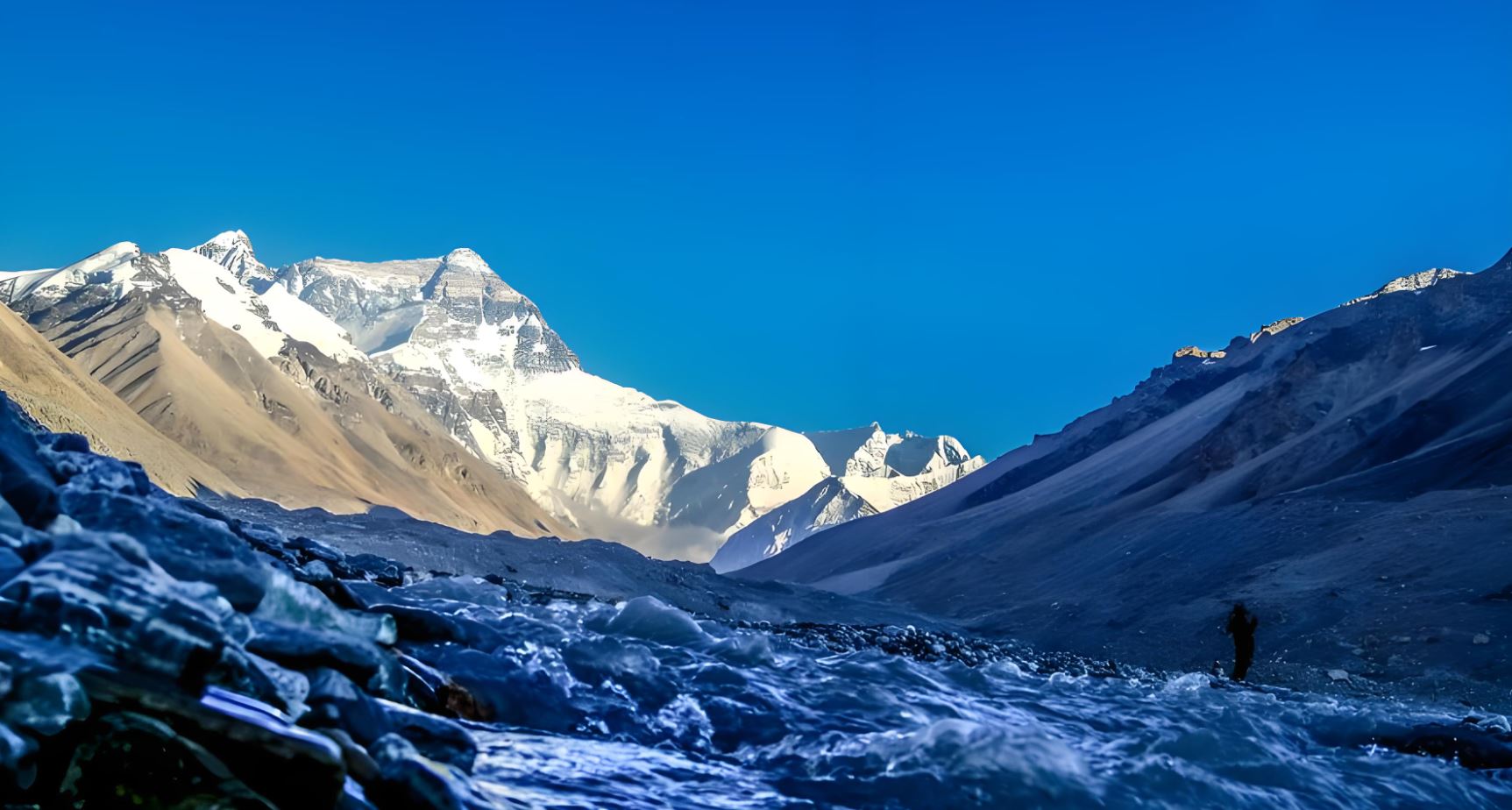
Everest Base Camp sits at 5,200 metres, and you reach it by vehicle — there is no trekking involved on our standard EBC tours. The Kailash Kora’s highest point, the Dolma La pass, is 5,630 metres — 430 metres higher than EBC — and you reach it on foot after 8–10 hours of hiking on the second day of the Kora.
The practical difference: at EBC you arrive by car and can rest immediately. At Dolma La you arrive after a steep morning climb and must descend on the other side before you can rest. The physical demand of Dolma La is therefore considerably greater than EBC.
This tour also spends more consecutive nights at high altitude — the Kailash plateau is consistently above 4,500 metres for five days — compared to a one-night stay at EBC on most Everest tours. Sustained high-altitude exposure requires good acclimatization, which is why three days in Lhasa are built into this itinerary before heading west.
What is the best time of year to visit Mt. Kailash?
The Kailash Kora is seasonal. The trail is generally open from May to October, with two distinct peak seasons:
May to June: Excellent conditions — clear skies, moderate temperatures, the grasslands around Kailash are beginning to green. Manasarovar is usually ice-free. Fewer tourists than July–August. This is the preferred season for most of our groups.
July to August: The height of the Indian monsoon. The southern Himalayas receive heavy rainfall, but Kailash sits in the rain shadow of the mountains and is typically dry. The plains are green and lush, and Tibetan nomadic festivals often occur in this period. Some trails can be muddy.
September to October: Golden-light season. Skies are crystalline after the monsoon, temperatures are cooling, and the crowds thin significantly after Golden Week (early October). The landscape is at its most photogenic.
November to April: The Kailash region is generally closed — extreme cold, heavy snowfall on the Dolma La, and most guesthouses shut down. Travel is not recommended and permits may not be issued.
Do I need special permits for the Kailash region beyond the standard Tibet Travel Permit?
Yes — the Kailash and Ngari region requires additional permits beyond the standard Tibet Travel Permit (TTP) that all foreign visitors to Tibet must hold.
The required documents for this tour are:
1. Tibet Travel Permit (TTP) — mandatory for all foreign visitors to Tibet. Issued to your tour operator, not you directly.
2. Alien’s Travel Permit (ATP) — required for travel outside Lhasa into other parts of Tibet, including the route to Shigatse and Kailash.
3. Military Restricted Area Permit — required specifically for the Ngari/Kailash region, as the area borders both Nepal and India and is a restricted military zone.
All three permits are arranged entirely by TibetTravel.com as part of this tour — you do not need to apply separately. Processing takes approximately 15 working days and requires a copy of your Chinese visa and passport. We recommend booking this tour at least 4–6 weeks in advance to allow sufficient permit processing time.
Can I hire yaks or porters to carry my bag during the Kailash Kora?
Yes — and for many travellers this is a very sensible decision. Yaks can be hired in Darchen at the start of the Kora to carry your main bag across all three days of the circuit. Local porters (human carriers) are also available, though yaks are more commonly used on this route.
The practical recommendation: carry only a small daypack on the Kora with water, snacks, camera, warm layers, rain protection and personal medication. Let a yak carry your main bag with sleeping kit, spare clothing and heavier items. At 5,630 metres on Day 2, every kilogram of unnecessary weight is a significant extra burden.
Yak hire costs approximately USD 15–25 per day (subject to local rates) and is not included in the tour price, as it is arranged directly on arrival in Darchen. Your guide can assist with the negotiation and loading.
How fit do I need to be to complete the Kailash Kora?
The Kailash Kora is manageable for any reasonably fit adult who is prepared specifically for altitude trekking. You do not need to be an experienced mountaineer or long-distance runner. However, you do need to be honest with yourself about your fitness level and, more importantly, your altitude tolerance.
The key physical demands are: sustained walking on uneven terrain for 6–10 hours per day over three consecutive days, a steep 800-metre ascent on Day 2 to 5,630 metres, and carrying a daypack at high altitude throughout.
Our specific recommendations: walk regularly for at least 6–8 weeks before the tour (aim for 2–3 hours of brisk walking per session). Include some hill or stair work to prepare for the Day 2 ascent. If you have a history of heart or respiratory conditions, consult your doctor before booking. Altitude tolerance varies between individuals regardless of fitness level — some very fit people acclimatize poorly. If in doubt, discuss this with us before booking and we can advise on acclimatization strategies.
Is the Kailash Kora open to people of all faiths — or just Hindus and Buddhists?
The Kailash Kora is open to travellers of all faiths and none. No religious affiliation, belief or practice is required to walk the circuit, and the Chinese authorities who administer permits and access to the Kailash region do not screen visitors by religion.
Many of our travellers who complete the Kora are agnostic, atheist, or simply people moved by the idea of high-altitude walking in one of the world’s most remote and beautiful landscapes. They report that the experience is profound regardless of belief — the combination of extreme physical effort, extraordinary natural scenery, complete remoteness, and the visible intensity of faith around them creates something that transcends the religious framework.
The only practical consideration for non-pilgrims: be respectful of the circumambulation direction. Buddhist and Hindu pilgrims walk the Kora clockwise. Bön pilgrims walk it counter-clockwise. Walking against the main direction of pilgrimage is considered disrespectful. Our guides are clear on this.
What is included and not included in the tour price?
Included: All permits (Tibet Travel Permit, Alien’s Travel Permit, Military Restricted Area Permit for Ngari), professional English-speaking Tibetan guide throughout, private vehicle with experienced driver, all accommodation as listed in the itinerary (hotels in Lhasa and Shigatse; guesthouses in Saga, Darchen, Driapuk and Dzultripuk), entrance fees to all listed tourist sites, and a shared emergency oxygen tank in the vehicle.
Not included: International or domestic flights or trains to/from Tibet; meals not specified in the itinerary (lunches and dinners except where noted, approximately USD 3–15 per meal); yak or porter hire on the Kora (arranged locally); tips for guide and driver; personal expenses (laundry, snacks, optional activities); and the single room supplement if you prefer a private room.
A note on the guesthouses: accommodation on the Kora itself (Driapuk and Dzultripuk) is very basic by any standard — shared dormitory-style rooms, minimal heating, and simple squat toilet facilities. This is the nature of the circuit; there is no other accommodation available on the route. Most travellers find that after a long day of trekking, the standards of the guesthouses become entirely irrelevant.
Before you send your inquiry
- No deposit — ever. Your dates are held with a free inquiry, and nothing is due until we confirm. On fixed group departures, book early to secure your seats.
- Cancel free before your Tibet Travel Permit is issued — full refund, every dollar.
- After the permit is issued: the USD $100 permit fee is non-refundable, everything else is refunded. Refunds within 7 business days.
- Bring a group of 7 and your spot is free (7+1).
- Single room supplement — free of charge for any group booking 5 rooms or travelling with 10 or more.
- Tell us your dates and route on the form below — you will have a written itinerary and an item-by-item quote within 12 hours, with no obligation to book.
- Prices depend on group size, hotel standard, season and how you travel into Tibet, so we quote each trip individually rather than from a price list.
- Hotel details — the exact hotels we use — come with your quote. Ask below for the standard you would like and we will match it.
- A Lhasa-based Tibet tour operator since 1999 — our own guides, vehicles and office in Lhasa, 7,200+ travellers from 40+ countries, 4.9★ on TripAdvisor.