Small group departures
9 Days Nyingchi–Lhasa–Yamdrok–Shigatse Small Group Tour
9 Days $915 per person Overview Itinerary Tips & FAQ Namcha Barwa (7,782 m) — the easternmost Himalayan giant, famous for hiding behind cloud; a clear view is a lucky day Basumtso Lake — emerald-green glacial lake with the island…
- 9 Days / 8 Nights
- Namcha Barwa (7,782 m) — the easternmost Himalayan giant, famous for hiding behind cloud; a clear view is a lucky day → Basumtso Lake — emerald-green glacial lake with the island Cuozong Monastery, the most beautiful lake in East Tibet → Lulang Forest Valley — pine meadows, stone-pot cuisine, and a landscape that looks nothing like the plateau → Lamalin Temple — a distinctive Nyingma monastery with a religious character unique among Tibet's sacred sites → Two completely different Tibets — lush forested East Tibet followed by the bare high plateau of the west → Gyantse Kumbum + Tashilhunpo — the 15th-century nine-storey stupa and the seat of the Panchen Lamas
- Moderate pace
- Best: March to April and September to October
- No Deposit — Ever
- Cancel Free Before Permit Issued
- Full Refund except $100 Permit Fee
- Bring 7, Your Spot Is Free
- Our Own Office in Lhasa, Since 1999
The trip at a glance
The first four days belong to Nyingchi. Day 1 is arrival and rest at the lower altitude — a genuine acclimatisation advantage over any tour that starts directly on the plateau. Days 2 and 3 cover the main highlights: Lulang Town, the Namcha Barwa Viewing Platform, Lamalin Temple, and Basumtso Lake with its extraordinary emerald water and island monastery. Day 4 is the return to Lhasa — by the Fuxing high-speed railway through gorges and tunnels, or by road through the Yarlung Tsangpo canyon.
Days 5 and 6 follow the same Lhasa heritage programme as our 4-Day Lhasa tour — see that page for the full descriptions.
Days 7 and 8 complete the western mini-loop: south over the Gampala Pass to Yamdrok Lake, then to Gyantse, then overnight in Shigatse. Day 8 morning belongs to Tashilhunpo — the seat of the Panchen Lamas and one of the finest intact monastery complexes in Tibet — before the group drives back to Lhasa. Day 9 is departure.
The result is nine days that span three landscapes in a single tour: lush East Tibet, the sacred heritage city, and the high plateau west — without rushing any of them.
- Bayi District · Lulang Town · Namcha Barwa Viewing Platform · Lamalin Temple
- Lulang · Basumtso Lake · Return to Nyingchi Bayi
- Train or Drive Back to Lhasa
- Tibet Museum · Nanshan Park · Jokhang Temple · Barkhor Street
- Potala Palace · Sera Monastery Monk Debate · Local Family Visit
- Gampala Pass · Yamdrok Lake · Karola Glacier · Gyantse Kumbum · Shigatse
Day by day
Namcha Barwa (7,782 m) — the easternmost Himalayan giant, famous for hiding behind cloud; a clear view is a lucky day → Basumtso Lake — emerald-green glacial lake with the island Cuozong Monastery, the most beautiful lake in East Tibet → Lulang Forest Valley — pine meadows, stone-pot cuisine, and a landscape that looks nothing like the plateau → Lamalin Temple — a distinctive Nyingma monastery with a religious character unique among Tibet's sacred sites → Two completely different Tibets — lush forested East Tibet followed by the bare high plateau of the west → Gyantse Kumbum + Tashilhunpo — the 15th-century nine-storey stupa and the seat of the Panchen Lamas
Day1
Arrival in Nyingchi — Rest & Acclimatisation
Arrive at Nyingchi Mainling Airport (IATA: LZY). At approximately 3,000 m, Nyingchi sits a full 600 metres lower than Lhasa — one of the gentlest altitude entries available anywhere in Tibet. Your guide meets you and transfers you to the hotel in Bayi Town, the main centre of Nyingchi Prefecture, on the banks of the Niyang River.
Today is for rest. Walk along the river in the afternoon if the energy is there. The forested hills that ring the valley are already a visual contrast with the bare plateau that will come later in the tour.
Note: if your international or domestic flight lands at Lhasa Gonggar Airport in the morning and you prefer not to take a separate flight to Nyingchi, we can arrange a rapid transfer from the airport directly to Lhasa Railway Station to catch the midday Fuxing train to Nyingchi (approximately 3.5 hours). This option carries an additional surcharge — please ask when booking.
Day2
Bayi District · Lulang Town · Namcha Barwa Viewing Platform · Lamalin Temple
The morning starts in Bayi — a compact, pleasant town with a Tibetan-Han mixed character and good local restaurants. Then the road heads east into the Nyang River valley: a corridor of Tibetan villages, walnut orchards and conifer forests that opens gradually into the Lulang valley.
Lulang Town (鲁朗, 3,720 m) sits in a wide bowl of spruce and fir. Tibetans sometimes call it ‘the place that makes you forget home.’ The stone-pot chicken (石锅鸡) cooked here — in clay pots over a slow fire with medicinal herbs — has been famous for over a decade; the better restaurants are worth the queue.
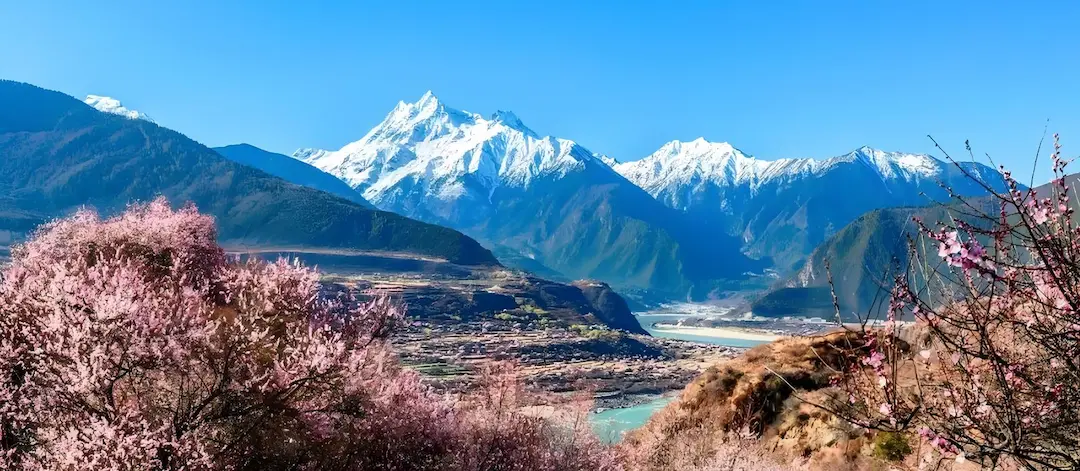
Before arriving in Lulang, the group pauses at the Namcha Barwa Viewing Platform. Namcha Barwa (南迦巴瓦峰, 7,782 m) is the easternmost major Himalayan summit — and one of the most secretive mountains on earth. It is estimated to be visible without cloud for fewer than 15 days a year. On a clear morning, the peak appears suddenly above the treeline, enormous and white. On most days you see the valley, the mist, and a dim outline of something vast behind it. Both are worth standing still for.
Also visit Lamalin Temple (喇嘛岭寺), a Nyingma monastery in the Milin area whose religious tradition and ritual character set it apart from the more commonly visited Gelug institutions of Central Tibet. Overnight Lulang.
Day3
Lulang · Basumtso Lake · Return to Nyingchi Bayi
Drive to Basumtso Lake (巴松错, also known as Cuoga Lake), at 3,460 m — the most striking lake in East Tibet. The water is an extraordinary blue-green, the colour produced by glacial minerals and depth: it does not look like a photograph. An island sits in the centre of the lake; on it is Cuozong Monastery, a small temple reachable by boat. Forested mountains ring the shore on all sides.
Take the morning without hurrying. Walk the lakeside path. Take the boat to the island if time allows.
After lunch, the group drives back toward Nyingchi Bayi — arriving in the early afternoon. The rest of the day is unscheduled. Rest at the hotel, walk along the Niyang River, or explore the market streets at your own pace. Overnight Nyingchi Bayi.
Day4
Train or Drive Back to Lhasa
The Lhasa–Nyingchi Railway (opened June 2021) is one of the most technically remarkable railways ever built: 435 km, 47 tunnels and 121 bridges through deep gorges and across rivers that no road could easily follow. The midday Fuxing train covers the distance in approximately 3.5 hours. The ride itself — through mountain tunnels that open suddenly onto canyon vistas — is an experience in its own right. Recommended.
For those who prefer the road, the Lalin Expressway follows the Yarlung Tsangpo River for much of the route — 4.5 to 5 hours, passing through the Kadinggou gorge area with sustained river and cliff scenery throughout. The road allows stops; the train is faster and more comfortable.
Arrive Lhasa in the afternoon. Overnight Lhasa.
Day5
Tibet Museum · Nanshan Park · Jokhang Temple · Barkhor Street
Tibet Museum in the morning, Nanshan Park panorama, then Jokhang Temple and the Barkhor pilgrim circuit in the afternoon. See the 4-Day Lhasa tour for the full day description.
Day6
Potala Palace · Sera Monastery Monk Debate · Local Family Visit
Potala Palace in the morning, Sera Monastery’s monk debate in the afternoon, and a local Tibetan family visit to close the day. See the 4-Day Lhasa tour for the full day description.
Day7
Gampala Pass · Yamdrok Lake · Karola Glacier · Gyantse Kumbum · Shigatse
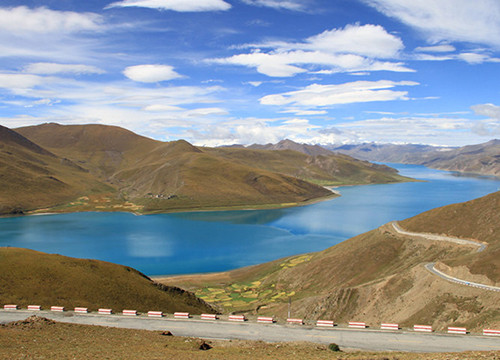
An early start south from Lhasa. The road climbs to the Gampala Pass (4,794 m), where Yamdrok Lake appears below — the turquoise expanse that is one of Tibet’s three sacred lakes, and one of the most photographed bodies of water on the plateau.
The group continues west past the Karola Glacier — hanging blue-grey ice visible from the roadside — and reaches Gyantse in the early afternoon. The Pelkor Chöde Monastery compound holds the Kumbum Stupa (1427–1439): nine storeys, 77 chapels, an architectural mandala that takes a full hour to explore properly. It is the finest piece of 15th-century Tibetan religious architecture that survives intact.
The day ends in Shigatse — Tibet’s second city — for an overnight before Tashilhunpo in the morning.
Day8
Tashilhunpo Monastery · Drive Back to Lhasa
Tashilhunpo was founded in 1447 by the first Dalai Lama and has been the seat of the Panchen Lamas for three centuries. Its most arresting feature is the Hall of Maitreya — the world’s largest gilded bronze statue of the future Buddha, 26 metres tall, built in 1914 and covered in gold, turquoise and coral. Beyond it: the chorten hall containing the tombs of past Panchen Lamas, the Kelsang Lhakhang assembly hall, the debating courtyard, and monks going quietly about their day. Give it at least two hours.
After Tashilhunpo, the group loads the vehicles and drives back to Lhasa — approximately four hours along the Friendship Highway, returning through the Yarlung Tsangpo valley. Arrive Lhasa in the late afternoon. Overnight Lhasa.
Day9
Departure from Lhasa Gonggar Airport
After breakfast, your guide transfers you to Lhasa Gonggar Airport or the railway station in time for your departure. Tour services end here.
Note: Gonggar Airport is approximately 65 km from Lhasa city — allow at least 2.5 hours before your flight. Your guide will confirm the transfer time the evening before.
Meals: Breakfast Tibet Permit — Required for All Visitors Every visitor to Tibet must hold a Tibet Tourism Bureau (TTB) permit. It is mandatory, cannot be obtained on arrival, and differs by nationality. We handle the full application once you book — please allow at least 15 days before your departure date.
What is included
Included
- Tourist bus (7–17 seats) for all ground transportation
- Twin-sharing accommodation with daily breakfast
- Featured meals as listed in itinerary (Tibetan welcome banquet + specialty dinners)
- Professional English/Chinese-speaking tour guide
- Entrance tickets to all scenic spots listed in the itinerary
- Tibet Entry Permit, Alien’s Travel Permit and Border Pass
- Travel Accident Insurance, Vehicle Seat Insurance and Agency Liability Insurance
- Airport/station pick-up and drop-off service (7:00 am–10:00 pm)
- Emergency oxygen canister per person; 2 × 300 ml drinking water per day; 4 L medical oxygen in vehicle
- All taxes, handling charges and Potala Palace reservation fee
Not included
- Single room supplement — free of charge for any group booking 5 rooms or travelling with 10 or more.
- Room fees for any itinerary changes due to personal reasons
- Personal expenses (laundry, drinks, telephone, optional activities)
- Force majeure costs (natural disasters, flight delays, political events, etc.)
- Guide and driver tips (suggested 30 CNY per person per day each)
- International or domestic flight/train tickets to/from Tibet
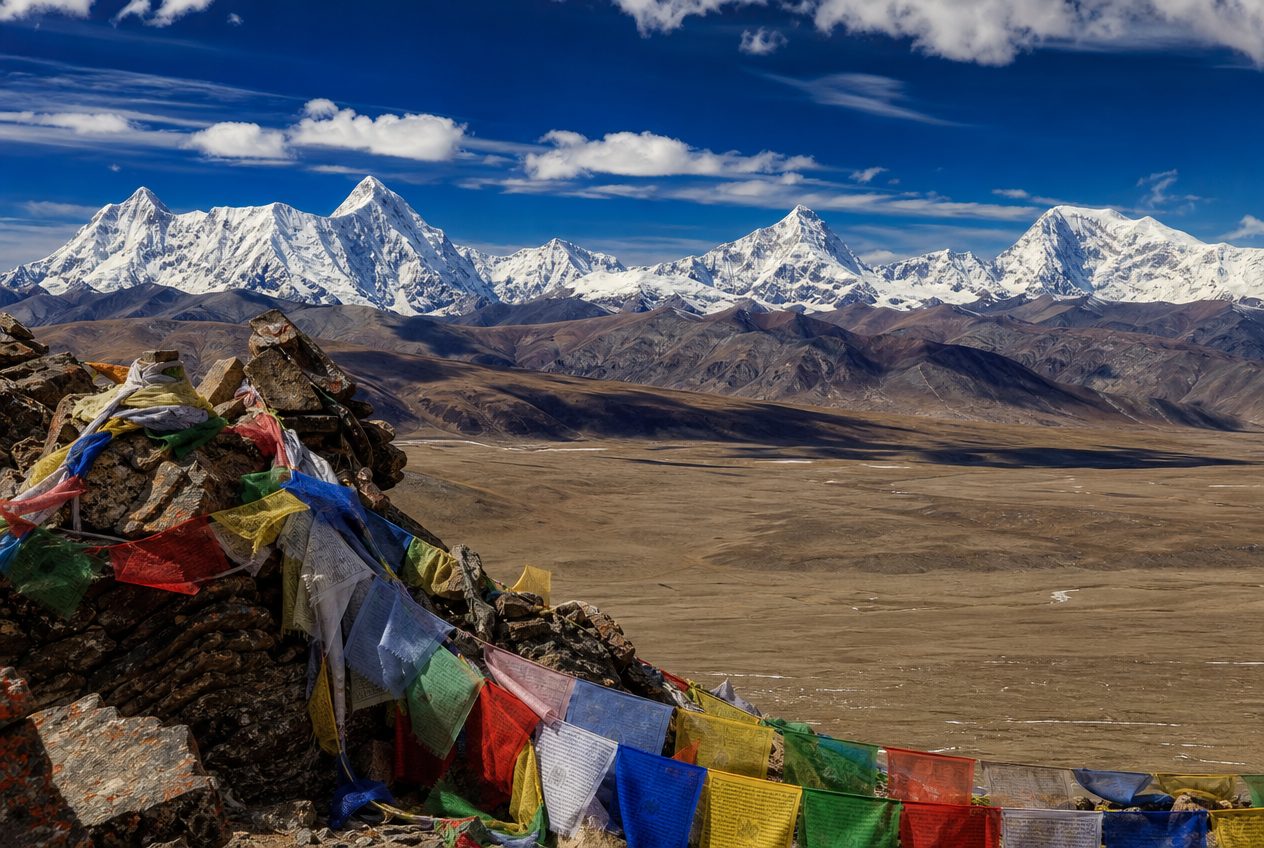
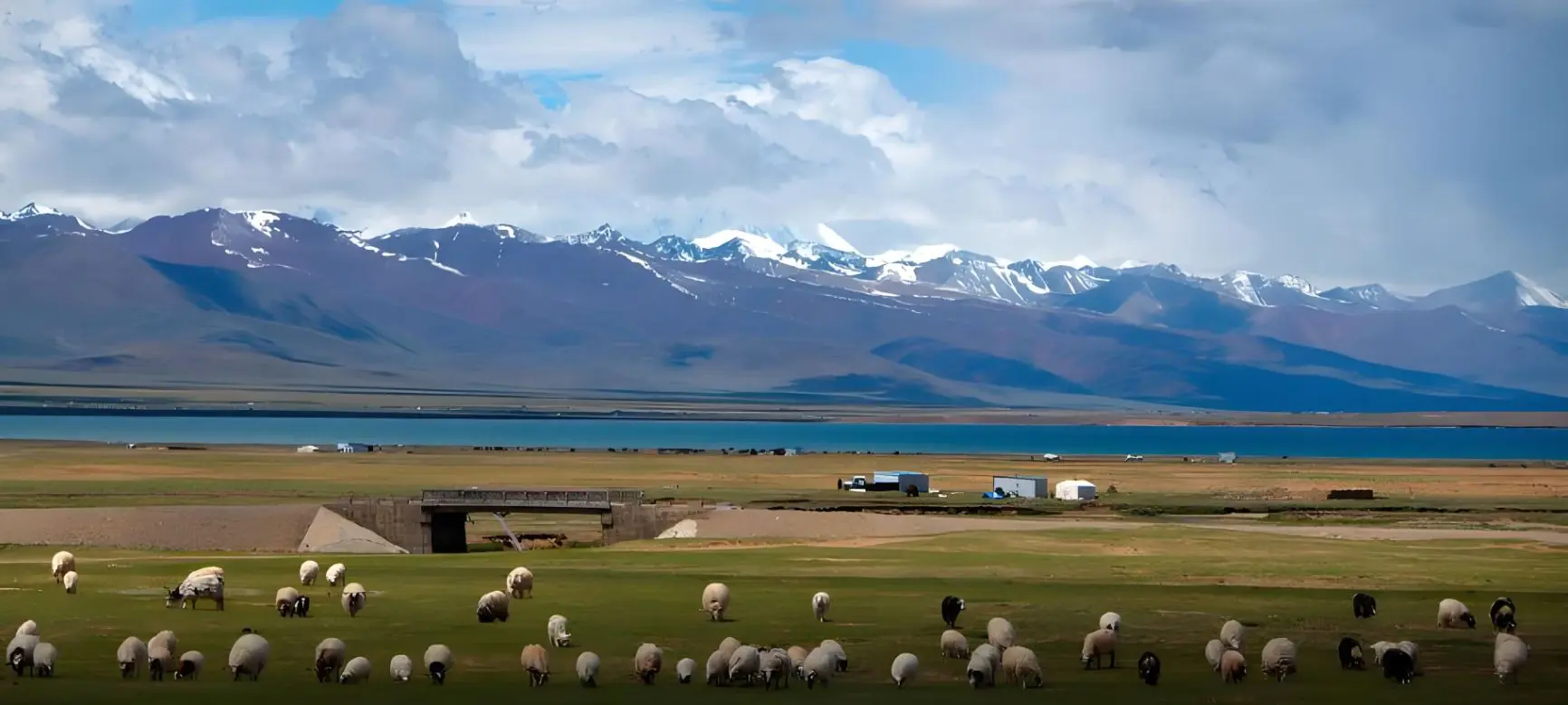
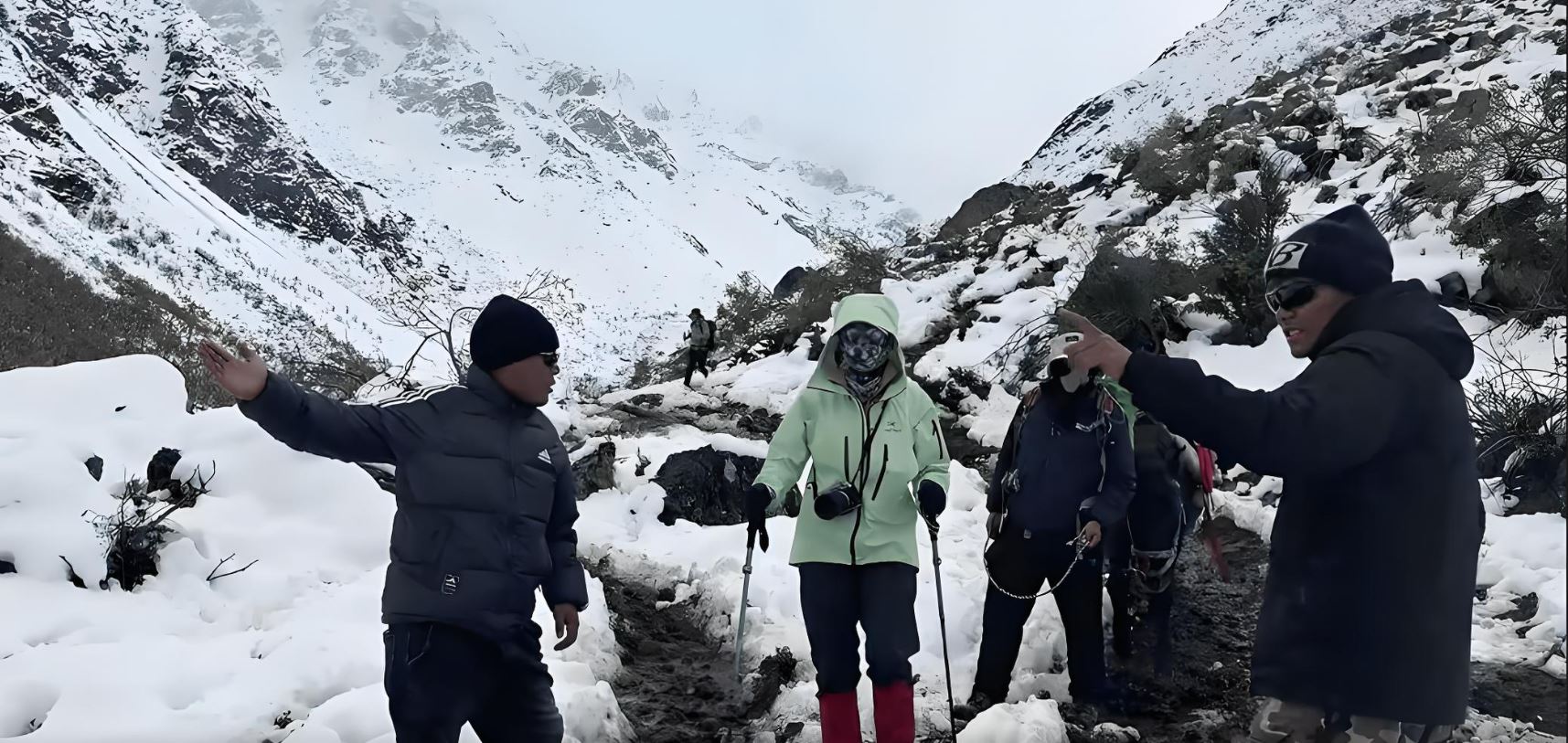
Photos from this route
Questions travellers ask
Why does this tour start in Nyingchi and not Lhasa?
Two reasons — practical and experiential.
Practically: Nyingchi’s altitude (approximately 3,000 m) is significantly lower than Lhasa (3,600 m). Starting in Nyingchi gives your body a gentler introduction to elevation. By the time the group returns to Lhasa on Day 4, most travellers have adapted well and the plateau days that follow feel comfortable.
Experientially: arriving in Nyingchi first means you see East Tibet before Central Tibet, not after. The contrast — lush forests and glacial rivers on Days 1–3, then the bare plateau opening up on Day 7 at the Gampala Pass — is far more dramatic in this sequence than it would be in reverse.
When is the best time to take this tour?
Nyingchi’s most famous season is the wild peach blossom period — typically the second half of March through early April. The valley floors turn pink, the snow peaks are still in winter condition, and the combination is extraordinary. Peak season: expect crowds and book well ahead.
April through June and September through October offer the best balance: clearer mountain views (including Namcha Barwa), open roads, and fewer visitors than the blossom rush. The Lhasa and Shigatse portions are excellent in these months too.
July and August are monsoon season — lush and green in Nyingchi, sometimes overcast at Yamdrok. Still possible; just be prepared for rain and occasional road delays.
December through February: cold throughout, and Nyingchi’s forests are dormant. The plateau section is clear but very cold.
What are my chances of seeing Namcha Barwa clearly?
Honest answer: low, but meaningful.
Namcha Barwa (7,782 m) is estimated to be fully cloud-free for fewer than 15 days a year, which is part of why it was among the last of the world’s major peaks to be climbed. The best odds are early morning in October and November, when the monsoon has cleared and the air is stable.
If the peak appears on your day, it is an experience that travellers remember for years. If it stays hidden — which is more likely — the Lulang valley is still one of the most beautiful places in Tibet, and the visit to the platform is still worth making.
We do not guarantee a clear view; no responsible operator can.
Train or drive from Nyingchi back to Lhasa on Day 4?
We recommend the train for most travellers. The Fuxing high-speed service (opened 2021) covers 435 km in approximately 3.5 hours, passing through 47 tunnels and across 121 bridges — the engineering required to lay this route through the gorges is remarkable in itself. The ride is smooth, the views from the windows are striking, and you arrive in Lhasa rested.
The road (Lalin Expressway) takes 4.5–5 hours and allows stops. If you want to visit the Kadinggou gorge area or have a specific reason to travel by road, we can arrange that instead.
Both options are included; please indicate your preference at booking.
How does this tour compare to the other 9-day group tours?
The 9-Day Lhasa–Everest–North Tibet Grassland Loop (gp-05) goes west from Lhasa to EBC, then north through the Changthang plateau to Namtso Lake. That tour is for travellers who want the EBC experience and the high-altitude grassland.
This tour (gp-12) goes east to Nyingchi instead of west to EBC. There is no Everest Base Camp. What you get in exchange is a completely different landscape — warm, forested, low-altitude East Tibet — plus the same Lhasa and Shigatse heritage programme. If you want Everest, choose gp-05. If you want the broadest landscape contrast Tibet can offer in nine days, this is the right tour.
What permits are required, and how large is the group?
This tour requires two Tibet permits, both included in the tour price: the Tibet Tourism Bureau (TTB) permit and the Alien’s Travel Permit (ATP). The Nyingchi area falls within standard ATP coverage — no additional restricted area permits are needed.
Please apply at least 15 days before your departure date; Tibet permits cannot be processed on short notice.
Our small-group tours are run with a group size of 3–8 pax. Most departures run with 4–8 people, in a 4WD or Landcruiser rather than a large coach. A 3–8 group costs a little more per person and is quieter, with more freedom to change the day on the road; a 3–16 group costs less per person and gives you more people to travel with.
Before you send your inquiry
- No deposit — ever. Your dates are held with a free inquiry, and nothing is due until we confirm. On fixed group departures, book early to secure your seats.
- Cancel free before your Tibet Travel Permit is issued — full refund, every dollar.
- After the permit is issued: the USD $100 permit fee is non-refundable, everything else is refunded. Refunds within 7 business days.
- Bring a group of 7 and your spot is free (7+1).
- Single room supplement — free of charge for any group booking 5 rooms or travelling with 10 or more.
- Tell us your dates and route on the form below — you will have a written itinerary and an item-by-item quote within 12 hours, with no obligation to book.
- Prices depend on group size, hotel standard, season and how you travel into Tibet, so we quote each trip individually rather than from a price list.
- Hotel details — the exact hotels we use — come with your quote. Ask below for the standard you would like and we will match it.
- A Lhasa-based Tibet tour operator since 1999 — our own guides, vehicles and office in Lhasa, 7,200+ travellers from 40+ countries, 4.9★ on TripAdvisor.