



Monlam Prayer Festival in Lhasa
Monlam Chenmo, the Great Prayer Festival, is held in the first Tibetan month, in the days straight after Losar, the Tibetan New Year. It was founded in Lhasa in 1409 by the great teacher Tsongkhapa, and it ends on the fifteenth day with the Butter Lamp Festival. Tibet is open to foreign visitors at this time of year.
When Is Monlam?
Monlam follows the Tibetan calendar, so the dates move every year — usually in February or March, starting just after Losar. Tell us when you would like to travel and we give you the exact dates for your year.
| Day of the first Tibetan month | What happens |
|---|---|
| Day 1 | Losar, the Tibetan New Year |
| The days after Losar | Monlam, the Great Prayer Festival: prayers and offerings at the temples and monasteries |
| Day 15 (full moon) | The Day of Miracles and the Butter Lamp Festival (Chunga Choepa) — the end of the New Year season |
What You See in Lhasa During Monlam Today
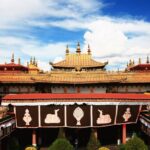
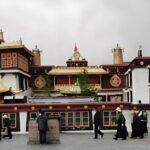
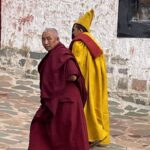
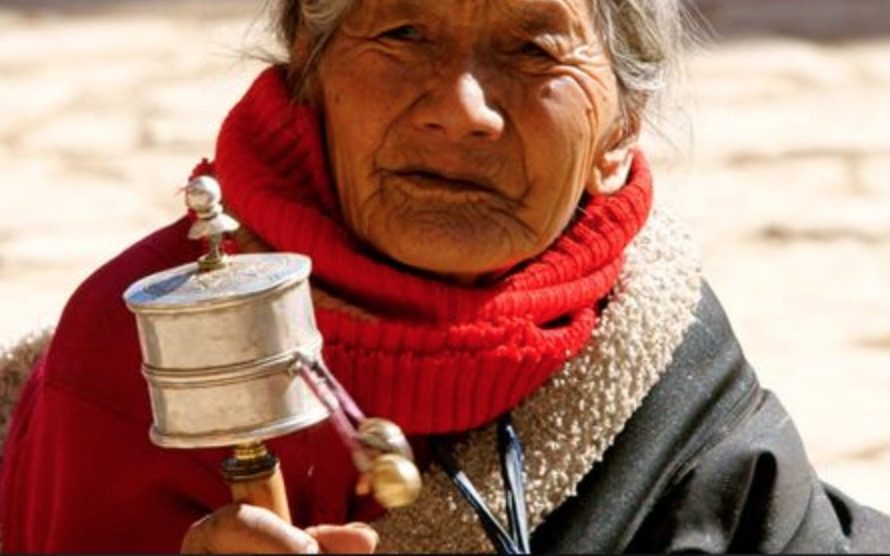
Monlam today is quieter than in old Tibet. The great ceremonies with thousands of monks are seldom seen now. What you notice is the people: more and more pilgrims come to the temples and monasteries, each carrying a jar of yak butter, to refill the butter lamps in front of the statues. The Jokhang Temple and the Barkhor are full from early morning, and the air smells of butter and juniper incense.
This is also the time to see butter sculptures — delicate figures, flowers and symbols made of coloured yak butter. At Monlam they can be seen in nearly every monastery and in the Jokhang Temple; at other times of the year you seldom see them.
Is Monlam Worth Planning a Trip Around?
Not on its own — but it is a lovely bonus. Monlam is not a show for visitors; it is a time of prayer, pilgrimage and getting together. If your trip to Tibet happens to fall in these weeks, you will see Lhasa at its most devout: the butter lamps, the butter sculptures and the crowds of pilgrims. Many travellers combine it with Losar, which comes just before.
The Origins of Monlam
Tsongkhapa chose this time of year because of a story from the life of the Buddha. Six rival teachers challenged the Buddha to a contest of miracles. For a long time he did not answer them, so people thought he was afraid. Then, in the first fifteen days of the year, he showed a great miracle every day and defeated them.
It is said that during the first Great Prayer Festival in 1409, everyone in Lhasa saw visions of Buddhas and gods filling the sky. In old Tibet, the whole country was invited to two weeks of prayer, rituals and teachings, and thousands of monks gathered at the Jokhang Temple.
The Day of Miracles and the Butter Lamp Festival
The full moon on the fifteenth day is the Day of Miracles, the high point of Monlam, and the Butter Lamp Festival (Chunga Choepa). People pray, make offerings, light butter lamps and look at the butter sculptures — a gentle close to the New Year season.
Purpose of the Festival
Monlam is a time to pray for the long life of the great teachers of every Buddhist tradition, for the Buddha’s teaching to spread, and for world peace. People believe that prayers made together with strong faith remove obstacles to peace and help everyone live in harmony.
Good Manners for Visitors
- Walk clockwise with the pilgrims on the Barkhor and around temples and chapels.
- Step around people doing prostrations, never over them.
- Ask before taking photos of people. Inside chapels, photography is often not allowed — your guide will tell you where it is.
- If you would like to make an offering, a small note of money or a little yak butter for the lamps is always welcome.
The Weather and Tours
Monlam falls in late winter: in Lhasa, days are sunny and around 10°C, and nights drop below freezing. Bring a warm down jacket, and sunglasses and sun cream for the strong sun. See Tibet weather in February and in March.
Winter is the season for culture tours: 4 days in Lhasa, 5 days Lhasa and Shannan, or 6 days Lhasa, Gyantse and Shigatse. More ideas: winter tours in Tibet and the Tibetan festival calendar.
Frequently asked questions
When is the Monlam Prayer Festival?
In the first Tibetan month, in the days straight after Losar, the Tibetan New Year — usually in February or March. It ends on the fifteenth day with the Butter Lamp Festival. The dates move every year; ask us for the dates in your year.
Can tourists see Monlam in Lhasa?
Yes. Tibet is open to foreign visitors at this time. Today you will not see the great ceremonies of old Tibet; what you see is many pilgrims at the temples and monasteries, refilling the butter lamps with yak butter, and butter sculptures in the monasteries.
What is the Butter Lamp Festival?
Chunga Choepa, on the full moon of the first Tibetan month — the last day of Monlam. People pray, make offerings, light butter lamps and look at the butter sculptures made of coloured yak butter.
Is Monlam worth planning a trip around?
Not on its own, but it is a lovely bonus if your trip falls in these weeks — Lhasa at its most devout. Many travellers combine it with Losar, which comes just before.
Who founded the Monlam Prayer Festival?
Tsongkhapa, the founder of the Gelug school, in Lhasa in 1409.
We answer within 12 hours, Monday to Saturday.