






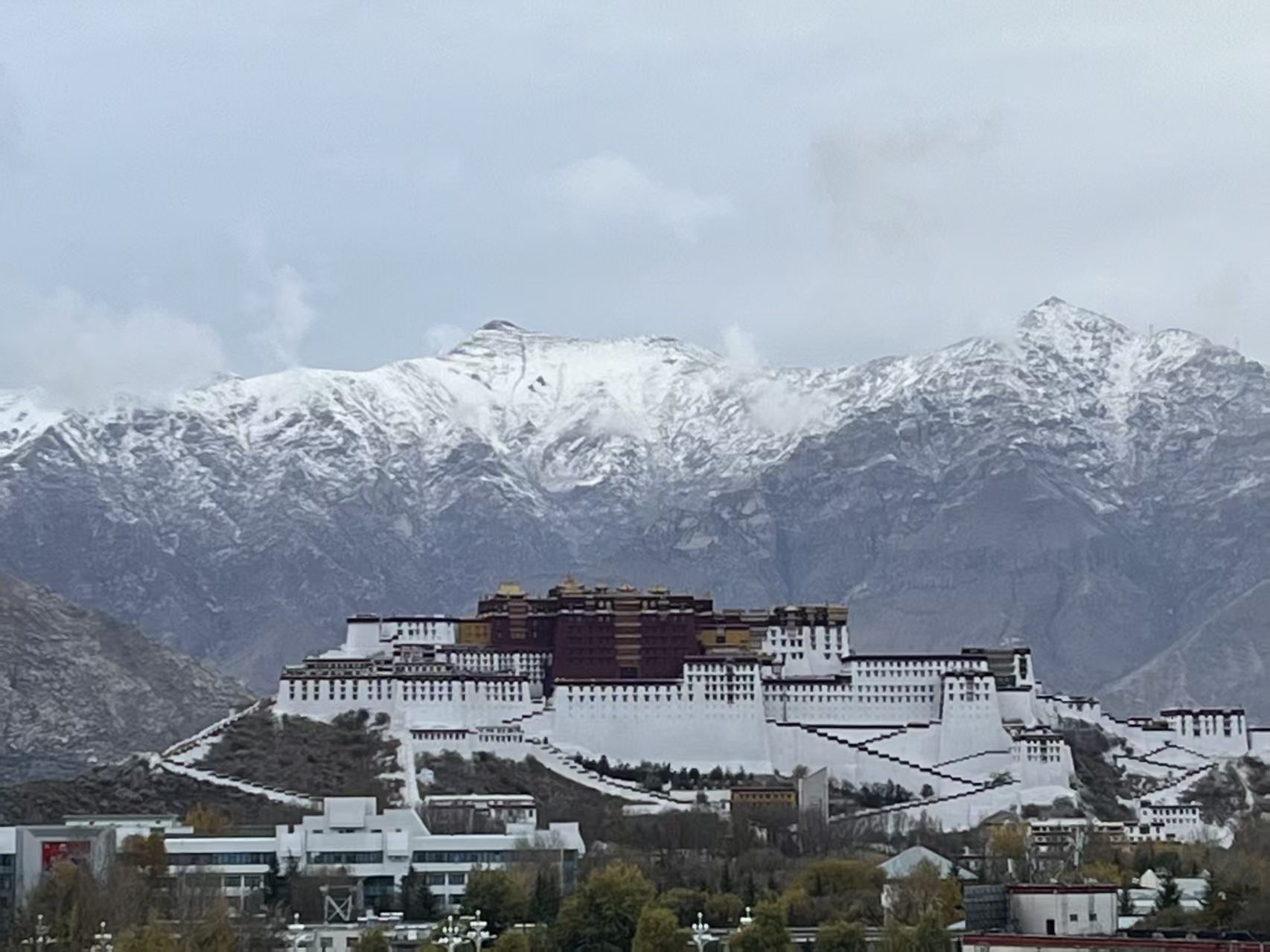
Tibetan New Year (Losar) in Lhasa
Losar is the Tibetan New Year — the biggest family festival of the year. It falls on the first day of the first Tibetan month, usually in February or early March, and the celebrations last about two weeks, with the main days at the very beginning. Tibet is open to foreign visitors at Losar, and it is one of the most moving times to be in Lhasa: the Jokhang Temple and Barkhor Street fill with pilgrims in their best clothes, and the whole city smells of juniper incense.
When Is Losar?
Losar follows the Tibetan calendar, so the date moves every year — usually between late January and early March, often close to Chinese New Year, though not always on the same day. The astrologers of the Mentsekhang in Lhasa set the calendar each year. Tell us when you would like to travel and we give you the exact dates for your year.
| Day | What happens |
|---|---|
| 29th day of the last month (Gutor) | The house is cleaned from top to bottom; in the evening the family eats guthuk, the dough-ball soup |
| Last day of the old year | Monasteries hold ceremonies to drive away the bad luck of the old year; family reunion dinner |
| Losar — New Year’s Day | A day at home with the family: offerings at the family shrine, new clothes, khapse and chang. No visiting on this day |
| Day 2 onwards | Families visit relatives and friends, and friends visit each other, with the greeting “Losar Tashi Delek” |
| Day 3 | New prayer flags go up on the rooftops and on the hills around Lhasa, with juniper burnt as an offering |
| Day 15 | The Butter Lamp Festival, at the end of Monlam, the Great Prayer Festival |
Can Foreigners Visit Tibet at Losar?
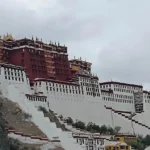
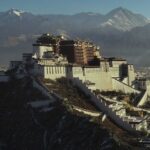
Yes. Tibet is open to foreign visitors at Losar, and the Tibet Travel Permit is issued as normal. One practical tip: Losar often falls close to Chinese New Year, when flights to Lhasa are busy and more expensive — book your flights early once your dates are fixed. The Potala Palace, the Jokhang Temple and all the monasteries stay open throughout the New Year festival.
What You See in Lhasa at Losar
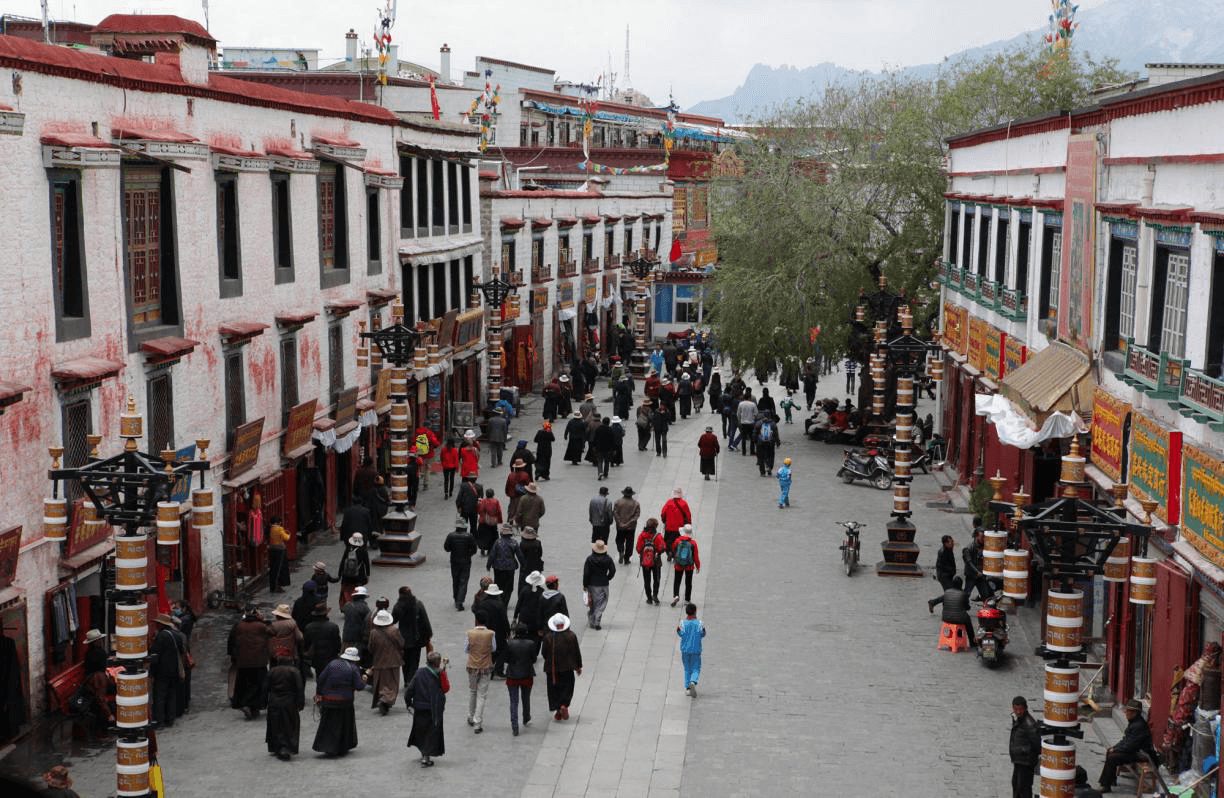
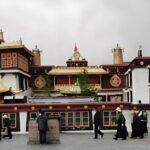
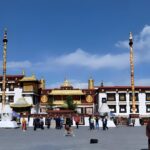
- The Jokhang Temple and the Barkhor. Pilgrims from all over Tibet come to Lhasa for the New Year. From before dawn they walk the Barkhor circuit and queue to pray in the Jokhang — the busiest and most joyful days of the year.
- New clothes and old jewellery. Families wear their best traditional dress, often with turquoise, coral and silver handed down for generations.
- Prayer flags and incense. On the third day, new prayer flags go up on every rooftop and on the hills, and white smoke from burning juniper rises over the city.
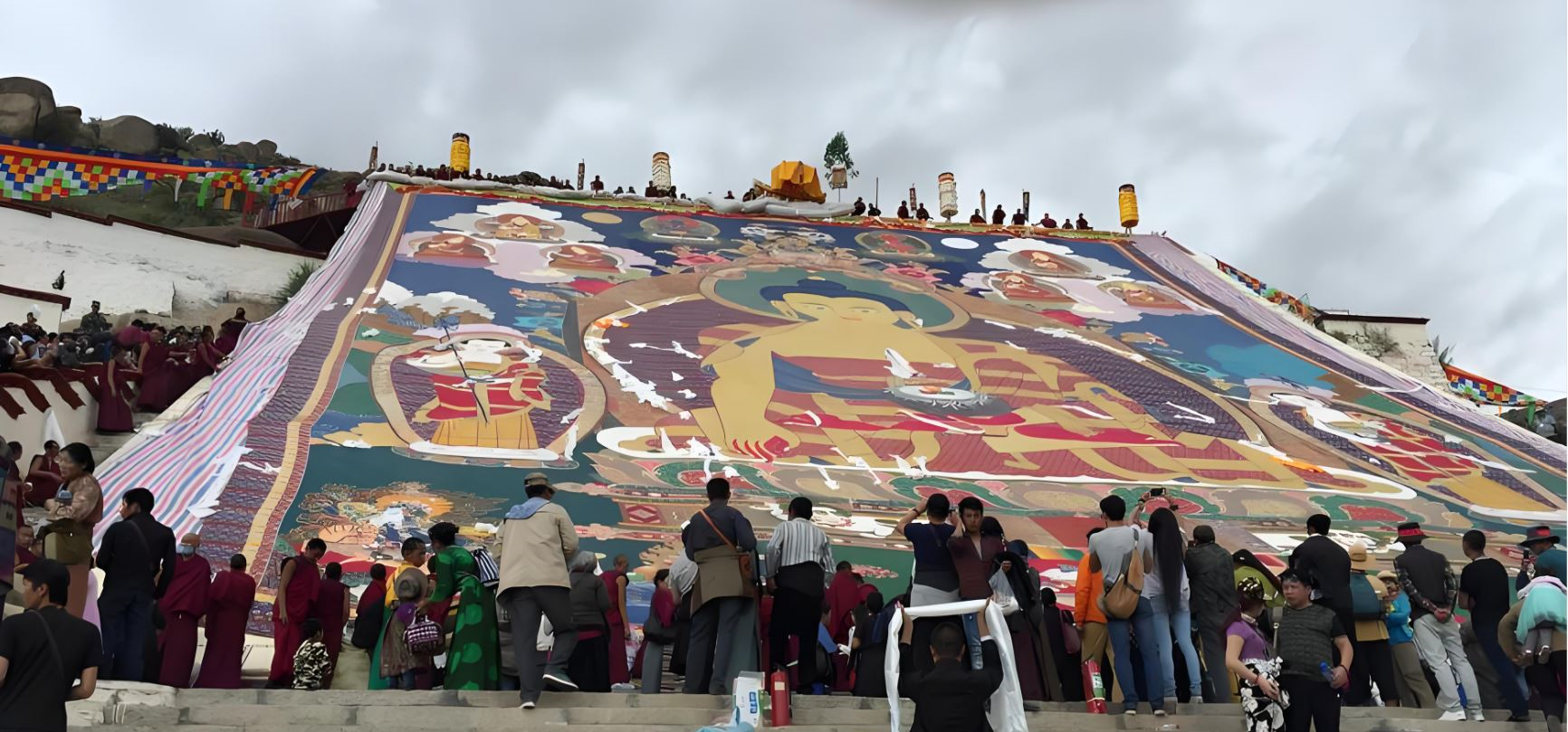
- Ceremonies and masked dances at the monasteries in the days around the New Year.
How Is Losar Celebrated?
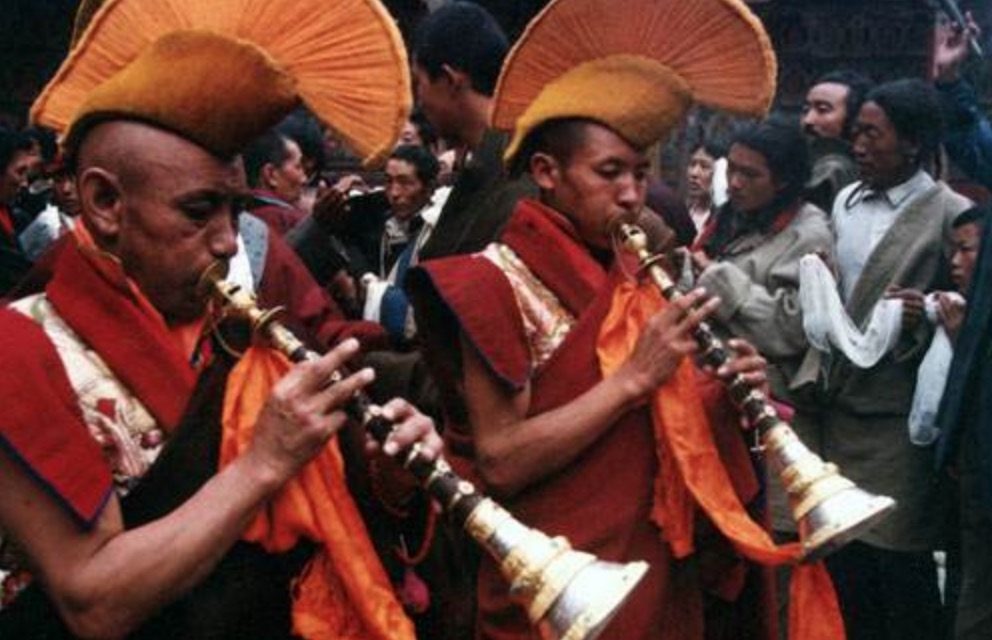
Losar is a time of family, music, dancing and fun. Monasteries hold ceremonies and masked dances, and in some places there are torch processions and comic plays.
Gutor Day 1 — Cleaning & Cooking
On the 29th of the last month, the whole house is cleaned, especially the kitchen. In the evening the family eats guthuk, a special soup with small dough balls. Some dough balls hide an object inside, such as a chilli, salt, wool or a piece of charcoal. Whatever you find is said to show your character, which causes a lot of laughter.
Gutor Day 2 — Religious Ceremonies
On the last day of the year, people visit monasteries to pray and make offerings to the monks. Monasteries hold ceremonies to drive away the bad luck of the old year. In the evening the family has a big reunion dinner.
New Year’s Day — Family & Blessings
People get up very early, wash and put on new clothes. They place offerings at the family shrine, including a chemar box of tsampa and barley and torma sculptures made of butter and flour. In the past, the first water of the new year was fetched from the river or well before dawn, which was believed to bring good luck. The day is spent at home with the family, sharing khapse (fried pastries) and chang (barley beer). Nobody goes visiting on New Year’s Day.
From the Second Day — Visiting Family and Friends
From the second day, families go to see their relatives, and friends visit each other’s homes. Guests are greeted with “Losar Tashi Delek!”, offered butter tea, khapse and chang, and a pinch of tsampa from the chemar box is thrown into the air for good luck. On our tours, a visit to a local Tibetan family is possible from the second day of Losar — a rare chance to share the New Year in a Tibetan home.
Good Manners for Visitors at Losar
- Greet people with “Losar Tashi Delek” — it is always met with a smile.
- If you are offered butter tea, khapse or chang, accept with both hands. With chang, it is polite to sip three times before the glass is filled again.
- In a home, take a pinch of tsampa from the chemar box, throw it into the air and say “Tashi Delek”.
- Ask before taking photos of people, and never inside a home or a chapel without permission.
- On the Barkhor and around temples, walk clockwise with the pilgrims.
The Weather at Losar
Losar falls in the dry heart of winter. In Lhasa, days are sunny and around 10°C, and nights drop to about −5°C — colder still outside the city. Bring a warm down jacket, gloves and a hat for the evenings, and good sunglasses and sun cream for the strong winter sun. See Tibet weather in February for more.
Tours over Losar
Winter is the season for culture tours, on roads that stay open in the snow:
- 4 days in Lhasa — the Potala Palace, the Jokhang Temple, Sera Monastery and a local family, timed around the New Year days.
- 5 days Lhasa and Shannan — add Samye Monastery and Yumbulakhang, the cradle of Tibetan civilisation.
- 6 days Lhasa, Gyantse and Shigatse — the great old towns of central Tibet.
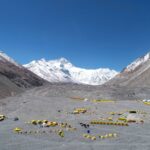
Namtso Lake is closed in winter, and Everest Base Camp in winter is only for travellers who accept a change of plan if snow blocks the road. More ideas: winter tours in Tibet, and the full Tibetan festival calendar.
The History of Losar
The word “Losar” comes from “lo” (year) and “sar” (new). Losar goes back to pre-Buddhist times, when Tibetans followed the Bon religion. Every winter they held a ceremony and burned incense to please the local spirits and protector gods. Later the festival became a Buddhist New Year, celebrated across the Tibetan plateau and also in Bhutan, Mongolia and other Himalayan areas.
Frequently asked questions
When is Losar, the Tibetan New Year?
On the first day of the first Tibetan month — usually in February or early March, and sometimes in late January. The date moves every year with the Tibetan calendar. Tell us when you would like to travel and we give you the exact dates for your year.
Is Tibet open to foreign visitors at Losar?
Yes. Tibet is open at Losar, the Tibet Travel Permit is issued as normal, and the Potala Palace, the Jokhang Temple and the monasteries all stay open. Book flights early, as Losar is often close to Chinese New Year, when flights to Lhasa are busy.
How long does Losar last?
About two weeks. The main days are the two Gutor days before the New Year, New Year’s Day itself and the following days of family visits. The Butter Lamp Festival on the fifteenth day closes the New Year season.
Can I visit a Tibetan family at Losar?
Yes, from the second day. New Year’s Day is spent at home with the family and nobody visits; from the second day, families and friends visit each other, and on our tours a visit to a local family is possible.
What should I wear in Lhasa at Losar?
Days are sunny and around 10°C, nights about −5°C. Bring a warm down jacket, gloves and a hat, plus sunglasses and sun cream for the strong winter sun.
We answer within 12 hours, Monday to Saturday.