



















Tibetan Food & Restaurants
From Tsampa and yak meat to Lhasa’s vibrant restaurant scene — your complete guide to eating and drinking in Tibet.
Tibetan cuisine is shaped by altitude, climate and centuries of Buddhist culture. Whether you’re exploring the bustling tea houses of Barkhor Street or eating simple noodles beside a monastery, food in Tibet is a gateway into the soul of the plateau.
Must-try drink
Salted Butter Tea (Po Cha)
Staple food
Tsampa (roasted barley flour)
Local delicacy
Air-dried Yak Meat
Social hub
Sweet Tea Houses (Ja Khang)
Tibetan Food
Tsampa — Tibet’s Staple Food
Tsampa is the most famous food in Tibet and the daily staple of the Tibetan people — roasted barley flour eaten with butter tea. Understanding Tsampa is understanding Tibetan culture.
Regional Dining
Dining in Lhasa
Lhasa has a surprisingly international dining scene — from authentic Tibetan home cooking and Sichuan hot dishes to Nepalese curries, Muslim noodles, and Western-style restaurants around Barkhor Street.
Dining in Tsedang
Food in Tsedang is relatively rich in variety since Tsedang sits at a lower altitude — fruits and vegetables are more abundant. Uniquely, Tsedang’s restaurant scene is dominated by Sichuan cuisine rather than traditional Tibetan food.
Dining in Nagchu
Though the food in Nagchu might not cater to Western tastes, it provides enough sustenance to complete your trip. Yak butter tea is plentiful and the basic Sichuan, Tibetan and Muslim restaurants are available — but bring your own snacks.
Dining in Ngari (Western Tibet)
The food in Ngari (western Tibet) is limited in variety due to the harsh remote climate. Vegetables and fruits are mostly imported, making food expensive. But restaurants still operate across most counties — here is what to expect.
Dining in Nyingchi
Nyingchi — the ‘Jiangnan of Tibet’ — has the widest food variety of any Tibetan prefecture. Lower altitude brings fresh fruit and unusual local specialties, from stone-pot chicken soup to Luoba grilled delicacies.
Lhasa Restaurants
Tibetan Hot Pot Restaurant
Tibetan Hot Pot is a home-style Tibetan restaurant in Lhasa with a beautiful traditional courtyard. It serves some of the most authentic Tibetan cuisine in the city — air-dried yak meat, vegetables and Tibetan hot pot.
Potala Atmosphere Restaurant
The Potala Atmosphere Restaurant in Lhasa is a unique three-floor combination of restaurant and bar, blending Tibetan and Western culture. Famous for its Tibetan-flavour hot pot, Potala pizza and nightly live performances.
Guangming Kamqung Sweet Tea House
The Guangming Kamqung Sweet Tea House on Barkhor Street is one of Lhasa’s most famous and oldest tea houses. For CNY 0.7 a cup, you can sit alongside pilgrims, monks and locals in an institution that has defined Lhasa social life for generations.
New Mandala Restaurant
New Mandala Restaurant is a Nepali-run restaurant in Lhasa offering Western and Oriental cuisine from a prime Barkhor Street location. The rooftop offers one of the best views in the city — directly over Jokhang Temple.
Snowland Restaurant
Snowland Restaurant is a mid-range Lhasa favourite near Barkhor Square — open from 7:30am to 10:30pm daily. Popular with budget travellers for its reliable mix of Tibetan, Nepalese and Western food at very reasonable prices.
Recommended Bars in Lhasa
Bars in Lhasa give off unique exotic flavours unlike anywhere else. Though fewer and more intimate than mainland China’s big cities, Lhasa’s bar scene blends Tibetan folk performances, world music and a genuine frontier spirit.
Four Things to Try First
Tsampa. The staple food of Tibet: flour made from roasted highland barley, roasted before grinding, which gives it a nutty, slightly smoky taste. To eat it, put some in a bowl, add a little butter tea, turn the bowl with your left hand and mix with the fingers of your right, then press it into small balls. Some people add dried cheese, sugar or butter. Tibetans eat it daily and carry it when they travel — it is light, filling and needs no cooking. At Losar, people throw pinches of tsampa into the air for good luck. If a Tibetan family offers you some, accept: it is a sign of welcome.
Butter tea (po cha). The natural partner to tsampa, and the drink that has kept pilgrims, nomads and travellers going across the high passes for centuries.
Sweet tea (ja ngarmo). Made with black tea, milk and sugar, softer and sweeter than Indian chai. It is poured from big thermos flasks into small glasses; you put a few notes or coins on the table and the server fills your glass and takes the money as you drink. A glass costs only a few yuan.
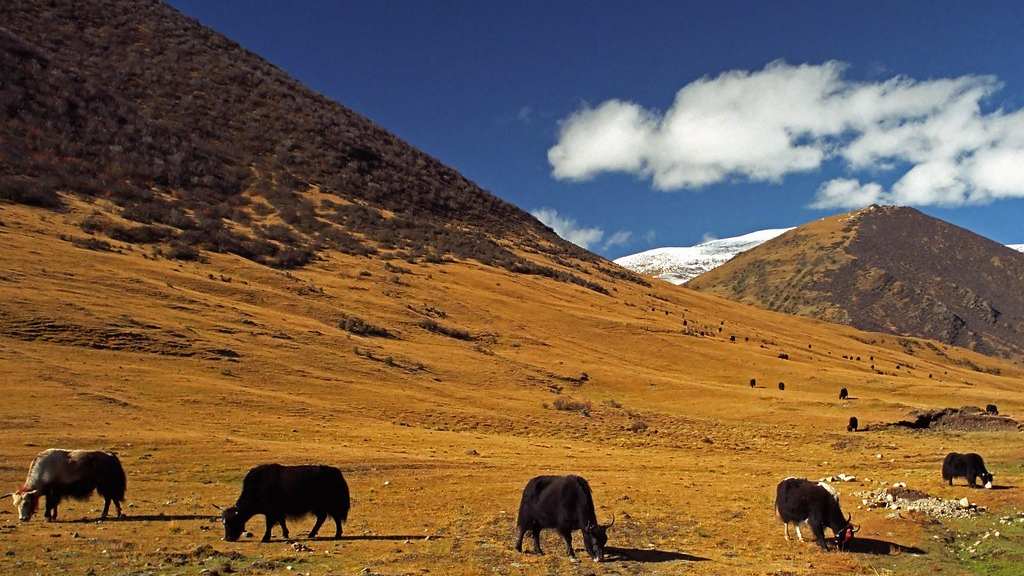
Air-dried yak meat. The local delicacy, and the centre of most Tibetan hot pots in Lhasa.
Sweet Tea Houses — Where Lhasa Actually Meets
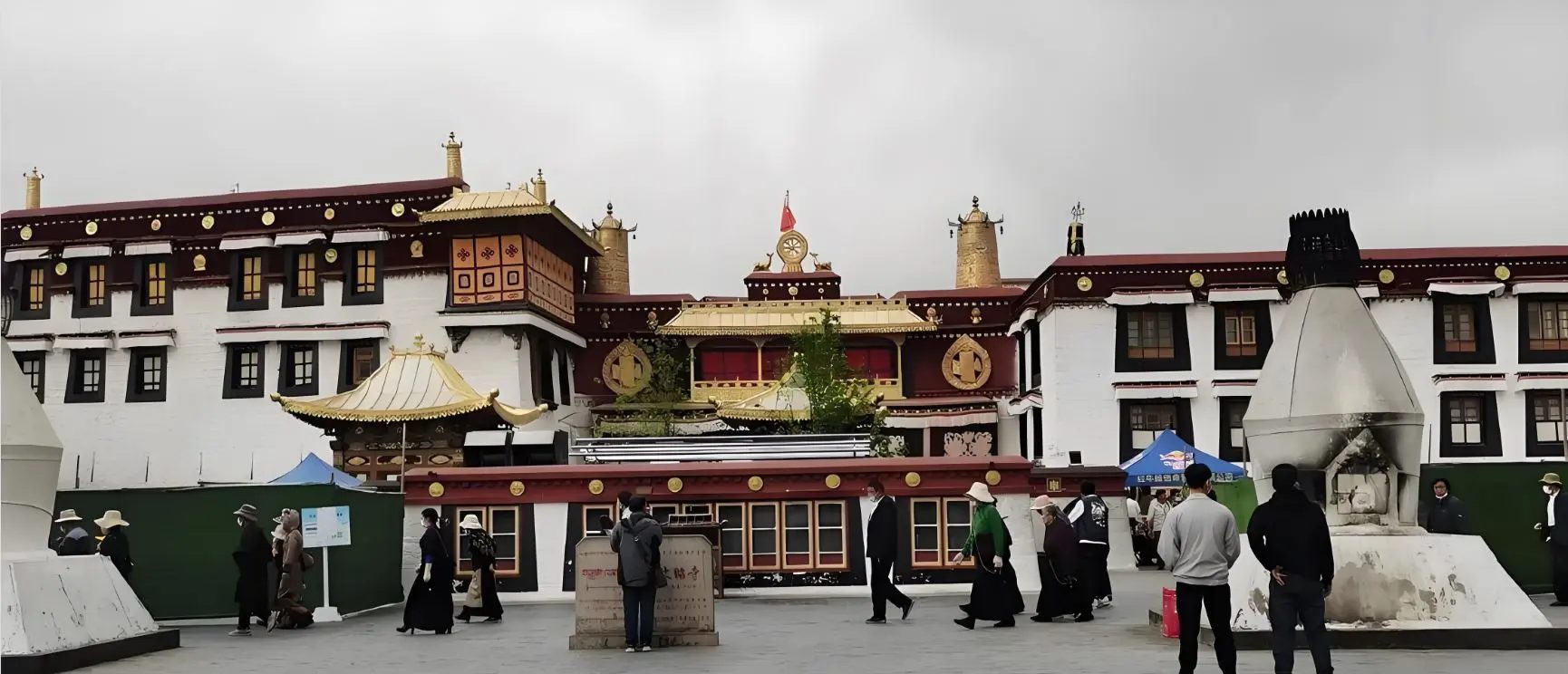
Tea houses are everywhere in Tibet, and they are where Tibetans meet friends and spend their free time. For many, tea is what coffee is to Westerners: the first thing in the morning and the drink you share. In old Tibet tea houses were for the wealthy; today people from every walk of life come to chat, catch up on news, play dice or cards and watch the world go by. Expect long wooden tables and benches shared with locals. Guangming Kamqung Sweet Tea House, near the Jokhang Temple and Barkhor Street, is one of the oldest and best known in Lhasa.
Where to Eat in Lhasa
Most restaurants for visitors cluster around the Jokhang Temple, Barkhor Street, Beijing East Road and the Potala Palace. A few that come up again and again:
- Crazy Yak Saloon — Beijing East Road. Tibetan decoration, yak meat dishes and an evening Tibetan song and dance show.
- Snow-Deity Palace Tibetan Restaurant — just west of Potala Palace Square. Tibetan dishes such as fried mutton ribs and steamed meat buns.
- Pentoc Tibetan Restaurant — in a lane off Beijing East Road. Home-made momos, thukpa (noodle soup), shemdre (rice with potato and meat curry), butter tea and chang. English menu.
- Snowland Restaurant — on Mentsikhang Road, in the Snowland Hotel. Western, Tibetan and Nepali food at fair prices.
- Potala Atmosphere Restaurant — three floors of restaurant and bar, known for Tibetan-flavour hot pot, Potala pizza and nightly live performances.
Sichuan restaurants are everywhere in Lhasa: cheap, quick and good. If you don’t like hot food, ask for “bu la” (not spicy) or “wei la” (a little spicy) — many have picture menus, which makes ordering easy. Nepali, Indian, Muslim and Western options are all available too.
Eating Outside Lhasa
Variety drops sharply the further you go from the capital, so it is worth knowing what to expect before you set off:
- Nyingchi — the “Jiangnan of Tibet” has the widest food variety of any prefecture; lower altitude brings fresh fruit and local specialities such as stone-pot chicken soup.
- Tsedang — richer in vegetables and fruit thanks to the lower altitude, but the restaurant scene is dominated by Sichuan cuisine rather than Tibetan food.
- Nagchu — basic but sustaining. Yak butter tea is plentiful and you will find simple Sichuan, Tibetan and Muslim places; bring your own snacks.
- Ngari (western Tibet) — the harshest and most remote. Vegetables and fruit are mostly imported, so food is limited in variety and expensive, though restaurants operate across most counties.
Our regional guides go into each area in more detail — start with dining in Lhasa if that is where you are heading.
Ready to Taste Tibet?
Our local guides know the best tea houses, hidden restaurants and food markets across Tibet. Let us show you where locals actually eat.
Frequently asked questions
What should I try in Tibet?
The essentials are tsampa (roasted barley flour), salted butter tea (po cha), momos, thukpa noodle soup and air-dried yak meat. The sweet tea houses are the social hub of any town.
Where are the best places to eat in Lhasa?
Around the Barkhor and the old town you find the traditional Tibetan restaurants and sweet tea houses, while the newer parts of Lhasa have a broader range of Chinese and international dining. Our guides will point you to their favourites.
Is there food for vegetarians or fussy eaters?
Yes — Lhasa has a wide range of restaurants, including Chinese, Nepali and Indian cuisine and vegetarian options, alongside the traditional Tibetan dishes.
We answer within 12 hours, Monday to Saturday.