Tibet Festivals
Tibetan festivals follow the lunar calendar, so their dates move from year to year — the same festival can land in a different month each time you look. What does not change is what they feel like: monastery courtyards full of pilgrims, butter tea passed around, opera performed outdoors for anyone who wants to sit down and listen.
Tibet’s festival calendar
What falls when — a rough guide to the year
Every date below is a typical window, not a fixed date. Use it to sense which season suits you; once you tell us your travel year we confirm the dates that actually apply.
- January – February — the quiet end of the Tibetan year: few festivals, the lowest visitor numbers, and the clearest mountain views. Losar, Tibetan New Year, usually falls in February, sometimes in early March.
- February – March — Monlam Chenmo, the Great Prayer Festival, and the Butter Lamp Festival on the fifteenth day of the first Tibetan month. Butter sculptures and lamp displays fill the Jokhang and the Barkhor.
- April — a lull between the New Year cycle and Saga Dawa. Stable weather and the first treks of the season.
- May – June — Saga Dawa, the holiest month of the Tibetan year, peaking at the full moon of the fourth Tibetan month. The kora around Mount Kailash is at its busiest on that day.
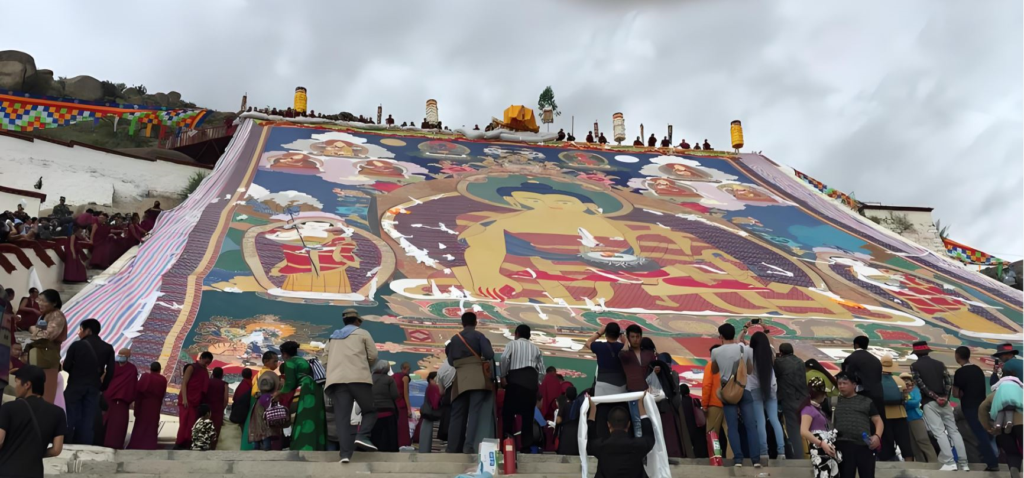
- June – July — Shigatse’s festival time. From 1 June the city takes a week off for Linka, picnics in the parks, and on the 14th to 16th days of the fifth Tibetan month (June or July) Tashilhunpo Monastery hangs three giant thangkas on three days. See festivals in Shigatse.
- July — Wangkor, the village “field-watching” festival, in the farming districts around Lhasa and Shigatse. Colourful, local, and still almost unknown to overseas visitors.
- August — the busiest festival month. Shoton (Yogurt) Festival in Lhasa: the giant thangka unveiled at dawn on the hillside at Drepung Monastery, then days of Tibetan opera in the gardens of Norbulingka. The Ganden Thangka Festival at Ganden Monastery, and the Nagchu Horse Racing Festival out on the northern grasslands, every year on 10 August (see all horse racing festivals in Tibet).
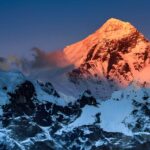
- September — Bathing Festival (Karma Dunba), also called Chaksang in Lhasa, when the river is believed to carry especially pure water. Early autumn is also the most dependable month for Everest.
- October — quiet again as high season fades: excellent light, cold nights, very few crowds.
- November — Lhabab Duchen, marking the Buddha’s descent from the heavens, on the twenty-second day of the ninth Tibetan month.
- December — Ganden Ngamchoe, the Butter Lamp Festival commemorating Tsongkhapa. Lamps are lit on rooftops, windowsills and monastery parapets across Tibet.
The festivals travellers ask about
- Tibetan New Year (Losar) — usually in February or March. The year’s biggest family festival; monasteries hold prayer ceremonies and Lhasa fills with pilgrims in their best clothes.
- Saga Dawa — the full-moon day of the fourth Tibetan month, usually in May or June. It commemorates the birth, enlightenment and passing of the Buddha, and is the high point of the pilgrimage year: the kora around Mount Kailash is at its busiest on this day.
- Shoton (Yogurt) Festival — usually August in Lhasa. The giant thangka is unveiled on the hillside at Drepung Monastery at dawn, and Tibetan opera is performed in the gardens of Norbulingka. We have written about it in detail: our Shoton Festival story.
- Ganden Thangka Festival — usually August. Ganden Monastery displays its large embroidered thangkas, and pilgrims climb the kora ridge behind the monastery.
- Bathing Festival — early autumn, a Lhasa tradition of bathing in the river during a week believed to carry especially pure water.
The five festivals worth planning a trip around
Each of these has a full character of its own — and each rewards arriving with a little background knowledge.
Tibetan New Year (Losar)
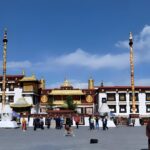
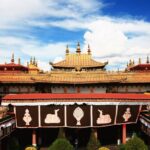
Losar falls on the first day of the first Tibetan month, usually February or early March. Preparations begin on the 29th day of the last month, when houses are cleaned and families eat guthuk — a soup of small dough balls, some hiding a chilli, salt, wool or a piece of charcoal, each said to reveal the finder’s character and cause a lot of laughter. The celebrations last about two weeks, with the main festivities in the first three days: new clothes, offerings of chemar and khapse, glasses of chang, and the greeting “Losar Tashi Delek”. Good to know: Tibet is open to foreign visitors at Losar, so you can see the New Year in Lhasa itself — the Jokhang Temple and Barkhor Street are full of pilgrims in their best clothes.
Saga Dawa
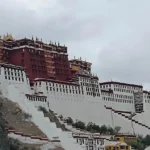
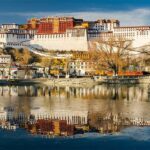
The holiest month of the Tibetan year, remembering the Buddha’s birth, enlightenment and passing — all said to have fallen on the full moon of the fourth Tibetan month (in 2027, around 18 June). Nobody organises Saga Dawa: for a whole month, ordinary people — drivers, farmers, shopkeepers, children — walk the kora around the Potala Palace, the Jokhang and the old town, prayer wheels turning clockwise. Most Tibetans do not eat meat that month, almost no animals are killed, and good deeds are said to count many times over. Visitors are welcome to walk the kora too: keep clockwise, match the pilgrims’ pace, and step around people doing prostrations, never over them. At Mount Kailash, the full-moon day draws thousands of pilgrims to Tarboche to watch the great prayer flagpole raised — guesthouses around the mountain fill up, so book months ahead.
Shoton, the Yogurt Festival
Lhasa’s biggest summer party, usually mid-to-late August — in 2026 it ran from 12 to 18 August, and it lasts roughly six days. It opens before sunrise on day one: from three or four in the morning, tens of thousands of people climb the hill to Drepung Monastery to watch a giant thangka of the Future Buddha unrolled across the hillside — a display that lasts about three hours, with Sera Monastery holding its own thangka the same afternoon. Then the festival moves to Norbulingka for days of masked Tibetan opera and family camping in the gardens — the tradition of guo linka, when Lhasa families bring tents, food and grandparents and stay for days. The yogurt that gives the festival its name is pure, unsweetened yak-milk yogurt, eaten with a spoonful of white sugar stirred slowly through. In 2006 the festival was added to China’s national list of intangible cultural heritage.
Nagchu Horse Racing Festival
Opens every year on 10 August and runs from several days to two weeks — the biggest horse festival in Tibet, and one of the most important events of the nomads’ year. Families from across the northern grassland set up a tent city of thousands of tents, with horses in their finest saddles and riders in traditional dress. Racing, archery at full gallop, wrestling and stone lifting, yak racing, and circle dances and opera in the evenings. Hotels in Nagchu town fill fast around the festival — book at least two months ahead, and remember that Nagchu sits at about 4,500 m, so plan several days in Lhasa first.
The Bathing Festival (Karma Dunba)
Seven days in early autumn — in 2027, expected around 6–12 September — while the star Karma Dunba shines in the night sky. In the evenings, families go down to the rivers to bathe and wash clothes, washing away illness and bad luck for the year ahead. It is a quiet, private custom rather than a public show: much of it happens after dark, and Tibetans see it as personal time. Visitors can join in the late afternoon — bring no soap or shampoo (nothing that foams on the water), and no photographs of people bathing. It comes straight after Shoton, so one trip can take in both.
Festivals beyond Lhasa
The festival year is not only Lhasa’s. In Shigatse, Tashilhunpo Monastery hangs three giant thangkas on its thangka wall over three days, usually in June or July, and from 1 June the whole city takes a week off for the Linka picnic holiday — see festivals in Shigatse, our 8-day Tashilhunpo Thangka Festival tour and our 7-day Shigatse Linka Week tour. Gyantse holds its horse race festival in summer — racing, archery, opera and games. At Samye, Tibet’s first monastery, monks perform masked cham dances for Samye Dhoede in June or July. And out at Ganden Monastery in August, pilgrims climb the kora ridge behind the monastery for the thangka showing. Tell us where you want to be and when, and we will build the itinerary around it.
Planning a trip around a festival
Travelling during a festival changes the trip — in good ways and practical ways. Monasteries and streets are at their most alive, but permits, trains and hotels fill up early. Have a look at the festival tours we run, or tell us your dates and we will tell you which festivals fall within them.
When is the Shoton Festival held?
It follows the Tibetan lunar calendar and usually falls in August. We have written about what it feels like in Lhasa in our Shoton Festival story.
Do Tibetan festival dates change every year?
Yes. Tibetan festivals are set by the lunar calendar, so they move against the Gregorian calendar by several weeks each year. Every date on this page is a typical window rather than a fixed date — tell us your travel year and we will confirm the days that actually apply.
Which festival is easiest to see on a normal tour?
Shoton in Lhasa, usually in August, and Saga Dawa in May or June. Both take place in Lhasa itself, fit comfortably inside a standard four-day Lhasa itinerary, and need no additional permits beyond the usual Tibet permits.
Can I plan my Tibet trip around a festival?
Yes — and it is worth it, but plan early: permits, trains and hotels fill up quickly around the big festivals. See the festival tours we run, or tell us your dates and we will tell you which festivals fall within them.
Can I combine a festival with Everest or Mount Kailash?
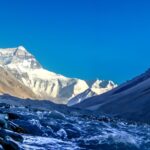
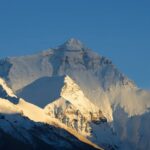
Yes. Saga Dawa is the classic case: it is the busiest day of the year on the Kailash kora, and we build the itinerary so you are on the circuit on the right days. Festivals in Lhasa combine easily with Everest Base Camp, which needs roughly two extra days from the city.
We answer within 12 hours, Monday to Saturday.