


Silk Road & Tibet Overland Journey
- Duration
- 28 nights / 29 days
- Pace
- Moderate
- Group size
- Private, on your dates
- Best season
- May to early October
The trip at a glance
Twenty-nine days. Two of Asia's greatest routes. One group that refused to rest.
Beijing · Hohhot · Xi’an · Silk Road · Kashgar · Lhasa · Gyantse · Shigatse
- Beijing
- Hohhot
- Xi'an
- Silk Road
- Kashgar
- Lhasa
 Gyantse
- Shigatse
Your Journey Designer
John
Silk Road & Tibet Overland Pioneer
New Zealand
John from New Zealand is one of our longest-standing international partners — a man with an enduring love for the great overland routes of Central Asia and the Tibetan plateau. A former member of parliament for Dunedin, he organised and led multiple ambitious China and Tibet tours over the years, each time choosing the long route over the short one.
He has a natural instinct for the cultural dimensions of travel — the informal Chinese character lesson on the coach through Xinjiang, the decision to put his whole group on bicycles on their first afternoon in Lhasa rather than rest. His journeys have a particular energy: curious, unhurried, willing to go further than necessary because further is where the real experience lives.
How This Tour Came to Be
We seem to share a special bond with travellers named John. Two remarkable partners bear this name — one from New Zealand and one from the United Kingdom — and each brought something entirely their own to years of work together. John from New Zealand organised several tour groups with us, most of them ambitious multi-week journeys that combined visits to inland Chinese cities with a Tibet segment. These were not short holidays. They were real expeditions, spanning some of the most varied geography and culture in Asia.
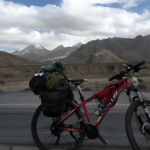
We first met around 1999. At the time, John was a serving member of parliament for Dunedin — a detail he mentioned alongside something that clearly held personal significance: he had once been received for a personal interview with former Premier Zhu Rongji. After his group arrived in Lhasa and transferred to the hotel, our standard practice was to allow travellers time to rest and begin acclimatising to the altitude. John had other plans. ‘Mark, we didn’t come here just to rest. We want to do something active,’ he said. That afternoon, instead of quiet hotel rooms, his entire group cycled around downtown Lhasa. Their stay in Lhasa lasted only four days — but it began on bicycles, and that detail stayed with our team for years.
On one of his longer journeys, the group crossed a vast stretch of China before entering Tibet: Beijing, Xi’an, the ancient Silk Road through Gansu, then Xinjiang — both the northern and southern circuits — ending at Kashgar before flying to Xining and then Lhasa. I joined the group as accompanying guide from Beijing. Many memorable moments accumulated over 29 days on the road. Somewhere on the coach between Lanzhou and Dunhuang, to fill the hours across the Gobi, I gave the group an informal lesson in Chinese characters — specifically, how to tell apart four that look nearly identical to foreign eyes: 人 (rén, person), 大 (dà, big), 天 (tiān, heaven) and 夫 (fū, husband). Each is distinguished by a single additional stroke. I explained the differences carefully, then noted that the extra stroke on 夫 extends upward beyond the top line — suggesting, I said, that a husband considers himself bigger than heaven. The coach erupted. It was exactly the kind of moment that a 29-day journey can produce, and that no itinerary ever plans for.
Two further memories from our partnership stay with the team. On a return visit to New Zealand — arranged much as Kim’s Guam visit had been — we were received with remarkable warmth. Lady Janny offered a stay at her home; Julie extended invitations for seafood meals along the coast. And on a separate Inner Mongolia tour, when Julie discovered that the toilet in her ger accommodation had broken and grew anxious about being billed for the damage, John and I went directly to the hotel manager to resolve the matter on her behalf. It was a small incident, but it taught us something that still guides how we work: standing fully for guests means being present in the difficult moments, not only the pleasant ones.
What You Will See & Do
- Cycling around downtown Lhasa on arrival day — instead of resting
- 29 days across China’s two greatest overland routes
- Full Silk Road circuit: Xi’an, Lanzhou, Jiayuguan, Dunhuang, Turpan, Kashgar
- Xinjiang — both northern and southern circuits including Kashgar
- Mogao Grottoes at Dunhuang — one of the world’s great Buddhist art sites
- Inner Mongolia grasslands and ger-style overnight
- Tibet loop: Lhasa, Gyantse, Shigatse and return
- John — NZ Member of Parliament, recipient of a personal Premier Zhu Rongji interview
- Chinese character lesson on the coach — husband bigger than heaven
- Return visit to New Zealand: personal invitations, coastal seafood, remarkable hospitality
Three Immersive Pillars
‘We Didn’t Come Here to Rest’
Most tour groups arriving in Lhasa after a long journey need and expect a rest day to acclimatise. John’s group did not want one. The moment they checked in, he redirected the entire afternoon: his group cycled around downtown Lhasa instead. This was not recklessness — it was a statement of how he approached travel. The four days in Lhasa that followed were equally active. It set the tone for every trip we ran together: the pace was never passive, the group was never just passengers.
The Long Road — Silk Road to Tibet
The 29-day itinerary that became the defining journey of this partnership is one of the most ambitious combined routes we have ever operated. From Beijing south to Xi’an, then west along the ancient Silk Road through Lanzhou, Jiayuguan and Dunhuang — past the Mogao Grottoes, across the Gobi Desert, into Xinjiang with its twin circuits of northern grasslands and southern oasis cities, culminating in Kashgar — and then by air to Xining and Lhasa. The route covers two of Asia’s great overland traditions in a single journey, and doing it well requires local knowledge across every section.
Standing Fully for Guests
On a separate Inner Mongolia tour, a small but telling incident unfolded. Julie, one of John’s group members, found the toilet in her ger-style accommodation had broken during the night. She was upset — not just by the inconvenience, but by the concern that she might be held responsible for the damage. John and I sat with the hotel manager together and resolved the matter properly on her behalf. It cost us time and a degree of diplomatic effort. It was also exactly the right thing to do. We have carried that standard forward into every trip since.
Another overland story: Venky’s self-drive tour to Everest Base Camp.
Trip at a Glance
- Tour Leader John
- Year 2018
Where you go, and how high you sleep
The route, stop by stop
Beijing → Hohhot → Xi'an → Silk Road → Kashgar → Lhasa → Gyantse → Shigatse
- Beijing — Capital FoundationsDay 1
- Hohhot & Inner Mongolia GrasslandsDay 4
- Pingyao Ancient TownDay 7
- Xi'an — The Ancient CapitalDay 8
- Lanzhou → Jiayuguan → Dunhuang — Into the Silk RoadDay 11
- Turpan — Vineyards, Fire Mountains and Underground WaterDay 14
- Urumqi & Kashgar — Northern and Southern XinjiangDay 17
- Kashgar → Urumqi → Xining → Lhasa — Into TibetDay 22
- Lhasa — Two Days in the Holy CityDay 24
- Gyantse → Shigatse → Return to LhasaDay 26
- Departure — Lhasa to GuangzhouDay 29
Day by day
Beijing — Capital Foundations
- Meet the group on arrival. Transfer to hotel in central Beijing.
- Sightseeing across three days: Tian’anmen Square, the Forbidden City, the Summer Palace and Yonghegong Lama Temple.
- Evening entertainment: acrobatic performances and Peking Opera.
- Authentic Peking duck dinner.
- Board an overnight sleeper train to Hohhot on the evening of Day 3.
Hohhot & Inner Mongolia Grasslands
- Arrive Hohhot. Explore downtown, including Dazhao Temple — sharing its pronunciation with a famous monastery in Lhasa.
- Day trips to surrounding grassland areas. Most group members came from agricultural backgrounds and took particular interest in comparing Mongolian herding traditions with farming life back home.
- Ger-style overnight accommodation in the grasslands on one night.
- Overnight train to Pingyao, Shanxi Province, departs evening of Day 6.
Pingyao Ancient Town
- Arrive Pingyao. Stroll time-honoured streets lined with traditional red lanterns.
- Overnight in a family-run inn with traditional northern-style brick kang beds and vintage décor.
- Western-style breakfast prepared by the innkeeper the following morning — greatly enjoyed by the group.
- Train to Xi’an in the afternoon.
Xi'an — The Ancient Capital
- Arrive Xi’an. Visit the Terracotta Warriors and Horses Museum — one of the world’s most significant archaeological sites.
- The Big Wild Goose Pagoda, the ancient city wall, the Bell Tower and Drum Tower.
- Dumpling feast dinner and Tang Dynasty song-and-dance performance.
- Overnight train to Lanzhou departs on the evening of Day 10.
Lanzhou → Jiayuguan → Dunhuang — Into the Silk Road
- Early morning arrival in Lanzhou. Brief city tour: the Yellow River Iron Bridge and local museums.
- Board a coach heading west along the historic Silk Road toward Dunhuang. Midway near Wuwei, the coach broke down. After several hours’ wait, a replacement vehicle arrived and the journey continued — an unplanned delay that became part of the trip’s story.
- Stop in Wuwei to see the Flying Horse Stepping on a Swallow bronze relic site.
- Day 12: Tour the Jiayuguan Great Wall fortress — the ‘First Grand Pass under Heaven’ at the western terminus of the Ming Wall. Drive onward to Dunhuang across sweeping Gobi Desert landscapes.
- Day 13: Mogao Grottoes — one of the world’s most important Buddhist art repositories, with painted caves spanning over a thousand years. Crescent Moon Spring oasis.
Turpan — Vineyards, Fire Mountains and Underground Water
- Train from Liuyuan station to Turpan.
- Flaming Mountain — the dramatic red eroded ridgeline of the Turfan Depression.
- Karez underground irrigation system — a 2,000-year-old network of hand-dug channels that brings snowmelt from the Tian Shan to the desert floor.
- Grape Valley and local family homestays. Most group members had never encountered a desert vineyard.
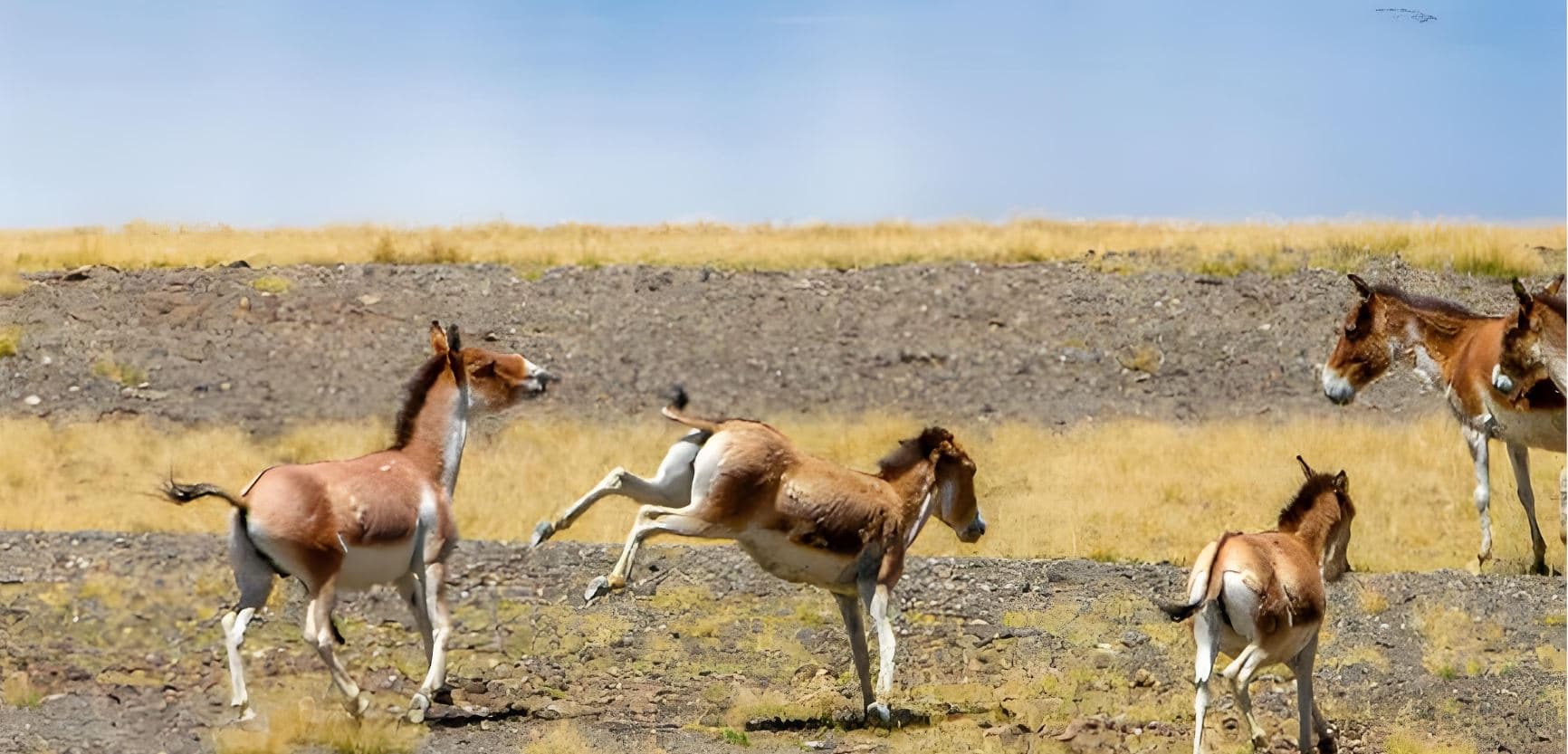
Urumqi & Kashgar — Northern and Southern Xinjiang
- Day 17: Urumqi sightseeing — the Grand Mosque and the International Grand Bazaar.
- Day 18: Tianchi (Heavenly Lake) above Urumqi, then begin the long overland drive south toward Kashgar, passing through Kuqa en route.
- Day 19: Journey through Aksu region.
- Days 20–21: Kashgar — the ancient Silk Road trading city at China’s western extremity. Local cultural experiences, the old city quarter, the Sunday market.
- Note: Somewhere on the long coach drive between Lanzhou and Dunhuang, I taught the group four Chinese characters — 人 (person), 大 (big), 天 (heaven) and 夫 (husband) — and explained that the husband character extends its top stroke upward beyond the line, implying a husband considers himself bigger than heaven. The coach erupted. The lesson was remembered long after the characters were forgotten.
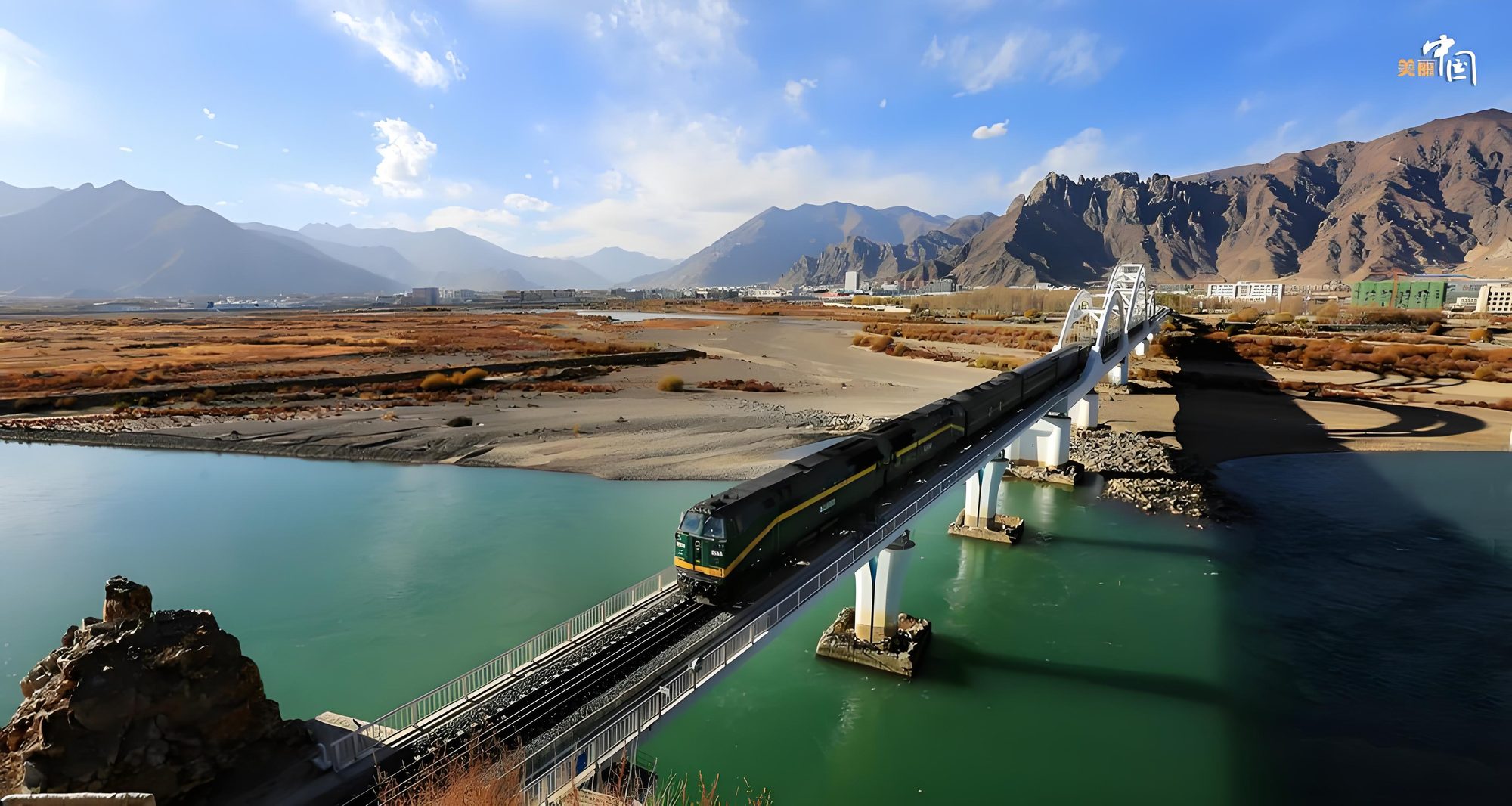
Kashgar → Urumqi → Xining → Lhasa — Into Tibet
- Day 22: Fly from Kashgar to Urumqi, then connect onward to Xining.
- Day 23: Morning flight from Xining to Lhasa. Transfer to hotel. Acclimatisation — or, for this group, a bicycle.
Lhasa — Two Days in the Holy City
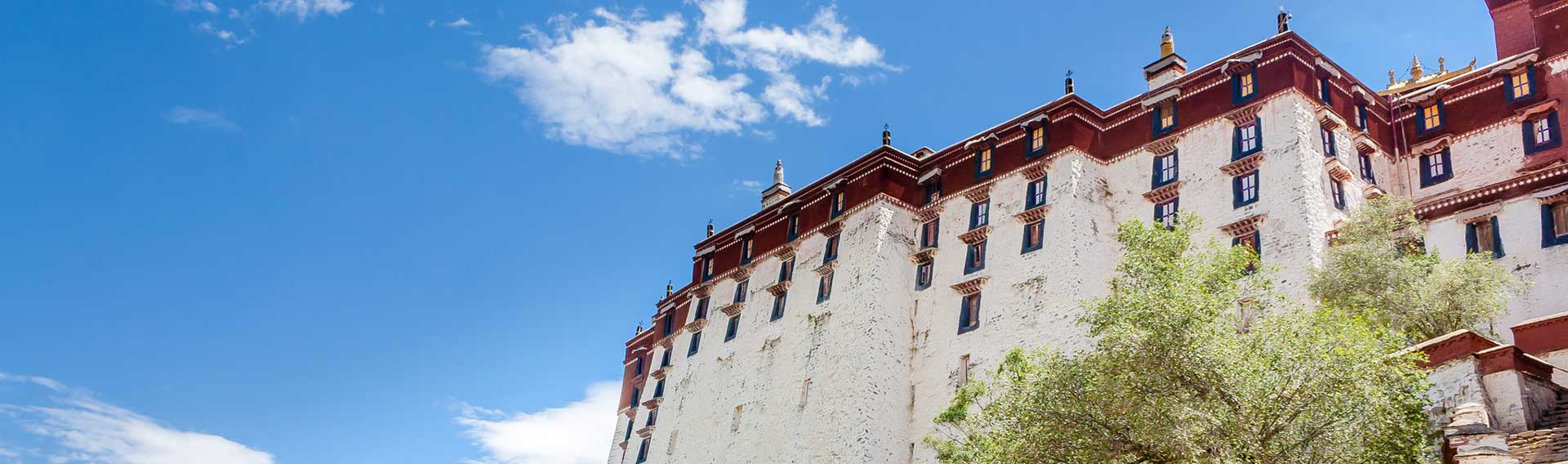
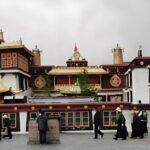
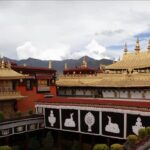
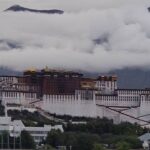
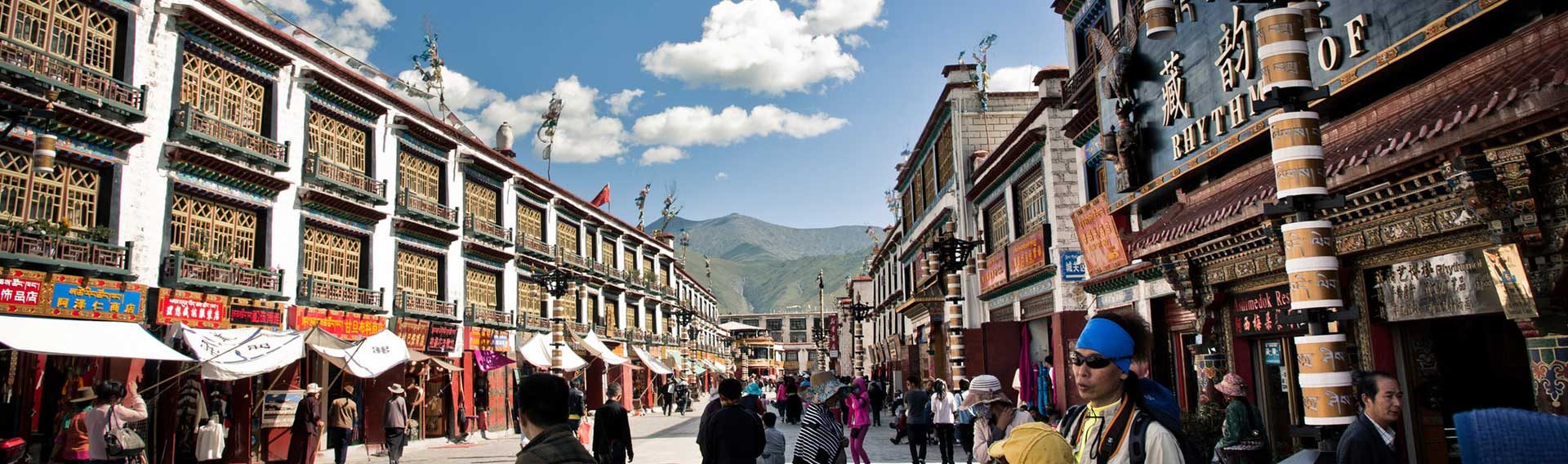
- Potala Palace, Jokhang Temple, Barkhor Street pilgrim circuit.
- Sera Monastery and the afternoon monk debate.
- Two full days of Lhasa cultural sightseeing — compact but purposeful.
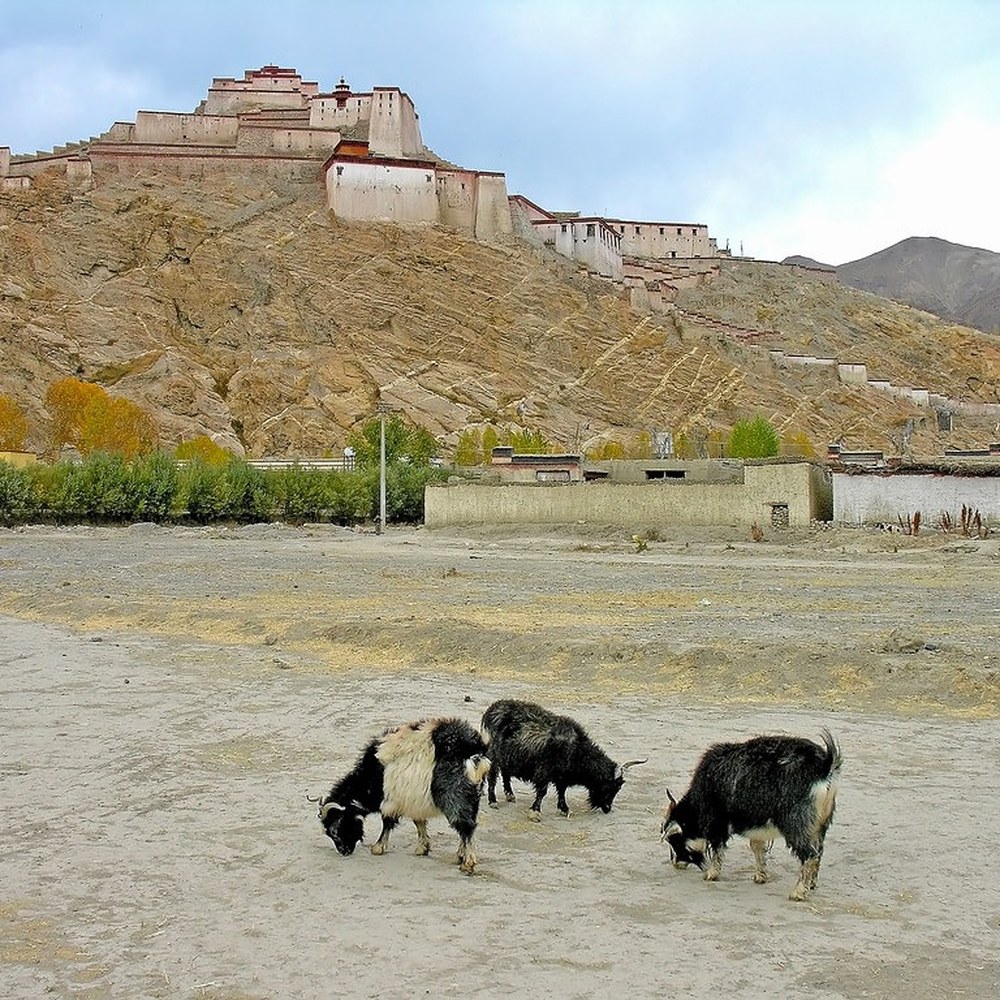
Gyantse → Shigatse → Return to Lhasa
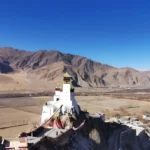
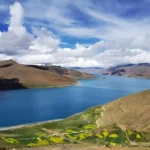
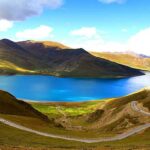
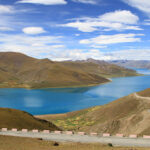
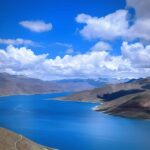
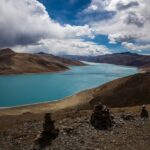
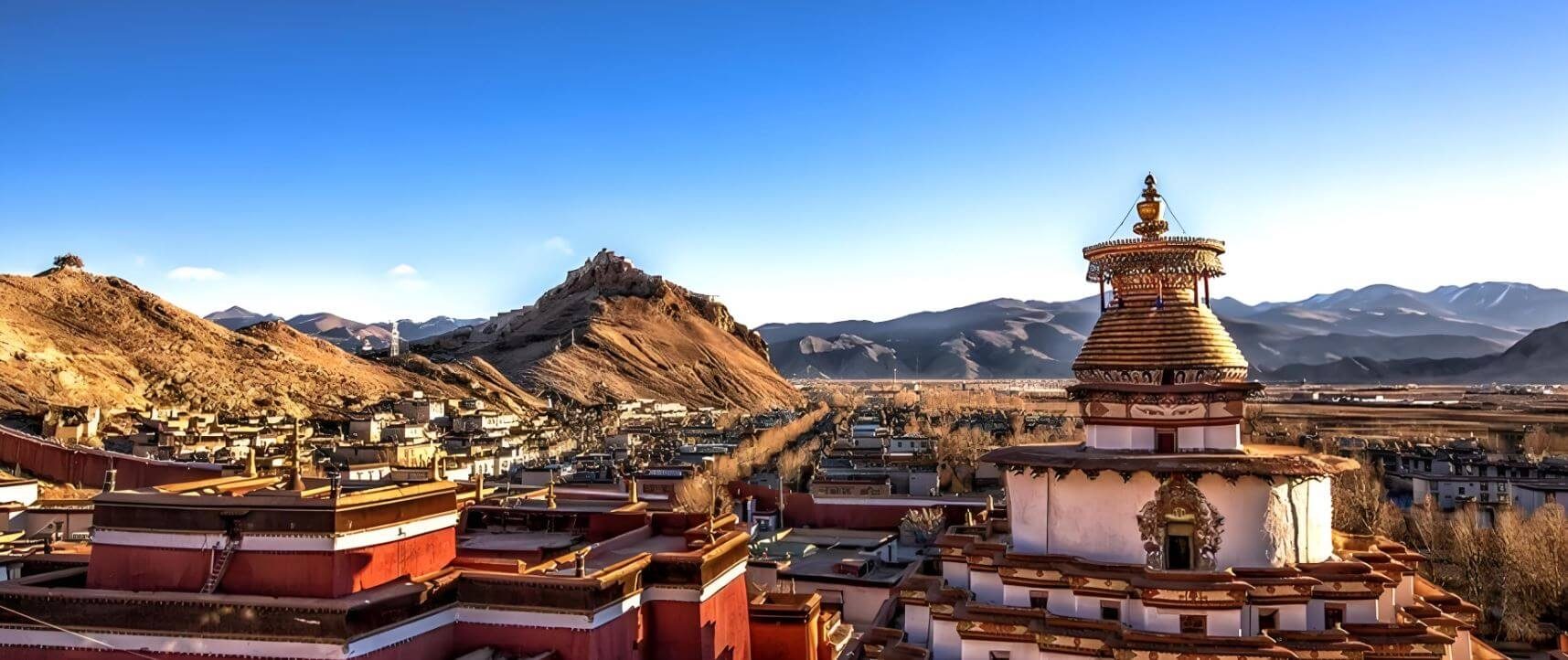
- Day 26: Drive south from Lhasa to Gyantse via Yamdrok Lake and the Kamba La pass. Gyantse Dzong, Pelkor Chode Monastery and the Kumbum stupa.
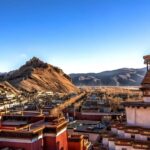
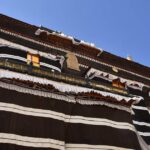
- Day 27: Drive west to Shigatse. Tashilhunpo Monastery — seat of the Panchen Lama.
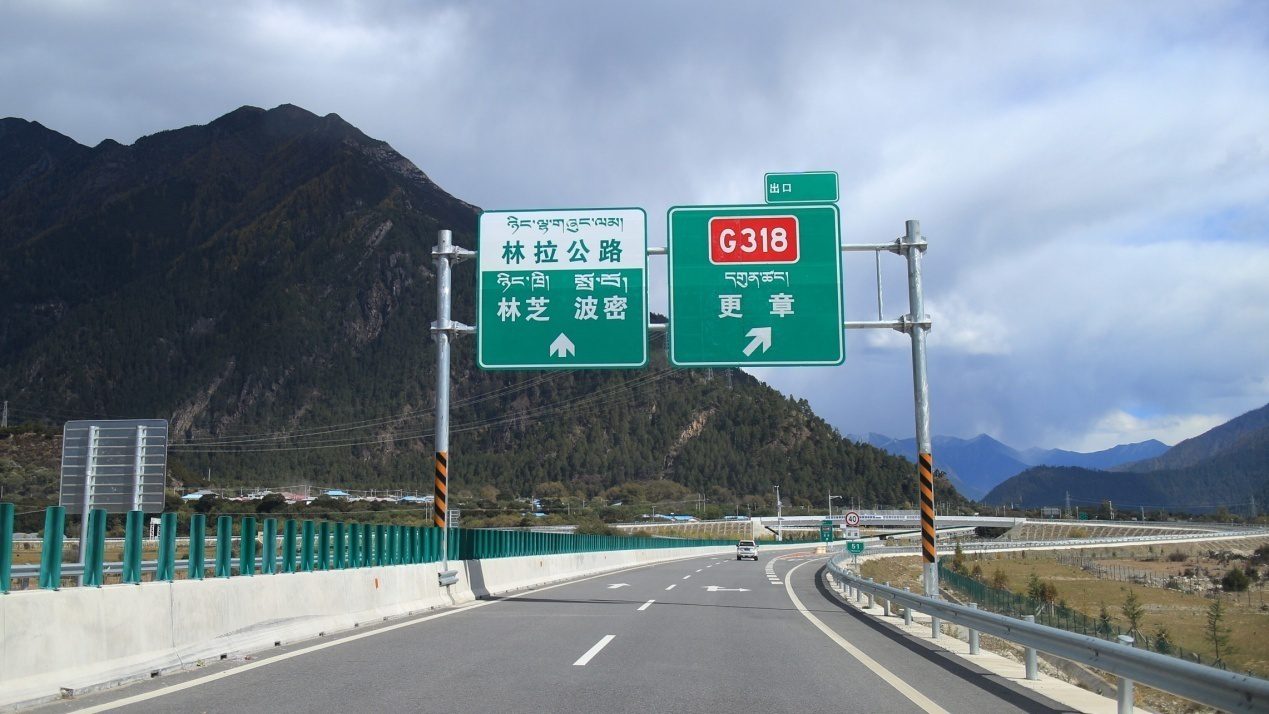
- Day 28: Return to Lhasa via the modern expressway.
Departure — Lhasa to Guangzhou
- Fly from Lhasa to Guangzhou for connecting international flight home.
- Twenty-nine days. Two of Asia’s greatest overland routes. One group that cycled through Lhasa on Day 1.
Photos from this route
Questions travellers ask
How large will my group be?
This is a private tour — your party travels alone on your own dates, with your own guide and vehicle throughout. The group is only the people you bring; solo travellers, couples and families all travel this way. If you would rather join a fixed small-group departure (usually 3–8 travellers) on one of the classic routes, tell us on the form and we will suggest departures that fit your dates.
Which permits does this tour need?
We arrange every permit this trip needs as part of your booking — you only need a valid passport. This route needs two: the Tibet Travel Permit, which every foreign visitor needs to enter Tibet and the Alien’s Travel Permit, for places outside Lhasa. All of them are included in your quote.
How do I get to the starting point of the tour?
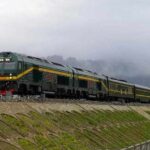
We meet you on arrival in Lhasa — your guide is waiting and your transfer is included. You can reach Lhasa by flight or by the Qinghai–Tibet railway. Many travellers fly in and take the train out (or the other way round) to see both faces of the plateau, and we are happy to advise on flights and train tickets as part of your booking.
Can this tour be customized?
Yes — every tour on this site can also run as a private departure with your own dates and pace, arranged by our own office in Lhasa. Send us your dates, group size and interests and we will adapt the itinerary around you.
Similar tours you may like