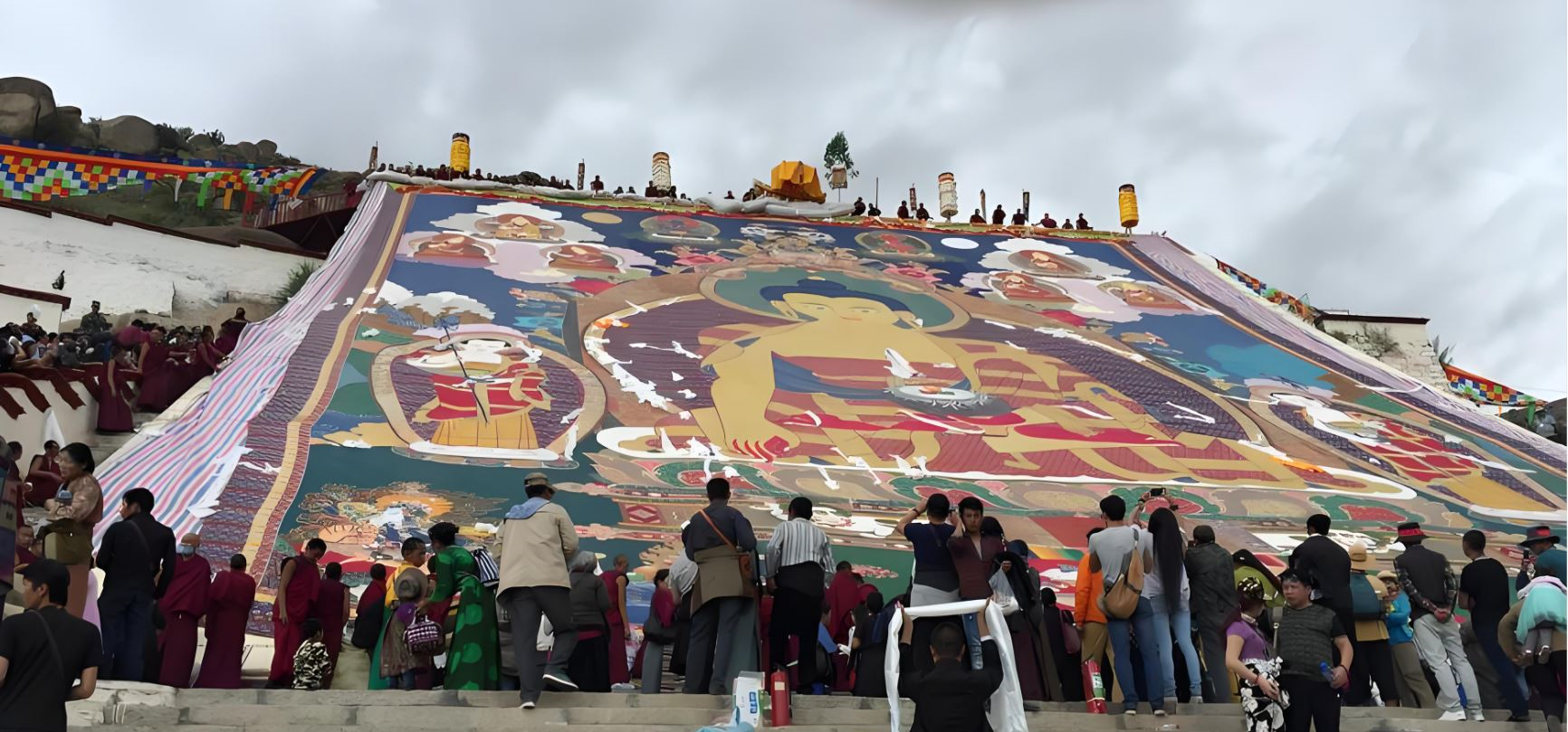
Losar, the Tibetan New Year, falls on the first day of the first Tibetan month, usually in February or early March. Preparations start on the 29th day of the last month, and the celebrations last about two weeks, with the main festivities in the first three days. Losar is also celebrated in Bhutan, Mongolia and other Himalayan areas.
Important: Tibet is usually closed to foreign visitors for some weeks around Losar. You can’t see Losar in Tibet itself in most years, but visiting soon after it reopens, when pilgrims are still in Lhasa, is a lovely time to come.
How is Losar Celebrated?
Losar is a time of family, music, dancing and fun. Monasteries hold ceremonies and masked dances, and in some places there are torch processions and comic plays.
Gutor Day 1 — Cleaning & Cooking
On the 29th of the last month, the whole house is cleaned, especially the kitchen. In the evening the family eats guthuk, a special soup with small dough balls. Some dough balls hide an object inside, such as a chilli, salt, wool or a piece of charcoal. Whatever you find is said to show your character, which causes a lot of laughter.
Gutor Day 2 — Religious Ceremonies
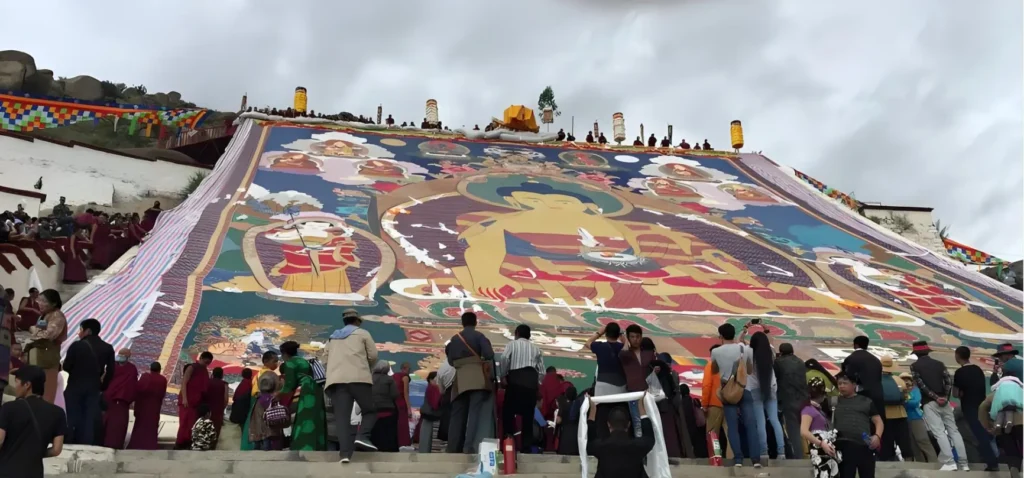
On the last day of the year, people visit monasteries to pray and make offerings to the monks. Monasteries hold ceremonies to drive away the bad luck of the old year. In the evening the family has a big reunion dinner.
New Year’s Day — Family & Blessings
People get up very early, wash and put on new clothes. They place offerings at the family shrine, including a chemar box of tsampa and barley and torma sculptures made of butter and flour. In the past, the first water of the new year was fetched from the river or well before dawn, which was believed to bring good luck. The day is spent with family, sharing khapse (fried pastries) and chang (barley beer), and greeting each other with “Losar Tashi Delek!”
The History of Losar
The word “Losar” comes from “lo” (year) and “sar” (new). Losar goes back to pre-Buddhist times, when Tibetans followed the Bon religion. Every winter they held a ceremony and burned incense to please the local spirits and protector gods. Later the festival became a Buddhist New Year celebrated across the Tibetan plateau.