







































































Why Are Tibetan Doors So Low? What Bowing Under the Door Means
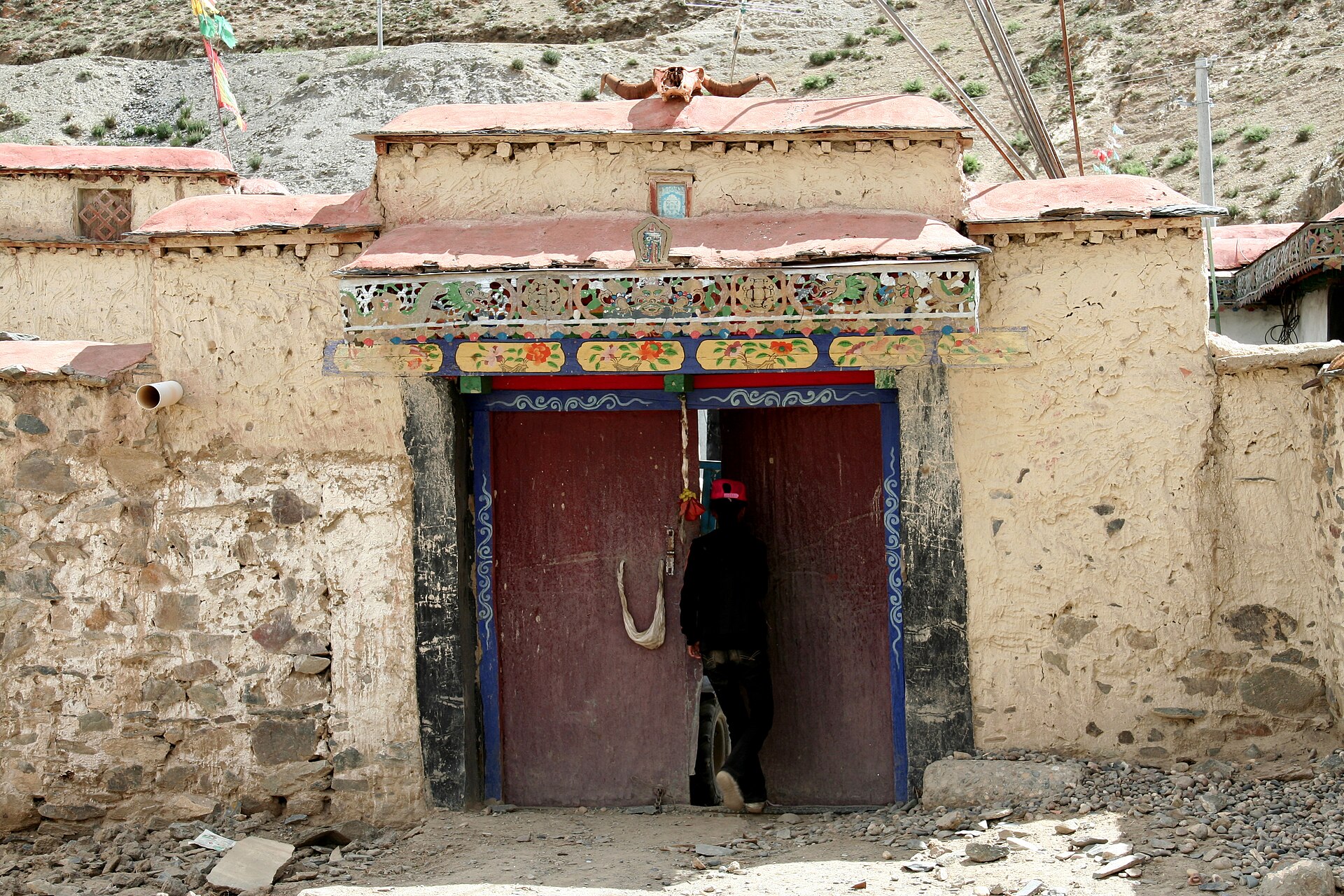
Short answer: you bow your head when you go in. Tibetans say the low door makes every person, guest or family member, bow to the host and hostess and to the Buddhist shrine inside the house. An old folk story about the Ro-Lang gives a second reason. You can still see low doors in old Lhasa lanes and in village houses.
What Tibetans say: the door makes you bow
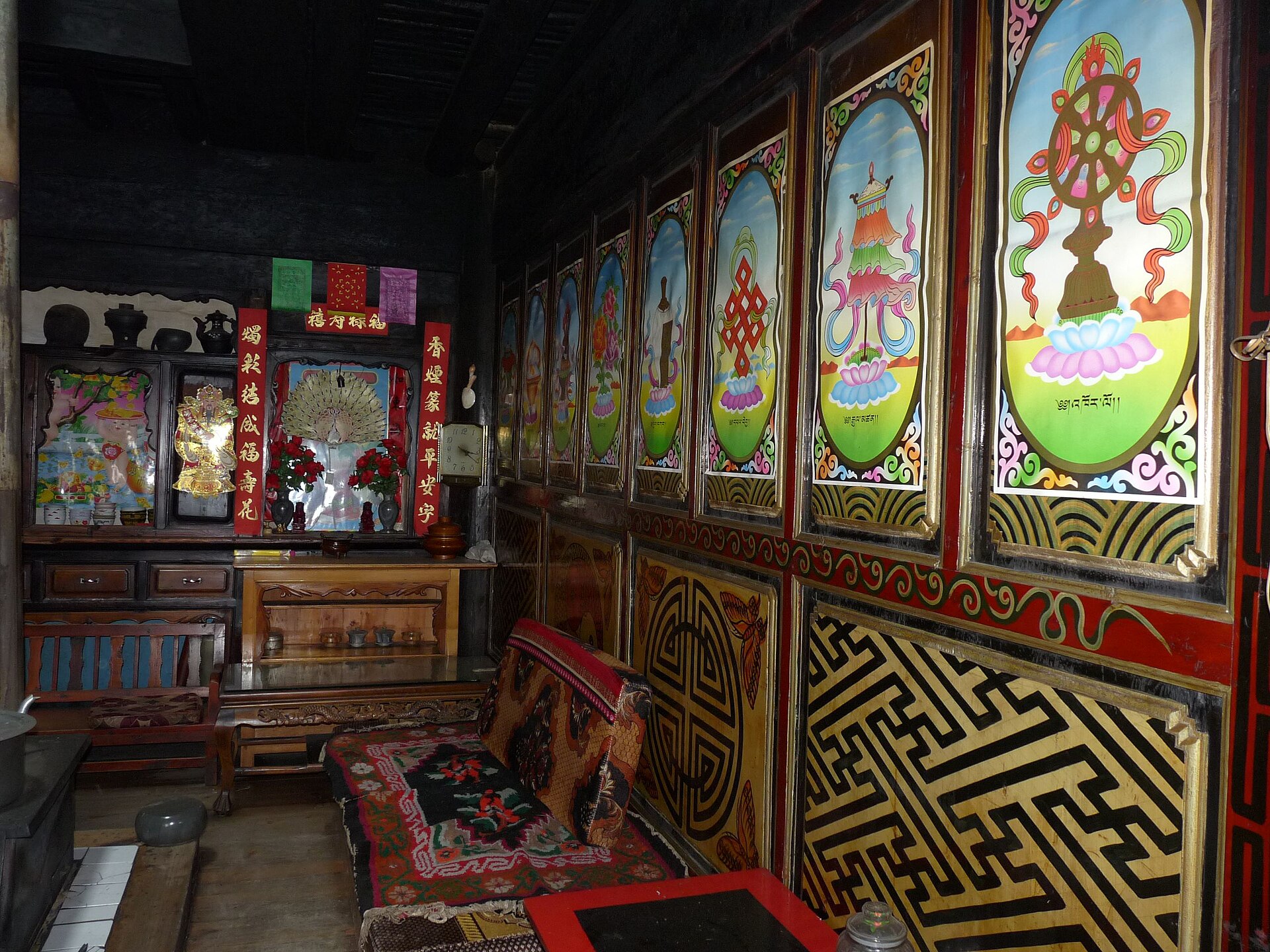
Ask a Tibetan and this is the first answer you will hear. In a traditional home the family shrine is the most important place in the house. To enter, you must duck under a low, narrow frame, and ducking means bowing. Guests do it, and so do the people who live there.
So the door is a small, daily act of respect. Coming in, you bow to the host and hostess and to the shrine. Going out, the host and hostess bow again, and that second bow is a bow to nature. Nobody has to say anything. The house teaches the manners.
The Ro-Lang story
There is also an older folk explanation. In Tibetan folklore a Ro-Lang is a “risen corpse”. It is said to be stiff and unable to bend at the waist, so a low door frame stops it from walking in. The Ro-Lang is recorded in folklore studies, for example in an article by Turrell Wylie in History of Religions in 1964.
We tell this as a folk story, not as a fact. Many Tibetans know it, but it is not the reason they give first.
Other reasons people give
- Cold and wind. A small door lets in less cold air.
- Little timber. Big timber is hard to find on the plateau, so frames are kept small.
These are common explanations, not proven ones. They do fit Tibetan building as a whole: thick walls, small openings and few windows, made for a cold, dry climate.
Look at the windows too: why the black frames?
Many old houses have a black frame around each window, wider at the bottom than at the top. In the village photo below you can see the dark painted frames around the windows. Black is a protective colour, because the protector deities are shown in black. Frames are often black in much of Tibet, and in some regions, such as the east, they are often white.
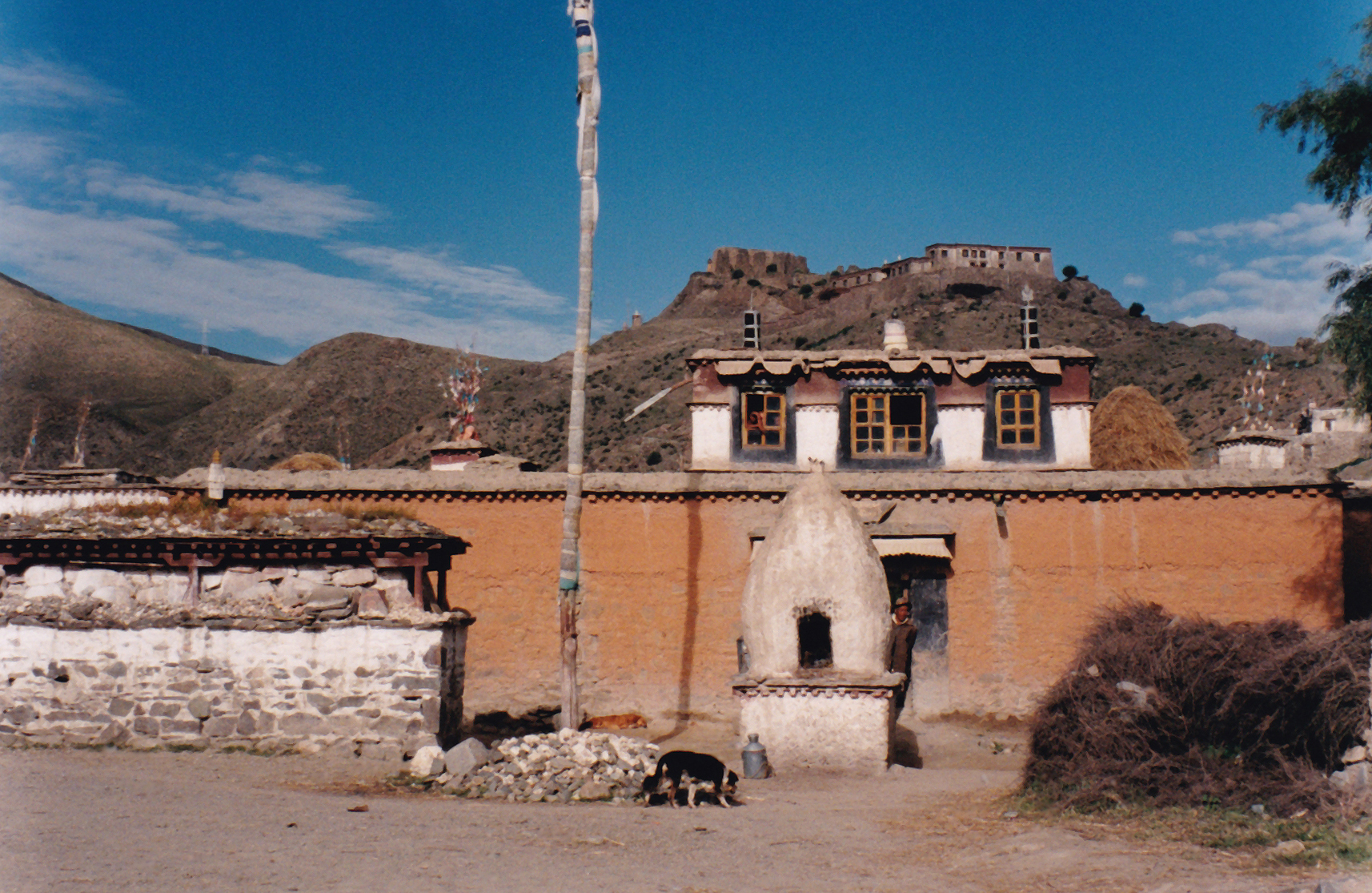
Where can you still see low doors?
- In the old lanes around the Barkhor in Lhasa.
- In village houses on the road from Lhasa to Gyantse and Shigatse, and around Yamdrok Lake.
You will not find them in new buildings or hotels. Low doors belong to old houses and village homes.
Tips for visitors
- Watch your head. Tall visitors hit the frame more often than they expect.
- Bow a little as you go in, as local guests do.
- Ask your guide before you take photos inside a home, and never photograph the shrine without permission.
Visit a Tibetan home on a tour
A family visit is the easiest way to see a low door from the inside. Our 4-day private Lhasa tour includes a visit to a local Tibetan family, with dinner, and the 8-day Tashilhunpo Thangka Festival tour visits a farming family near Shigatse. For another trip, tell us what you would like to see on the Plan Your Trip page and we will plan village and home visits into it.
Photo credits: Tibetan house on the outskirts of Lhasa, by Carla Antonini, CC BY-SA 3.0; roadside village near Lhasa, by G41rn8, CC BY-SA 4.0; inside a Tibetan home, by Caihm, CC BY 3.0; all via Wikimedia Commons, resized.
Frequently asked questions
Why are doors in old Tibetan houses so low?
Tibetans say the low door makes everyone bow their head on the way in, as a sign of respect to the host and hostess and to the Buddhist shrine inside the house. A folk story about the Ro-Lang, a stiff “risen corpse” that cannot bend, gives a second explanation.
What is a Ro-Lang?
In Tibetan folklore a Ro-Lang is a “risen corpse” that is stiff and cannot bend at the waist. The story says a low door frame stops it from walking into the house. We tell it as a folk story, not as a fact.
Are all Tibetan doors low?
No. Low doors are found mainly in old houses in Lhasa lanes and in village homes. New buildings and hotels have normal doors.
Why do Tibetan windows have black frames?
Black is a protective colour in Tibetan tradition, because protector deities are shown in black. The painted frame is usually wider at the bottom than at the top. In some regions, such as the east, the frames are often white.
Can I visit a Tibetan home on a tour?
Yes. Our 4-day private Lhasa tour includes a visit to a local family with dinner, and the 8-day Tashilhunpo Thangka Festival tour visits a farming family near Shigatse. We can also plan home and village visits into other private tours.
We answer within 12 hours, Monday to Saturday.