






















Can Children Travel to Tibet? The Altitude Truth Every Family Must Know
“Can I bring my child?” It is one of the most common questions we receive from families planning a Tibet trip. The answer depends almost entirely on one thing: the child’s age. And the threshold is more specific — and more important — than most families realise before they ask.
Why Very Young Children Face a Different Risk
Altitude sickness in adults is well understood: reduced oxygen at high elevation triggers headaches, nausea, fatigue, and in serious cases the life-threatening conditions HACE (High Altitude Cerebral Edema) and HAPE (High Altitude Pulmonary Edema). Adults can communicate their symptoms, and guides and doctors know what to watch for.
In very young children — particularly those under three years old — the physiology is fundamentally different. The cardiovascular system in the first years of life is still developing. The heart and lungs of an infant or toddler are not simply a smaller version of an adult’s. They respond to oxygen deprivation in ways that are less predictable, faster-developing, and harder to detect until a situation has already become serious.
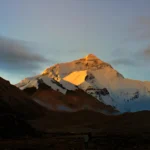
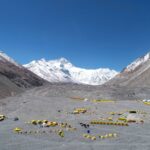
A young child cannot tell you their chest feels tight. They cannot describe a strange pressure behind their eyes or a sense that their breathing feels wrong. By the time visible distress is apparent, the window for straightforward intervention may already have narrowed. And at high altitude in Tibet — hours from a major hospital, at 3,600 metres in Lhasa and up to 5,200 metres at Everest Base Camp — a narrow window is a dangerous window.
What Australian Medical Researchers Told Us
We do not say this based on general caution alone. Years ago, a group of Australian medical researchers who specialised specifically in high-altitude illness traveled with us on a group programme to Tibet. These were not generalist physicians. Their professional focus was the physiological effects of high altitude on the human body.
In conversations with our guides during that tour, they were direct: the developing hearts of children under three years old respond to the oxygen deprivation of extreme altitude in ways that cannot be reliably predicted and cannot be adequately managed in a field environment — however well-equipped the guide, however experienced the tour operator. The plateau is magnificent. It is also physiologically extreme. For very young children, those two facts do not coexist safely.
We have carried that advice ever since. Almost no other Tibet tour operator communicates it this clearly. We do so because we believe the families who book with us deserve to know exactly what they are deciding — not to be discouraged from coming, but to plan the timing of their Tibet journey correctly.
What Age Is Safe? Practical Guidance by Age
Under 3 years old — Not recommended
Developing cardiovascular system. Unpredictable altitude response. Not safe on the high-altitude plateau regardless of the specific destination.
Ages 3 to 6 — Possible with strict restrictions
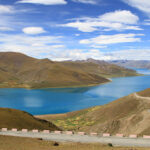
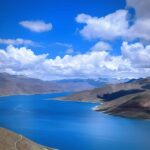
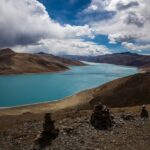
Lhasa only (3,658m). No high mountain passes. No destinations above 4,000m — meaning no Namtso Lake, no Yamdrok, no Everest itinerary. Shorter days, slower pace, and an immediate plan to descend if any symptom appears. Consult your paediatrician before booking.
Ages 6 to 12 — Manageable with proper acclimatisation
Children in this range generally acclimatise well if given adequate time in Lhasa before ascending further. A minimum of two to three days at Lhasa altitude before any higher destination is essential. Follow every standard altitude precaution, and treat any symptom seriously and immediately.
Age 12 and above — Similar to adults
Teenagers generally respond to altitude similarly to healthy adults. Standard acclimatisation practices apply. Ensure your child is in good general health and has no respiratory or cardiac conditions before travel.
Warning Signs to Watch in Children
Children at altitude show some of the same symptoms as adults, but there are important differences in how those symptoms present. Watch for:
Common symptoms in children at altitude
- Persistent crying or unusual irritability — a child cannot say ‘I have a headache’
- Loss of appetite or refusal to eat or drink
- Unusual fatigue — more than would be expected from a day of sightseeing
- Difficulty sleeping, or waking repeatedly in distress
- Pale or grey skin tone
- Rapid breathing at rest (not after physical activity)
- Vomiting (beyond mild nausea)
Practical Tips for Families Travelling to Tibet with Children
Before departure
- Consult your paediatrician specifically about altitude and your child’s individual health
- Discuss Acetazolamide (Diamox) with your doctor — its use in children requires professional guidance
- Ensure your child has no active cold, respiratory infection, or anaemia before travel
- Book a tour with a longer Lhasa acclimatisation period — at least two full days before going higher
- Purchase travel insurance that explicitly covers children and includes medical evacuation
During the trip
- Keep children well hydrated — more water than they would normally drink
- Avoid any strenuous activity on arrival day and the first full day in Lhasa
- Do not allow children to run, climb stairs quickly, or exert themselves in the first 24–48 hours
- Keep days shorter than you might plan for adult groups
- Carry portable oxygen — your guide should have it; ask before booking
- Maintain a clear, agreed plan with your guide: what symptom triggers an immediate descent
Our Experience With Family Tours at Altitude
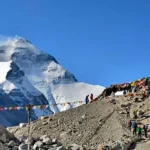
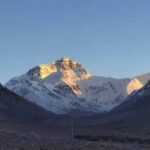
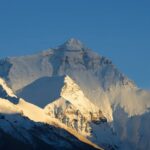
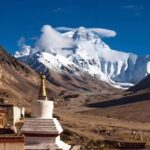
We have guided many family groups to Tibet — including one particularly memorable journey in which an entire American family, including parents, siblings, and relatives, gathered on the Tibetan plateau for a wedding celebration that culminated at Rongbuk Monastery in direct view of Mount Everest.
That experience — and the conversations with the Australian altitude researchers that preceded it by years — is what shaped our current family tour approach: transparent about the risks, specific about the age thresholds, and always structured around genuine safety rather than itinerary ambition.
Talking to Us Before You Book
If you are planning a Tibet trip with children, please tell us their ages when you first make contact. Our itinerary recommendations for families are shaped around the specific ages involved — not a generic family template. We will tell you honestly whether the trip you have in mind is appropriate, suggest modifications that make it safer, or recommend waiting if the timing is not right.
That honesty is what the Australian researchers gave us, and it is what we pass on to every family that asks.
Plan Your Tibet Trip
Response within 12 hours
Our guides are trained in altitude sickness response. Let us design a safe, acclimatization-friendly itinerary for you.
📧 info@tibettravel.com
📞 +86 138 8208 5511
🚨 Emergency Contacts in Lhasa
More Altitude Guides
- › What is High Altitude Sickness
- › The Symptoms of Altitude Sickness
- › How to Prevent Altitude Sickness
- › How to Treat High Altitude Sickness
- › Medicine for High Altitude Sickness
- › Tibet Medical Treatments & Hospitals
Frequently asked questions
Can children travel to Tibet?
Very young children face a different risk at altitude. Our guidance, following altitude-medicine advice, is that children under three should not be taken to high altitude.
What age is safe for a child to visit Tibet?
There is no single fixed cut-off — the younger the child, the greater the concern. For families we discuss the specific ages, the itinerary and the highest altitudes involved before recommending a plan.
What warning signs should parents watch for?
Watch for persistent headache, vomiting, unusual lethargy, poor sleep or confusion, and take any of them seriously at altitude. If symptoms do not improve with rest and oxygen, descend and seek medical help.
Do you arrange family tours?
Yes — we have experience with family groups at altitude and can plan a slower itinerary with lower-mileage days. Contact us with your children’s ages and we will advise honestly.
We answer within 12 hours, Monday to Saturday.