


8 Days Western & Central Bhutan — Trongsa & Bumthang
- Duration
- 8 Days / 7 Nights
- Pace
- Moderate
- Group size
- Private, on your dates
- Best season
- March to May and September to November
The trip at a glance
Eight days that cross the Black Mountains into central Bhutan — the great dzong at Trongsa and the four sacred valleys of Bumthang, which most visitors to Bhutan never reach — then back west through the crane valley of Phobjikha to Paro.
 Paro · Thimphu · Punakha · Trongsa · Bumthang · Phobjikha · Paro
Where you go, and how high you sleep
The route, stop by stop
Paro · Thimphu · Punakha · Trongsa · Bumthang · Phobjikha · Paro
- Arrival at Paro — Drive to ThimphuDay 1
- Thimphu — PunakhaDay 2
- Punakha — Trongsa — BumthangDay 3
- Bumthang SightseeingDay 4
- Bumthang — Gangtey (Phobjikha)Day 5
- Gangtey — ParoDay 6
- Paro — Hike to Taktsang (Tiger’s Nest)Day 7
- Departure from ParoDay 8
Day by day
Arrival at Paro — Drive to Thimphu
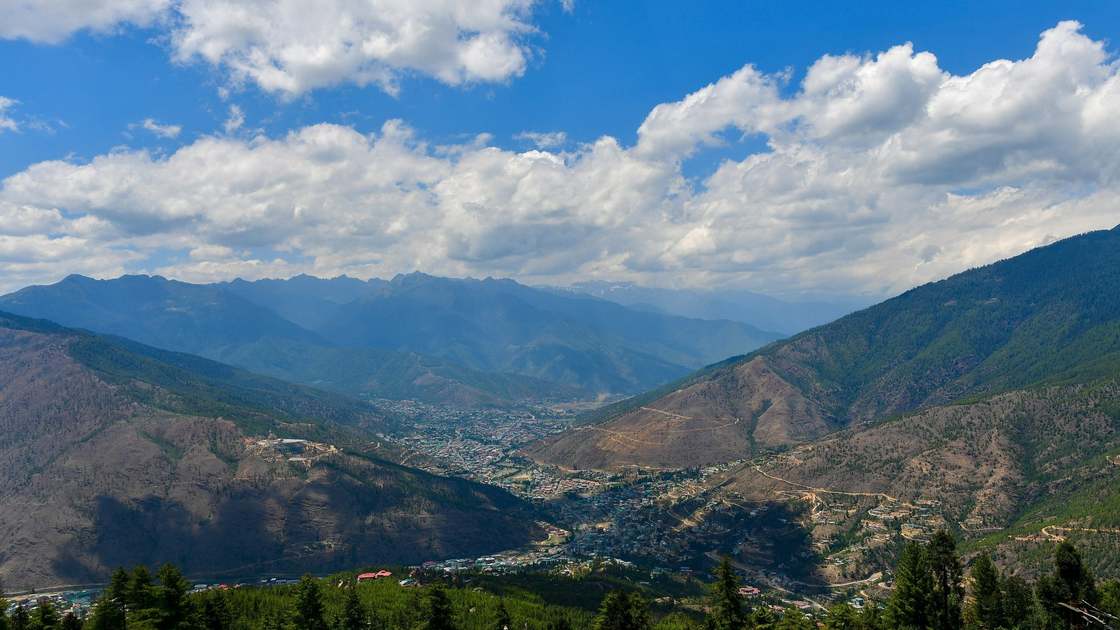
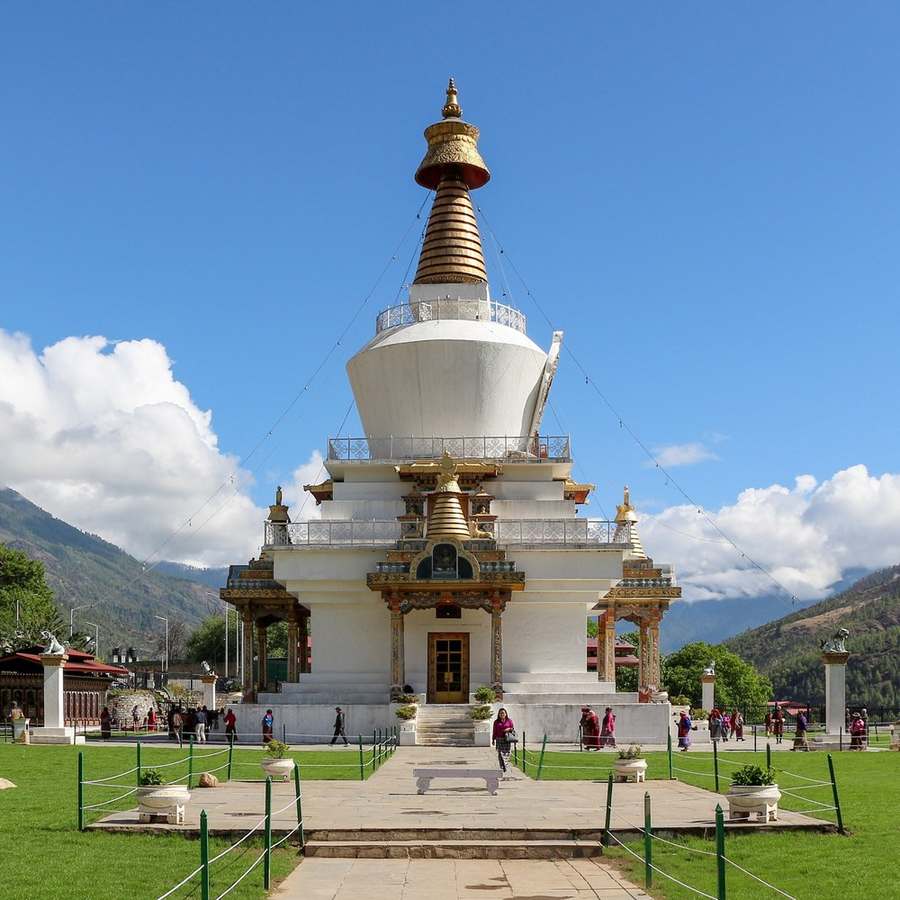
The flight into Paro is one of the most spectacular mountain approaches in the world. You are met at the airport and driven for an hour to Thimphu, stopping at Tamchog Lhakhang, the iron-chain suspension bridge built by Thangtong Gyalpo, and at Chuzom, where the three shrines of the confluence stand in the Nepali, Tibetan and Bhutanese styles. In Thimphu visit the Great Buddha Dordenma at Kuensel Phodrang, the Memorial Chorten and the Trashichhoedzong, and end the day at the Craft Bazaar.
Thimphu — Punakha
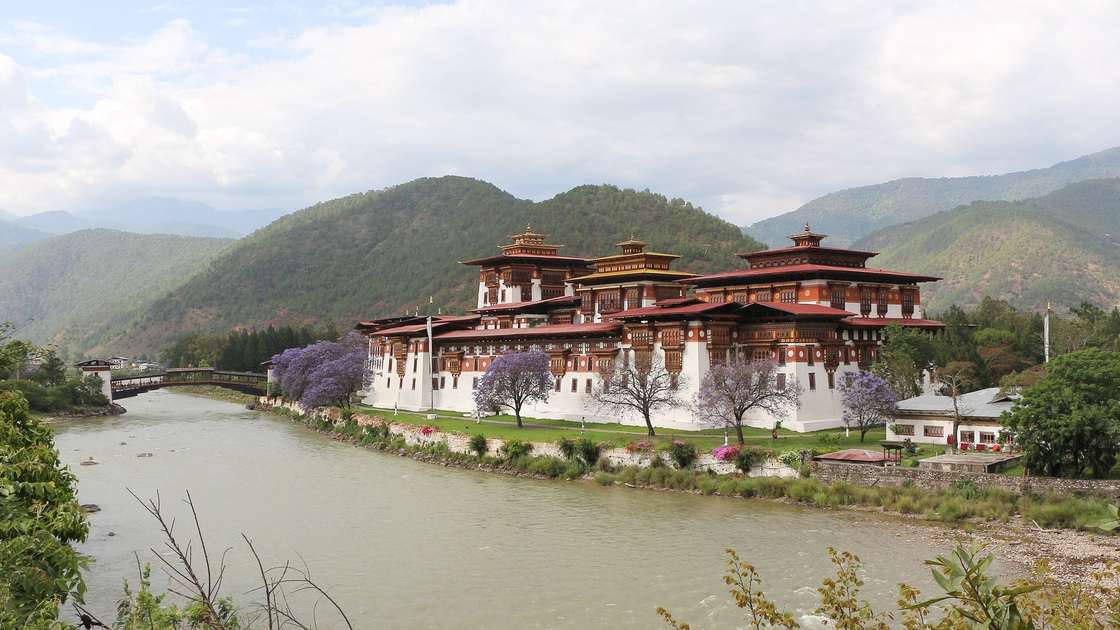
Drive to Punakha via the Dochula Pass at 3,150 m, where on a clear day the whole Himalayan range is visible. Walk through the paddy fields of Sopsokha village to Chimi Lhakhang, the temple of fertility, then visit the Punakha Dzong, built in 1637–38 at the meeting of the Pho Chhu and Mo Chhu rivers. Later walk out onto the Punakha Suspension Bridge, the longest pedestrian bridge in Bhutan.
Punakha — Trongsa — Bumthang
A long, beautiful drive through central Bhutan. Cross the Pelela Pass at 3,353 m and stop for lunch at Chendebji, then see the Trongsa Dzong from the road — sitting on a ridge above the Mangde Chhu, it was so crucial to the country’s defence that it regulated all east–west trade. Continue over the Yotong La into the Jakar valley of Bumthang, passing Chumey village, known for its yathra weaving.
Bumthang Sightseeing
Bumthang is the cultural heartland of Bhutan, where Guru Padmasambhava first brought Buddhism at the invitation of a local king. Visit Jambay Lhakhang, one of the oldest temples in the country, with its three steps said to mark the three ages; Kurjey Lhakhang, where the oldest temple holds a body print of the Guru on a rock; Mebartsho, the Burning Lake, where the treasure revealer Pema Lingpa found sacred relics; and Tamshing Goemba, built by Pema Lingpa and home to a chain-mail armour it is thought auspicious to carry around the temple three times.
Bumthang — Gangtey (Phobjikha)
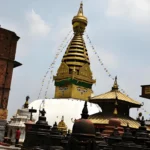
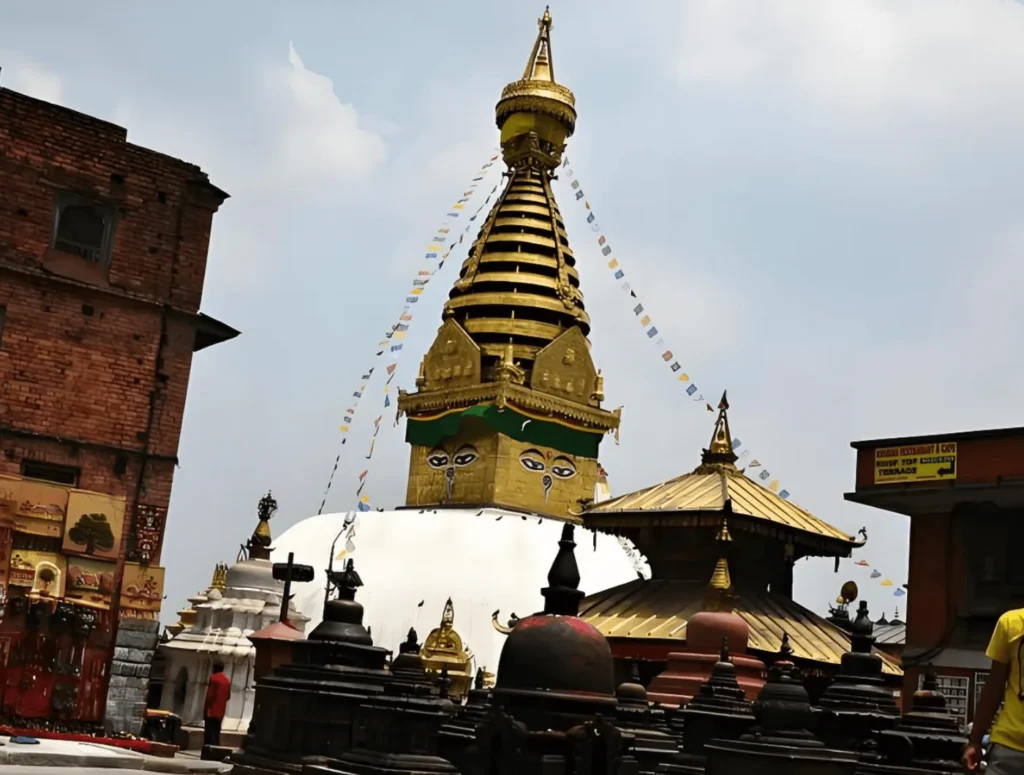
Return west across the Pele La, visiting the Trongsa Ta Dzong, the former watchtower that now houses the national museum, and the Chendebji Chorten, patterned on the Swayambhunath stupa in Kathmandu. Descend into Phobjikha, one of the Baeyuls or hidden valleys and the winter home of the black-necked crane, and visit the Gangtey Goempa that dominates the valley.
Gangtey — Paro
An early start for the long drive back to Paro — about seven hours, with a lunch stop in Thimphu and time for any last souvenir shopping. On arrival in Paro, visit the National Museum in the Ta Dzong watchtower, with its collection of thangkha paintings, textiles, weapons and household objects, then walk down to the Rinpung Dzong.
Paro — Hike to Taktsang (Tiger’s Nest)
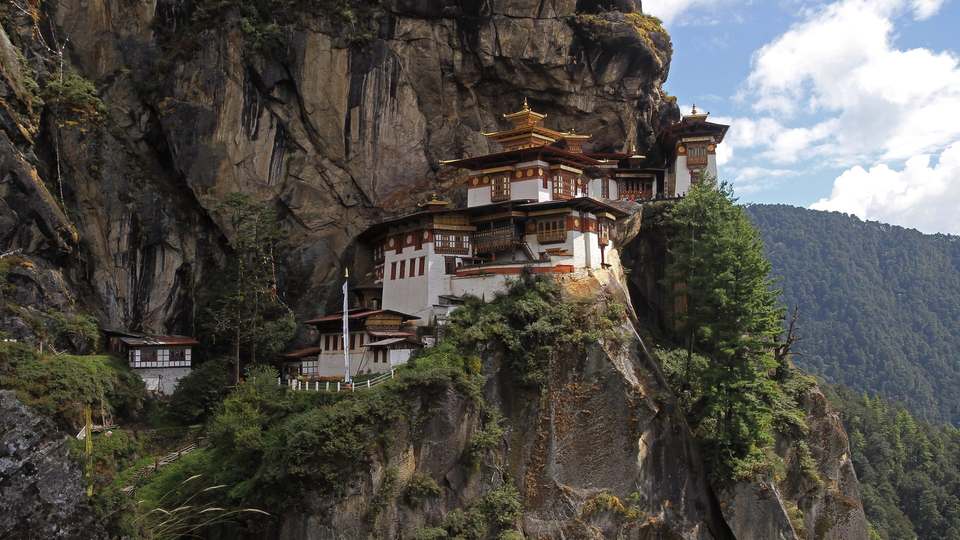
The hike to Taktsang, the Tiger’s Nest, on the face of a sheer cliff above the Paro valley — about two hours uphill to the viewpoint, through alpine forest. Afterwards visit Kyichu Lhakhang, one of the oldest monasteries in the country, built in the 7th century by the Tibetan king Songtsen Gampo, and, if time allows, Dumtse Lhakhang, built in 1433 by the iron bridge builder Thangtong Gyalpo.
Departure from Paro
Breakfast at the hotel, then transfer to Paro International Airport for your flight onward. Tashi Delek!
What is included
Included
- Licensed Bhutanese guide throughout
- Private vehicle with driver for the whole journey
- Accommodation as listed in the itinerary
- Daily breakfast at your hotel
- All entrance fees for the sites listed in the itinerary
- Bhutan visa and the daily Sustainable Development Fee, arranged by the partner
- Airport transfers on arrival and departure
Not included
- International flights to and from Paro
- Lunch and dinner during the tour
- Travel insurance
- Tips for guide and driver
- Personal expenses (drinks, laundry, souvenirs, optional activities)
- Anything not listed in the itinerary
Photos from this route
Questions travellers ask
Do you run these Bhutan tours yourselves?
Travel with us from start to finish. We run Tibet with our own team. For Nepal, Bhutan or other parts of China, we work with local partners we have known for years — and we stay with you the whole way.
What is Bhutan’s Sustainable Development Fee?
Bhutan levies a daily Sustainable Development Fee on every visitor, on top of the tour itself, and the amount is reviewed from time to time. It is included in the Bhutan part of your trip price. Ask us and we will get you the current amount for your dates.
Is the drive from Punakha to Bumthang comfortable?
It is a long day — roughly five to six hours from Punakha to Bumthang, and up to eight hours on the Bumthang–Gangtey leg — but the road is good and the scenery is some of the finest in Bhutan. The crossing of the Pelela Pass at 3,353 m is the highlight, and there are tea stops along the way.
Bhutan with Tibet
Want to add Tibet as part of your journey?
Most of our guests come to us for the whole journey, not a single country. We plan the full route — Tibet, Nepal and Bhutan — and look after you from the first email to the last day, with our own team on the Tibetan plateau and people we have worked with for years in Nepal and Bhutan. Many of them travelled with us the first time, and come back to us again and again — each time for another part of the Himalaya.