


Trans-Himalaya Expedition — Beijing to Hong Kong via Tibet & Nepal
- Duration
- 20 nights / 21 days
- Pace
- Moderate
- Group size
- Private, on your dates
- Best season
- April to June and September to October
The trip at a glance
One escort guide from Beijing to Hong Kong. Three countries. The roof of the world, Everest at golden hour, and Nepal's jungles — in twenty-one days.
Beijing · Xi’an · Guilin · Chengdu · Lhasa · Everest · Gyirong · Kathmandu · Pokhara · Chitwan · Hong Kong
- Beijing
- Xi'an
- Guilin
- Chengdu
- Lhasa
 Everest
- Gyirong
- Kathmandu
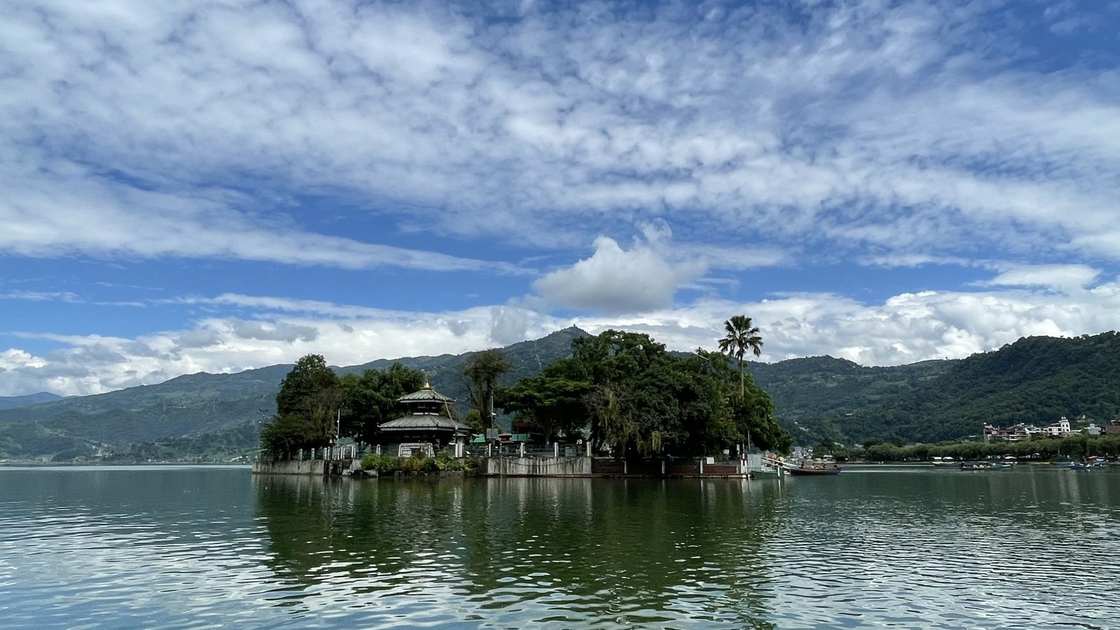 Pokhara
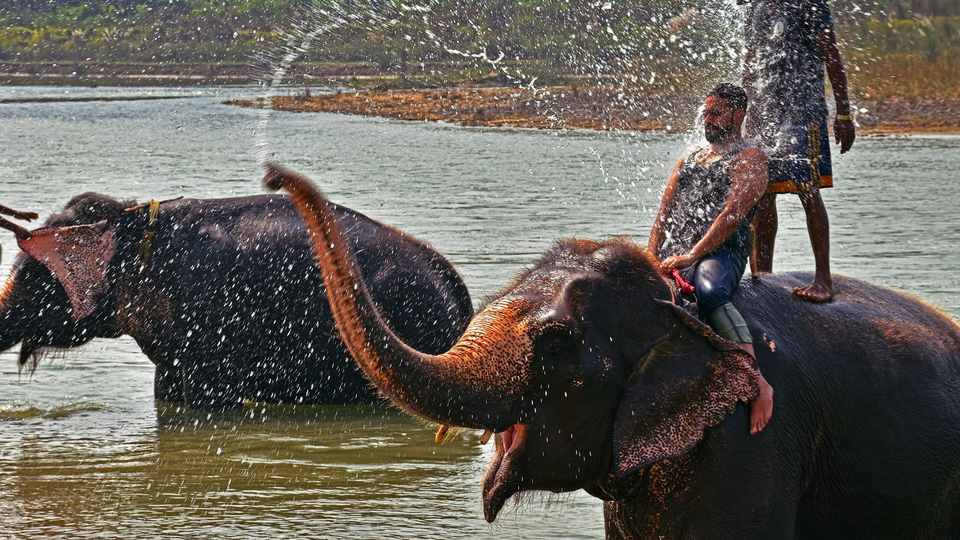 Chitwan
- Hong Kong
Your Journey Designer
Kim
His Tours
Pioneering Everest Expedition 1997 →
Trans-Himalaya — Beijing to Hong Kong
This tourKim from Guam is one of our most enduring partners — someone whose connection to Tibet travel stretches back to 1997, when roads to Everest Base Camp were barely passable, electricity was absent from overnight stops, and the entire industry was still finding its shape. His winter expedition that year is preserved on this site as a historical record of what Everest tourism looked like before it became comfortable.
Kim’s speciality has always been the great overland approach routes — journeys that enter Tibet by land rather than air, crossing high passes and border terrain before reaching Lhasa. Whether arriving from Nepal via the Friendship Highway or tackling the early Everest circuit in conditions most operators would have refused, Kim has consistently chosen the harder, more immersive route over the convenient one.
How This Tour Came to Be
Some journeys are simply too large to be handed between local operators at each border. Kim’s Trans-Himalaya Expedition was one of those. From the moment the group flew into Beijing from Hong Kong on Day 1 to the moment they returned to Hong Kong twenty-one days later, a single escort guide from our team accompanied them through every transition — from the imperial capital of China through the plateau of Tibet, over the Gyirong pass into Nepal, across the Himalayan foothills, through Pokhara and into Chitwan’s jungle, and finally back to Hong Kong. Not a relay of separate operators handing a group from city to city. One person, one journey, from start to finish.
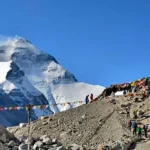
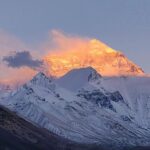
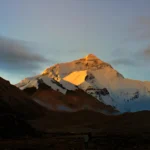
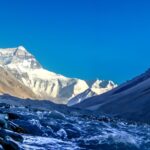
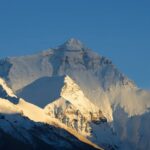
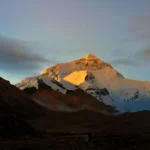
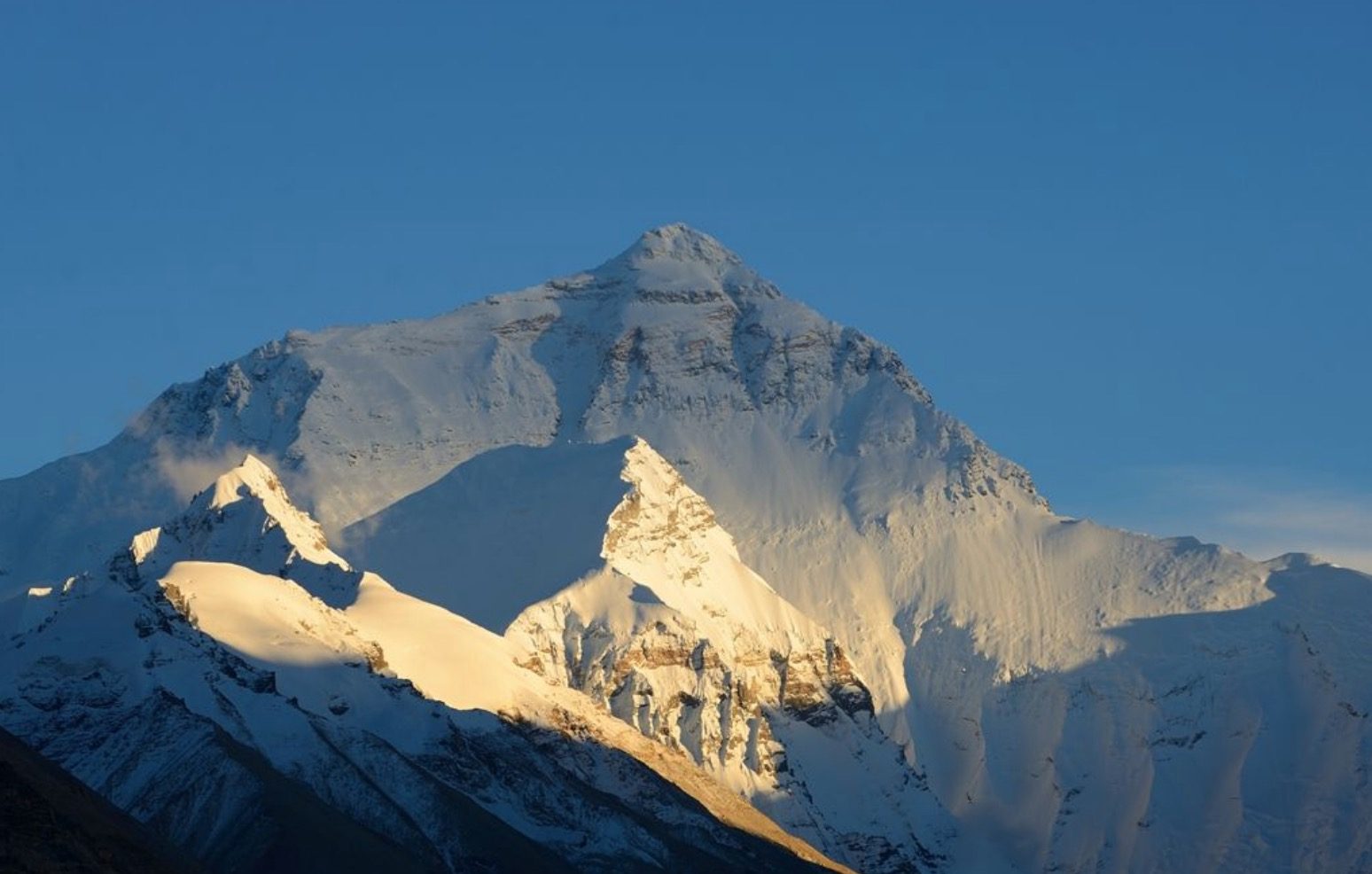
The route itself was a deliberate statement about what a long-distance overland expedition can be when built by people with genuine regional knowledge. In China, the group moved through the great imperial corridor — Beijing, Xi’an — before turning south to Guilin’s karst landscape, one of the most visually distinctive environments in all of East Asia. From Chengdu they ascended to the Tibetan plateau; from Lhasa they drove westward to the Shigatse valley and then south toward Everest. The sunset at Everest Base Camp — the group waiting through the afternoon as the light changed and the summit caught gold — was planned, not accidental. We knew the angle, the timing, the right positions on the moraine.
The Gyirong border crossing between Tibet and Nepal is among the most dramatic in the world — a mountain road descending from the high plateau through a deep gorge, with the temperature and the vegetation changing at every kilometre as Tibet becomes Nepal. On the Tibetan side, the landscape is spare, wind-swept, ancient. Cross the border and within twenty minutes the air is warm, the trees are green, and everything smells of jungle. Kim’s group crossed this threshold on Day 15, completing the geographical and climatic transition that defines the entire overland structure of the journey.
Nepal in this itinerary is not a brief add-on. Four days — Kathmandu, Pokhara, Chitwan — gave the group time to engage with a third complete cultural tradition after the Chinese imperial cities and the Tibetan Buddhist plateau. The elephant ride through Chitwan’s grasslands, the reflections of Annapurna in the Phewa Lake at Pokhara, the pilgrims circling Swayambhunath at dawn — these were not rushed. The journey was built to breathe.
What You Will See & Do
- Full escort guide from Day 1 in Beijing to final departure from Hong Kong — no hand-offs between operators
- Li River cruise, Guilin — the karst landscape that inspired a thousand years of Chinese ink-wash painting
- Giant Panda Base, Chengdu — giant pandas in bamboo-dense semi-natural habitat
- Tibetan family home visit in Lhasa — authentic cultural exchange beyond the monastery circuit
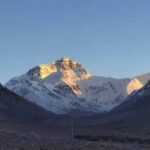
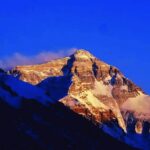
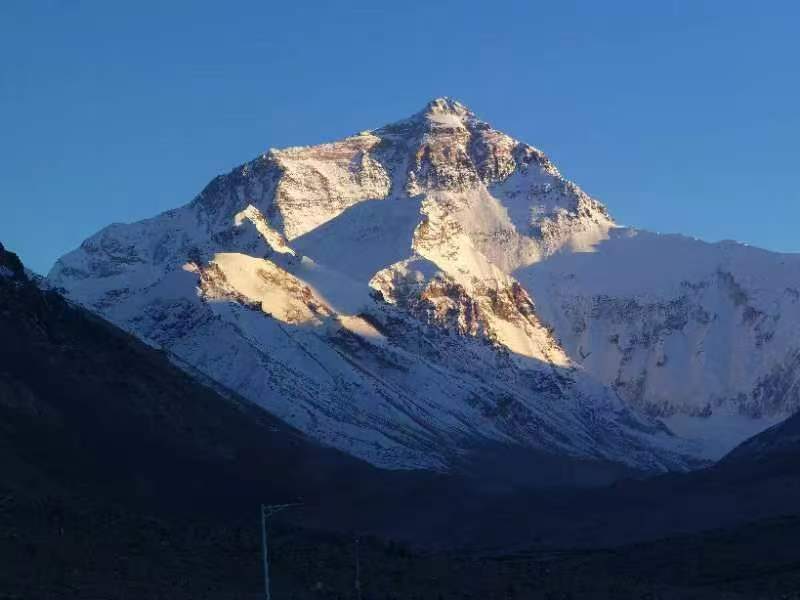
- Everest Base Camp at sunset — golden hour light on the world’s highest summit, carefully timed by our guide
- Gyirong border crossing — the dramatic descent from Tibetan plateau to Nepalese valley
- Swayambhunath (Monkey Temple) and Kathmandu Durbar Square — the ancient religious and royal heart of Nepal
- Pokhara lakeside with Annapurna panorama — the view that defines the Himalayas for most Western travellers
- Chitwan National Park — elephant ride, jungle safari, one-horned rhinos and evening campfire
- Concludes in Hong Kong — completing a genuine arc from the South China Sea across the continent and back
Three Immersive Pillars
The Full-Escort Philosophy
It is standard practice in multi-destination tours for different local operators to handle each segment — a Beijing company for the capital, a Xi’an company for the terracotta warriors, a different Tibet operator, a Nepal ground handler. The knowledge gaps at each handover are real, and the cumulative friction of introductions, briefings, and renegotiations adds up across a three-week journey. Kim’s expedition was built differently: one escort guide, fully briefed on every segment, managing every transition from start to finish. This person knew the group by Day 3. They understood who needed extra time, who asked the best questions, which members had altitude concerns, and how to pace each day against the group’s energy. By Kathmandu, they were not a guide but a trusted companion. That is what a full escort produces — and it is not something most operators offer on a 21-day cross-country itinerary.
Everest at Sunset — A Timed Arrival
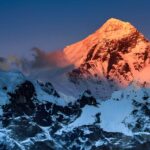
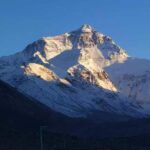
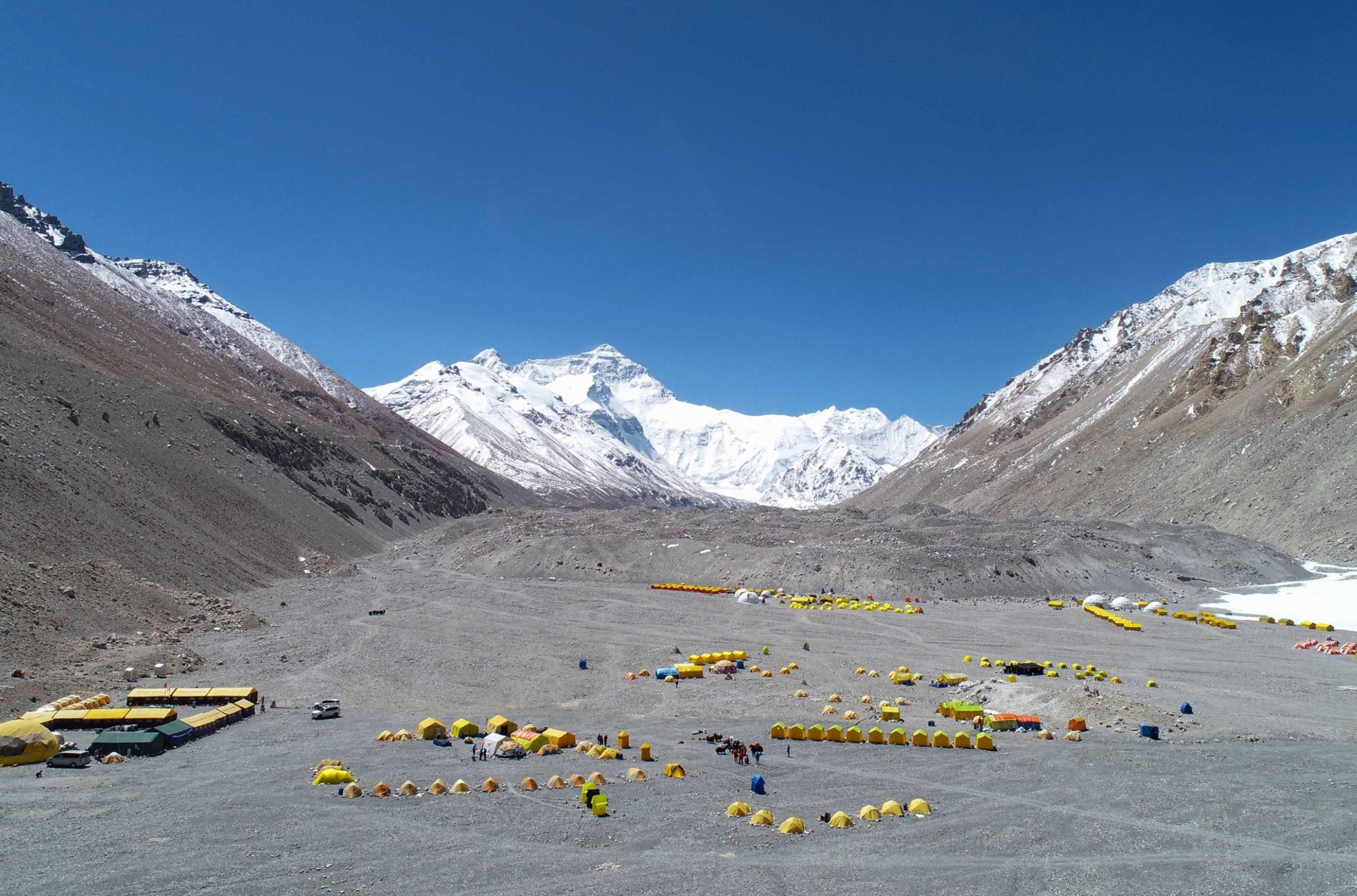
Everest Base Camp is visited by thousands of travellers each year. Most of them arrive at midday, walk to the viewpoint, take photographs in the flat light of noon, and leave within an hour. Our approach was different. We drove the group to the EBC area in the late afternoon and waited. The golden hour at 5,050 metres is not a guarantee — cloud cover, season and weather all play roles — but when it arrives, the effect on Everest’s north face is unlike anything in daylight. The summit and the great buttresses below it are lit in tones of amber and deep orange, with the surrounding peaks still in shadow. The group arrived in the afternoon and waited. The light came. This was not luck. It was planning, timing, and the patience of an escort guide who had seen it before and knew what to hold the group for.
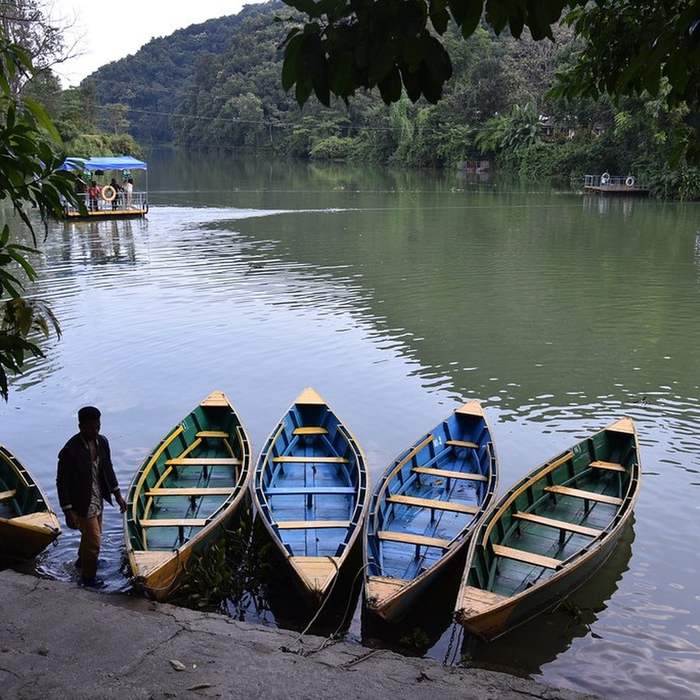
Nepal in Full — Kathmandu, Pokhara and Chitwan
The Nepal segment of this expedition is substantive, not symbolic. Four nights across three environments gave the group genuine access to a country that is often added to Tibet itineraries as a single-day border town visit. Kathmandu’s Swayambhunath and Durbar Square carry a spiritual density that compares with Lhasa — different tradition, same depth of accumulated devotion. Pokhara, set between a lake and the Annapurna massif, is arguably the most beautiful small city in Asia; the reflections of Fishtail Mountain (Machhapuchchhre) in Phewa Lake at dawn are among the defining images of the Himalayas. And Chitwan — the jungle safari, the one-horned rhinos, the elephant back through grassland that in the morning mist looks like another world entirely — brought the group down from altitude into a biological richness that made the contrast with the plateau above feel like a full circle.
Trip at a Glance
- Tour Leader Kim
Where you go, and how high you sleep
The route, stop by stop
Beijing → Xi'an → Guilin → Chengdu → Lhasa → Everest → Gyirong → Kathmandu → Pokhara → Chitwan → Hong Kong
- Hong Kong → Beijing — Arrival & Peking Duck EveningDay 1
- Beijing — Juyongguan Great Wall & Yonghegong Lama TempleDay 2
- Beijing — Tian'anmen, Forbidden City, Summer Palace & Overnight TrainDay 3
- Xi'an — Terra-Cotta Warriors, Qin Mausoleum & Huaqing Hot SpringDay 4
- Xi'an — Historic City Tour & Tang Dynasty EveningDay 5
- Xi'an → Guilin — Reed Flute Cave & Elephant Trunk HillDay 7
- Guilin — Li River Cruise to Yangshuo → Flight to ChengduDay 8
- Chengdu — Giant Panda Base, Kuanzhai Alleys & Du Fu CottageDay 9
- Chengdu → Lhasa — Full Altitude Acclimatisation DayDay 10
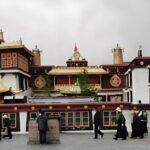
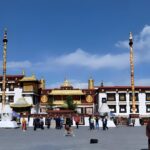
- Lhasa — Potala Palace, Jokhang Temple & Barkhor StreetDay 11
- Lhasa — Tibet Museum, Sera Monastery Debate & Tibetan Family VisitDay 12
- Lhasa → Yamdrok Lake → Karola Glacier → Gyantse → ShigatseDay 13
- Tashilhunpo Monastery → Everest Base Camp at SunsetDay 14
- Everest Base Camp → Gyirong Border PortDay 15
- Gyirong → Kathmandu — Swayambhunath & Durbar SquareDay 16
- Kathmandu → PokharaDay 17
- Pokhara → Chitwan National Park — Elephant Ride, Jungle Safari & CampfireDay 18
- Chitwan → Return to KathmanduDay 19
- Kathmandu → Hong KongDay 20
- Hong Kong — Depart for GuamDay 21
Day by day
Hong Kong → Beijing — Arrival & Peking Duck Evening
- The group flies from Hong Kong to Beijing. Our escort guide meets them at Beijing Capital International Airport on arrival.
- Transfer to hotel, check-in and freshen up after the flight.
- Evening: authentic Quanjude Peking Duck dinner at one of Beijing’s most storied traditional restaurants, followed by a classical Peking Opera performance — a fitting introduction to the cultural register of the journey ahead.
Dinner: Quanjude Peking Duck — Beijing’s most celebrated culinary tradition
Overnight: Beijing hotel (Night 1)
Beijing — Juyongguan Great Wall & Yonghegong Lama Temple
- Full-day excursion to the Juyongguan section of the Great Wall, built through a mountain pass northwest of Beijing. Walking the ancient stone ramparts with rolling mountain ranges in every direction.
- Yonghegong Lama Temple — the largest Tibetan Buddhist temple in Beijing, built in 1694 as a palace for Prince Yongzheng before being converted to a lamasery in 1744. A spiritually resonant preview of the Tibetan Buddhist world the group will enter more deeply in ten days’ time.
Dinner: Restaurant dinner in Beijing
Overnight: Beijing hotel (Night 2)
Beijing — Tian'anmen, Forbidden City, Summer Palace & Overnight Train
- A full day at Beijing’s foundational landmarks: Tian’anmen Square — the vast public plaza at the heart of the capital; the Forbidden City, the 180-acre palace complex of twenty-four emperors across six centuries; and the Summer Palace, with its kilometre-long covered walkway and imperial garden architecture set around Kunming Lake.
- Evening: spectacular Chinese Acrobatic Show.
- Board the overnight express train from Beijing to Xi’an.
Dinner: Restaurant dinner in Beijing
Overnight: Overnight express train to Xi’an
Xi'an — Terra-Cotta Warriors, Qin Mausoleum & Huaqing Hot Spring
- Arrive in Xi’an early morning. Hotel refreshment and short rest.
- Eastern route excursion: two and a half hours at the Terra-Cotta Warriors and Horses Museum — the burial army of China’s first emperor, one of the most significant archaeological discoveries of the twentieth century.
- Lunch inside the scenic area.
- Contemplation beside the Mausoleum of Qin Shi Huang — the sealed earthen pyramid concealing the emperor’s burial chamber after more than 2,200 undisturbed years.
- Huaqing Hot Spring: the legendary imperial bathing palace at the foot of Mount Lishan.
- Evening: traditional Xi’an Dumpling Feast.
Dinner: Xi’an Dumpling Feast — multi-course traditional banquet
Overnight: Xi’an hotel (Night 4)
Xi'an — Historic City Tour & Tang Dynasty Evening
- Full-day city tour: Giant Wild Goose Pagoda (built 652 AD to house scriptures brought from India by the monk Xuanzang); the Ancient City Wall — one of the most complete surviving city walls in China; Drum Tower; Shaanxi History Museum; and the Stele Forest Museum with thousands of stone inscriptions spanning two millennia.
- Leisurely wander through the Muslim Quarter — the old Islamic neighbourhood centred on the Great Mosque, established during the Tang dynasty, still alive with food stalls, artisan workshops and its own distinct atmosphere.
- Evening: elegant Tang Dynasty Music and Dance performance.
Dinner: Restaurant dinner in Xi’an
Overnight: Xi’an hotel (Night 5)
Xi'an → Guilin — Reed Flute Cave & Elephant Trunk Hill
- Flight from Xi’an south to Guilin — a geographical transition from the loess heartland of the north to the subtropical karst landscape of Guangxi.
- Reed Flute Cave: a vast limestone cavern whose stalactite and stalagmite formations, illuminated against the natural rock, represent some of the most spectacular underground geology in China. The cave has been visited for over 1,200 years.
- Elephant Trunk Hill: the natural limestone formation rising from the Li River that has served as the symbol of Guilin for centuries — its arch creating the image of an elephant drinking from the water.
Dinner: Guilin local cuisine
Overnight: Guilin hotel (Night 7)
Guilin — Li River Cruise to Yangshuo → Flight to Chengdu
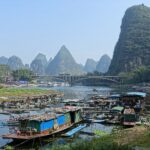
- Morning embarkation on the Li River scenic cruise from Guilin to Yangshuo — one of the classic river journeys of China, drifting past the karst peak formations that have been the subject of Chinese ink-wash landscape painting for a thousand years. The river is slow, the peaks are improbable, and the light changes constantly.
- Disembark in Yangshuo — a riverside town surrounded by karst scenery, with time for independent walking in the old streets or along the waterfront.
- Afternoon flight from Guilin to Chengdu.
Dinner: Chengdu restaurant dinner
Overnight: Chengdu hotel (Night 8)
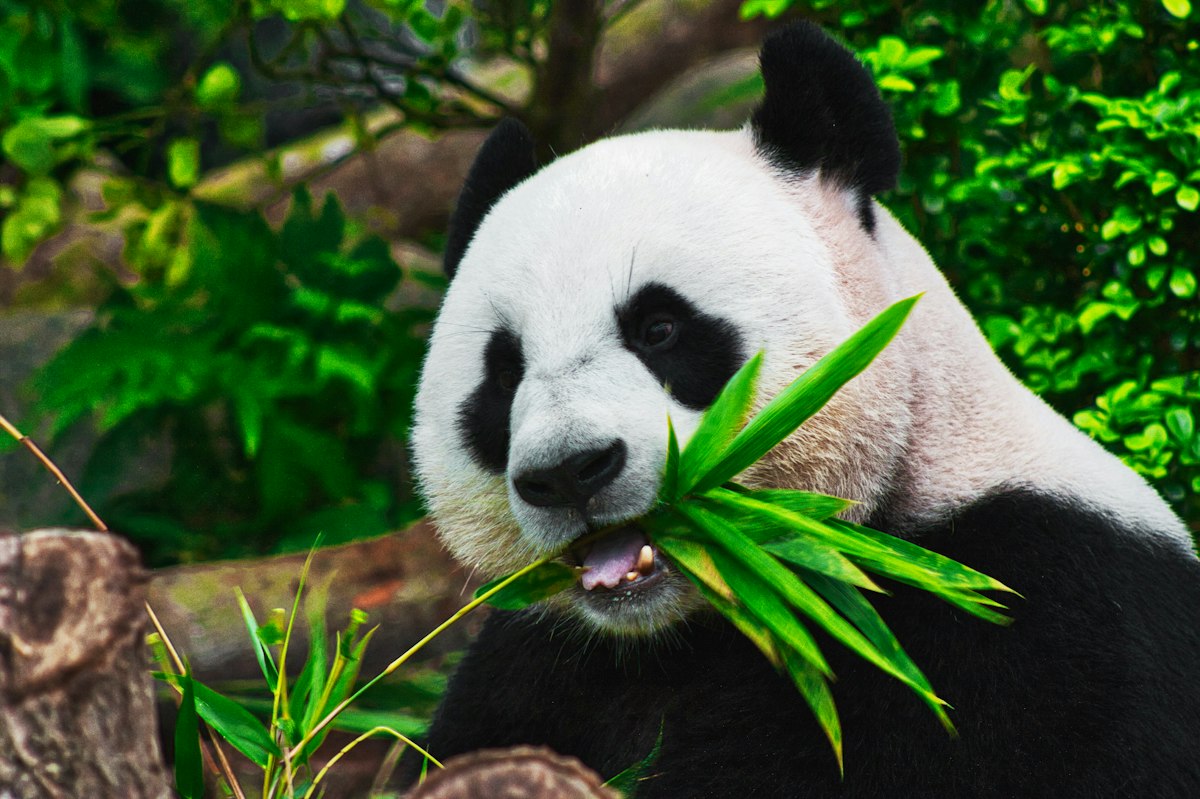
Chengdu — Giant Panda Base, Kuanzhai Alleys & Du Fu Cottage
- Morning: the Chengdu Research Base of Giant Panda Breeding — bamboo-dense grounds where giant pandas feed, sleep and move at the deliberate pace animals choose for themselves. The base is less zoo than ecological garden; the atmosphere is green, quiet, and unhurried.
- Kuanzhai Ancient Alleys — the restored Qing-dynasty neighbourhood in the centre of Chengdu, with its teahouses, courtyard architecture and Sichuan folk culture.
- Du Fu Cottage — the former residence of the great Tang-dynasty poet Du Fu (712–770 AD), now a museum and garden, set among bamboo groves and old trees on the western edge of the city.
Dinner: Sichuan cuisine — the famous Chengdu hot pot or milder local alternatives
Overnight: Chengdu hotel (Night 9)
Chengdu → Lhasa — Full Altitude Acclimatisation Day
- Morning flight from Chengdu to Lhasa Gonggar Airport. Arrival at 3,650 metres above sea level.
- Transfer to hotel. Full day of rest — no sightseeing of any kind. Altitude acclimatisation is the single priority.
- Light walking only. Drink water consistently. The body needs unhurried time to adjust to the thinner air of the plateau.
Dinner: Light Tibetan welcome dinner at the hotel
Overnight: Lhasa hotel (Night 10)
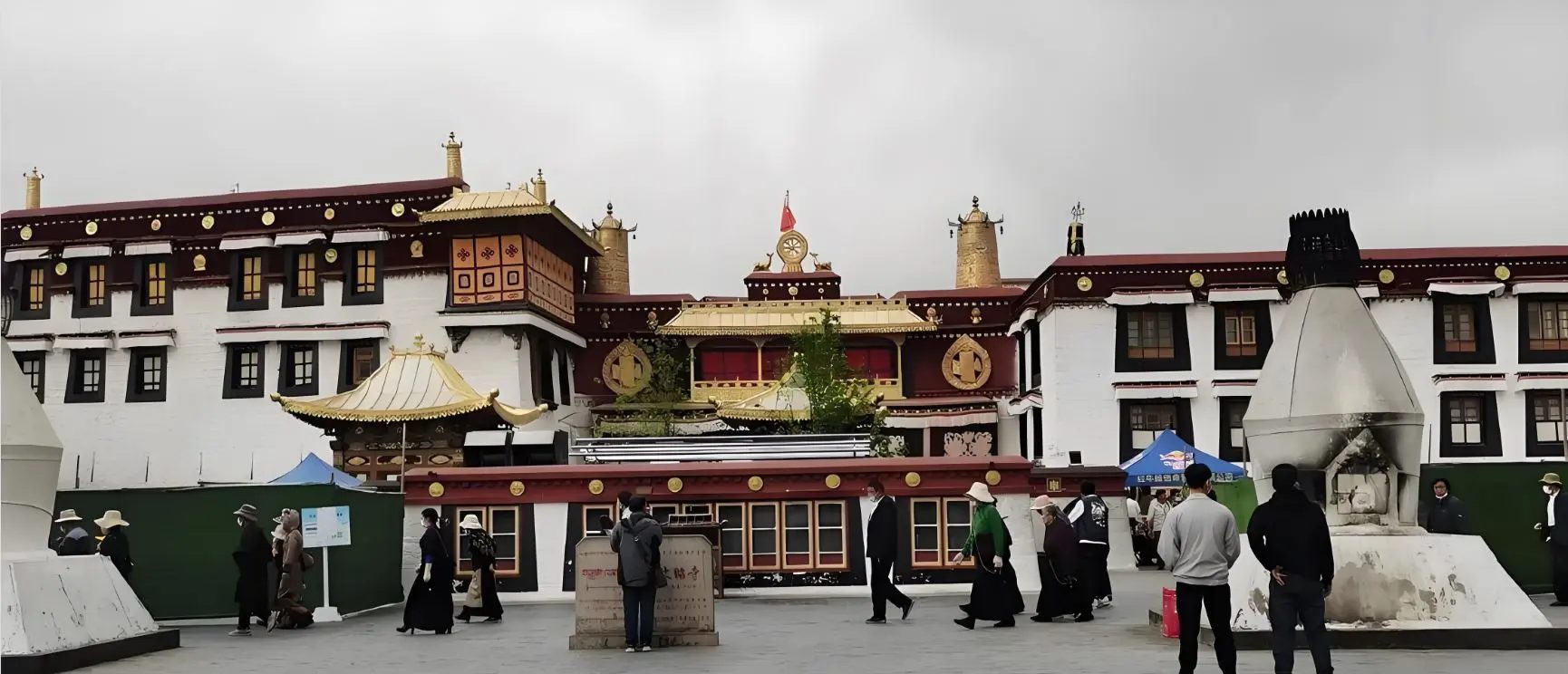
Lhasa — Potala Palace, Jokhang Temple & Barkhor Street
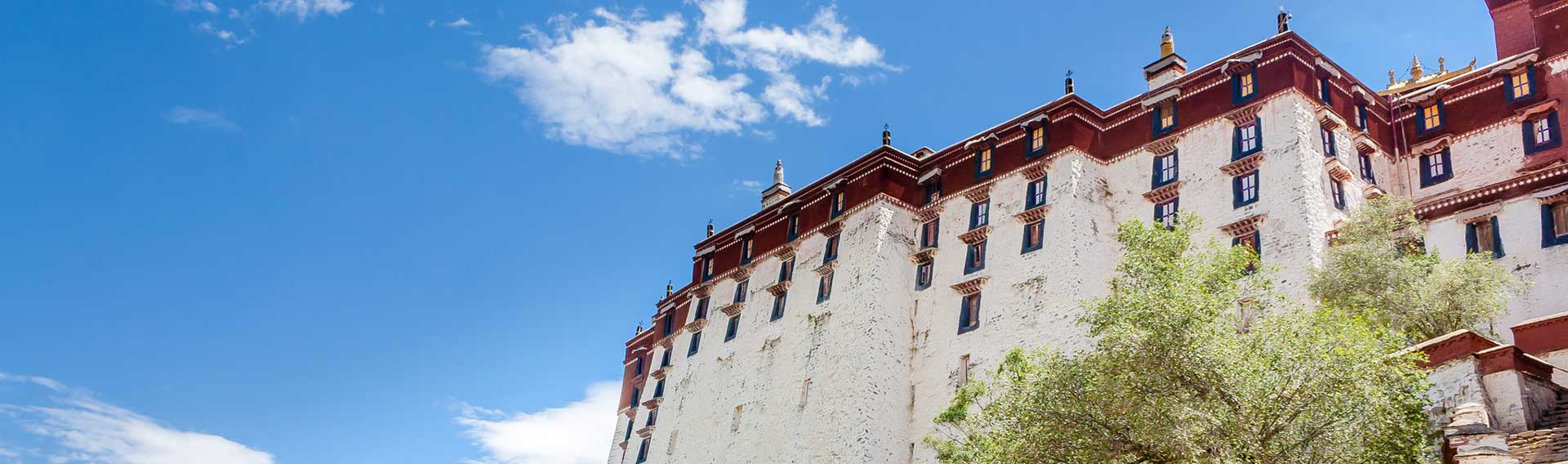
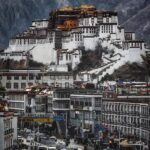
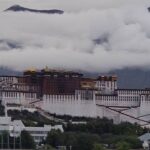
- Morning: the Potala Palace — the thirteen-storey winter palace of the Dalai Lamas, rising 117 metres above Red Hill, containing over a thousand rooms, ten thousand shrines and the jewelled mausolea of eight Dalai Lamas.
- Afternoon: Jokhang Temple — the holiest shrine in Tibetan Buddhism, founded in the 7th century, housing the Jowo Rinpoche Buddha image before which pilgrims have prostrated for thirteen centuries. The butter-lamp smoke and the sound of devotional chanting inside the temple are unlike anything else on the plateau.
- Barkhor Street: the sacred circumambulation circuit surrounding Jokhang, perpetually filled with pilgrims, prayer wheels, butter lamps and the quiet intensity of people who have walked very far to be there.
Dinner: Restaurant dinner in Lhasa
Overnight: Lhasa hotel (Night 11)
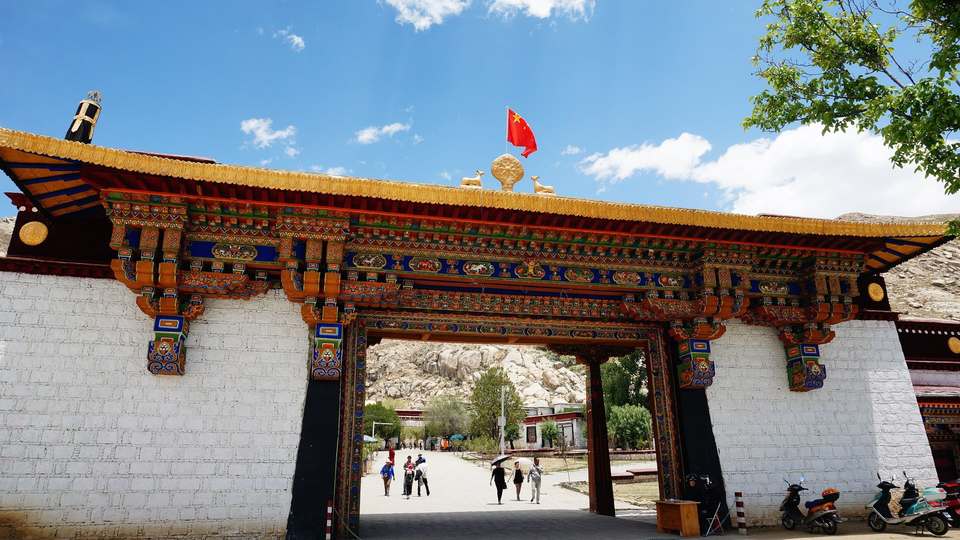
Lhasa — Tibet Museum, Sera Monastery Debate & Tibetan Family Visit
- Tibet Museum: a systematic and well-curated introduction to Tibetan history, religious art, folk customs and material culture — useful context for everything seen across the preceding and following days.
- Sera Monastery: one of the three great Gelug monasteries of Lhasa, where the afternoon monk debate ceremony fills the courtyards with energy, noise and rigorous philosophical exchange. The contrast with the monastery’s general atmosphere of quiet and incense is total.
- Tibetan family home visit: sitting with a local household, drinking butter tea, observing daily domestic life in a Lhasa home. One of the most grounding and genuine cultural encounters a Tibet itinerary can offer — and one that our deep local relationships make possible.
Dinner: Tibetan restaurant in Lhasa
Overnight: Lhasa hotel (Night 12)
Lhasa → Yamdrok Lake → Karola Glacier → Gyantse → Shigatse
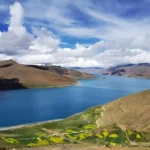
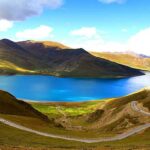
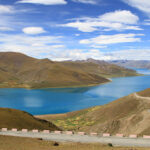
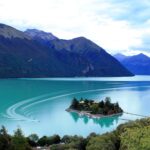
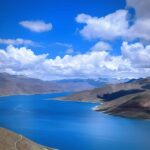
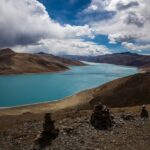
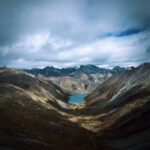
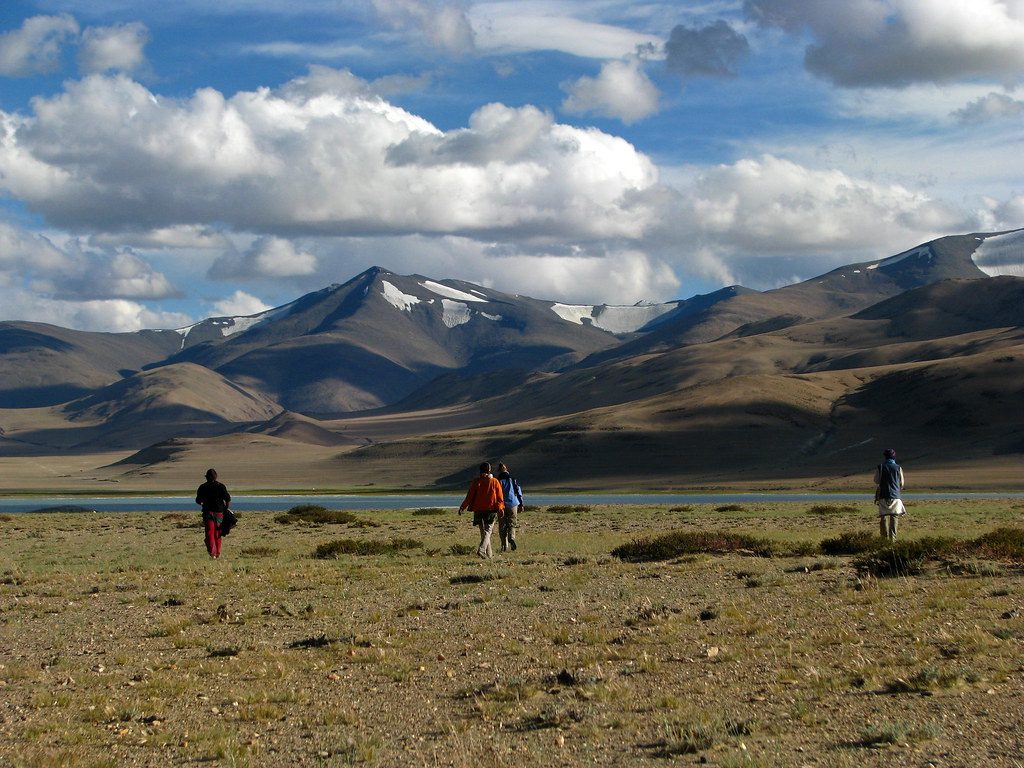
- Classic southern Tibet overland drive. Over the Kamba La pass, where Yamdrok Lake — one of Tibet’s three great sacred lakes — fills the valley below in a sweep of impossible turquoise.
- The Karola Glacier: one of the few glaciers in Tibet directly accessible from a main road, its blue-white ice face descending almost to the roadside.
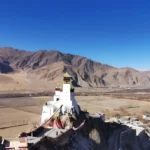
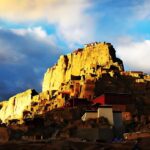
- Gyantse: the great Gyantse Dzong fortress commanding the valley, Pelkor Chode Monastery, and the Kumbum Stupa — a nine-storey, 108-chapel stupa with an architectural design found nowhere else in Tibetan Buddhism.
- Continue to Shigatse for overnight.
Dinner: Shigatse hotel dinner
Overnight: Shigatse hotel (Night 13)
Tashilhunpo Monastery → Everest Base Camp at Sunset
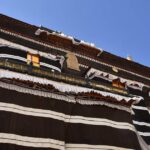
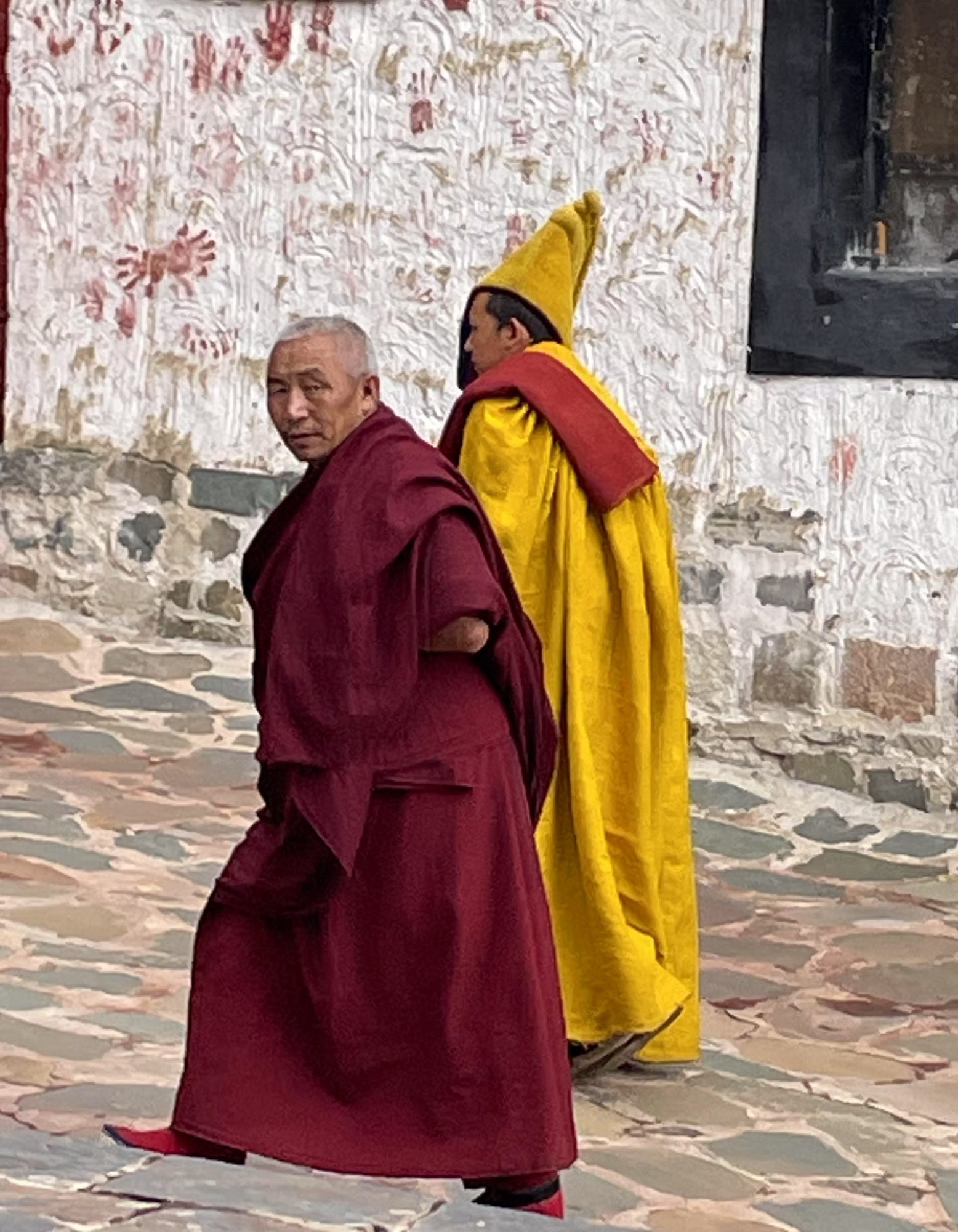
- Morning: Tashilhunpo Monastery in Shigatse — the traditional seat of all Panchen Lamas, founded 1447, with its magnificent hall housing a 26-metre gilded Maitreya statue, one of the largest gilded figures in the world.
- Continue driving westward and southward toward the Everest Nature Reserve, rising toward the high passes that give access to the Rongbuk valley and the north face of Everest.
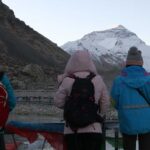
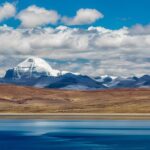
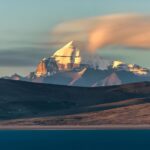
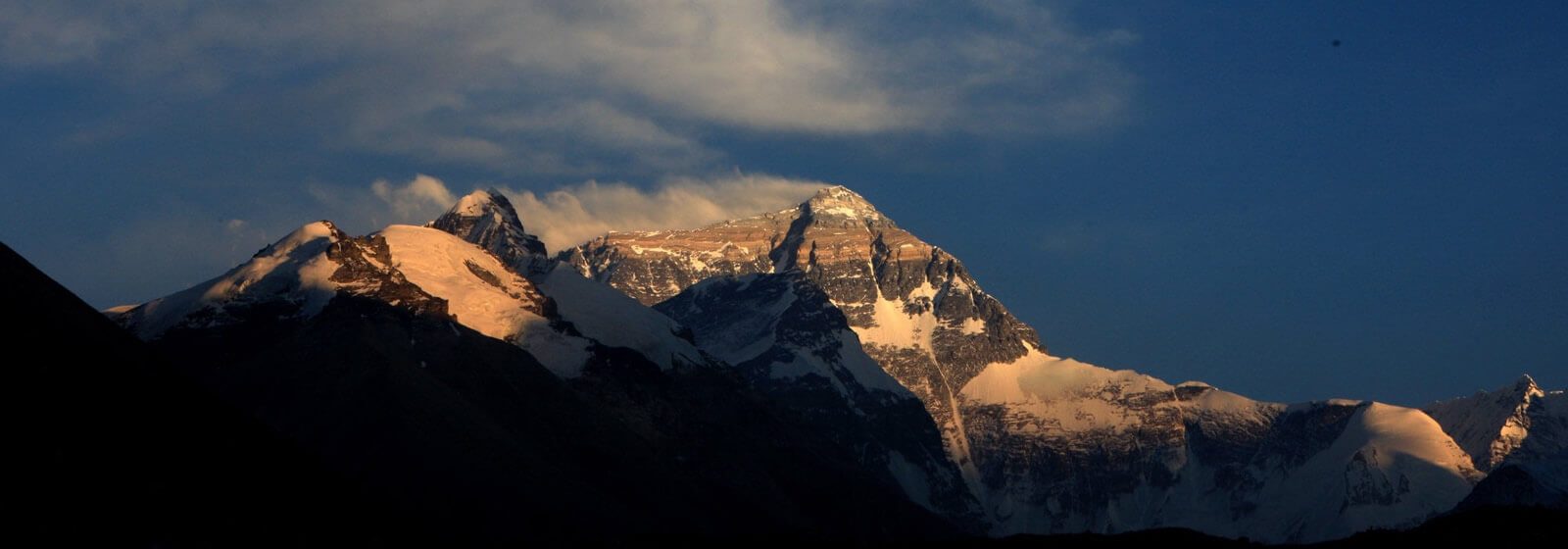
- Arrive at the Base Camp area in the late afternoon — a deliberate choice. The golden-hour light at this altitude reaches Everest’s summit and its surrounding ridgelines at an angle that midday visits never see. The group waited. The light arrived. The summit caught gold.
- Overnight near Everest Base Camp.
Dinner: Guest house dinner near Everest Base Camp
Overnight: Everest Base Camp area (Night 14)
Everest Base Camp → Gyirong Border Port
- Early morning departure from the EBC area, turning south toward the Nepal frontier.
- The drive to Gyirong follows high mountain roads through remote terrain — sparse, wind-swept, with almost no human habitation on the Tibetan side of the passes.
- Gyirong port: complete all border-crossing formalities at one of the most dramatically situated frontier posts in Asia. The descent from the Tibetan plateau on the Nepal side is immediate and visceral — temperature rises, vegetation appears, and the scale of the mountains changes completely.
- Overnight accommodation near the border zone.
Dinner: Border area guest house dinner
Overnight: Gyirong border area (Night 15)
Gyirong → Kathmandu — Swayambhunath & Durbar Square
- Cross the international border and drive down through the Trishuli valley into the Kathmandu basin — a descent of roughly 150 kilometres through increasingly lush Himalayan foothills.
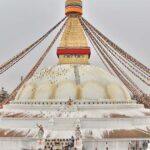
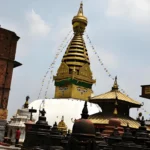
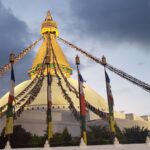
- Swayambhunath (the Monkey Temple): the ancient Buddhist stupa on a hilltop overlooking the Kathmandu Valley, one of the most sacred Buddhist sites in Nepal, with the Buddha’s eyes painted on all four faces of the central tower gazing across the valley.
- Kathmandu Durbar Square: the old royal plaza at the centre of the ancient city, surrounded by medieval palaces, temples and pagodas — a UNESCO World Heritage site and the spiritual and ceremonial heart of the Kathmandu Valley.
Dinner: Restaurant dinner in Kathmandu — Nepali or international cuisine
Overnight: Kathmandu hotel (Night 16)
Kathmandu → Pokhara
- Drive westward from the Kathmandu valley to Pokhara — a lakeside city at the foot of the Annapurna range, approximately five to six hours by road through the Prithvi Highway.
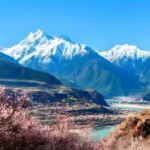
- Pokhara is set between Phewa Lake and a wall of Himalayan peaks — Machhapuchchhre (Fishtail Mountain), Annapurna I, II and III visible across the water on clear days. The reflections of the peaks in the lake at dawn are among the defining images of the Himalayas.
- Leisure time along the lakeside for walking, boating or simply absorbing the view.
Dinner: Pokhara lakeside restaurant
Overnight: Pokhara hotel (Night 17)
Pokhara → Chitwan National Park — Elephant Ride, Jungle Safari & Campfire
- Travel south from Pokhara toward Chitwan National Park — a protected tropical wilderness area in the Terai lowlands, one of the best-preserved sub-Himalayan ecosystems in Asia.
- Elephant-back ride through the park’s grasslands and sal forest — a mode of movement that allows quiet passage through vegetation that vehicles cannot enter.
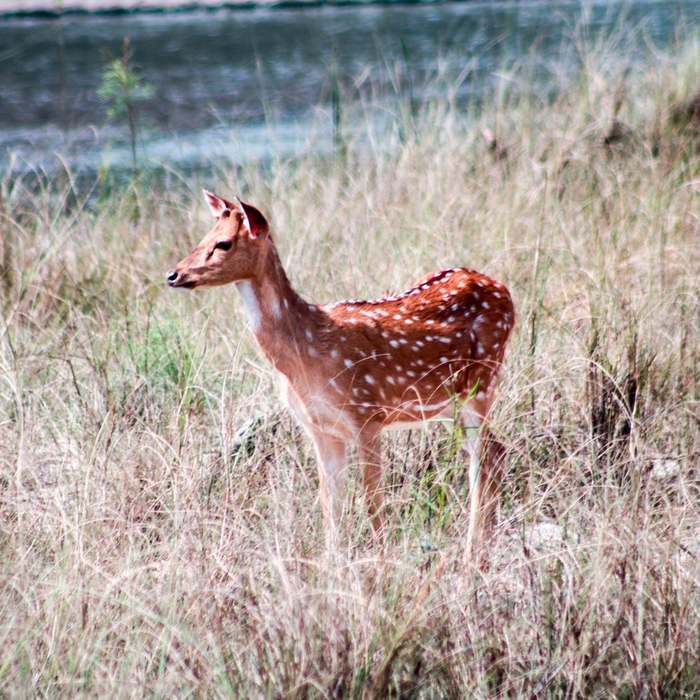
- Guided jungle safari: searching for one-horned rhinoceroses, spotted deer, gharial crocodiles, Bengal tigers (rarely seen but present), and a rich birdlife that includes species not found elsewhere in Nepal.
- Evening campfire: gathering after dark with cultural sharing, conversation and the sounds of the jungle at night.
Dinner: Resort dinner inside the Chitwan zone
Overnight: Chitwan resort (Night 18)
Chitwan → Return to Kathmandu
- Morning departure from Chitwan. Drive back to Kathmandu through the Terai lowlands and the foothills north of the valley.
- Arrive Kathmandu in the afternoon. Free time for independent walking, last-minute shopping in Thamel, or quiet time in the city.
Dinner: Restaurant dinner in Kathmandu
Overnight: Kathmandu hotel (Night 19)
Kathmandu → Hong Kong
- International flight from Kathmandu Tribhuvan Airport to Hong Kong International Airport.
- Check in to Hong Kong hotel for overnight rest before final departure.
- The escort guide’s assignment concludes here — twenty days since Beijing, the same person, the same group, from the imperial capital to the South China Sea.
Dinner: Hong Kong hotel dinner or restaurant
Overnight: Hong Kong hotel (Night 20)
Hong Kong — Depart for Guam
- Final morning in Hong Kong. Complete last arrangements.
- Depart from Hong Kong International Airport on the flight back to Guam — completing a genuine continental arc: from the South China Sea to the Roof of the World, over the Himalayas, through three countries, and back to the sea.
- Twenty-one days. One escort guide. One unbroken journey.
Photos from this route
Questions travellers ask
How large will my group be?
This is a private tour — your party travels alone on your own dates, with your own guide and vehicle throughout. The group is only the people you bring; solo travellers, couples and families all travel this way. If you would rather join a fixed small-group departure (usually 3–8 travellers) on one of the classic routes, tell us on the form and we will suggest departures that fit your dates.
Which permits does this tour need?
We arrange every permit this trip needs as part of your booking — you only need a valid passport. This route needs three: the Tibet Travel Permit, which every foreign visitor needs to enter Tibet, the Alien’s Travel Permit, for places outside Lhasa and the Border Defence Permit, for the Everest and border areas. All of them are included in your quote.
How do I get to the starting point of the tour?
We meet you on arrival in Lhasa — your guide is waiting and your transfer is included. You can reach Lhasa by flight or by the Qinghai–Tibet railway. Many travellers fly in and take the train out (or the other way round) to see both faces of the plateau, and we are happy to advise on flights and train tickets as part of your booking.
Can this tour be customized?
Yes — every tour on this site can also run as a private departure with your own dates and pace, arranged by our own office in Lhasa. Send us your dates, group size and interests and we will adapt the itinerary around you.
Similar tours you may like