


5-Day Tibet Civilization & Buddhism Cradle Journey (Samye & Tsedang)
- Duration
- 4 nights / 5 days
- Pace
- Easy
- Group size
- Private, on your dates
- Best season
- April to October
The trip at a glance
One night inside Tibet's first monastery. The palace where Buddhism arrived. The temple that holds 100,000 pearls.
Lhasa · Samye Monastery · Chimpu Caves · Tsedang · Yumbulagang Palace · Tradruk Temple
- Lhasa
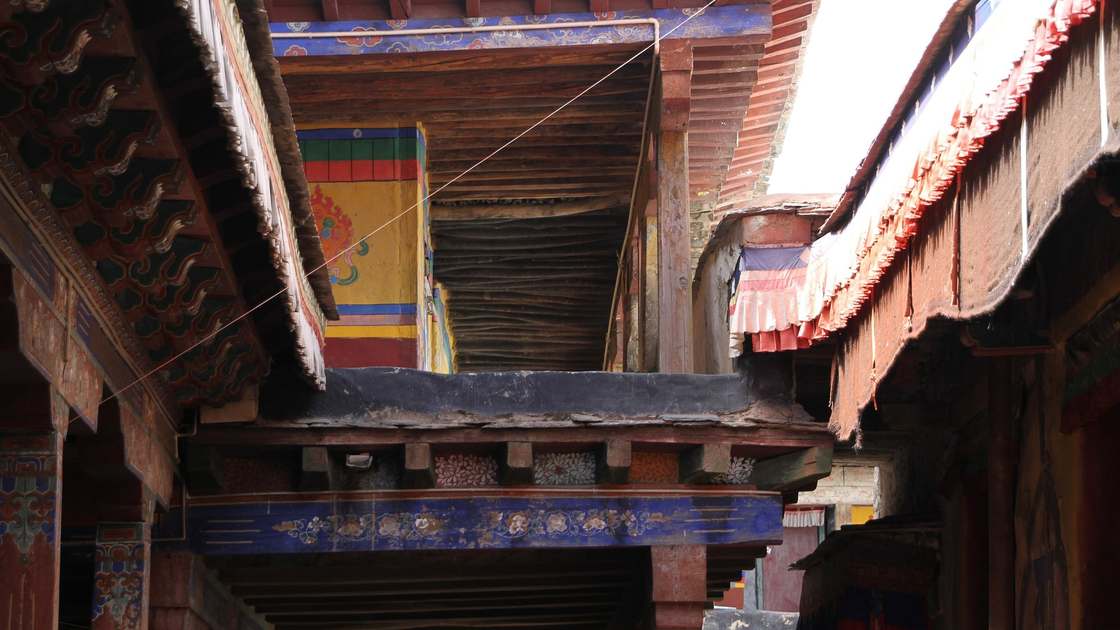 Samye Monastery
- Chimpu Caves
- Tsedang
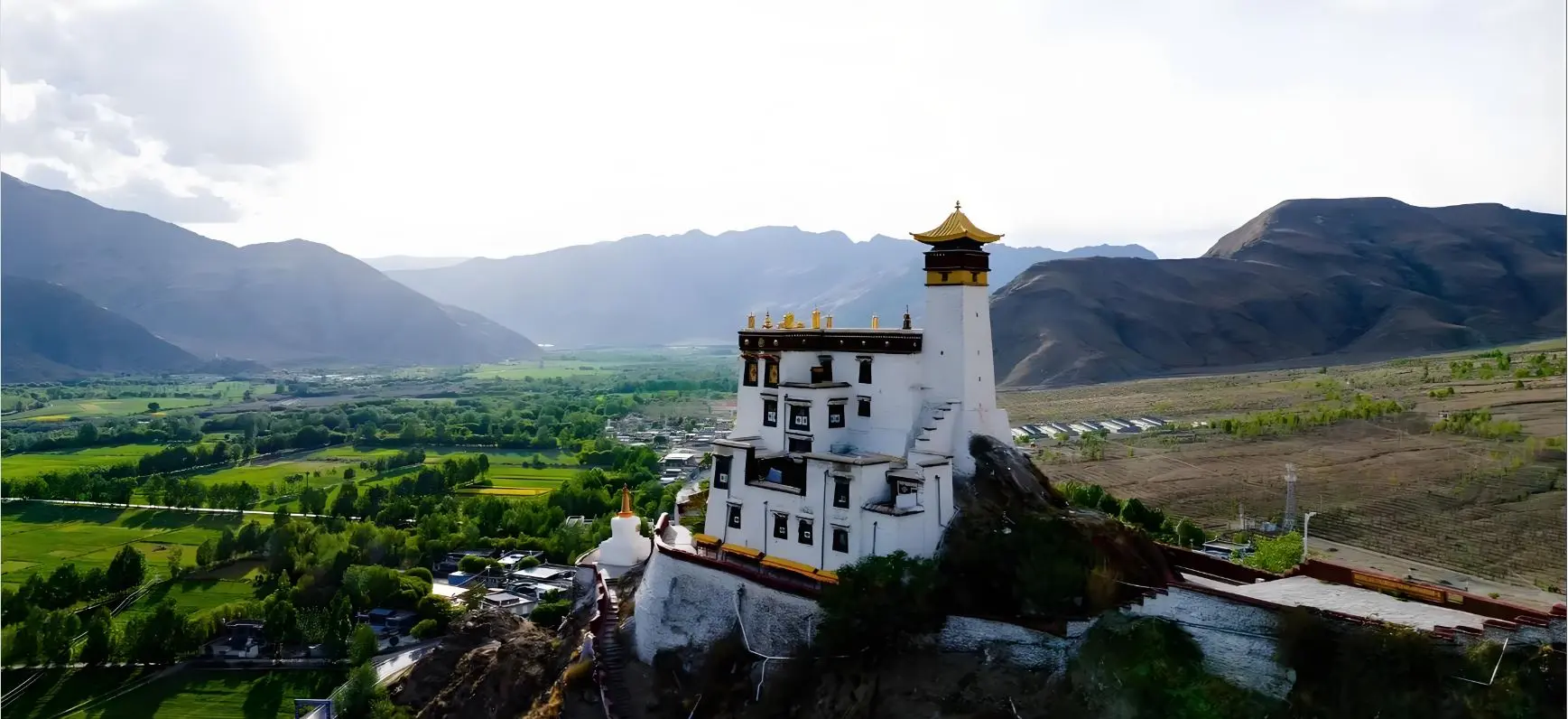 Yumbulagang Palace
- Tradruk Temple
How This Tour Came to Be
Tibet has changed enormously over the past two to three decades. The old gravel roads that once made southern Tibet a punishing multi-day undertaking have been replaced by smooth tar-paved highways. When this route was first operated, the 200-kilometre journey from Lhasa to Tsedang alone took five to six hours — drivers had to head west to Qushui Bridge, make a full U-turn, and travel east along the river. Guests crossed the Yarlung Tsangpo — the Brahmaputra — by ferry, then continued by truck for over twenty minutes just to reach the gates of Samye Monastery.
That Yarlung Tsangpo crossing by ferry is something most travellers today will never experience. We remember it. And for guests who want the unhurried scenic version of this route, we can still offer the original slower path — past vintage roadside scenery that modern expressway travel bypasses entirely.
But the core of what we offer here has nothing to do with roads. It is about what Samye and Tsedang represent. Samye Monastery, founded in the 8th century, was Tibet’s very first Buddhist monastery — the point at which Buddhism formally took root in the plateau. Chimpu, just above it, is the mountain retreat where Padmasambhava himself meditated, alongside the 25 disciples who carried his teachings forward. Yumbulagang, in the Yarlung Valley near Tsedang, is the oldest building in Tibet — a fortress-palace dating to the 2nd or 3rd century BC, where the first Buddhist scriptures are said to have descended from the sky.
This is not a route we found in a brochure. It is a route we have operated for real groups across many seasons, refined to the point where the sequence, the overnight arrangements and the site selection all feel completely natural. Every arrangement here came from decades of on-site operational experience.
What You Will See & Do
- Samye Monastery — Tibet’s very first Buddhist monastery, founded 8th century
- One overnight stay inside the Samye Monastery Guest House
- Chimpu Meditation Caves — ancient retreat of Padmasambhava and his 25 disciples
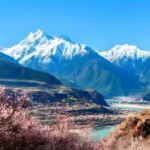
- Yarlung Tsangpo River valley scenery
- Tsedang — the ancient cultural and civilizational birthplace of Tibet
- Yumbulagang Palace — Tibet’s oldest building, 2nd–3rd century BC
- Tradruk Temple — Pearl Tara Thangka inlaid with more than 100,000 pearls
- Flexible departure: Day 5 (evening flights) or Day 6 (early morning flights)
- Days 1–3: Full Deep & Insightful Lhasa programme included
Three Immersive Pillars
One Night Inside Samye Monastery
This is the detail that separates this itinerary from every other southern Tibet tour on the market. Rather than visiting Samye as a day stop and driving back to Lhasa, we arrange overnight accommodation inside the monastery guest house. The lodging is simple — no modern luxury. But after the last tour buses leave and the gates quiet down, the atmosphere of Samye at dusk and at dawn is something that cannot be replicated from a hotel in Lhasa. Butter lamps, low chanting, the smell of incense — absorbed over a full evening and morning rather than a rushed two-hour visit.
Chimpu — Where Tibetan Buddhism Was Concentrated
Above Samye Monastery, carved into the hillside, are the Chimpu Meditation Caves. This is where Padmasambhava — Guru Rinpoche — retreated to meditate, along with his 25 disciples, after founding Samye below. These caves are among the most spiritually significant sites in all of Tibet, yet they appear on very few tour itineraries. The walk up to Chimpu from the monastery valley is itself an experience — simple, quiet, unhurried. For guests interested in the inner history of Tibetan Buddhism, this is the site that makes the journey complete.
Yumbulagang & Tradruk — The Civilizational Birthplace
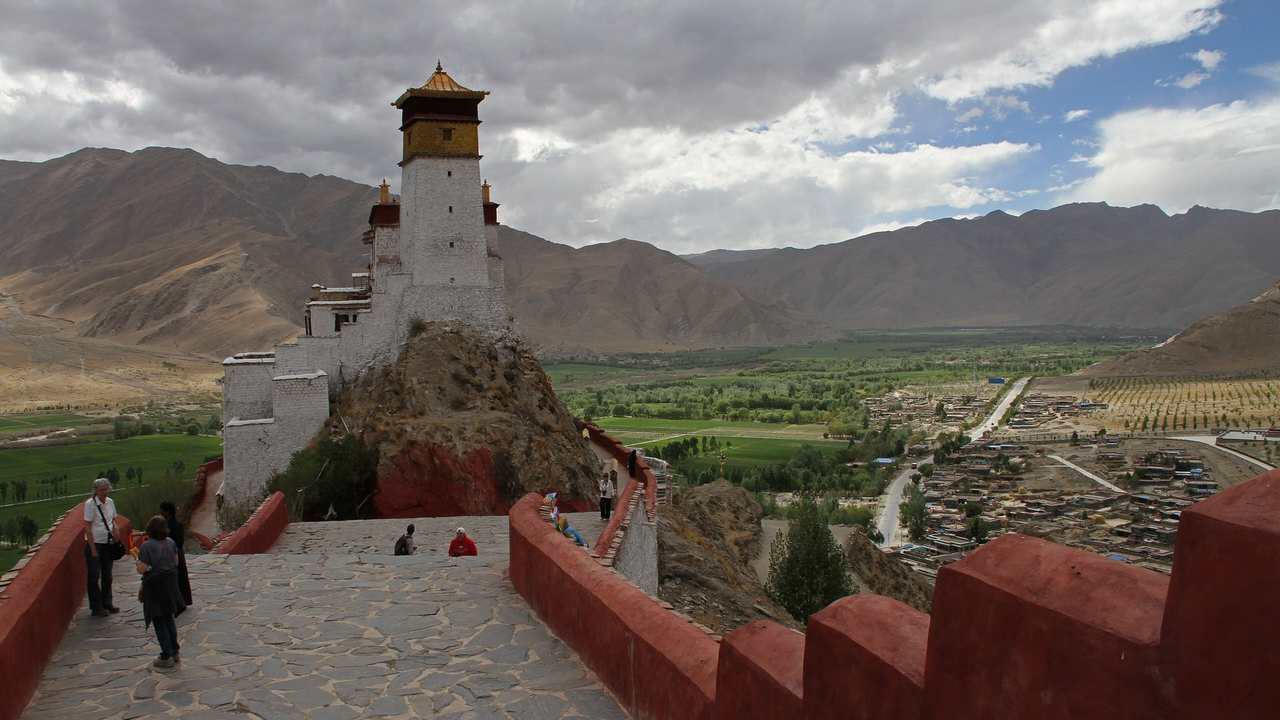
Tsedang sits in the Yarlung Valley — the agricultural heartland where Tibetan civilization itself is considered to have begun. Yumbulagang Palace, perched dramatically on a ridge above the valley, is Tibet’s oldest surviving structure. Built between the 2nd and 3rd centuries BC, it is the site where the first Buddhist scriptures are said to have descended from the heavens into Tibet. Tradruk Temple, one of the earliest royal monasteries in the country, holds the Pearl Tara Thangka — a unique masterwork inlaid with more than 100,000 pearls and considered a national-level cultural treasure. Very few travellers ever see it.
Meal Plan
- Days 1–3 — Full non-repetitive Lhasa meal programme (see linked tour)
- Day 4 — Dinner at Samye Monastery Guest House
- Day 5 — Breakfast at Samye, lunch in Tsedang, dinner in Tsedang (overnight guests) or pre-airport meal
Where you go, and how high you sleep
The route, stop by stop
Lhasa → Samye Monastery → Chimpu Caves → Tsedang → Yumbulagang Palace → Tradruk Temple
- Deep & Insightful Lhasa City ProgrammeDay 1
- Lhasa → Samye Monastery & Chimpu Meditation CavesDay 4
- Samye → Tsedang — Yumbulagang Palace & Tradruk TempleDay 5
- Day 6 | Departure Day (Early-Flight Guests Only)Day 6
Day by day
Deep & Insightful Lhasa City Programme
Days 1–3 follow exactly our proven Deep & Insightful Lhasa Cultural Tour (3-Night 4-Day) programme. The link below opens the full programme in a new tab, so this page stays where it is. Full details of sightseeing, family visits, hands-on workshops, cultural lectures and the complete meal plan.
Deep & Insightful Lhasa Cultural Tour →
- Potala Palace, Jokhang Temple, Barkhor Street and the afternoon monk debate at Sera Monastery.
- Tibetan family discovery visits — sit with household elders over butter tea and traditional snacks.
- Seasonal hands-on cultural activities: thangka-painting class or farm-field workshops depending on season.
- Optional cultural lecture and open Q&A with a local university lecturer.
- All meals follow our carefully designed non-repetitive culinary schedule.
Lhasa → Samye Monastery & Chimpu Meditation Caves
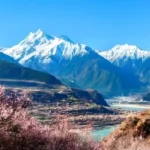
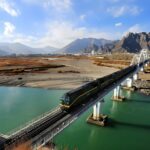
- Depart Lhasa via modern highway, heading southeast toward Samye. The route follows the Yarlung Tsangpo River valley — a broad, wind-carved corridor between high ridgelines. Travel time is significantly shorter than the historic ferry route of earlier decades.
- Arrive at Samye Monastery — Tibet’s very first Buddhist monastery, founded in the 8th century under King Trisong Detsen and Padmasambhava. The monastery’s mandala layout, representing the Buddhist universe, is visible clearly from the surrounding hills.
- In the afternoon, visit the Chimpu Meditation Caves above the monastery. Walk up through the hillside retreat complex where Padmasambhava and his 25 disciples meditated after Samye’s founding. The site is one of the most spiritually concentrated in all of Tibet — cave hermitages, active retreat practitioners, and a silence that the lower monastery valley cannot match.
- Return to Samye for the evening. After most day visitors have departed, experience the quiet of the monastery at dusk — butter lamps lit, monks at practice, the grounds unhurried.
- Overnight at Samye Monastery Guest House. Simple accommodation inside the monastery zone — no modern amenities, but the atmosphere after dark is irreplaceable.
Dinner: Dinner at Samye Guest House.
Overnight: Samye Monastery Guest House (Night 4)
Samye → Tsedang — Yumbulagang Palace & Tradruk Temple
- Early morning — optional quiet walk around the monastery before the day-visitors arrive. Breakfast at the guest house.
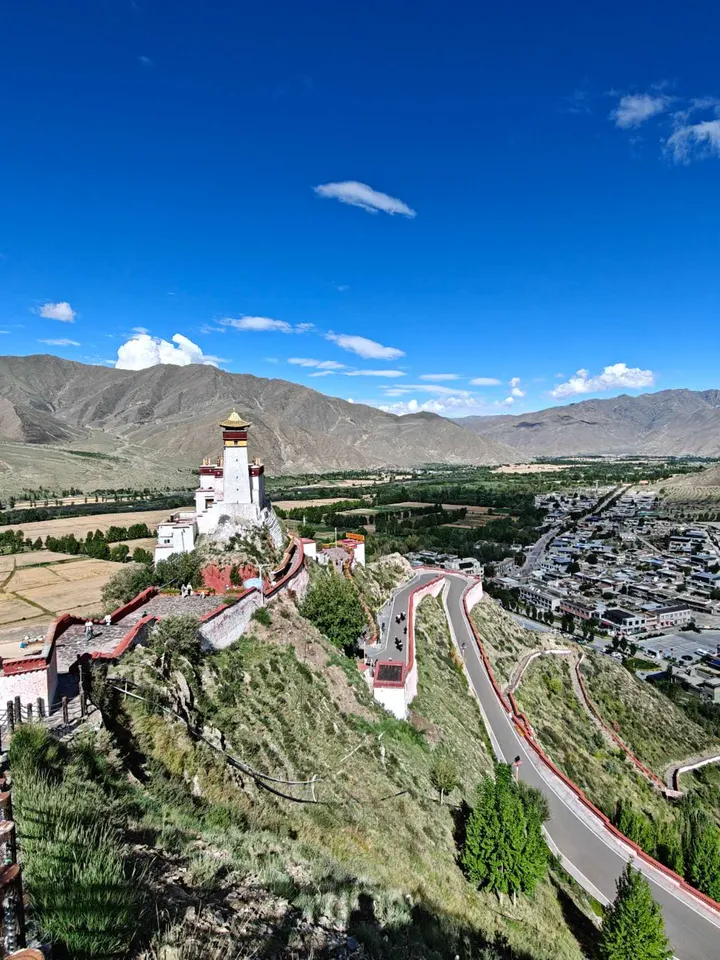
- Drive from Samye to Tsedang Town — the ancient cultural and civilizational birthplace of Tibet, set in the broad Yarlung Valley where Tibetan history itself is said to have begun.
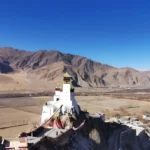
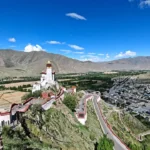
- Visit Yumbulagang Palace — Tibet’s oldest surviving structure, a fortress-palace built between the 2nd and 3rd centuries BC. The palace sits dramatically on a narrow ridge above the valley floor. It is the site where the first Buddhist scriptures are recorded to have arrived in Tibet, descending from the sky onto the palace roof.
- Visit Tradruk Temple — one of Tibet’s earliest royal monasteries, holding the Pearl Tara Thangka: a masterwork inlaid with more than 100,000 pearls and precious stones, considered a national-level religious art treasure rarely seen anywhere else.
- Lunch in Tsedang.
- Guests with evening or late-afternoon flights: transfer directly from Tsedang to Lhasa Gonggar Airport. Tour concludes at airport drop-off.
- Guests with early-morning flights: overnight in Tsedang. Depart for airport on Day 6.
Dinner: Dinner in Tsedang (for guests staying overnight) or meal before airport transfer as schedule allows.
Overnight: Tsedang hotel (Night 5, early-flight guests only) — or tour concludes at airport.
Day 6 | Departure Day (Early-Flight Guests Only)
- Breakfast at Tsedang hotel.
- Private transfer to Lhasa Gonggar Airport, timed to your morning flight.
- Tour concludes at airport drop-off.
Photos from this route
Questions travellers ask
How large will my group be?
This is a private tour — your party travels alone on your own dates, with your own guide and vehicle throughout. The group is only the people you bring; solo travellers, couples and families all travel this way. If you would rather join a fixed small-group departure (usually 3–8 travellers) on one of the classic routes, tell us on the form and we will suggest departures that fit your dates.
Which permits does this tour need?
We arrange every permit this trip needs as part of your booking — you only need a valid passport. This route needs two: the Tibet Travel Permit, which every foreign visitor needs to enter Tibet and the Alien’s Travel Permit, for places outside Lhasa. All of them are included in your quote.
How do I get to the starting point of the tour?
The tour starts in Lhasa. You can reach it by flight or by the Qinghai–Tibet railway — either way we meet you on arrival. Many travellers fly in and take the train out (or the other way round) to see both faces of the plateau. We are happy to advise on flights and train tickets as part of your booking.
Can this tour be customized?
Yes — every tour on this site can also run as a private departure with your own dates and pace, arranged by our own office in Lhasa. Send us your dates, group size and interests and we will adapt the itinerary around you.
Similar tours you may like