




The Two Great Lineages
What “Dalai Lama” actually means, how the Panchen Lama system began, and why a golden urn stands in the Potala Palace — explained before entering Tashilhunpo Monastery
Published 14 August 2026 · 20 min read
- WhereTashilhunpo Monastery · Shigatse · Tibet
- Stops10
- Read20 minutes
- Told byMark, your guide
The story, stop by stop
- 1 · Eight hours on the road — before we go in
- 2 · Buddhism — a religion that is also a philosophy
- 3 · Why ‘Tibetan’ Buddhism — and not just Buddhism
- 4 · Five centuries of history — compressed
- 5 · Four schools — and the politics behind the monasteries
- 6 · This monastery — and who actually built it
- 7 · How the title ‘Dalai Lama’ came to be
- 8 · The Panchen Lama system — and another thing to get straight
- 9 · The sacred lake — how a reincarnation is found
- 10 · What you are about to see — the four chapels
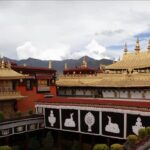
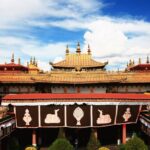
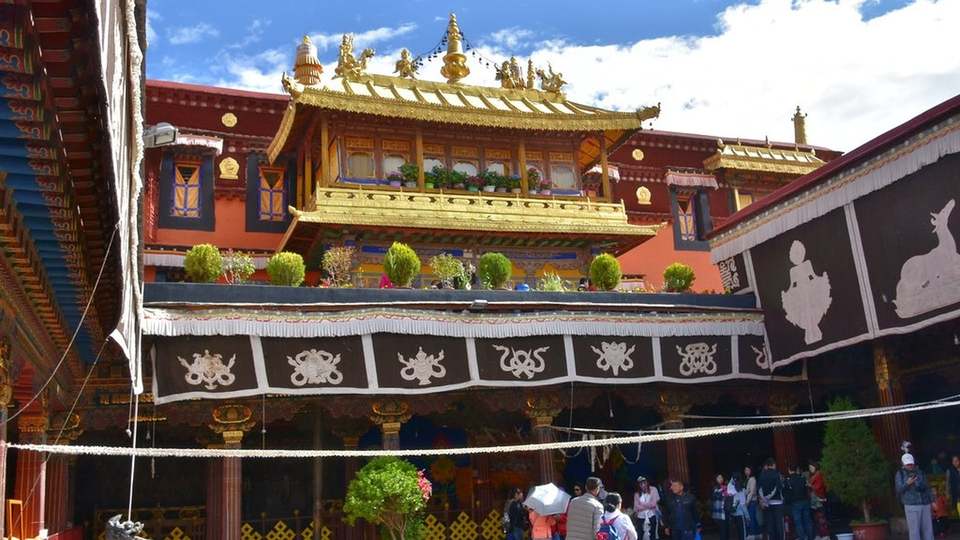
Jokhang Temple · Lhasa
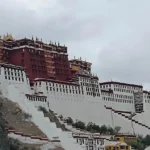
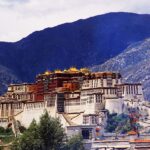
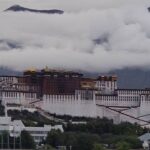
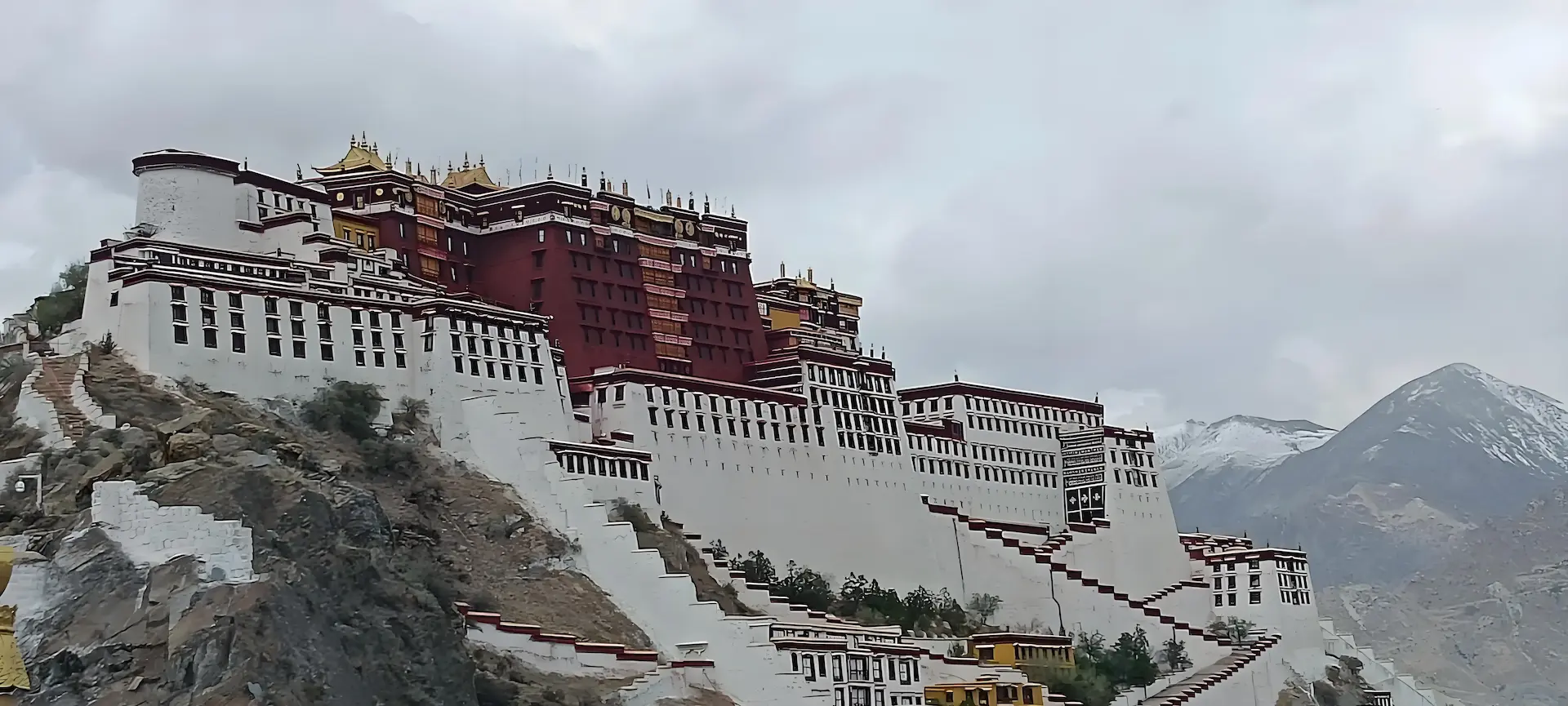
Potala Palace · Lhasa
Eight hours on the road — before we go in
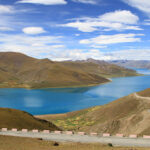
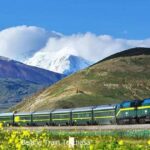
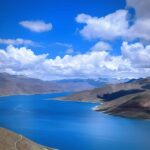
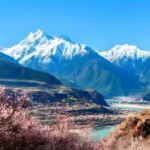
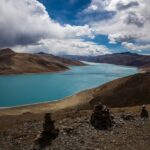
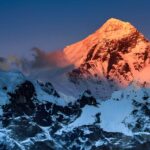
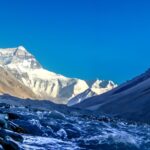
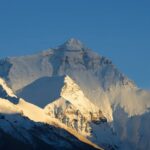
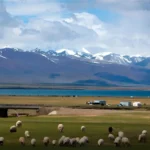
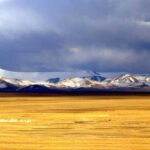
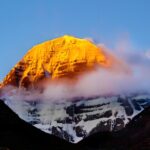
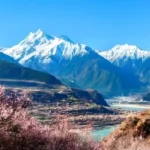
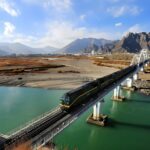
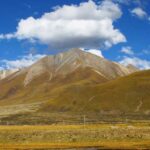
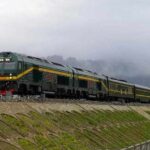
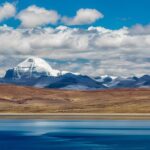
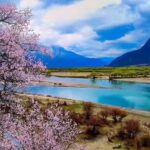
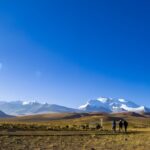
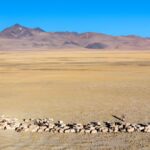
We left Lhasa early this morning. Eight hours on the road to get here. You have crossed mountain passes, stopped by lakes, and watched the plateau open out in ways the city does not allow. And now you are standing outside a monastery that most visitors in Lhasa never reach.
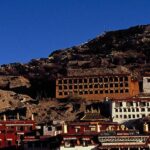
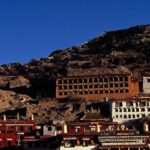
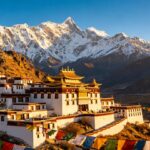
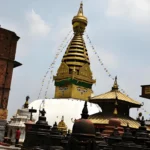
This is Tashilhunpo, in Shigatse — the largest functioning monastery in Tibet, and as important to Tibetan Buddhism as the Potala Palace in Lhasa. The difference is that the Potala belongs to one lineage and Tashilhunpo belongs to the other. By the time we leave here today, you will know exactly what that means.
Before we go inside and see the chapels, I want to give you something that will make everything you see in there meaningful. A clear picture of what Tibetan Buddhism actually is, how the two great lineages came into being, and what the relationship between the Dalai Lama and the Panchen Lama really is. These are things most visitors do not know when they walk in. They are things that take a few minutes to explain properly. But these few minutes will save you a lifetime of confusion.
Buddhism — a religion that is also a philosophy
Most religions ask you to believe in a god. Buddhism does not require this. That is the first unusual thing about it. Buddhism is equally a philosophy — a system of thought about the nature of suffering, the causes of suffering, and the path away from it. This is why people who are not religious in any conventional sense can still find something serious and useful in Buddhist practice. There is no contradiction between being a non-believer and finding Buddhism worth studying.
Within Buddhism, there is a fundamental division — between those who focus on self-liberation and those who focus on saving all living beings. The first path is sometimes called the Lesser Vehicle — Hinayana in Sanskrit. The second is the Greater Vehicle — Mahayana .
The Buddhism you see across most of Southeast Asia — in Thailand, in Sri Lanka, in Myanmar — belongs to the Theravada tradition, which is closest to what scholars call Hinayana. The emphasis is on individual practice, individual liberation, and the monastic community as the vehicle of the teaching.
The Buddhism of inland China — what is often called Chan Buddhism, and what the Japanese received as Zen — belongs to the Mahayana tradition. The goal is not only your own liberation but the liberation of all beings without exception. The bodhisattva — the awakened being who postpones final nirvana in order to remain in the world and help others — is the central figure of this tradition.
Tibetan Buddhism also belongs to the Mahayana tradition. All three — Chan, Tibetan Buddhism, and the various Mahayana schools of East Asia — share that fundamental orientation toward the liberation of all beings. But they look and feel very different from each other. And there is a specific reason why Tibetan Buddhism looks so different from anything else.
Why ‘Tibetan’ Buddhism — and not just Buddhism
Buddhism originated in India. When it traveled to Tibet, it did not arrive into an empty space. Tibet already had its own indigenous religion — Bon — with its own cosmology, its own rituals, its own understanding of the relationship between the spirit world and the land.
What happened over several centuries was not a replacement but a fusion. Buddhism and Bon absorbed each other. Practices, deities, and ritual forms from both traditions merged into something that had not existed before and has not existed anywhere else since. That fusion is what we call Tibetan Buddhism — or, more precisely, Vajrayana: the Diamond Vehicle, the tantric branch of Mahayana Buddhism.
This is why we use the qualifier “Tibetan.” It is not a minor local variation of Indian Buddhism. It is a distinct tradition that was created here, on this plateau, shaped by the conditions of altitude and by the encounter with what was already here when Buddhism arrived.
The simple answer to why it has its own name: because it became something genuinely different.
Five centuries of history — compressed
Let me give you the timeline quickly. You need a frame before the details make sense.
The fifth century AD: the earliest Buddhist texts appeared in the Yarlung Valley in southern Tibet, at the royal fortress of Yumbulakhang. Folk legend says they fell from the sky — a gift from heaven. The historical record suggests they were left behind by Indian monks passing through. It almost does not matter which version is true, because the result was the same: no one could read them, no one understood what they said, and so they were simply placed on an altar and worshipped as sacred objects. No monks. No teaching. No community. Just a relic.
The seventh century: Songtsen Gampo moves the Tubo capital to Lhasa. Princess Wencheng arrives from the Tang dynasty; Princess Bhrikuti arrives from Nepal. Both bring Buddha statues and sutras. Buddhism enters the royal court for the first time. This is the era of the Jokhang Temple, and the stories I told you in Lhasa.
The eighth century: King Trisong Detsen invites the great Indian master Guru Rinpoche — Padmasambhava — to Tibet. Together they build Samye Monastery: the first monastery in Tibet with all three elements of the Buddhist tradition in place — the Buddha, the Dharma, and the Sangha. At this moment, what existed in Tibet was essentially pure Indian Buddhism, transplanted and functioning for the first time.
Then came Lang Darma — the king who persecuted Buddhism and tried to eradicate it. I told that story at Jokhang Temple. Monasteries were burned, monks driven out or killed, and the transmission of Buddhism in Tibet was broken.
The tenth century: the Indian master Atisha comes to Tibet. Over the generations that follow, Buddhism begins to recover and rebuild. But this time, the rebuilding is different. Buddhism and Bon have had centuries to mix. What re-emerges is no longer the same as what Guru Rinpoche brought from India. It is something new. The Tibetan Buddhism you see today — its rituals, its iconography, its relationship with the landscape and the spirit world — was formed in this period and has remained essentially stable since.
Four schools — and the politics behind the monasteries
Tibetan Buddhism has four major schools: Nyingma, Sakya, Kagyu, and Gelug. When you visit monasteries in Tibet today, you will almost always be inside a Gelug monastery. This is not because Gelug is the oldest or the most spiritually senior school. It is because of politics — specifically, the politics of the Qing dynasty, which gave decisive support to the Gelug school, and whose influence shaped the institutions you see today.
But different dynasties supported different schools, and the political history behind Tibetan Buddhism is inseparable from its institutional history.
During the Yuan dynasty — the Mongol empire’s rule over China — the central court gave its support to the Sakya school. The Sakya lamas administered Tibet on behalf of the Yuan court. The most celebrated figure of that era was Drogön Chögyal Phagpa, who became the imperial preceptor of Kublai Khan. Phagpa was not only a religious teacher. He created the Phags-pa script — the writing system adopted across the Mongol empire for official documents. A Tibetan lama created the Mongolian written language. That is a fact most people do not know when they come here.
By the fourteenth century, the Sakya school’s political dominance had faded. And it was in this climate that Tsongkhapa — one of the most influential figures in all of Tibetan history — carried out a major religious reform and founded a new school.
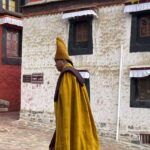
Tsongkhapa’s school is the Gelug — sometimes called the Yellow Hat school because of the distinctive yellow hats worn by its monks. The Gelug reform emphasised strict monastic discipline: no marriage, no alcohol, careful observance of conduct. Other schools tightened their own discipline in response.
One note on food, since it often comes up: monks in inland China follow a strictly vegetarian diet. Here on the Tibetan plateau, the climate made that impossible for centuries. At this altitude and in this cold, vegetables were simply not available in sufficient quantities. So Tibetan monks are permitted to eat what is called “three clean meats” — meat from animals you did not see killed, did not hear being killed, and which were not killed specifically for you. The prohibition on killing remains absolute. The adaptation is a practical recognition of what life at altitude actually requires.
By the time the Qing dynasty came to power and gave its formal support to the Gelug school, that school was already the dominant institutional force in Tibetan Buddhism. Qing support cemented what was already becoming true. The monasteries we visit today reflect that history.
This monastery — and who actually built it
When Tsongkhapa founded the Gelug school and spread his teachings, he did so with a close circle of disciples. His most senior disciple was a man named Gendun Drupa.
Gendun Drupa built this monastery. Tashilhunpo was founded in 1447 by the man we now call the First Dalai Lama.
Get This Straight
Many visitors assume that because Tashilhunpo is the residence of the Panchen Lama, it was naturally built by the First Panchen Lama. This is wrong. Please leave here with the correct version.
Tashilhunpo was built in 1447 by Gendun Drupa — the First Dalai Lama. Not the First Panchen Lama. The Panchen Lama system did not yet exist when this monastery was founded. The connection between Tashilhunpo and the Panchen lineage came later. I will explain exactly when and how.
After Gendun Drupa died, the Second Dalai Lama left Shigatse and moved to Drepung Monastery in Lhasa to continue his teaching. The centre of the Gelug school followed him, shifting from Shigatse to Lhasa. Tashilhunpo remained — an important Gelug monastery, but no longer the centre of the tradition. That distinction had moved east with the lineage.
How the title ‘Dalai Lama’ came to be
The Third Dalai Lama — Sonam Gyatso — traveled from Tibet to Mongolia to teach Buddhism to the Mongolian people. He was enormously successful. The Mongolian ruler Altan Khan received him with great devotion and, in recognition, gave him an honorific title.
That title was “Dalai Lama.”
“Dalai” is Mongolian. It means “ocean” — as vast as the ocean. “Lama” is Tibetan for “teacher” or “guru.” Together: a teacher whose wisdom is as vast as the ocean. The title was not invented by Tibetan religious authorities. It was given by a Mongolian ruler to a Tibetan monk, in Mongolia. This matters for what comes next.
Sonam Gyatso died in Mongolia — never returning to Tibet. Because the title was newly created and given to the Third in the lineage, the generations before him had to be designated retroactively. The First and Second Dalai Lamas were named after the fact, working backwards through the recognised succession. They held the position, but not the title — the title came later and was applied to them posthumously.
Because the Third Dalai Lama died in Mongolia, the Fourth Dalai Lama — the next reincarnation — was found there. He was Mongolian. He is the only non-Tibetan Dalai Lama in the history of the lineage.
This was not a spiritual coincidence. It was the consequence of Mongolian nobles using their access and influence to direct where the next reincarnation would be recognised. Tibetan religious historians acknowledge this. The reincarnation landed in Mongolia because powerful people in Mongolia wanted it to. This is precisely the kind of manipulation that concerned the central government — and it is one of the central reasons why a formal system of oversight was eventually established.
The Fifth Dalai Lama traveled to Beijing to meet the Shunzhi Emperor of the Qing dynasty. The Qing court officially recognised him, giving him authority over the religious and political affairs of all Tibet. From that moment, the Dalai Lama system had central government recognition — and the central government had a formal role in the lineage.
The Panchen Lama system — and another thing to get straight
The word “Panchen” is a combination of two languages. “Pan” is derived from the Sanskrit pandita — a great scholar, a person of deep learning and attainment. “Chen” is Tibetan for “great.” Together: a great and learned master.
The title was not invented by Tibetan religious authorities either. It was given by a Mongolian ruler — a Mongolian khan — to the Fourth Panchen Lama as an honorific recognition of his standing. The Fourth Panchen Lama was also, at the same moment in history, the teacher of the Fifth Dalai Lama. This is the moment when the defining relationship between the two systems was formally established: the two great lineages would be, from that point onward, teacher and student to each other across every successive generation. Sometimes the Dalai Lama teaches the Panchen Lama. Sometimes the Panchen Lama teaches the Dalai Lama. The roles rotate, and the relationship is mutual. That is still true today.
Get This Straight
The First, Second, and Third Panchen Lamas were all designated posthumously — after the fact. None of them lived or practiced at Tashilhunpo during their lifetimes. They were monks at other monasteries in the Shigatse area.
After the Fourth Panchen Lama died, the Fifth Dalai Lama looked back through the lineage and retroactively designated the previous three, establishing the continuous succession. It was from the Fourth Panchen Lama onwards that Tashilhunpo became the Panchen Lama’s official residence. The monastery was expanded and developed. This is when Tashilhunpo became what you see today — the permanent seat of the Panchen lineage.
In 1713, the Kangxi Emperor of the Qing dynasty officially recognised and certified the Fifth Panchen Lama, bestowing the title “Panchen Erdeni” — a combined Tibetan, Sanskrit, and Mongolian honorific meaning something close to “great jewel of learning” — and giving him formal authority over the administration of rear Tibet. This was the moment the Panchen Lama system received its official imperial standing, equivalent to what the Fifth Dalai Lama had received from the Shunzhi Emperor two generations earlier.
The truth most guides skip — why the central government’s role matters
I want to tell you something that most tour guides do not go into. It is politically sensitive and historically complex. But without it, you will not understand why the Golden Urn system exists, or why the certification of reincarnation matters as much as it does.
The core principle is this: a reincarnation that has not been recognised by the central government is not a legally valid reincarnation. The government can revoke a lineage entirely, permanently and without appeal. It has done so.
The most dramatic example is the Karma Kagyu Red Hat lineage. The Tenth Red Hat Karmapa colluded with the Gurkha army — the forces of Nepal — and invited them to invade Tibet. The Gurkha troops looted rear Tibet and specifically targeted Tashilhunpo, the monastery you are standing outside right now. They caused serious damage and removed significant treasure.
The Qianlong Emperor suppressed the invasion militarily. And then he did something further: he issued an imperial edict abolishing the Red Hat lineage entirely. The title was stripped. The monastery’s assets were confiscated. The monks were required to convert to the Gelug school. And the Red Hat Karmapa was permanently forbidden from reincarnating. A lineage that had existed for centuries was ended by decree — not because of anything spiritual, but because its holder had chosen the wrong side.
I mentioned at the Potala Palace that the Sixth Dalai Lama, Tsangyang Gyatso — the poet — was enthroned and later removed by Tibetan local nobles who acted without central authorisation. The local aristocracy had developed the habit of using the reincarnation system as a political instrument, placing and removing living Buddhas according to factional interest. The court in Beijing drew the obvious lesson.
Beginning with the Seventh Dalai Lama, a new rule was established: the reincarnation of any major living Buddha must be submitted to the central government for review and approval before it can be declared valid. Local determination alone was no longer sufficient.
In 1793, the Qianlong Emperor formalised this into an institution: the Golden Urn system — Jinping Cheqian in Chinese. The process works as follows. A search party identifies candidate children — I will explain the search in the next section. The names of the candidates are written on ivory lots and placed inside a gold-and- enamel urn. A senior lama draws a lot in a formal ceremony witnessed by officials. The name on the drawn lot is submitted to Beijing for imperial approval. Only after that approval is the reincarnation declared valid and the new living Buddha enthroned.
The urn used for Dalai Lama reincarnations stands today inside the Potala Palace in Lhasa. The urn for Panchen Lama reincarnations is kept here at Tashilhunpo. These are not decorative objects. They are legal instruments — the physical form of a constitutional arrangement.
Rank, role, and relationship — the two great lineages side by side
Now that you have the history, let me give you the direct comparison. Two columns, clearly.
Secular authority: the Dalai Lama holds authority over all of Tibet and resides at the Potala Palace in Lhasa. The Panchen Lama holds authority over rear Tibet — the western and southern regions — and resides here, at Tashilhunpo in Shigatse.
Religious rank — and this often surprises visitors: the Panchen Lama is religiously senior to the Dalai Lama. The Dalai Lama is understood to be the living manifestation of Avalokitesvara — the Bodhisattva of Compassion, known in Chinese Buddhism as Guanyin. A bodhisattva is an awakened being who has chosen to remain in the world to help others rather than pass into nirvana. The Panchen Lama, by contrast, is understood to be the manifestation of Amitabha — the Buddha of Infinite Light, one of the five celestial Buddhas of Vajrayana Buddhism. A Buddha is a higher level of attainment than a bodhisattva.
So in terms of pure religious rank, the Panchen Lama holds the higher title. In terms of practical governance of Tibet, the Dalai Lama held the broader temporal authority. And in terms of their personal relationship to each other: teacher and student, rotating across generations, each participating in the recognition of the other’s reincarnation in turn.
The Dalai Lama lineage is currently in its fourteenth generation. The Panchen Lama lineage is in its eleventh.
The sacred lake — how a reincarnation is found
The Golden Urn is the legal conclusion of the process. But before you reach the urn, you have to find the candidates. And that search begins with a lake.
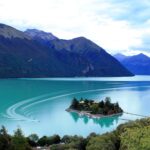
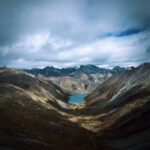
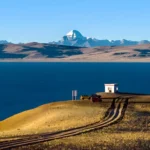
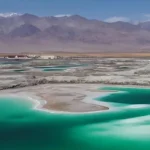
The lake is called Lhamoi Latso — sometimes translated as the Oracle Lake. It sits at high altitude in the Shannan region of Tibet, several hours from Lhasa by vehicle. It is remote. It is not a tourist destination. You do not visit it casually.
When a major living Buddha dies and the search for the reincarnation begins, senior lamas travel to Lhamoi Latso first. They sit by the water and observe the surface of the lake. They are looking for visions — images that appear in the water and provide directional clues: a region, a landscape, a cardinal direction, sometimes a specific monastery or type of building. The tradition holds that the lake reveals something real about where the reincarnation has occurred. This is treated not as ceremony but as genuine information.
Guided by what was seen at the lake, a search party travels in the indicated direction and looks for children born at or very close to the moment when the previous living Buddha died. Several candidates may be identified. Each is tested — given objects that belonged to the previous incarnation, mixed with similar objects that did not, and observed to see which ones the child reaches for without prompting or coaching. Children who reliably identify the correct objects become the formal candidates.
Those candidates’ names are written on the ivory lots that go into the Golden Urn. The draw is made in a formal public ceremony. The result is submitted to the central government for approval. Only when approval is given is the new living Buddha officially declared.
The lake is a source of information — the beginning of the search. The urn is the legal determination. Neither alone is sufficient. Both are required.
What you are about to see — the four chapels
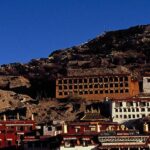
Turn and face the monastery. The chapels we are entering follow a fixed sequence from left to right. I will name them for you now so you know what you are walking into.
The first chapel is dedicated to Maitreya — the Buddha of the future, known in Tibetan as Jampa. The gilded statue inside is one of the largest of its kind in the world. The scale of it is something you have to stand in front of to understand.
The second chapel contains the funerary stupa of the Tenth Panchen Lama, who died in 1989. He was the most recent Panchen Lama to reside and work at Tashilhunpo. His stupa is elaborate, recently built, and contains his remains.
The third chapel contains the stupa of the Fourth Panchen Lama — the one who received the Panchen title, moved to Tashilhunpo, and established this monastery as the permanent seat of the Panchen lineage. Everything you have heard in the last half hour connects back to this man.
The fourth chapel , to the far right, is a combined memorial holding the funerary stupas of the Fifth through Ninth Panchen Lamas together — five generations in a single hall.
The chapels are crowded. We will not gather as a group inside. If you have questions at any point, come and find me directly — I will be moving through with you.
All right. Let’s go in.
More stories from the same journey
Frequently asked questions
What is Tashilhunpo Monastery?
Tashilhunpo, in Shigatse, is the seat of the Panchen Lama. The stories here explain Tibetan Buddhism, the Dalai Lama and Panchen Lama lineages, and how a reincarnation is found.
What is the difference between the Dalai Lama and the Panchen Lama?
They are two of the great reincarnation lineages in Tibetan Buddhism. The stories on this page explain how each lineage works and how the two have related over five centuries.
Where is this story told?
It is told outside Tashilhunpo Monastery in Shigatse, after the eight-hour drive from Lhasa.
We answer within 12 hours, Monday to Saturday.