










In the Footsteps of Huc & Gabet
Abbé Évariste Régis Huc & Father Joseph Gabet · 1850
The story, stop by stop
Two French missionaries left Inner Mongolia in 1844 and walked to Lhasa. This is their route, retraced for those who have read the book — and for those who are about to.
The Book
Who Were Huc and Gabet?
Évariste Régis Huc (1813–1860) was a French Lazarist missionary who spent years in China learning Mandarin, Mongolian, and Tibetan before setting out, with fellow missionary Joseph Gabet, on one of the most remarkable overland journeys of the 19th century. Their mission was religious. Their journey became literature.
Traveling in the disguise of Tibetan lamas, they crossed Inner Mongolia, the Muslim towns of Gansu, the high plateau of Qinghai, and the killing cold of the Tibetan passes before arriving in Lhasa on 29 January 1846 — among the very first Western travellers to reach the city. They were expelled four weeks later by the Chinese imperial commissioner. The book Huc wrote from his journals and memory was published in Paris in 1850 and immediately translated across Europe. It has never gone out of print.
What makes it extraordinary is not the adventure — though the adventure is real — but the quality of attention. Huc looked at everything: the way nomads built a fire, the way a lama prayed, the way a caravan of two thousand people moved across a frozen plateau. He wrote about all of it with curiosity rather than condescension. The book is available free, in both English and French, as a public domain text.
Travels in Tartary, Thibet and China
Abbé Huc · English translation · Public domain
Read free at Project Gutenberg →
Souvenirs d’un voyage dans la Tartarie, le Thibet et la Chine
Abbé Huc · Texte original français · Domaine public
Lire sur Wikisource →
“The book is the journey before the journey. Tibet is the arrival.”
The Historical Route
The Journey · In Five Acts
Huc’s journey from Inner Mongolia to Lhasa took over a year. Below it is told in five stages — each with the relevant section of the book to read before or during your visit.
Departure — Inner Mongolia
Inner Mongolia · The Open Steppe
Huc and Gabet had spent years in China learning the language, studying Buddhist doctrine, mastering the customs. In autumn 1844 they set out from a small Catholic mission in Inner Mongolia, disguised as Tibetan lamas — robes, shaved heads, rosary beads. The vast steppe received them without ceremony.
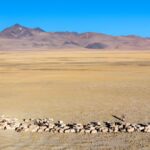
Moving west through nomadic Mongol settlements, they documented the Buddhism of the grasslands — its monasteries rising from flat land, its ceremonies, its wandering monks — with a precision and empathy rare among European observers of the 19th century. This first segment is the quietest part of the journey. It is the moment before the road truly begins.
Today
Today, Hohhot is the natural starting point. The grasslands Huc crossed — flat, treeless, immense — still extend for hundreds of miles. The Mongolian Buddhist monastery culture he observed survives in changed but recognisable form. Dazhao Temple in Hohhot still functions. The steppe still absorbs travellers without ceremony.
Modern equivalent: Hohhot & the Inner Mongolia Grasslands
Across the Yellow River — Ordos, Ningxia and Zhongwei
Baotou · The Yellow River · Zhongwei
West of Hohhot, Huc and Gabet came to the Yellow River. They crossed it by ferry to enter the Ordos country, after a hard march through flooded marshland. They crossed the Ordos, then reached the river again and crossed it a second time, going on through Ningxia. Their route passed the walled town they call Tchong-Wei, which is today’s Zhongwei, and then took them over the Great Wall and into the sand hills before they turned south-west across Gansu toward Xining.
Today
Baotou is a big city on the Yellow River and a good base for this part of the route. Zhongwei, on the same river in Ningxia, is known today for the Shapotou sand dunes beside the water. Both towns are on the railway, so you can travel this stretch by train. From Zhongwei the line runs through Lanzhou, in Gansu, to Xining. Lanzhou is only a connection on this route.
Modern equivalent: Baotou, Zhongwei and the Yellow River, by train
Kumbum Monastery — The Long Halt
Qinghai Province · Kumbum (Ta’er Si)
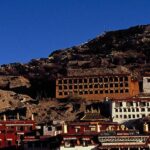
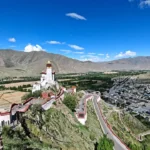
At a sacred mountain in Qinghai province, Huc and Gabet found Kumbum — a monastic city of several thousand monks, white-walled houses climbing the hillside, butter lamps burning in every shrine. They stayed for months: learning Tibetan, observing the great ceremonies, waiting for the caravan that would carry them into Tibet.
Here Huc described the monastery’s most famous natural wonder: a sandalwood tree at the heart of the complex whose bark and leaves appeared, to his astonished eyes, to bear Tibetan sacred syllables formed by nature rather than any human hand. Scholars have debated this claim for two centuries. The tree remains. Kumbum is also the birthplace of Tsongkhapa — founder of the Gelug school of Buddhism to which the Dalai Lama belongs.
Today
Ta’er Si — Kumbum’s Chinese name — is one of the six great Gelug monasteries. The hillside Huc described is still recognisable. The great prayer halls still function. Pilgrims still complete the same circuits. Visitors today walk the same courtyards where Huc spent his long winter waiting for the caravan to form. Of all the stops on this journey, Kumbum rewards time most.
Modern equivalent: Xining & Kumbum — the emotional heart of the journey
The Great Caravan
The Qinghai Plateau · The High Passes · The Roof of the World
In the autumn of 1845, Huc and Gabet joined the caravan of the Tibetan ambassador returning to Lhasa. By Huc’s account, the caravan numbered some two thousand people and over forty thousand animals — yaks, horses, camels, mules — stretching for miles across the plateau. The journey took months.
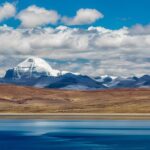
High passes took lives. Storms buried the route in snow. Disease moved through the column. Huc’s account of the crossing — the cold, the scale, the deaths, the strange and terrible beauty of the plateau at altitude — is among the most vivid passages in 19th-century travel literature. It is the heart of the book. Nothing about it is comfortable.
Today
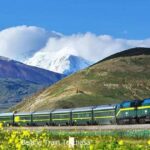
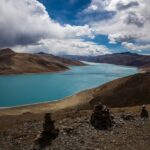
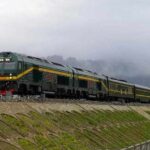
The Qinghai-Tibet Railway, opened in 2006, crosses the same plateau by a similar route. It runs above 4,000 metres for most of its length — the highest railway on earth — with oxygen piped into the carriages. It covers in sixteen hours what took Huc’s caravan several months. The landscape from the window is unchanged. Riding it, you understand what the caravan was crossing.
Modern equivalent: the Qinghai-Tibet Railway — the modern caravan
Lhasa — The Arrival
Lhasa · The Holy City
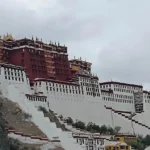
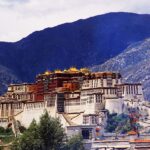
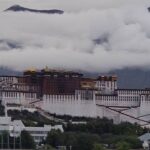
After more than a year of travel, Lhasa revealed itself through a narrow valley: the Potala Palace on its rocky hill above the city, golden-roofed temples in the plain below, the white walls of the noble quarters. Huc and Gabet arrived on 29 January 1846. They were received with curiosity and a measure of tolerance, attended ceremonies, explored the streets of the city.
On 26 February 1846, the Chinese imperial commissioner Qi Shan ordered their expulsion. They were escorted out of Tibet under guard. Neither Huc nor Gabet ever returned. The four weeks in Lhasa are among the most vivid sections of the book — the city observed by men who knew they would not be staying, and who wrote as if they understood this.
Today
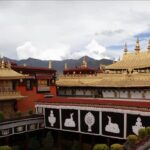
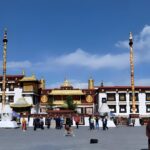
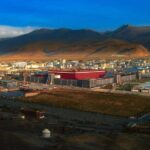
The Potala Palace Huc described is essentially the building that stands today — its red and white walls, its thirteen storeys, its position above the city unchanged since the 17th century. The Jokhang Temple remains the spiritual heart of Tibetan Buddhism. The Barkhor pilgrim circuit — the same street, the same direction, the same prayers — draws thousands daily. The city has grown enormously. The cores have not moved.
Modern equivalent: Lhasa — the destination, the arrival
The Modern Retrace
In the Footsteps of Huc & Gabet · 18 Days
This is a framework itinerary — a route that follows the spirit and geography of Huc’s journey using today’s trains, with one flight out of Lhasa at the end. It can be adjusted in length and detail. The sequence matters more than the exact schedule.
Beijing — The Starting Point
Huc operated from mission stations in north China. Beijing grounds the journey in the China he inhabited.
- Tian’anmen Square, Forbidden City, Summer Palace
- Yonghegong Lama Temple — a Gelug monastery in the capital, the same tradition Huc studied at Kumbum
- Orientation: who were Huc and Gabet, and what did they set out to do?
Hohhot & Inner Mongolia — Where They Departed
The journey begins here. The steppe Huc crossed still extends from the outskirts of Hohhot.
- Dazhao Temple — one of Inner Mongolia’s oldest Mongolian Buddhist monasteries
- Grassland day excursion — the open landscape Huc moved through heading west
- Optional ger-style overnight on the grasslands
Baotou — The Yellow River
Huc and Gabet crossed the Yellow River by ferry in this part of the world to enter the Ordos country. Baotou is the big city on the river here, and a good place to see it on the way west.
- The Yellow River at Baotou
- Train on to Zhongwei
Zhongwei, Ningxia — The Second Crossing
Huc and Gabet passed through the walled town they call Tchong-Wei, on the Yellow River, before they climbed into the sand hills and crossed the Great Wall.
- Two nights in Zhongwei
- Shapotou — sand dunes above the Yellow River
- The Yellow River at Zhongwei
- Train via Lanzhou to Xining. Lanzhou is only a connection on this route.
Xining & Kumbum Monastery — The Long Halt
Huc stayed at Kumbum for several months. We give it three full days — still a fraction of his time, and enough to understand why he stayed.
- Ta’er Si (Kumbum): first arrival and full circuit of the monastery complex
- Full second day at Kumbum — prayer halls, butter sculpture, inner courtyards. Unhurried.
- The sacred sandalwood tree Huc described — draw your own conclusions
- Xining city: Dongguan Grand Mosque, Qinghai provincial museum
The Plateau Crossing — Qinghai-Tibet Railway
Huc’s caravan took months to cross this plateau. The train takes sixteen hours. The landscape is the same.
- Board the Qinghai-Tibet Railway from Xining
- Crossing above 4,000 metres — the highest railway on earth; oxygen supplied in carriages
- The plateau seen from the window: bare, vast, impossibly high, full of sky
- Arrive Lhasa late afternoon or evening
Lhasa — The Arrival
Huc arrived on 29 January 1846 after more than a year of travel. He had four weeks before expulsion. We give four days — enough to feel what it took to arrive.
- Potala Palace — the building Huc saw, still standing
- Jokhang Temple and the Barkhor pilgrim circuit — the devotional heart of the city
- Sera Monastery — the afternoon monk debate (daily)
- Drepung Monastery — largest monastery in Tibet
- Optional extension: drive to Gyantse and Shigatse
Departure
Huc was escorted out of Lhasa on 26 February 1846 under imperial guard. You leave by your own choice, and you may return.
- Fly from Lhasa to Chengdu or Guangzhou for onward connections
- The journey Huc completed in two years, you have completed in eighteen days
Duration, pace and extensions (Gyantse, Shigatse, Dunhuang, Kashgar) can all be adjusted. This journey is by its nature not a standard package — it is arranged around you.
The Invitation
This journey is not for everyone.
It is for those who have already read the book — or who will read it before they arrive. It is for those who want to stand in places that Huc described, and feel the distance between 1846 and now. It is for those who understand that the Potala Palace is more interesting when you know that two French missionaries were expelled from the city below it for reasons of imperial politics in the spring of that year.
We have been operating in Tibet, Inner Mongolia, Qinghai and along the Silk Road for over twenty-five years. We know this route. We know which parts of it have changed and which have not. If you would like to retrace Huc and Gabet’s journey — or simply to travel this region with their book in hand — contact us to discuss the details.
Both editions of Travels in Tartary, Thibet and China (English) and Souvenirs d’un voyage dans la Tartarie, le Thibet et la Chine (French) are freely available as public domain texts.
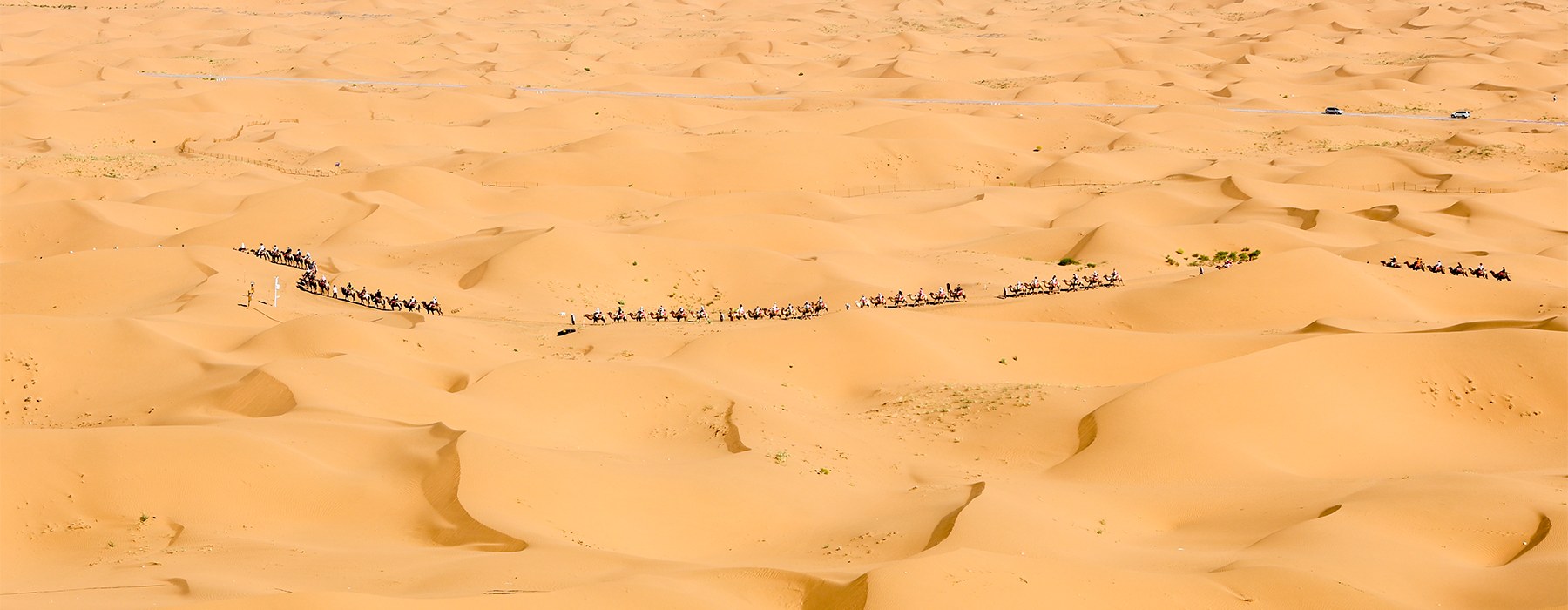
Photo: camel caravan in the Shapotou dunes, Zhongwei, by Windmemories, CC BY-SA 4.0, via Wikimedia Commons.
Frequently asked questions
Is there a tour from Inner Mongolia to Tibet?
Yes. Our 18-day private tour starts in Beijing, goes by train through Hohhot and Baotou in Inner Mongolia, then Zhongwei and Xining, and rides the Qinghai–Tibet Railway to Lhasa. It follows the 1844–1846 journey of the French missionaries Huc and Gabet.
Which places does the Inner Mongolia to Tibet tour visit?
Beijing, Hohhot (Dazhao Temple and the grasslands), Baotou and the Yellow River, Zhongwei and the Shapotou sand dunes, Xining and Kumbum (Ta’er Si) Monastery, then Lhasa. Lanzhou is only a train connection on this route.
Can I travel from Hohhot to Lhasa by train?
Yes. This tour does it by train in stages: Hohhot to Baotou, then Zhongwei, then Xining, and from Xining the Qinghai–Tibet Railway to Lhasa. Only the flight out of Lhasa at the end is by air.
Does the tour include the Silk Road and Dunhuang?
Dunhuang and the Silk Road are an optional extension. From Zhongwei or Lanzhou we can add Jiayuguan and Dunhuang (the Mogao Caves and the Mingsha dunes), then bring you back by fast train to Xining and on to Lhasa. Huc and Gabet did not travel the Hexi Corridor themselves, so this is an extra and not part of their route.
Can I visit Kumbum (Ta'er Si) Monastery on this tour?
Yes. Kumbum is the centre of the journey. We give Xining and Kumbum three days, with time for the prayer halls, the courtyards and the sandalwood tree Huc wrote about.
Why does the route go to Baotou and Zhongwei?
Because Huc and Gabet crossed the Yellow River twice on their way west. They first crossed it by ferry to enter the Ordos country, then crossed it again and passed through the walled town they call Tchong-Wei, which is today’s Zhongwei. Baotou is the big city on the river on the first part of the route. Today Zhongwei is known for its sand dunes at Shapotou, beside the Yellow River.
Do I need a Tibet permit, and who arranges it?
Yes, you need a Tibet permit. We apply for it for you, and you see it before you pay. Foreign visitors also travel in Tibet with a guide, and the guide is part of the tour.
Is there a shorter way to travel from Beijing to Tibet by train through Inner Mongolia?
Yes. Our 10-day Beijing to Tibet train tour via Inner Mongolia covers the same direction in less time. This 18-day tour is the longer version, with more time at the Yellow River, Kumbum and Lhasa.
Who were Huc and Gabet?
Évariste Régis Huc and Joseph Gabet were two French missionaries who left Inner Mongolia in 1844 and walked to Lhasa. Their account, Travels in Tartary, Thibet and China, is one of the great travel books.
When did Huc and Gabet reach Lhasa, and when were they expelled?
They reached Lhasa on 29 January 1846. The Chinese imperial commissioner Qi Shan ordered them out, and they were expelled on 26 February 1846, about four weeks later.
Do I need to read the book before I go?
No. The book is free to read online, and many guests read it before or during the trip. The tour also suits anyone who likes history, long train journeys and quiet places.
Who is this tour for?
It is for travellers who like history and long train journeys, and who want to see the places where Huc and Gabet travelled. You do not need to be a trekker. Lhasa is high, so we plan time for altitude.
How much does the tour cost?
The tour is private, so the price depends on the size of your group, the hotel level and your dates. Send us an inquiry and we reply within 12 hours, Monday to Saturday.
We answer within 12 hours, Monday to Saturday.