



















Legends from the Walls
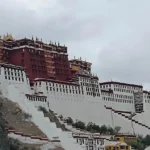
Every great Tibet tour passes murals that most guides walk past. Mark stops. He has told these stories — panel by panel, in front of specific walls — to hundreds of groups over twenty years. This is what he says.
Read the storiesWhat this series is
These are not textbook summaries of Tibetan mythology. They are the explanations Mark gave — in real time, in front of specific walls, to real groups — during twenty years of guiding in Tibet. Each story is anchored to a precise location: a panel number, a wall, a temple. Every page ends with the tours where you can hear this story in person.
The Storyteller
Mark
On the road since the winter of 2003 — and still guiding today. China’s retirement system says otherwise; Mark disagrees. He now guides exclusively for clients who request him by name, and for TibetTravel.com’s most discerning travellers — not general sightseeing groups. He self-taught Tibetan mythology through ten volumes of fairy tales during his early years, and has spent over two decades explaining these walls.
Stories in this series
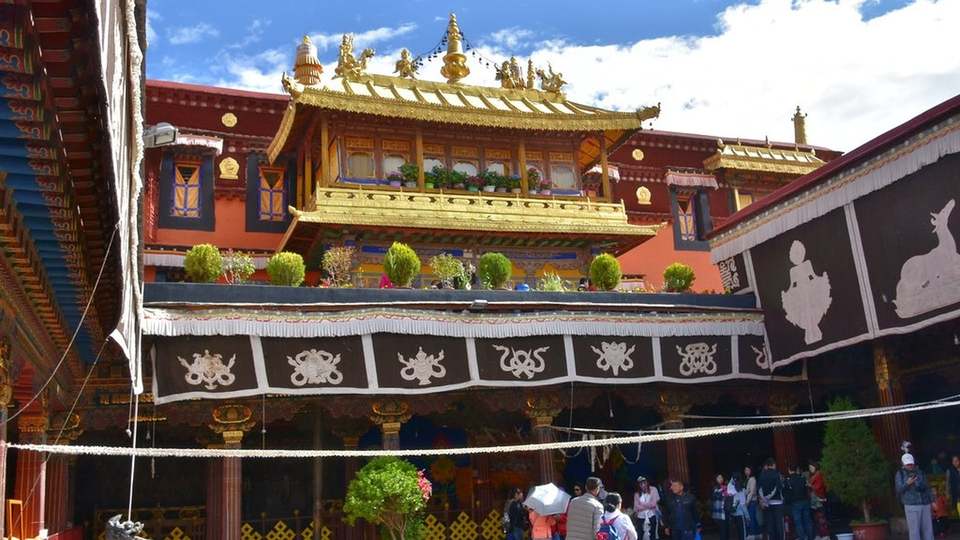
The White Goats That Named a City
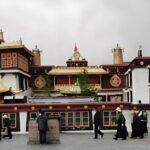
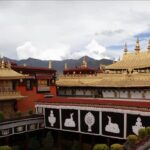
The place where you are standing was, in the seventh century, a pond. A demon woman’s heart, beating underwater. Thousands of white goats came to fill it. The city was named after them. That is what Jokhang Temple is built on.
Read the story →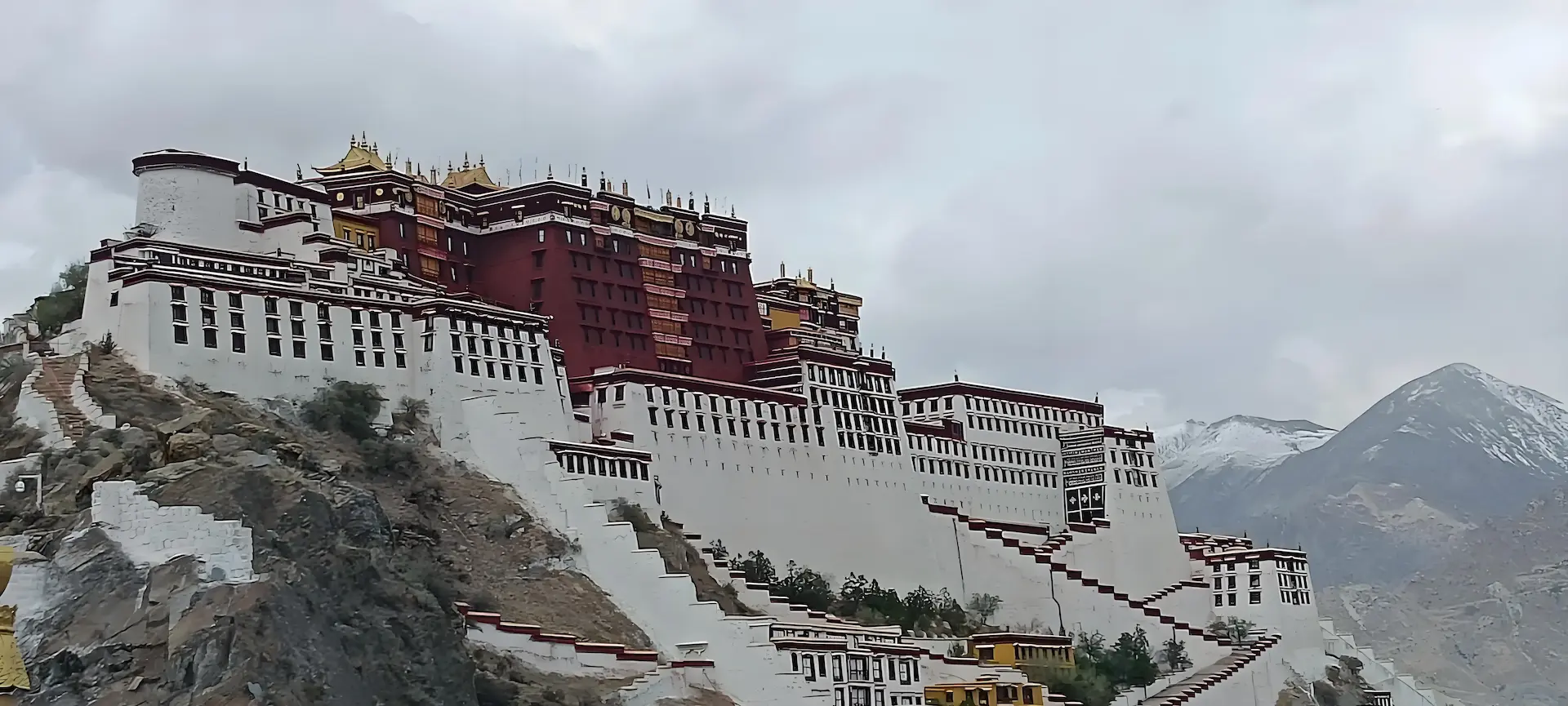
Neither the Buddha Nor You
A minister who may have loved a princess. A queen who severed a mountain’s artery with a sword. A Dalai Lama who kept slipping out of the palace at night, and left footprints in the snow. And the poem he left behind — one question, still no answer.
Read the story →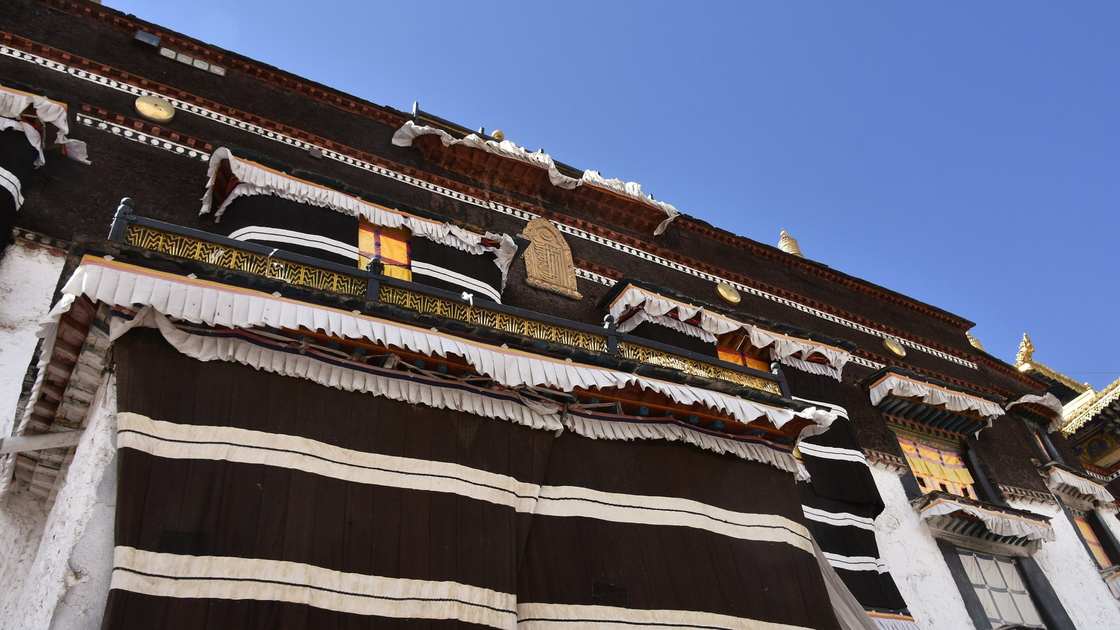
The Two Great Lineages
Eight hours on the road to get here. Before entering Tashilhunpo, Mark explains what ‘Dalai Lama’ actually means, how the Panchen Lama system began, who really built this monastery, and why a golden urn was installed in the Potala Palace — the political history most guides skip.
Read the story →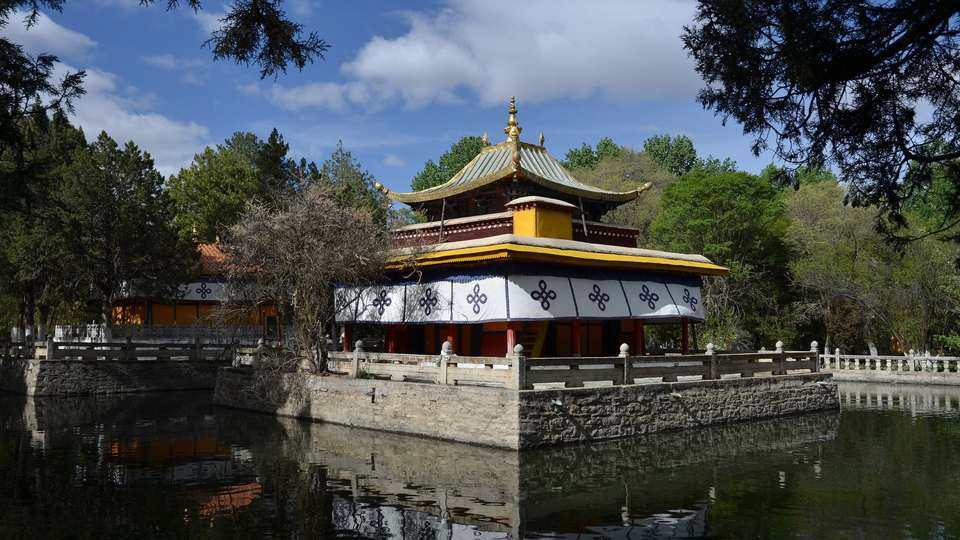
The Murals on the Wall
Two murals on the ground floor — the Four Harmonious Brothers and the Wheel of Life — before a single stair is climbed. Then upstairs: 301 paintings of Tibetan history, from a monkey on a sacred mountain to Chairman Mao and the 14th Dalai Lama celebrating Tibetan New Year in Beijing.
Read the story →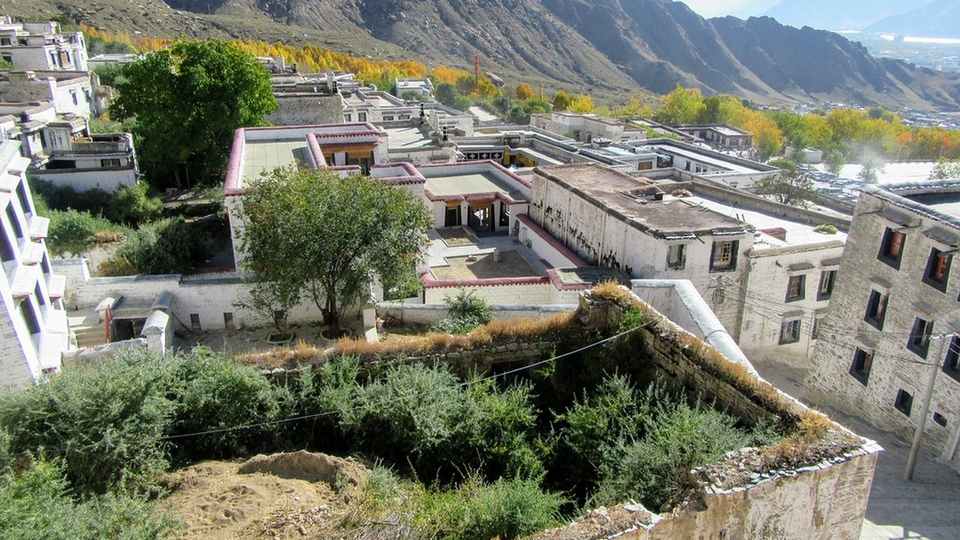
The Yogurt Festival
In Tibetan, ‘shö’ means yogurt and ‘tön’ means feast. Two thousand years of monks staying indoors in summer to avoid stepping on insects — and the day they finally came out, the people of Lhasa were waiting at the gate with bowls of yogurt. That is how Tibet’s second-greatest festival was born.
Read the story →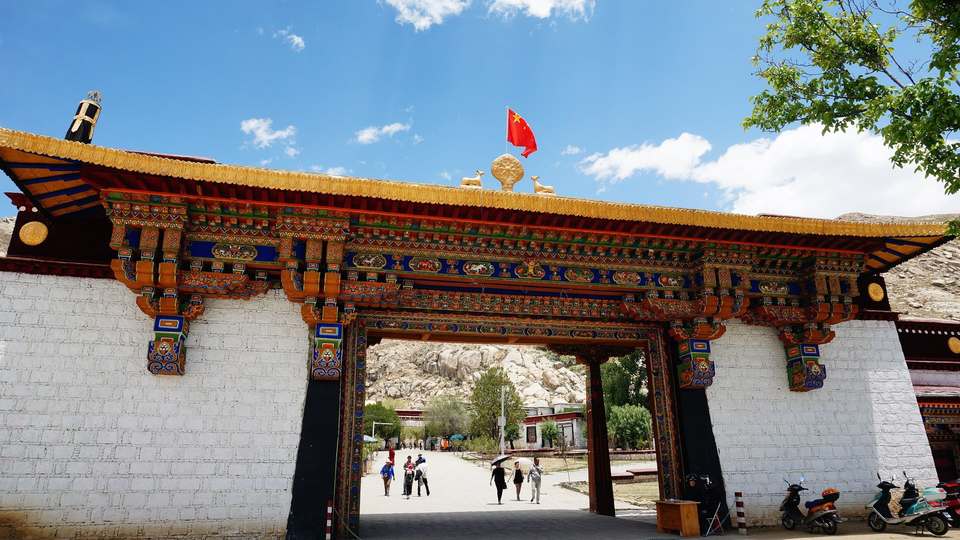
The Hand on the Head — and the Rope
Every monastery in Tibet has its own living Buddha. One of them drove our tourist van. Between one kind of blessing and another is exactly three metres of rope. And one afternoon in a Lhasa tea house, a group from Taiwan asked Mark a question that took the rest of the break to answer.
Read the story →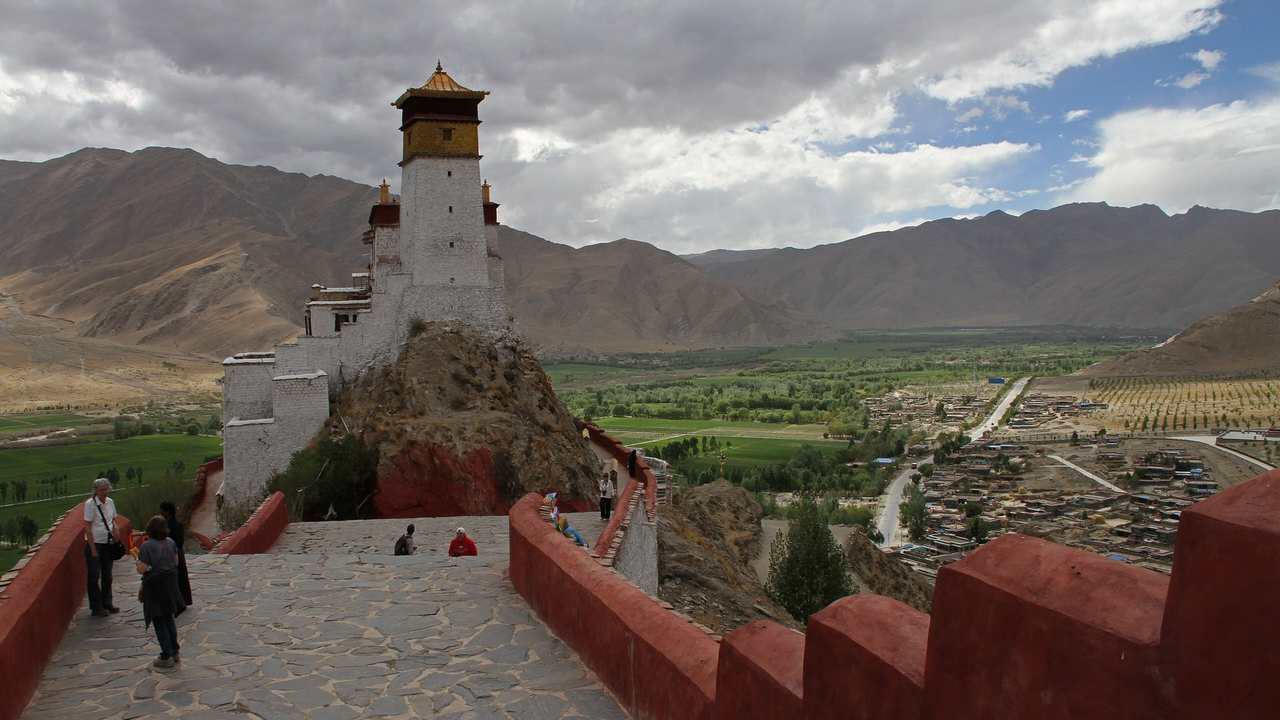
The Doe’s Hind Leg Palace
A man pointed upward to say ‘I came from over that mountain.’ The people watching thought he meant he fell from the sky. That misunderstanding made him Tibet’s first king — and the building they constructed for him predates the Potala Palace by 1,800 years.
Read the story →
Universe in Earth and Stone
Sky burial is not Tibet’s oldest funeral tradition. In the valley where Tibetan civilization began, the kings of the Tubo Dynasty were buried in the earth — under flat-topped mounds engineered to outlast dynasties. And nearby, a monastery designed not as a place of worship, but as a three-dimensional model of the entire Buddhist universe.
Read the story →Coming next
More stories from the walls
Sera Monastery’s debate courtyard, Yamdrok Lake, the cradle of Tibetan civilisation at Tsetang — each with a story told nowhere else.
More coming soonThe series is still being written. Each legend is published only once the telling is finished — one wall at a time, which is why they arrive slowly.
Frequently asked questions
What is the 'Legends from the Walls' series?
It is a series of Tibetan myths, Buddhist teachings and living history, told by Mark — a Tibet guide of twenty years — in front of the very murals and buildings where each story lives.
Who tells the stories?
Mark, a guide who has spent twenty years explaining Tibet’s sites to travellers, tells each story on location, from the Jokhang Temple to Norbulingka and the Potala.
Which stories are in the series?
The White Goats That Named a City, Neither the Buddha Nor You, The Two Great Lineages, The Murals on the Wall, The Yogurt Festival, and The Hand on the Head — and the Rope, among others.
We answer within 12 hours, Monday to Saturday.