










Tibet Train Guide
The Qinghai-Tibet Railway — riding the Sky Road to the Roof of the World
Train Routes, Schedule & Ticket Prices
The Qinghai-Tibet Railway connects seven major Chinese cities to Lhasa. All trains pass through Xining and follow the same spectacular plateau route from Xining to Lhasa. The difference is only the starting city and overall journey time.
Departing TO Lhasa (Soft Sleeper prices)
Departing FROM Lhasa
* Schedules are subject to change. Always verify with your travel agency or the China Rail website at time of booking.
On the way out of Tibet, one train crosses half of the plateau at night. See Lhasa to Xining by train for the daylight plan with a night in Golmud.
Worried about altitude? Read Tibet train and altitude sickness: which direction is easier.
Ticket Classes & Prices
Hard Sleeper (3-tier)
¥450 – ¥1,100
6 berths per compartment (upper, middle, lower). Lower berth is most popular (easiest to sit on). All berths have bedding. No door — open to the corridor.
Soft Sleeper (2-tier)
¥750 – ¥1,600
4 berths per compartment with a lockable door. More privacy, more comfortable mattresses. Recommended for longer journeys or those wanting better sleep quality.
Hard Seat
¥200 – ¥500
Assigned seats. Fine for daytime travel or short legs of the journey, but not recommended for the 20–48 hour Tibet train routes.
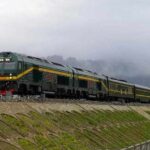
The Qinghai-Tibet Railway
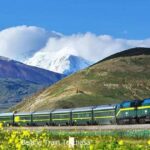
The Qinghai-Tibet Railway (青藏铁路, Qīng-Zàng Tiělù) is one of the greatest engineering achievements in history. Stretching 1,956 km from Xining to Lhasa, it crosses some of the most remote and challenging terrain on Earth — the Tibetan Plateau.
The railway was completed in 2006 after 50 years of planning and 5 years of construction. At its highest point — Tanggu La Pass at 5,072 metres — it holds the world record for the highest railway on Earth. For 960 km of its length, the track sits above 4,000 metres altitude.
Scenic Highlights Along the Route
Qinghai Lake (Kokonor)
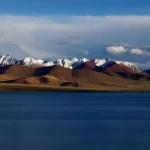
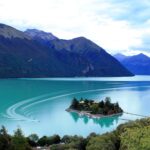
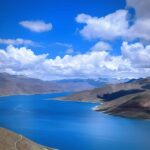
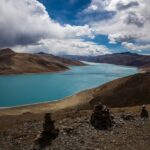
The largest lake in China, shimmering in brilliant blue at 3,196 metres. The train hugs its southern shore — a breathtaking opening to the journey.
Kekexili (Hoh Xil) Nature Reserve
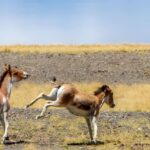
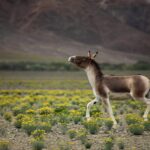
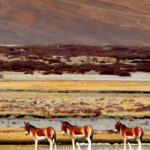
A UNESCO World Heritage Site protecting the remote Tibetan plateau ecosystem. Watch for Tibetan antelopes (chiru), wild yaks and herds of kiang (wild ass) from the carriage window.
Tanggu La Pass
The roof of the rail world — the train crests the highest point of the journey here. Oxygen begins to flow through the carriage supply system as altitude peaks.
Naqu (Nagqu)
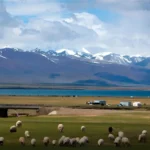
A typical Tibetan town on the northern plateau, surrounded by vast grasslands and nomad tents. The landscape begins to open into classic Tibetan scenery.
Damxung & Namtso Lake
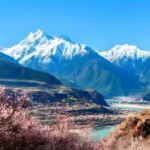
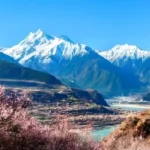
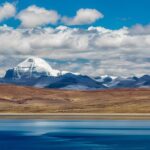
Though you can’t see Namtso Lake directly from the train, the Nyenchen Tanglha range dominates the skyline — a dramatic finale before Lhasa.
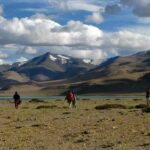
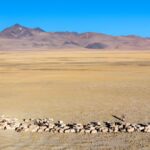
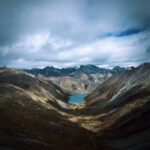
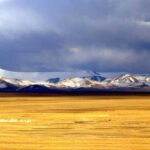
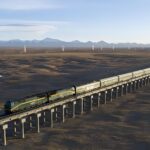
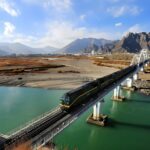
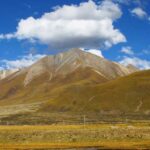
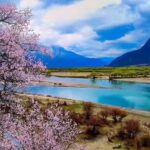
The Qinghai-Tibet plateau corridor — visible from your train window for hours
On-Board Facilities
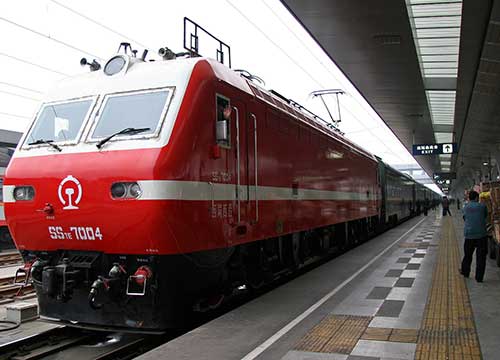
Tibet trains are modern, purpose-built for high-altitude operation and significantly more comfortable than standard Chinese trains. Every carriage is equipped with systems specifically designed for plateau travel.
🛏️
Sleeping Berths
All long-distance Tibet trains are sleeper trains. Berths come with clean bedding, a reading light, coat hooks and small storage space. The rhythm of the train makes sleeping surprisingly easy.
🫁
Supplemental Oxygen
Individual oxygen outlets above each berth allow passengers to plug in a nasal cannula. Cabin-wide oxygen enrichment maintains higher O₂ levels throughout the train. Essential for the 5,072m summit.
🍜
Dining Car
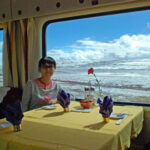
A full restaurant car serves Chinese dishes throughout the journey. Three meals a day at modest prices (¥20–60 per dish). Trolleys also come through selling snacks, drinks and instant noodles.
🚿
Toilets & Washing
Western-style flush toilets in soft sleeper cars; squat toilets in hard sleeper. Hand-washing basins between carriages. Hot water boilers allow you to make tea or instant noodles.
🌡️
Climate Control
All carriages are centrally heated — important as temperatures outside can drop to -20°C at altitude. The carriages maintain a comfortable 18–22°C throughout.
🔌
Power & Connectivity
Power outlets (220V) are available in each soft sleeper compartment and at the ends of hard sleeper carriages. Mobile signal disappears across remote plateau sections.
Train or Flight to Lhasa — Which Should You Choose?
Both will get you to Lhasa, but they suit different trips. Flights land at Lhasa Gonggar International Airport (LXA) — 3,570 m — after roughly 2.5 hours from Chengdu or 4.5 hours from Beijing. The train takes far longer: about 22 hours from Xining, and 35 to 47 hours from Chengdu, Chongqing, Beijing or Shanghai.
That extra time is the point. The Qinghai-Tibet Railway climbs onto the plateau gradually, so your body meets the altitude over a day or more instead of in a single descent from the air. Many travellers find the gentler ascent easier on their first night in Lhasa. The train also delivers scenery no flight can match — Qinghai Lake at 3,196 m, the Hoh Xil nature reserve, and the 5,072 m Tanggu La Pass, all from your window.
Choose the flight if your time is short, or if you are travelling in peak season when soft-sleeper berths sell out fast. Choose the train if you want the journey itself to be part of the trip, or you prefer to reach the plateau gradually. Either way a valid Tibet Travel Permit is required — see our Tibet permit guide. Flight routes and gateway cities are on our Flights to Tibet page.
How to Book Tibet Train Tickets
Tickets to Lhasa do not work like ordinary Chinese train tickets. Chinese state-owned stations do not sell Tibet train tickets online, so you cannot book direct the way you would for a Beijing–Shanghai service. In practice the booking runs in this order:
- Arrange your Tibet Travel Permit first. A valid permit (TTB) is required to board. It must be arranged through a licensed travel agency and takes about 15 days, sometimes up to 20 to process.
- Choose your departure city and berth class. Hard seat runs ¥200–¥500 and is fine for daylight legs but not for a 20–48 hour journey. Hard sleeper — 6 berths in three tiers, open to the corridor — is ¥450–¥1,100. Soft sleeper — 4 berths behind a lockable door — is ¥750–¥1,600.
- Book through a qualified agency. Tickets go on sale 15 days before departure, and in the May–September peak soft-sleeper berths can sell out on the first day — so book your tour early, and we buy your tickets the day sales open.
- Re-check the schedule close to departure. Timetables change; always verify with your agency or the China Rail website at the time of booking.
Choosing Your Departure City
Every Tibet train passes through Xining and then follows the same plateau route to Lhasa — only the starting city and the total journey time differ. Xining is where the Qinghai-Tibet Railway actually begins, so it offers the shortest ride (about 22 hours), at least five departures a day, and the best ticket availability. Beijing’s Z21 runs daily from Beijing West in about 40 hours; Shanghai’s Z164 leaves Shanghai Station daily for roughly 47 hours; Chengdu’s Z322 departs Chengdu North every other day for around 36 hours; Chongqing’s Z223 runs from Chongqing West every other day in about 35 hours. There is no direct train from Hong Kong — our departure city guides cover the transfer routings that work.
Altitude on Board — What to Expect
For 960 km of its 1,956 km length the track sits above 4,000 metres, cresting at Tanggu La Pass (5,072 m) — the highest railway point on Earth. The trains are purpose-built for it: two oxygen systems run on board, one enriching the cabin air and one delivering personal oxygen through individual tubes at each berth. Carriages are centrally heated to a comfortable 18–22°C even when it is -20°C outside.
If you feel the altitude, the usual precautions apply — drink water, take the first day slowly, and skip alcohol on the climb. Our altitude sickness guide covers symptoms and prevention in detail. Practical questions about berths, meals and toilets are answered on the on-board facilities page. The two days on the train are also a gentle start for the high western routes, such as our Mount Kailash tours.
Frequently asked questions
Do I need a special permit to board the Tibet train?
Yes. Foreign passengers must present their Tibet Travel Permit (TTP) when boarding at the station. Your travel agency will supply this document. Without it, you will not be allowed to board — even with a valid ticket.
Can I book Tibet train tickets myself?
Technically yes, but you also need the Tibet Travel Permit before you can buy a ticket, which requires booking through a licensed Tibet travel agency. In practice, most travellers let their agency handle both permit and ticket together to avoid complications.
Is altitude sickness a problem on the train?
The train climbs gradually over the Qinghai-Tibet Plateau, giving your body more time to acclimatize than flying directly to Lhasa. Supplemental oxygen is piped through outlets above each berth. Many travellers find the train journey much easier on their bodies than flying.
How far in advance should I book?
Tibet train tickets go on sale 15 days before departure, and in peak season (April–October) soft sleepers can sell out on the first day. Book your tour early, and we buy your tickets the day sales open. Off-season bookings (November–March) are easier, and Tibet is open to foreign visitors all year.
Is food available on the train?
Yes. Each train has a dining car serving Chinese food at reasonable prices. Trolleys also come through the carriages selling snacks, instant noodles and drinks. We suggest bringing some of your own favourite snacks for the journey.
What is the best starting city for the Tibet train?
Xining (Qinghai) is the most popular starting point — just 21 hours to Lhasa, with the most departures. Chengdu and Beijing are also popular because they offer sightseeing before boarding. All start points include the full Qinghai-Tibet Railway scenery from Xining onward.
Can I combine the train with a flight?
Absolutely. Many travellers take the train one way (to savour the journey) and fly the other direction. The most popular combination is: fly into Lhasa → tour Tibet → take the train to Xining or Chengdu at the end.
Is the train safe and reliable?
The Qinghai-Tibet Railway is one of the most technically advanced railways in the world. It operates with an excellent safety record. Trains are modern, heated and equipped with oxygen systems. Delays are rare.
Tours with the Tibet train
Ride the Qinghai–Tibet Railway as part of your tour — we buy the tickets together with your permit.
We answer within 12 hours, Monday to Saturday.