























































Lhasa · Yamdrok · Gyantse · Shigatse
- Duration
- 6 days
- Pace
- Moderate
- Group size
- Private, on your dates
- Best season
- April to October
The trip at a glance
From the Dalai Lama's Lhasa to the Panchen Lama's Shigatse — through the farming valleys of Front and Back Tibet, past Yamdrok Lake and the Karo La Glacier.
- Lhasa
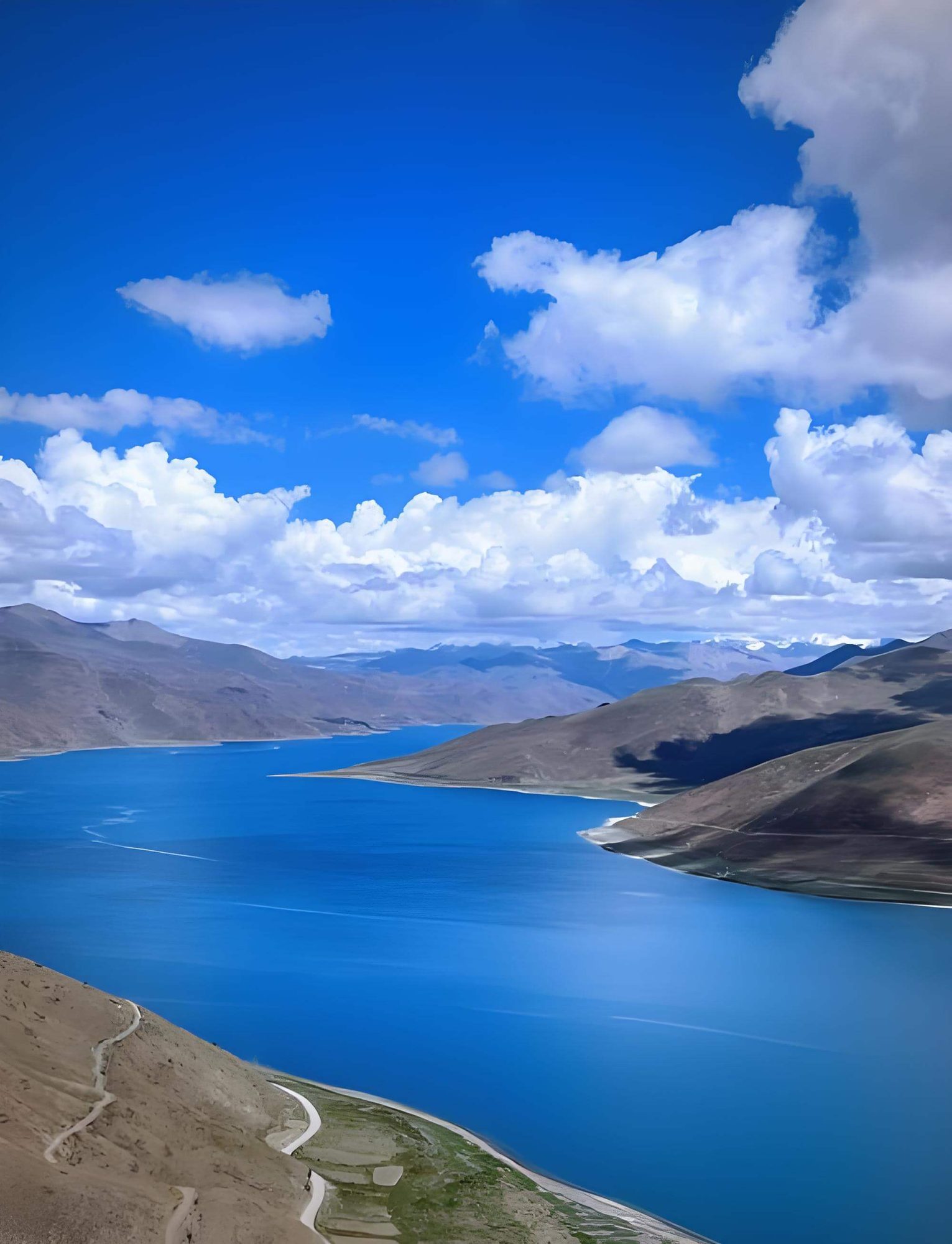 Yamdrok Lake
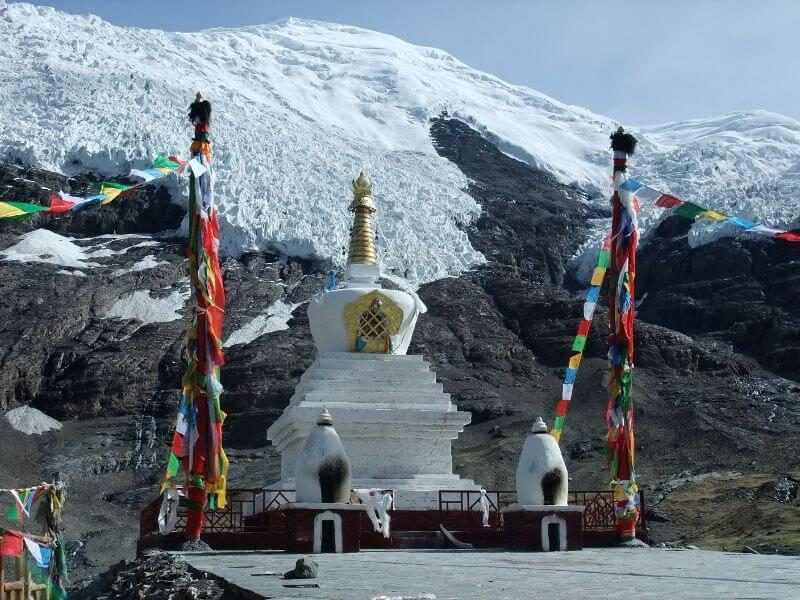 Karo La
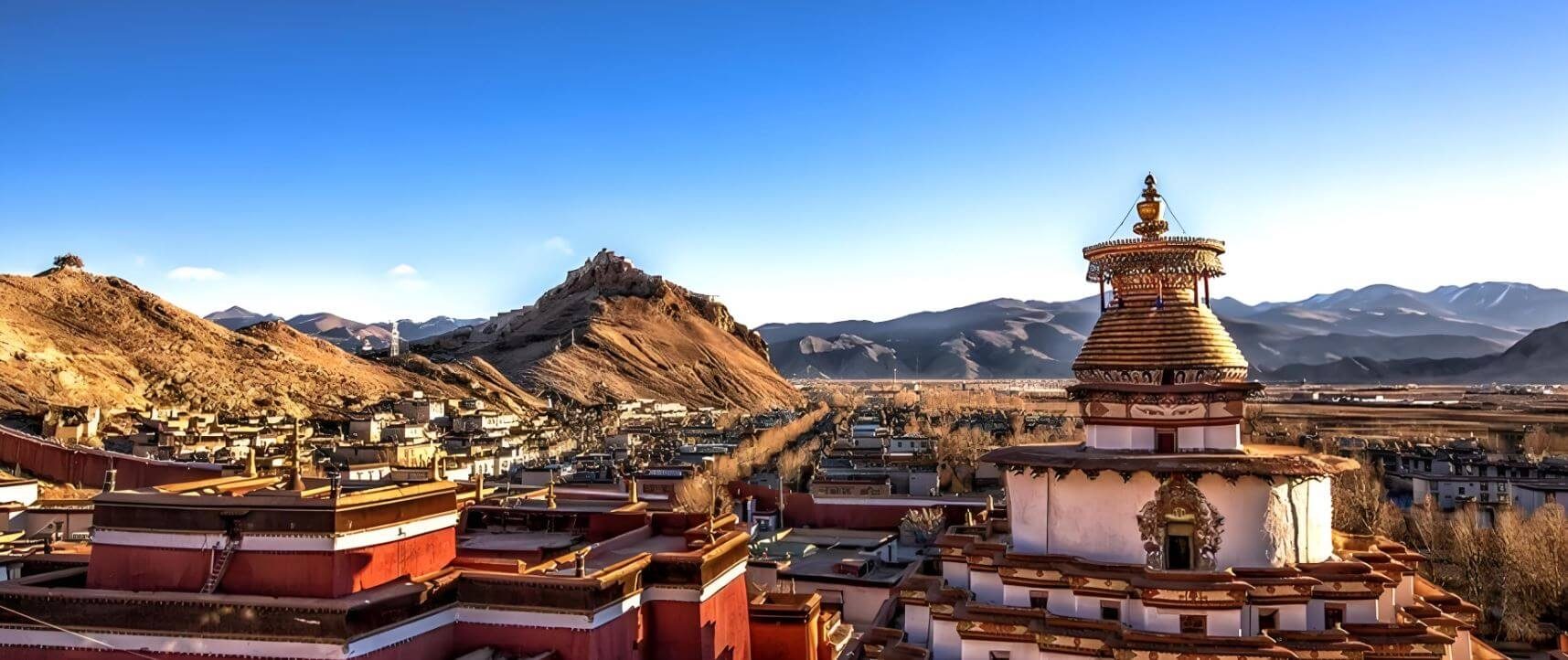 Gyantse
- Shigatse
- Lhasa
Days 1–3 — The Lhasa Foundation
Potala Palace · Jokhang · Sera debate · Local family dinner
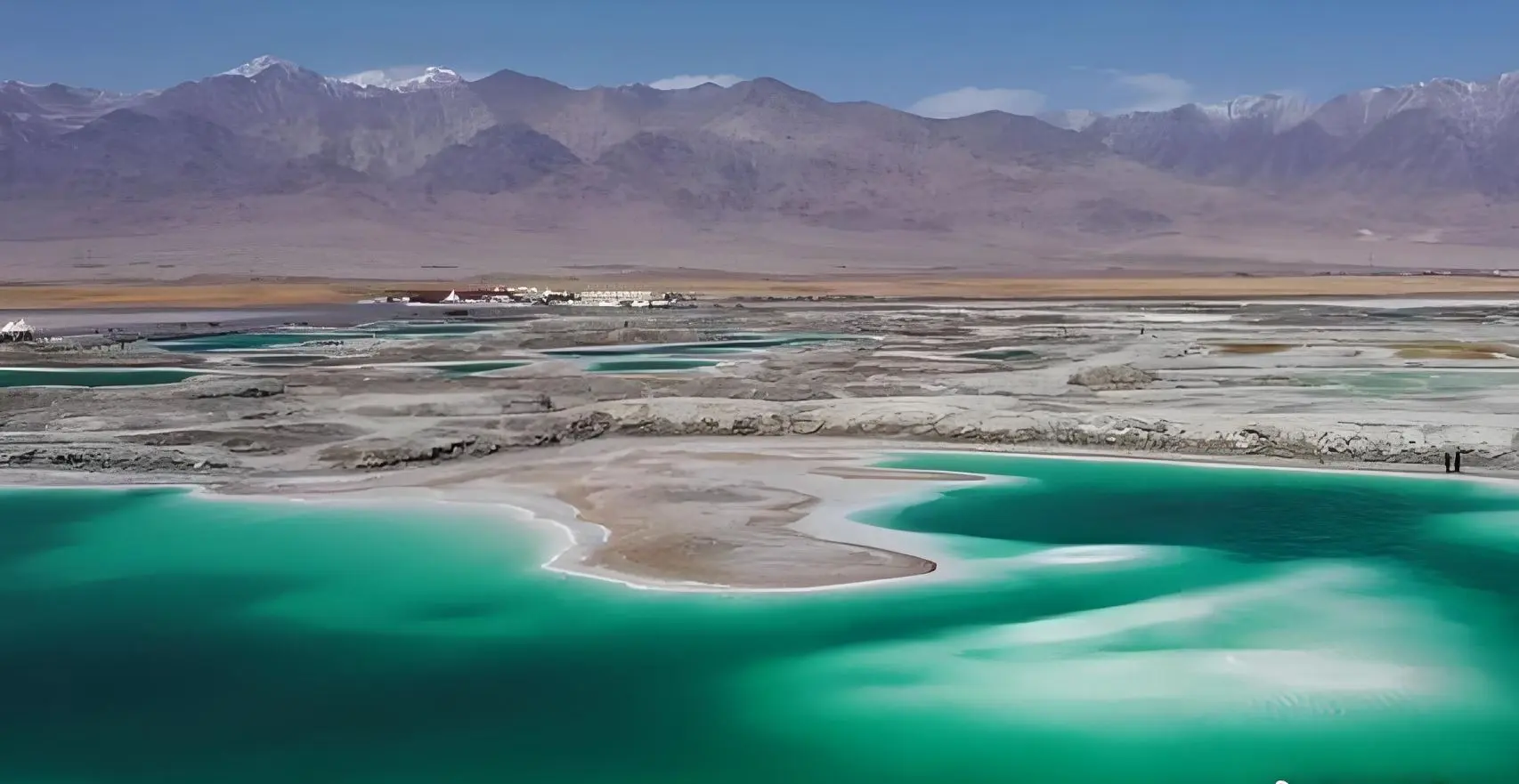
Day 1 — Arrival in Lhasa
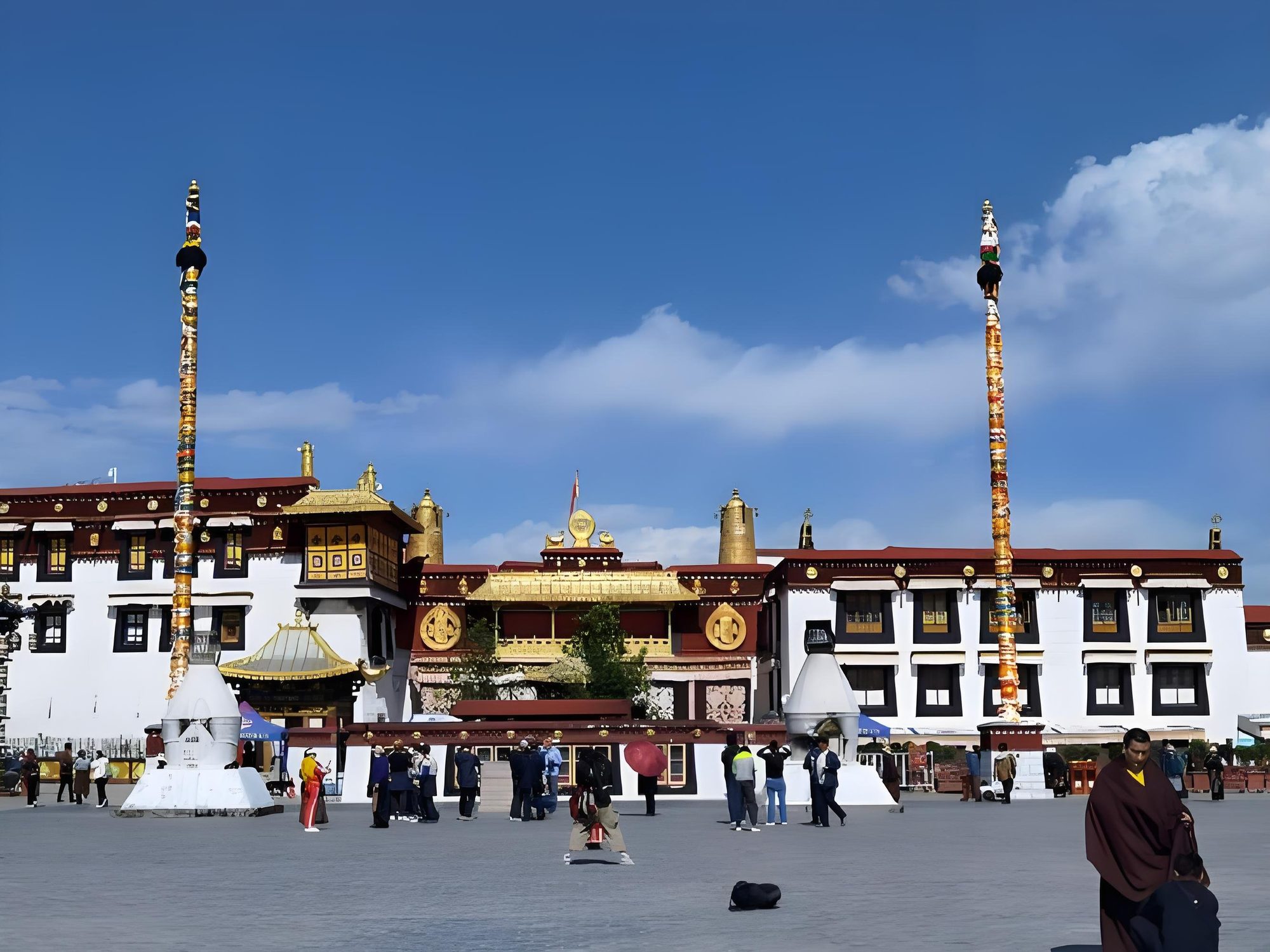
Day 2 — Tibet Museum · Jokhang Temple · Barkhor
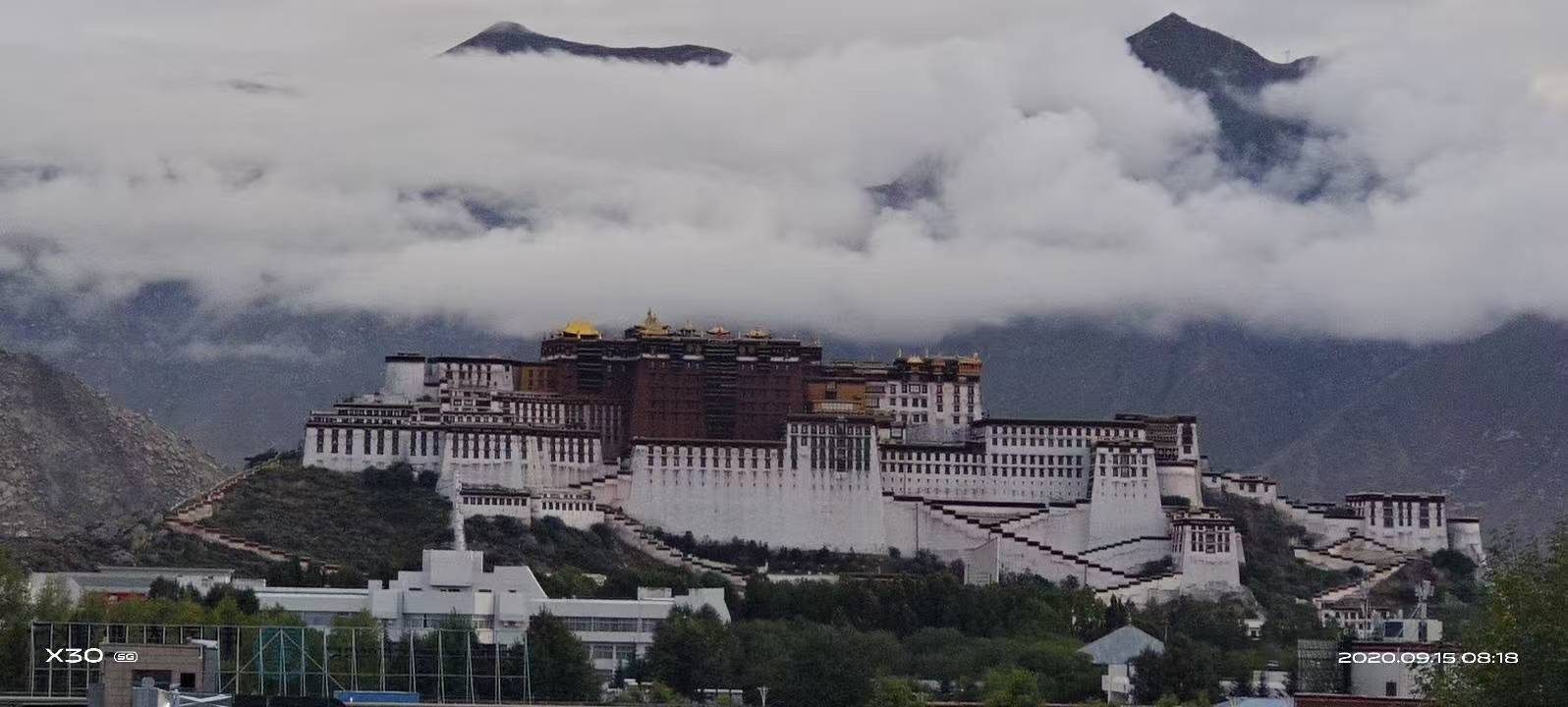
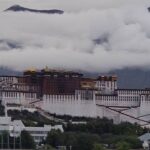
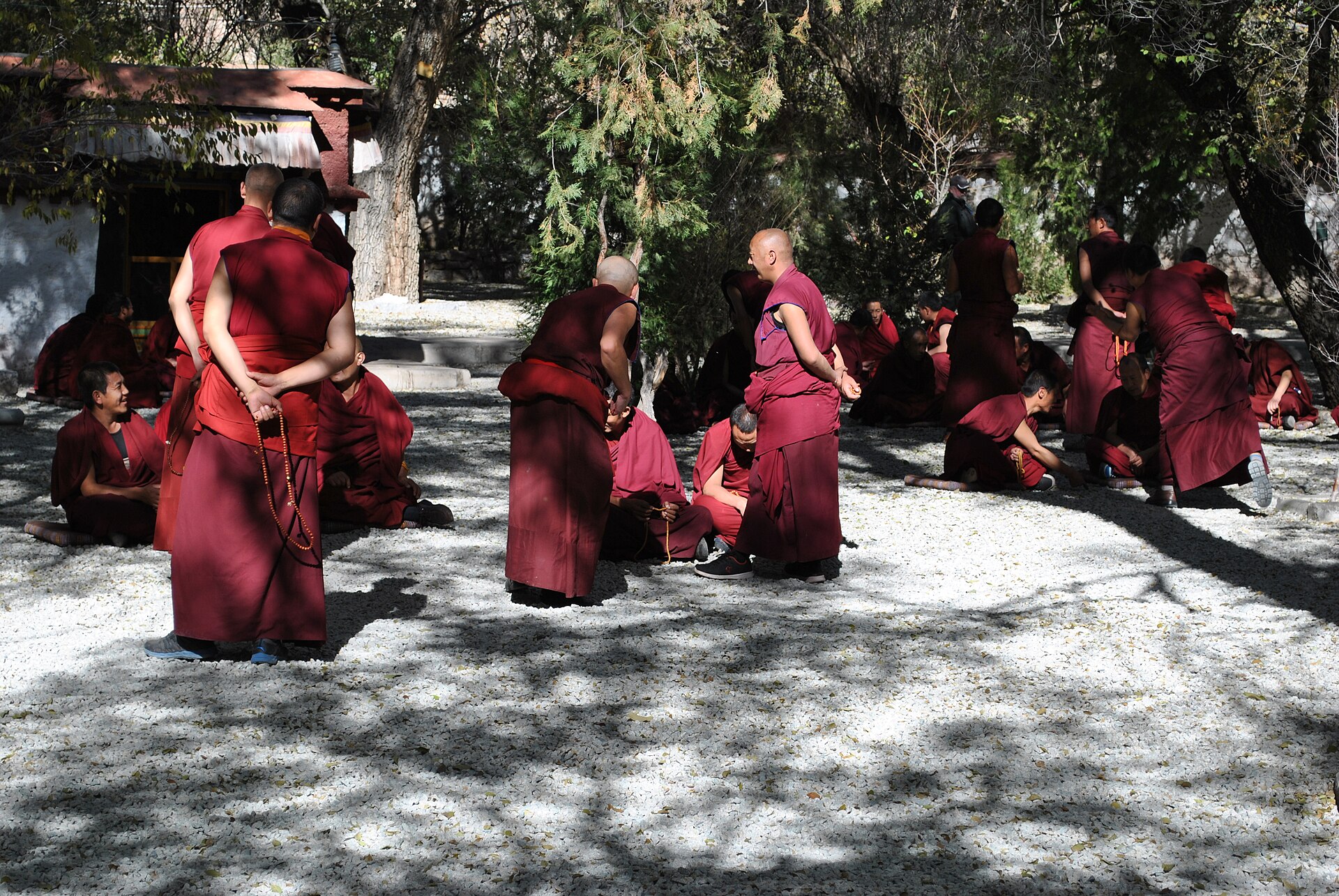
Day 3 — Potala Palace · Sera Debate · Local Family Dinner
Days 4–6 — The Journey
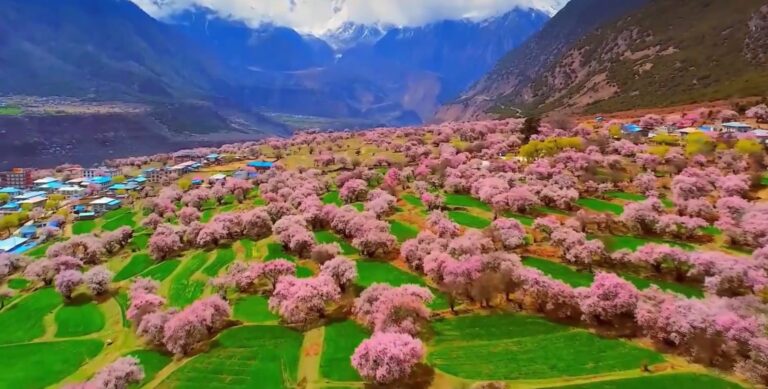
The road leaves Lhasa through the Kyichu valley — the same river valley that has sustained the city for fourteen centuries. Barley fields run along both banks, climbing the lower slopes in stepped terraces. This is the agricultural heart of Front Tibet, the Ü province, and it looks like farmland has always looked here: unhurried, productive, oriented to the river. On the hillsides above, ochre-coloured monasteries and whitewashed farm compounds alternate against a deep blue sky. The road climbs south and leaves the valley behind.
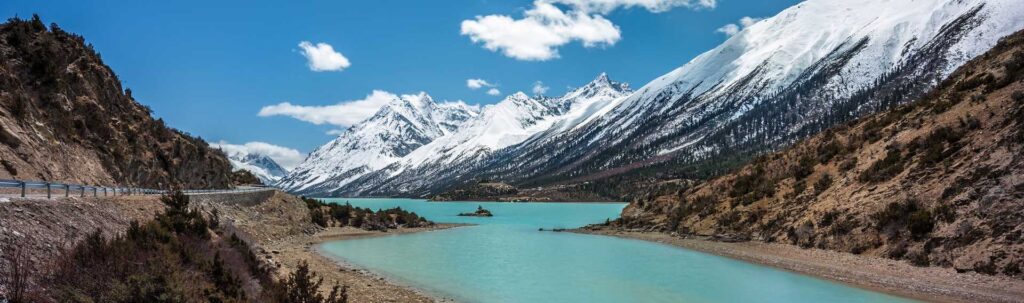
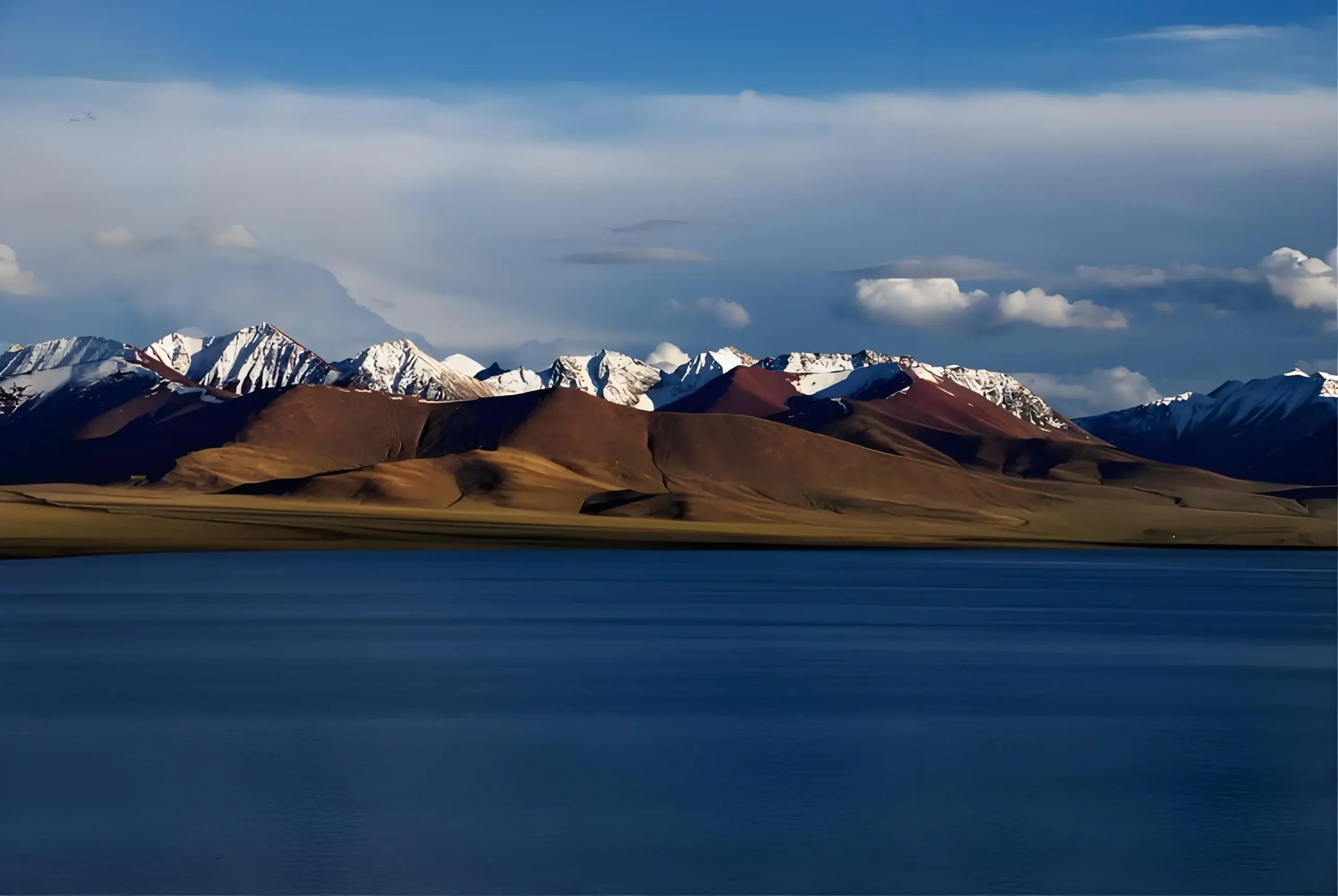
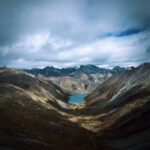
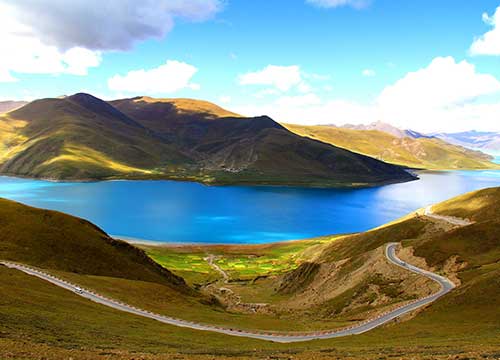
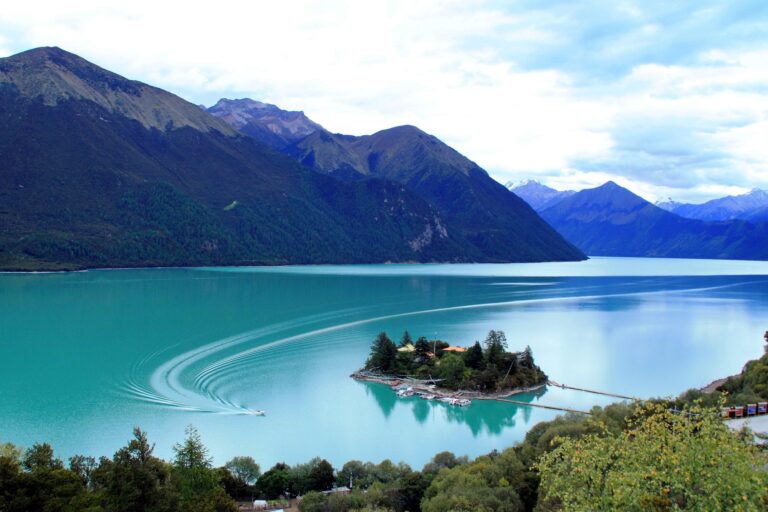
Kamba La Pass at 4,794 m opens onto the first great view of the journey — Yamdrok Lake below, turquoise water curling around the mountains in the shape ancient Tibetans compared to a scorpion. One of the three holy lakes of Tibet, bound by tradition to the nation’s life force. The aerial viewpoint from the pass is one of the most reproduced images in Tibet, and one of the very few that entirely lives up to its reputation.
The road descends, follows the northern shore, and then climbs again to cross the Karo La at 5,010 m. Here, a glacier descends from the ridge above and comes within metres of the road surface — close enough to reach. Glacial ice at over 5,000 m by the roadside is a quietly extraordinary thing, and easy to miss if you do not know to stop.
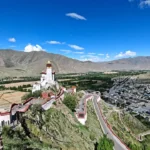
Beyond Karo La the road drops into the Nianchu River valley and arrives at Gyantse by midday. The Gyantse Dzong rises above the town on its rocky prominence — a fortress that was the site of a British military assault in 1904, the final engagement of the Younghusband expedition to Tibet. The ruins of the outer walls are visible from the main road. In the town below, Pelkor Chode Monastery and the Kumbum Stupa occupy the afternoon. The Kumbum — built in 1427 — is one of the most architecturally singular structures in Tibet: nine stories housing 77 chapels, each painted, each different, arranged as a three-dimensional cosmological mandala. There is nothing quite like it anywhere else.
From Gyantse, the road runs west through the broad, flat Nianchu valley to Shigatse. The river valley here — wheat and barley to the horizon, willows along the irrigation channels, white-walled farms on the benchlands — is the agricultural heart of Back Tibet, the Tsang province. It is not so different in character from the Kyichu valley you left in the morning, and that near-repetition is itself instructive: Tibet is not only high-altitude emptiness. There is an older, more settled world along its rivers. Overnight in Shigatse.
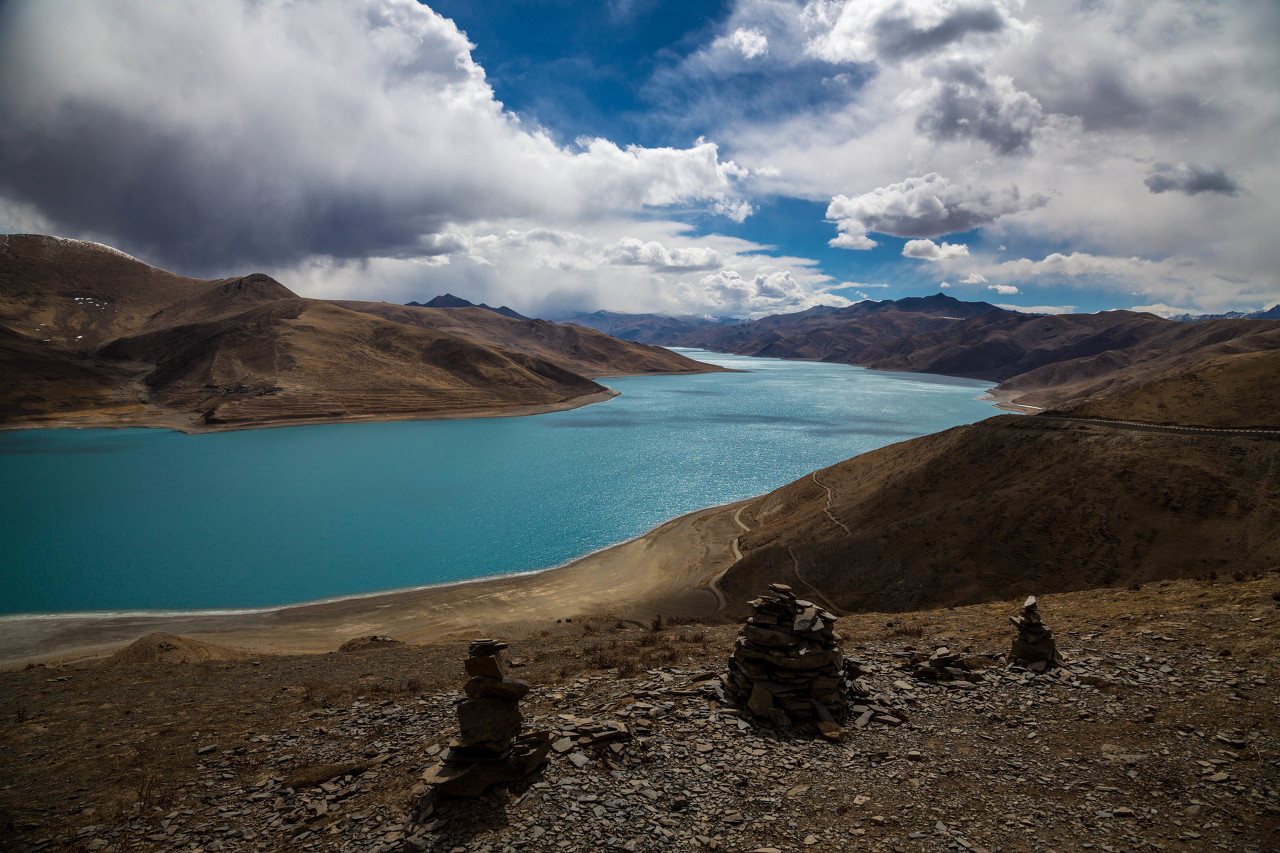
Kamba La
4,794 m
Yamdrok viewpoint
Karo La
5,010 m
Glacier by road
Gyantse
3,977 m
Kumbum Stupa
Shigatse
3,836 m
Overnight
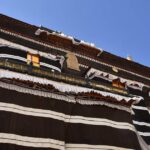
Tashilhunpo Monastery occupies the whole of the morning. Founded in 1447 by the First Dalai Lama and subsequently developed into the seat of the Panchen Lama, it is one of the great functioning monasteries of Tibet — several thousand monks in residence, a living institution rather than a preserved museum.
The relationship between the Dalai Lama in Lhasa and the Panchen Lama in Shigatse is one of the defining threads of Tibetan religious and political history. In theological terms, the Dalai Lama is considered an emanation of Chenrezig (Avalokiteshvara), the bodhisattva of compassion; the Panchen Lama is considered an emanation of Opagme (Amitabha), the Buddha of boundless light. The two traditions have historically confirmed each other’s legitimacy through a mutual recognition process. Tashilhunpo is where this second tradition is centred — the monastery that Potala Palace, seen the day before, implicitly answers.
The Maitreya Chapel holds a 26-metre gilded bronze seated statue of the future Buddha, built in 1914. The scale compresses the chapel around it. Walk the monastery’s outer circuit — the whitewashed walls and golden rooftops against the hills behind Shigatse have a different character from Lhasa’s monastic architecture, broader and more open, with the whole valley visible.
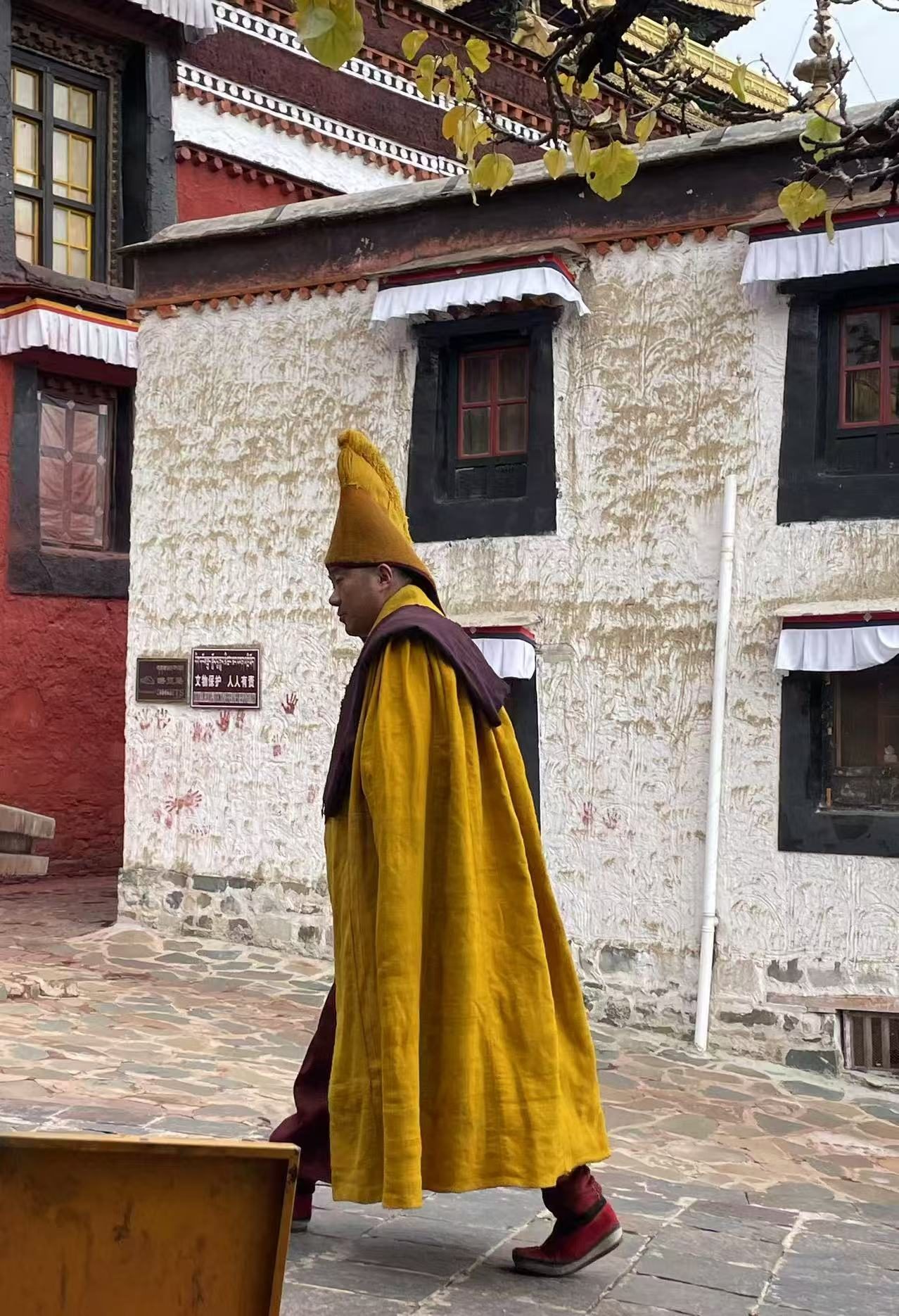
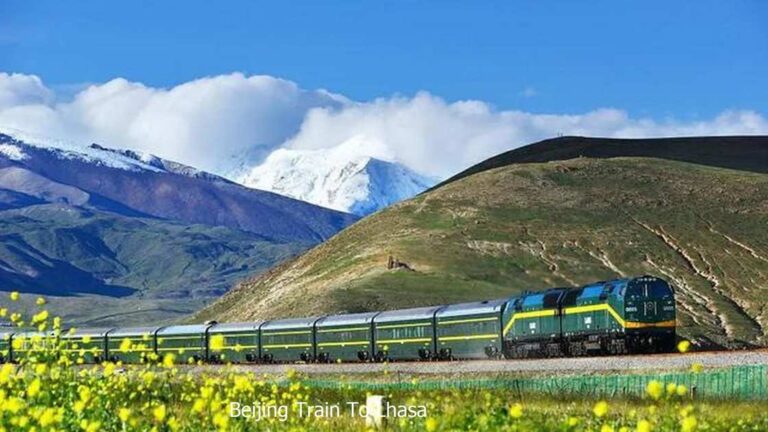
The return from Shigatse to Lhasa follows a different road entirely from the one that brought you here. The outbound route crossed two passes and circled the southern lakes. The return runs east along the Yarlung Tsangpo — the great river that Tibetans have named the World’s Roof River, and that empties into India as the Brahmaputra. Two roads share this valley and tell different versions of it: one runs at river level, close to the water, through willows and farmland; the other climbs above the valley floor and looks down on it — the river below, the barley terraces stepping up from its banks, the same landscape from a different height. For those who prefer to spend less time in the vehicle, there is another option: take the Shigatse–Lhasa train for part of the journey, leaving the vehicle to return on its own. Either way, you arrive in Lhasa by early evening, having travelled out over the mountains and back along the river — two different Tibets in one day.
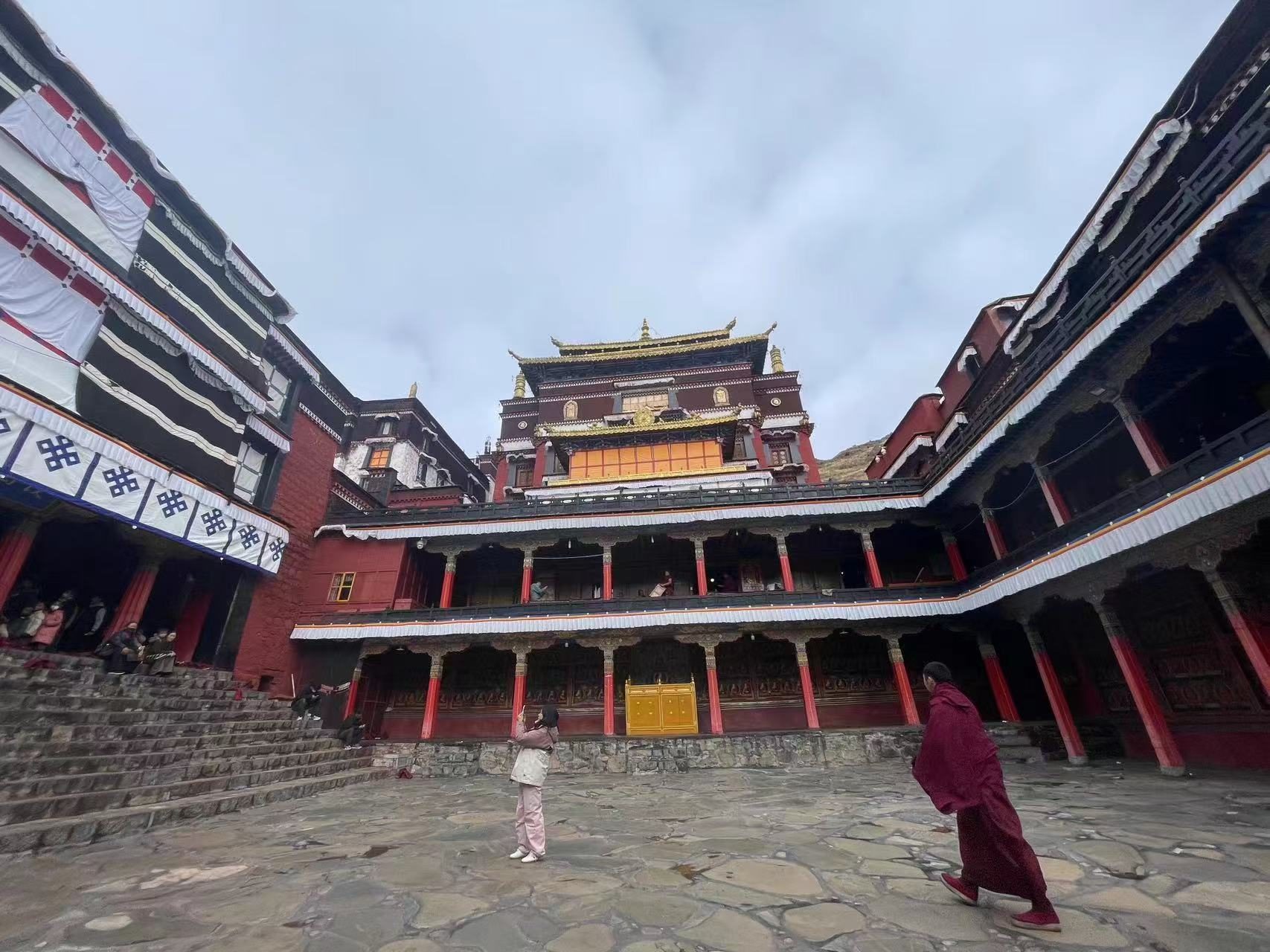
Tashilhunpo — the Panchen Lama’s seat since 1447
World’s largest gilded bronze Maitreya statue (26 m). Several thousand monks in active residence. Allow 90–120 minutes inside the monastery. The outer circuit of the white walls is worth the additional 20 minutes.
A final morning in Lhasa. The Barkhor at dawn, if there was no time earlier, or a walk along the Lhasa River. Transfer to Gonggar Airport or the railway station at the time that suits your departure. Services end at the point of departure.
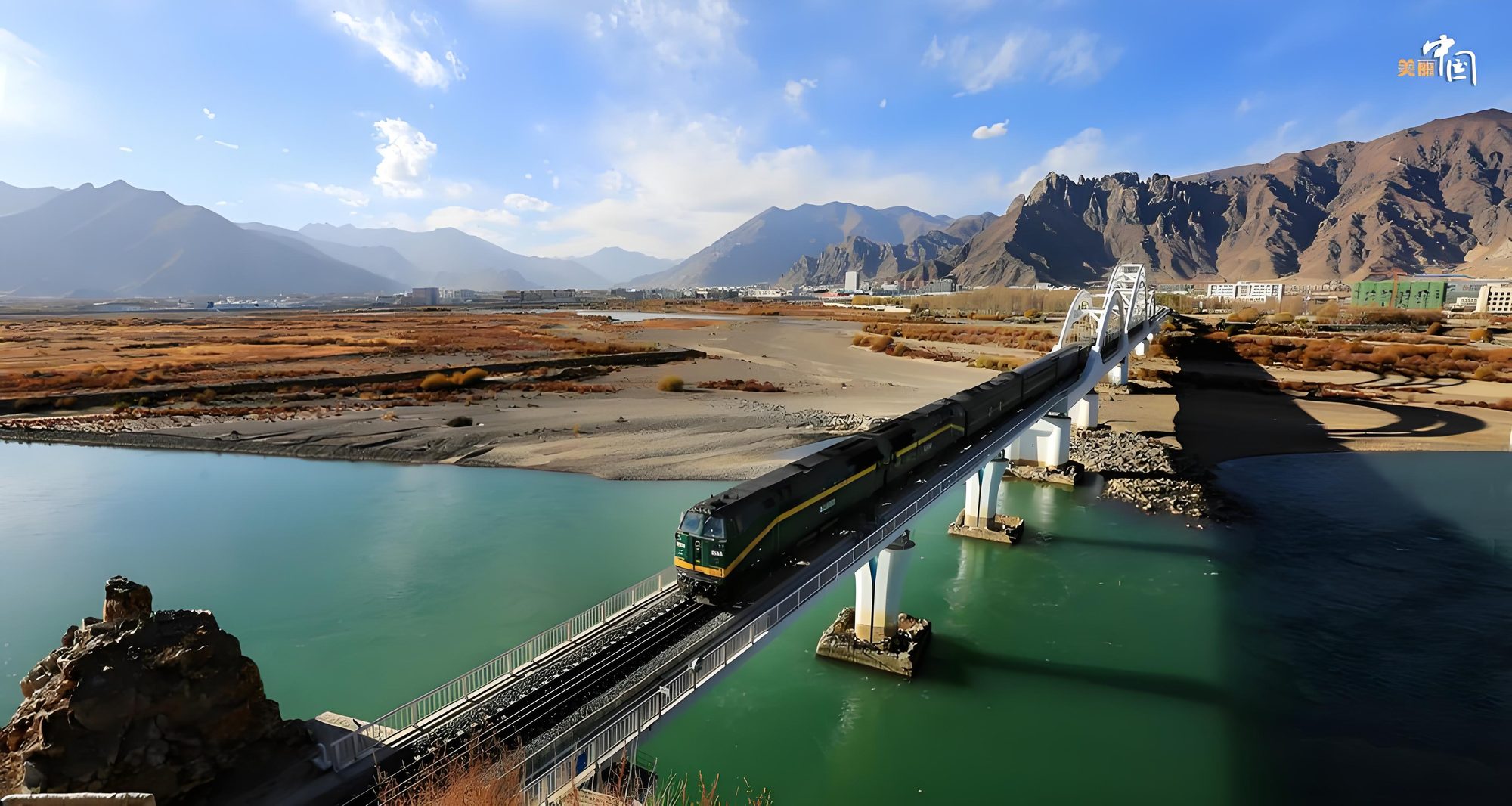
Front Tibet and Back Tibet
This tour is not merely a list of highlights — it is a journey between two distinct Tibetan worlds, connected by the Friendship Highway.
Front Tibet — Ü province · Lhasa
Kyichu River valley · Barley farming · Political and monastic capital · Potala Palace · The Dalai Lama’s seat · Gelug school’s centre of gravity
Back Tibet — Tsang province · Shigatse
Nianchu River valley · Barley farming · Second city of Tibet · Tashilhunpo · The Panchen Lama’s seat · A different, equally old tradition
Book this western loop
Private guide and vehicle throughout. Permits included. Reply within 12 hours.
Route at a glance
Lhasa
3,650 m · Kyichu valley · Front Tibet
Kamba La → Yamdrok → Karo La
4,794 m → 5,010 m
Gyantse → Shigatse
3,977 m → 3,836 m · Back Tibet
Tashilhunpo Monastery
Panchen Lama’s seat
Return to Lhasa
Arrive evening
Departure — Gonggar Airport
Permits
TTB Permit — mandatory. Allow 15 working days.
Alien’s Travel Permit — required for Gyantse and Shigatse. Included.
Both permits handled and included.
Photos from this route
Questions travellers ask
Why Gyantse in the middle of Day 4 rather than overnight?
The old itinerary spent a night in Gyantse because the road to Shigatse was poor. The current road from Gyantse to Shigatse is sealed and takes about 90 minutes. Continuing to Shigatse on Day 4 afternoon gives a full morning at Tashilhunpo on Day 5 — the better arrangement for both comfort and content.
What is the difference between the Dalai Lama's seat and the Panchen Lama's?
Potala Palace in Lhasa was the Dalai Lama's winter palace and the seat of the Tibetan government. Tashilhunpo in Shigatse is the Panchen Lama's seat — a different tradition within Tibetan Buddhism, historically the spiritual authority on matters of reincarnation. The two have been intertwined for centuries. Seeing Tashilhunpo after Potala gives both traditions a geographical reality they lack when encountered only in books.
Is the Karo La Glacier worth stopping for?
Yes. It is accessible — the glacier comes within metres of the road — and it is at 5,010 m, which is higher than the tops of most European mountains. The context makes it extraordinary. Stop for 15–20 minutes.
Can we extend this tour to Everest Base Camp?
Yes. Continuing west from Shigatse toward Lhatse and then south to Everest Base Camp adds 2 to 3 days and requires a separate Restricted Area Permit for the Everest region. That extension becomes the 9-day grand western loop. Ask about it when you inquire.
Is Gyantse Kumbum better than Tashilhunpo, or the other way around?
They are different. Tashilhunpo is a living institution with active monastic community, the Panchen Lama's history, and the vast Maitreya statue. The Kumbum is architecturally unique — nothing else in Tibet looks like it. The advantage of this 6-day tour is that you visit both, and do not have to choose.