


5 Days Lhasa & Shannan
- Duration
- 5 days
- Pace
- Easy
- Group size
- Private, on your dates
- Best season
- April to October
The trip at a glance
Three days in Lhasa's sacred city, then a full day in the Yarlung valley — Yumbulagang, Trandruk Temple, and Samye Monastery, where Tibetan Buddhism was born.
What “private” means on this tour
Read the full overview
Your vehicle
A dedicated 4WD for your group — from the Lhasa hotel to the Yarlung valley and back (or to the airport).
Your guide
A Tibetan guide with deep knowledge of Shannan’s history — Samye is not straightforward without good context.
Flexible sequence
Visit Yumbulagang first or Samye first. Linger at Trandruk. Your guide adjusts to your pace.
Airport flexibility
We plan the Day 4 schedule around your flight time, not around a fixed group itinerary.
This is your itinerary
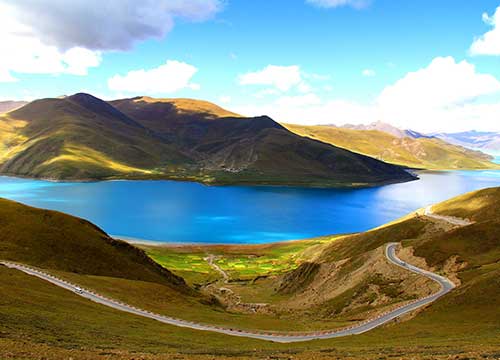
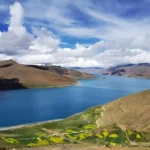
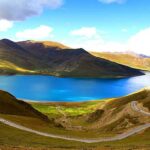
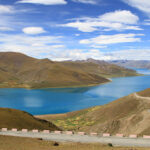
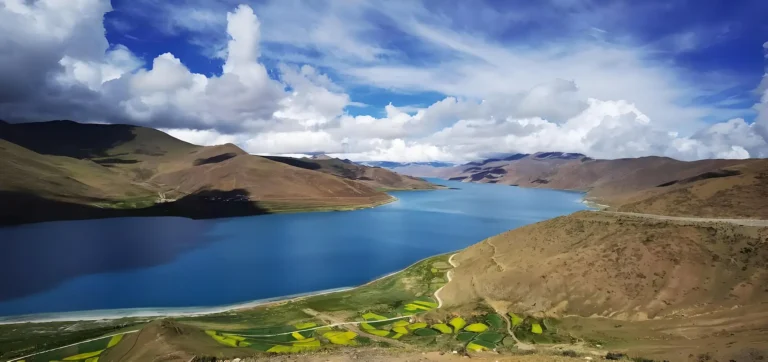
Lhasa (3 days) + Shannan & Tsedang (1 day). Send your dates and group size — we’ll reply with a full quote within 12 hours. With two more days, the Lhasa, Yamdrok Lake and the Yarlung Valley loop adds Yamdrok Lake on the way. The three Lhasa days are described in full on the 4-day Lhasa tour page.
Permits
TTB Permit — mandatory for all visitors. We apply on your behalf (allow 15 days).
Alien’s Travel Permit — required for Shannan. Included in your tour price.
Both permits handled and included.
- Lhasa
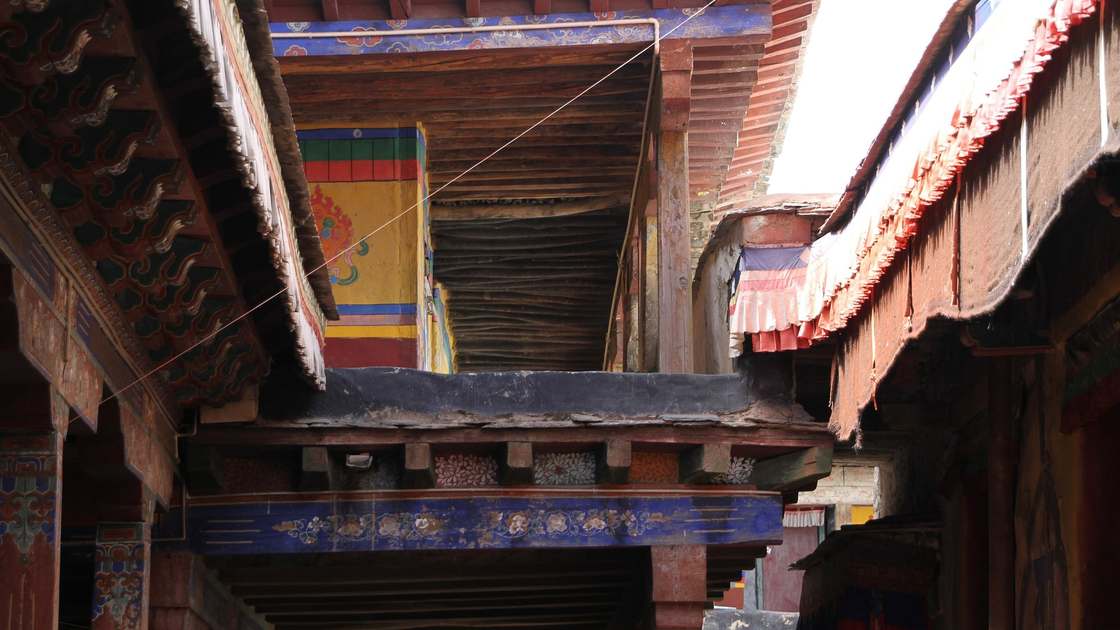 Samye Monastery
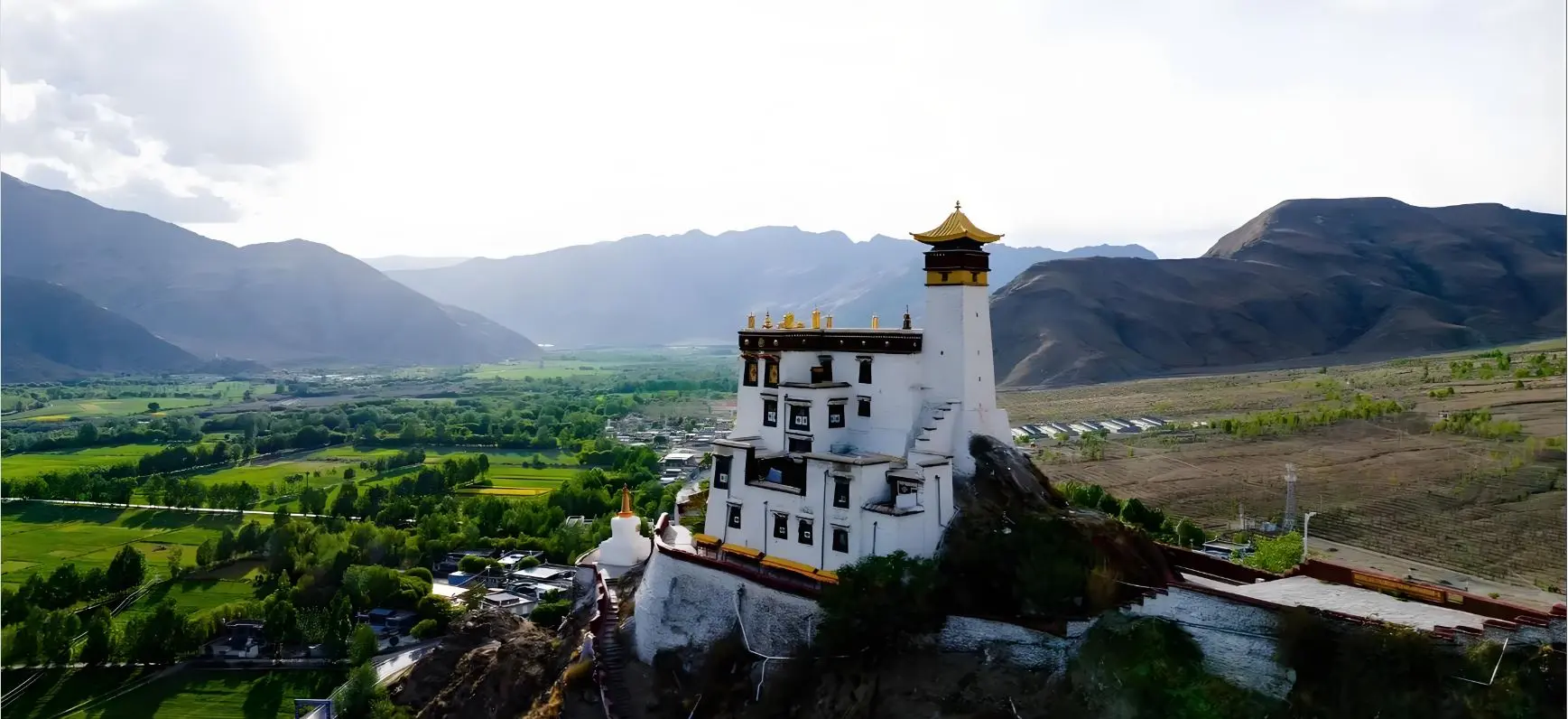 Yumbulagang
- Lhasa
Where you go, and how high you sleep
The route, stop by stop
Lhasa → Samye Monastery → Yumbulagang → Lhasa
- Arrival in LhasaDay 1 · sleep at 3,650 m
- Tibet MuseumDay 2 · sleep at 3,650 m
- Potala PalaceDay 3 · sleep at 3,650 m
- YumbulagangDay 4
- Free MorningDay 5
Sleeping altitude, night by night
How high you sleep each night — the reason the first days are kept easy.
Days 1–3 — The Lhasa Foundation
Days 1–3 · Lhasa
Arrival in Lhasa
The first rule of arriving in Lhasa is the same for every visitor regardless of fitness: slow down. At 3,600 m — more than twice the altitude of Denver — the city has its own pace, and the first afternoon rewards those who accept it.
Your private guide meets you at Lhasa Gonggar Airport or the railway station and transfers you directly to the hotel. No group assembly, no waiting for stragglers. The room is yours. Drink water, rest, and let the altitude settle.
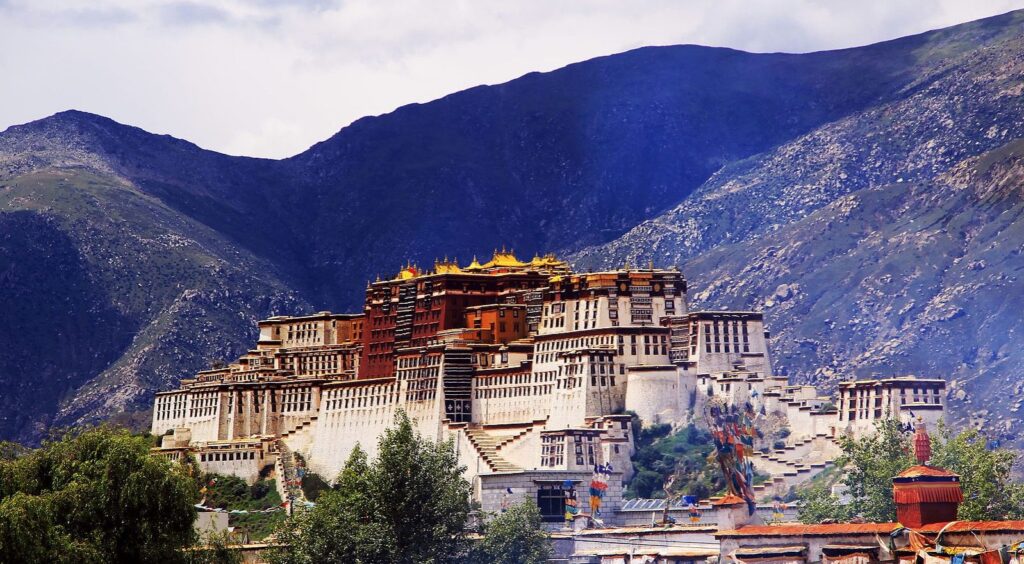
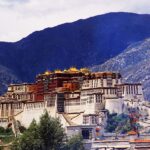
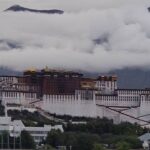
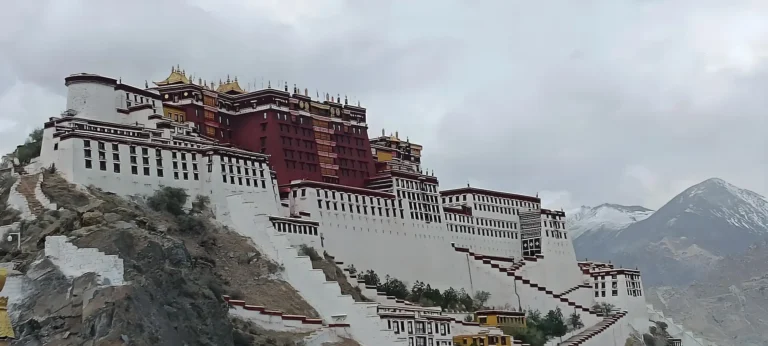
In the late afternoon, if the energy is there, step outside. The Potala Palace is visible from much of the city. The first sight of it — white and red, tiered, rising from its bare hill against a sky that seems too blue to be real — is worth the stillness it takes to receive it.
Tibet Museum · Nanshan · Jokhang · Barkhor
The morning opens at the Tibet Museum — not the largest museum you will ever visit, but among the most specific. The collections trace Tibetan civilisation from the Yarlung dynasty through fourteen centuries of scholarship, religious art and political history: thangkas, ritual objects, manuscripts, archaeological finds. Your guide adjusts the depth here; tell them what interests you.
After the museum, a short drive south to Nanshan Park on the rim of the Lhasa valley. The viewpoint gives a perspective the city streets cannot: the valley floor, the Potala on its hill, the mountains pressing in from every direction. Lhasa's geography becomes legible from here in a way that ground-level wandering never quite achieves.
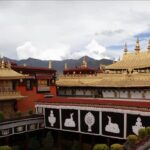
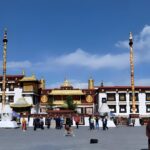
In the afternoon, Jokhang Temple. Built in the 7th century and rebuilt many times since, it remains the most sacred site in Tibet — the temple that pilgrims from across the plateau walk months to reach. The main shrine holds a golden statue of Shakyamuni Buddha at age twelve, brought as part of Princess Wencheng's dowry in 641 AD. The smell of butter lamps, the low murmur of chanted mantras, pilgrims prostrating on the flagstones outside — it is a living temple, not a monument.
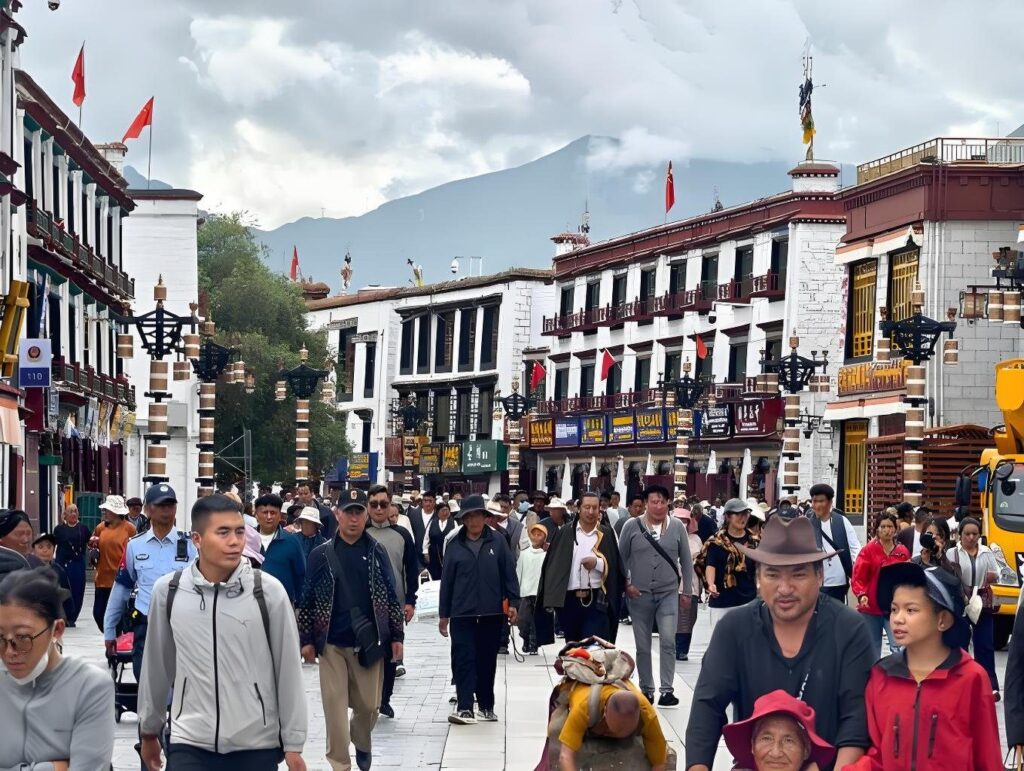
Outside, the Barkhor: the cobblestone pilgrim circuit around Jokhang where Lhasa's street life concentrates. Pilgrims circle clockwise with prayer wheels and rosaries. Traders sell turquoise and coral, yak butter, incense and Tibetan boots. Your guide can take you through the side alleys that most visitors never find, or step back and let you walk it alone. Either is right.
Potala Palace · Sera Debate · Local Family Dinner
Morning: Potala Palace. Entry is timed and numbered — your guide manages the booking in advance. Inside, the thirteen-storey structure contains 1,000 rooms, chapels, storage halls, and the golden funerary chortens of eight Dalai Lamas. The Red Palace at the centre holds the most sacred spaces; the White Palace was the administrative seat of government. The throne room of the 7th Dalai Lama. Rooms where successive Dalai Lamas were educated, governed, and prayed. History not as exhibit but as occupied space, still breathing.
Afternoon: Sera Monastery on the northern edge of Lhasa. The main reason to come is the monk debate, held every afternoon at 3:00 p.m. (except Sundays) in the tree-shaded debating courtyard. Monks in crimson robes challenge each other on points of Buddhist philosophy — each argument punctuated by a sharp hand clap that rings across the courtyard. It is not theatre for tourists. It is a live intellectual practice that has continued daily for six centuries.
Evening: a visit to a local Tibetan family for dinner. This is not a staged cultural performance — it is an arrangement with a family who opens their home to private guests. Butter tea, tsampa, momos, local vegetables, conversation through your guide. The way Lhasa breathes when it is not performing.
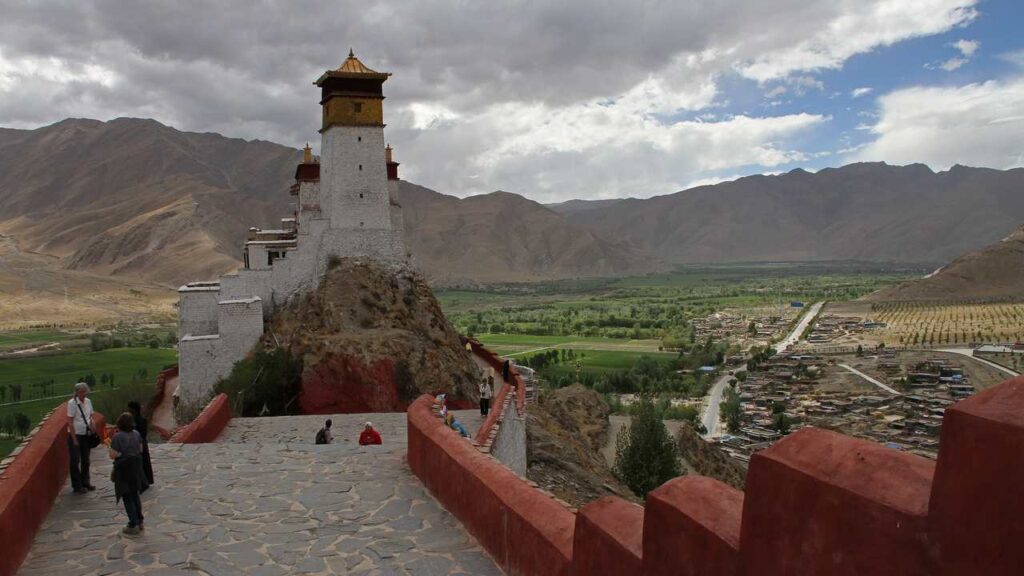
Yumbulagang · Trandruk Temple · Samye Monastery
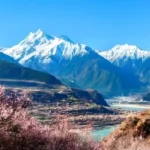
The Yarlung valley, 180 km southeast of Lhasa, is where the recorded history of Tibet begins. This is the valley where the first Tibetan kings established their courts, where the first monastery was built, and where the earliest written Tibetan texts were produced. Most visitors to Tibet never come here — the standard itineraries all go west. The drive south is one of the quieter decisions a Tibet visitor can make, and one of the most rewarding.
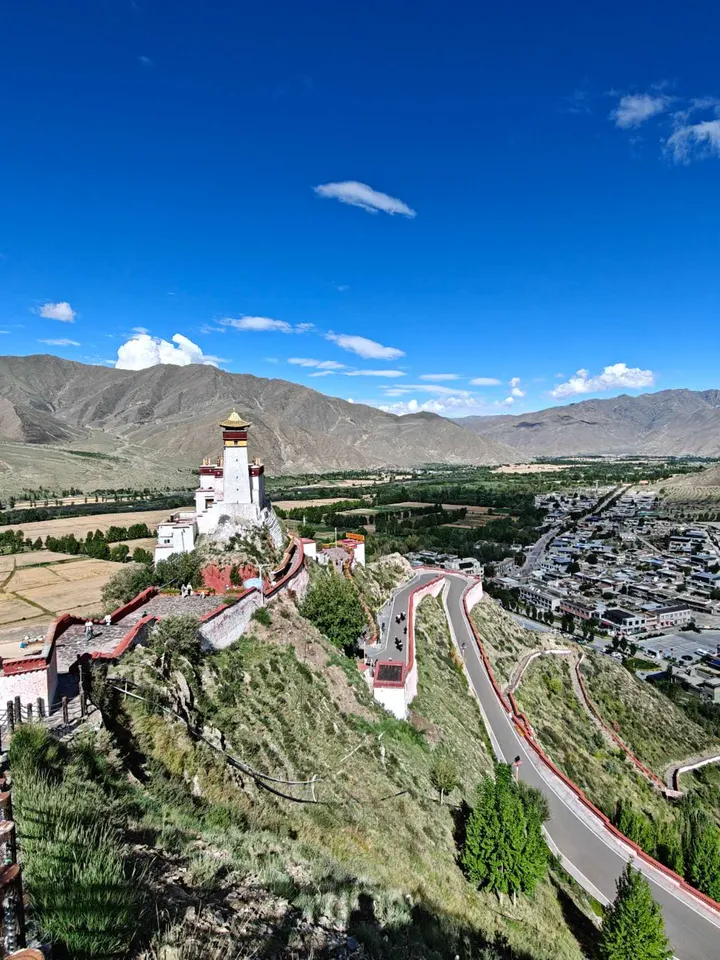
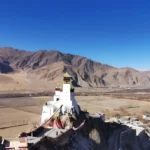
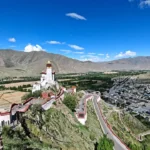
The first stop is Yumbulagang — the oldest palace in Tibet by tradition, a narrow tower-structure standing on a ridge above the valley floor. It looks out over barley fields and the river below. The current building is a restoration, but the site and the view across the Yarlung valley have not changed. On a clear morning the light on the ridge is extraordinary.
Trandruk Temple, a few kilometres further, is one of the oldest temples in Tibet — commissioned by Songtsen Gampo in the 7th century as one of twelve geomantic temples built across the plateau to pin down, in legend, a giant demoness whose body covered the land. The interior holds a rare thangka assembled from thousands of freshwater pearls depicting Chenrezig. It rewards slowness.
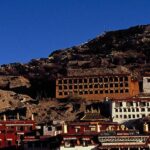
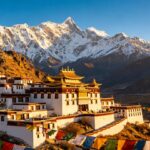
Samye Monastery is where the day builds toward. Built in the late 8th century by King Trisong Detsen and the Indian master Padmasambhava, it was Tibet's first monastery and the first place where Tibetan monks received full ordination. The architectural plan is a mandala: the central temple represents Mount Meru, surrounded by smaller shrines representing the continents and sub-continents, all enclosed within a circular wall. Sand dunes have drifted up from the riverbed on the eastern side. Walking the outer circuit in the afternoon, with the central temple above the flat plain and the dunes visible beyond the wall, it is easy to understand why this site has been occupied continuously for twelve centuries.
Airport departure option — Lhasa Gonggar Airport lies between Lhasa city and the Yarlung valley. If you have an afternoon flight, you can visit the valley sites in the morning and proceed directly to the airport — no return to Lhasa city required. Mention your flight time when you inquire.
Free Morning · Departure Transfer
Breakfast · End of services at airport or railway station
If you returned to Lhasa on Day 4, today is a final free morning in the city before your transfer. If you departed directly from the airport via the Yarlung valley, Day 5 is your onward travel day.
Photos from this route
Questions travellers ask
How far is the Yarlung valley from Lhasa?
About 180 km, taking 2–2.5 hours each way. The drive follows the Yarlung Tsangpo river through some of its most dramatic valley sections. An early start (8:00 a.m.) gives you a comfortable full day at all three sites before the return.
Can I fly out from the Yarlung valley instead of returning to Lhasa?
Yes — this is one of the practical advantages of the Shannan extension. Lhasa Gonggar Airport is located between Lhasa city and the Yarlung valley, on the south side of the Yarlung Tsangpo. For afternoon flights (3:00 p.m. or later), you can visit all three sites in the morning and proceed directly to the airport without returning to Lhasa city.
Is Samye accessible by road?
Yes, since a bridge was built across the Yarlung Tsangpo. The traditional approach was by ferry from Tsedang town, which is still possible and atmospheric if time permits. Your guide will choose the best route based on your schedule.
How does Shannan compare to the Namtso option?
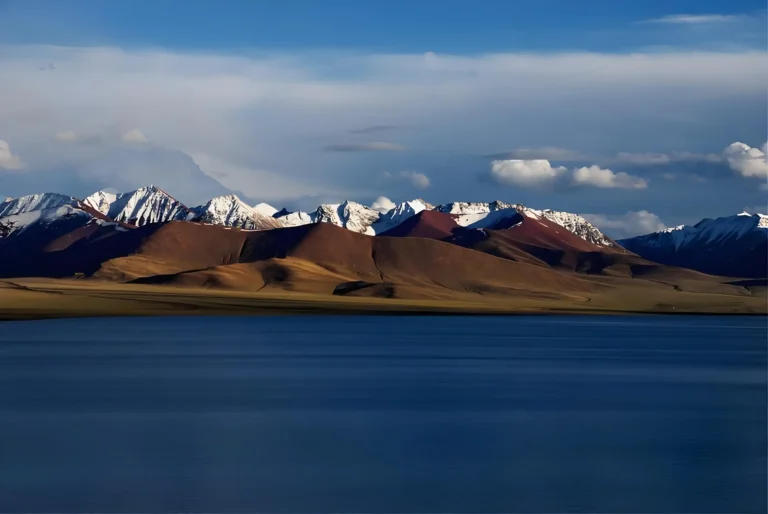
Namtso is a landscape experience — high altitude, vast, visually overwhelming. Shannan is a historical and cultural experience — lower altitude, quieter, richer in Tibet's origin story. If ancient monasteries and the question of where Tibetan civilisation began interest you more than mountain lakes, Shannan is the stronger choice.