Small group or private
7 Days A Week Tour to Everest Base Camp
7 Days $900 per person Overview Itinerary Tips & FAQ Lhasa Yamdrok Lake Karola Glacier Gyantse Kumbum Shigatse Rongbuk Monastery Everest Base Camp For travellers who refuse to let a tight schedule stand between them and the roof…
- 7 Days / 6 Nights
- Lhasa → Yamdrok Lake → Karola Glacier → Gyantse Kumbum → Shigatse → Rongbuk Monastery → Everest Base Camp
- Moderate pace
- Best: April to June and September to October
- No Deposit — Ever
- Cancel Free Before Permit Issued
- Full Refund except $100 Permit Fee
- Bring 7, Your Spot Is Free
- Our Own Office in Lhasa, Since 1999
The trip at a glance
In one full day in Lhasa, you will visit the iconic Potala Palace, the spiritually charged Jokhang Temple, the vibrant Barkhor Street market, and witness the famous afternoon monk debates at Sera Monastery. From Lhasa, the journey follows the Sino-Nepal Friendship Highway through two of Tibet’s most photogenic natural wonders — the turquoise waters of Yamdrok Lake and the dramatic Karola Glacier — before reaching Gyantse’s extraordinary Kumbum Pagoda and the city of Shigatse, home to Tashilunpo Monastery. The tour culminates at Everest Base Camp at 5,200 metres, where you spend a night beneath the north face of the world’s highest mountain.
The key difference between this 7-day tour and the 8-day standard is not what you see — it is the pace at which you see it. The 7-day itinerary works best for travellers who are younger and physically fit, those who acclimatize quickly at altitude, and those who have previously visited Lhasa and do not need additional time in the city. If you have experienced altitude sickness before, are travelling with older companions, or simply prefer a more relaxed pace, we recommend the 8-day tour which builds in a dedicated second day in Lhasa.
The best seasons are April to June and September to October, when the plateau weather is stable and mountain views are at their clearest. Tibet Travel Permit applications require approximately 15 working days and are handled entirely by our team — all you need is a valid Chinese visa.
- Lhasa → Potala Palace → Jokhang Temple → Sera Monastery
- Lhasa → Yamdrok Lake → Karola Glacier → Gyantse
- Shigatse → Tingri → Rongbuk Monastery → Everest Base Camp
- Everest Base Camp → Sunrise → Shigatse
- Shigatse → Tashilunpo Monastery → Lhasa
Day by day
Lhasa → Yamdrok Lake → Karola Glacier → Gyantse Kumbum → Shigatse → Rongbuk Monastery → Everest Base Camp
Day1
Arrival in Lhasa – Airport Pick Up
Arriving at Lhasa Gonggar Airport, your Tibetan guide greets you with a white silk kata — the traditional Tibetan welcome scarf — and transfers you to your hotel. The drive from the airport crosses the wide Yarlung Tsangpo valley beneath Tibet’s famously intense blue sky, with the first distant glimpse of the Potala Palace appearing above the valley floor as you approach the city.
At 3,600 metres above sea level, Lhasa’s air contains roughly 35% less oxygen than at sea level. Virtually every visitor notices the difference on their first day — mild headache, unusual fatigue, or slight breathlessness are all normal responses. Rest is your most important task tonight: drink significantly more water than usual, eat lightly, move slowly, and sleep as early as possible. The better you rest now, the more fully you will experience tomorrow’s full day of sightseeing.
Day2
Lhasa – Potala Palace – Jokhang Temple – Sera Monastery – Barkhor Street
Today is a full and rewarding day covering all of Lhasa’s essential highlights. After breakfast, we begin with the iconic Potala Palace — a UNESCO World Heritage Site that rises thirteen storeys above Lhasa from its perch on the Red Hill. The palace was the winter residence of the Dalai Lamas for centuries and houses countless chapels, gilded shrines, and sacred halls. Entry times are managed to control visitor numbers, so your specific time-slot will be confirmed on the day.
From the Potala, we continue to the Jokhang Temple — the most sacred site in all of Tibetan Buddhism. At its spiritual centre stands the Jowo Rinpoche, a precious statue of Shakyamuni Buddha brought to Tibet over 1,300 years ago. The atmosphere of devotion here — with pilgrims prostrating outside and monks chanting inside — is unlike anything you have experienced before.
The afternoon brings one of Lhasa’s most memorable experiences: the monk debating session at Sera Monastery. In a shaded courtyard, monks engage in lively philosophical debate — clapping, stamping, and challenging each other’s understanding of Buddhist scripture with striking theatrical energy. This session takes place on weekday afternoons and is one of the most authentic cultural spectacles in Tibet.
The day concludes with a stroll along Barkhor Street, the ancient pilgrim circuit encircling the Jokhang Temple, where stalls selling thangka paintings, jewellery, and Tibetan handicrafts make for excellent last-minute souvenir shopping.
Day3
Lhasa – Yamdrok Lake – Karola Glacier – Gyantse – Shigatse
The westward drive from Lhasa to Shigatse is one of the great scenic journeys of the Tibetan Plateau — a single day that delivers dramatic high-altitude landscapes, a sacred lake, a glacier, and a medieval architectural masterpiece.
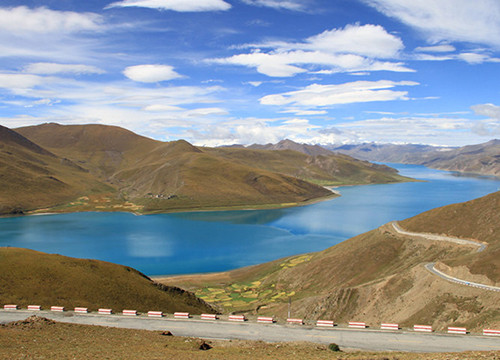
The first major stop is Kampala Pass at 4,797 metres, where Yamdrok Lake appears below in a sudden and complete panorama of turquoise water set against brown mountain ridges and distant snow peaks. One of Tibet’s three sacred lakes, its colour shifts from jade to deep blue depending on the angle of light — a genuinely breathtaking first encounter with the plateau’s high-altitude scenery.
Continuing west, the road passes directly beneath Karola Glacier — an accessible wall of ancient ice descending from Nojin Kangtsang peak. In Gyantse, the Kumbum Pagoda houses over seventy individual chapels in a single remarkable building, its walls covered with murals of extraordinary quality blending Tibetan, Nepali, Indian, and Chinese artistic traditions. The day ends in Shigatse — Tibet’s second city and the gateway to Everest tomorrow.
Day4
Shigatse – Tingri – Rongbuk Monastery – Everest Base Camp
This is the culminating day of the tour. Leaving Shigatse after breakfast, the road heads southwest through Lhatse and across open highland plains toward Tingri — a small plateau village where, on clear mornings, the distant summit of Everest appears above the Himalayan chain for the first time. The sight, even from this distance, is unmistakable.
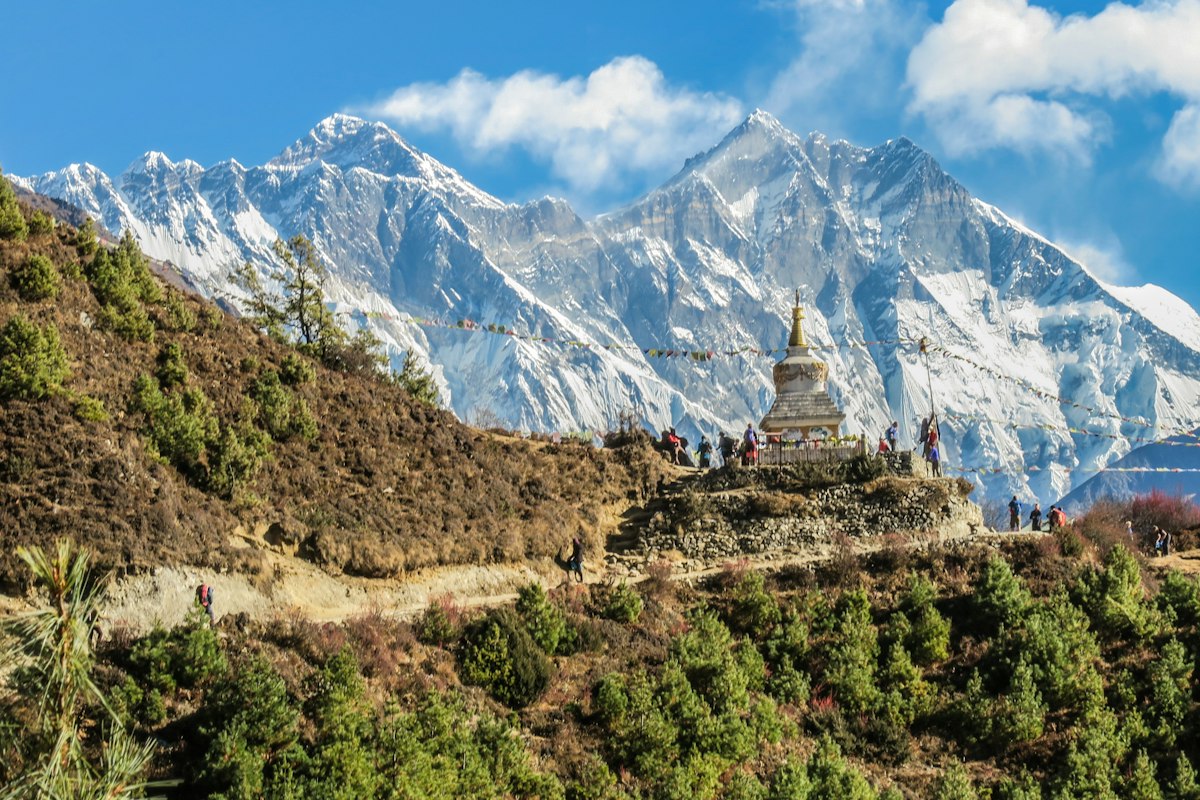
The route climbs to Pang La Pass at 5,200 metres, where on a clear day five of the world’s highest peaks are visible simultaneously: Everest, Lhotse, Makalu, Cho Oyu, and Shishapangma — a Himalayan panorama among the finest in the world.
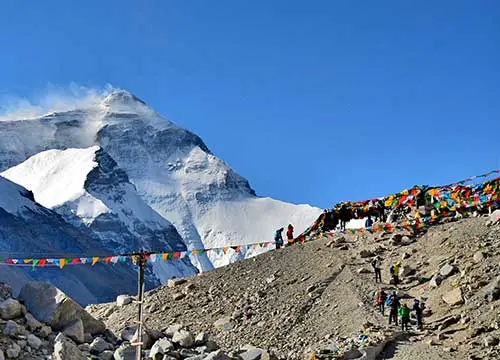
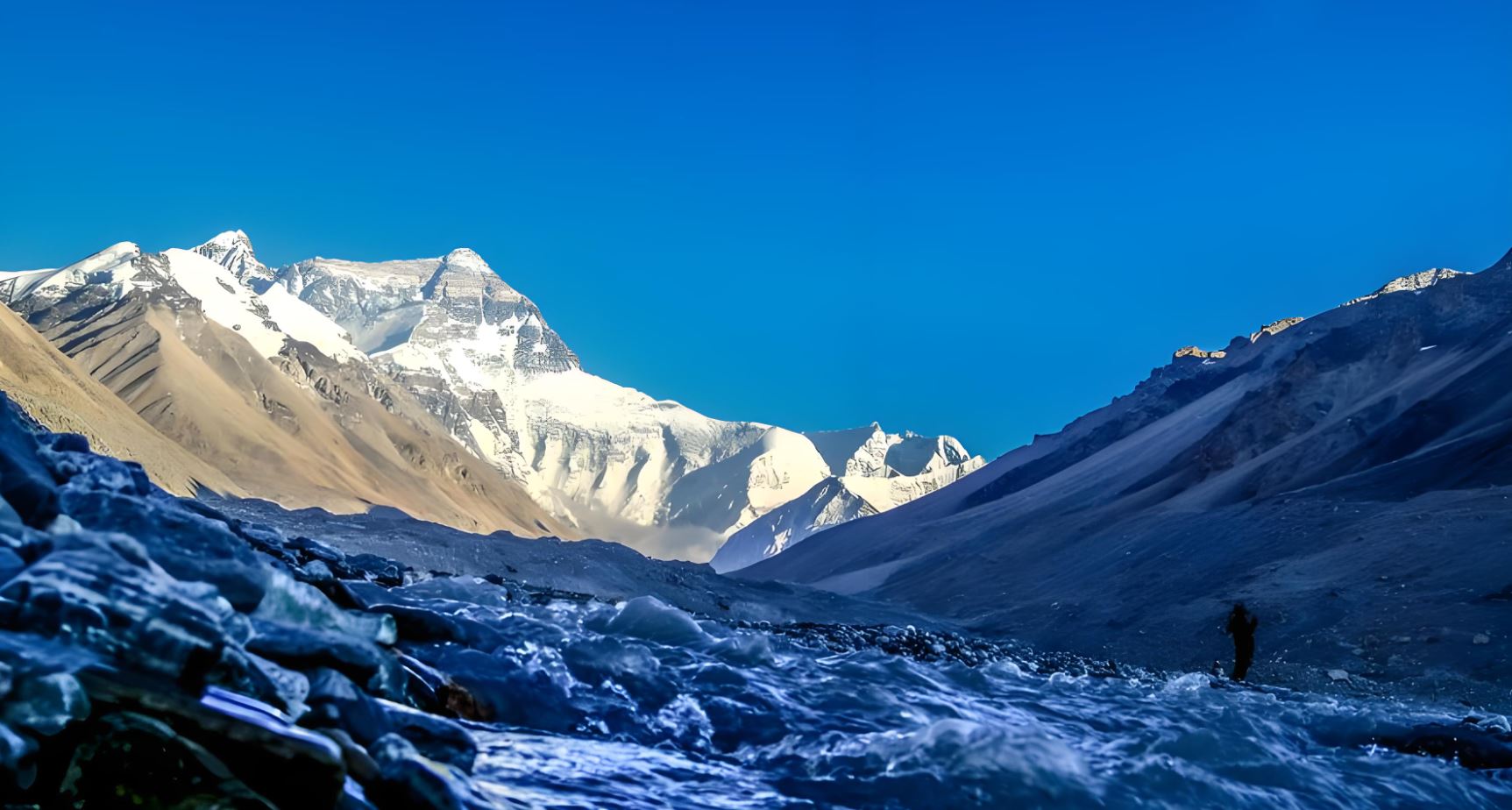
Descending from the pass, Rongbuk Monastery stands directly at the foot of Everest’s north face — the highest monastery in the world at 4,980 metres, serving pilgrims and mountaineers since 1902. From Rongbuk, eco-friendly transport carries you to Everest Base Camp at 5,200 metres. Step outside slowly. The air holds roughly half the oxygen of sea level. The north face of Everest rises above you, immense and completely present — an experience for which no description is adequate.
Day5
Everest Base Camp – Sunrise – Shigatse
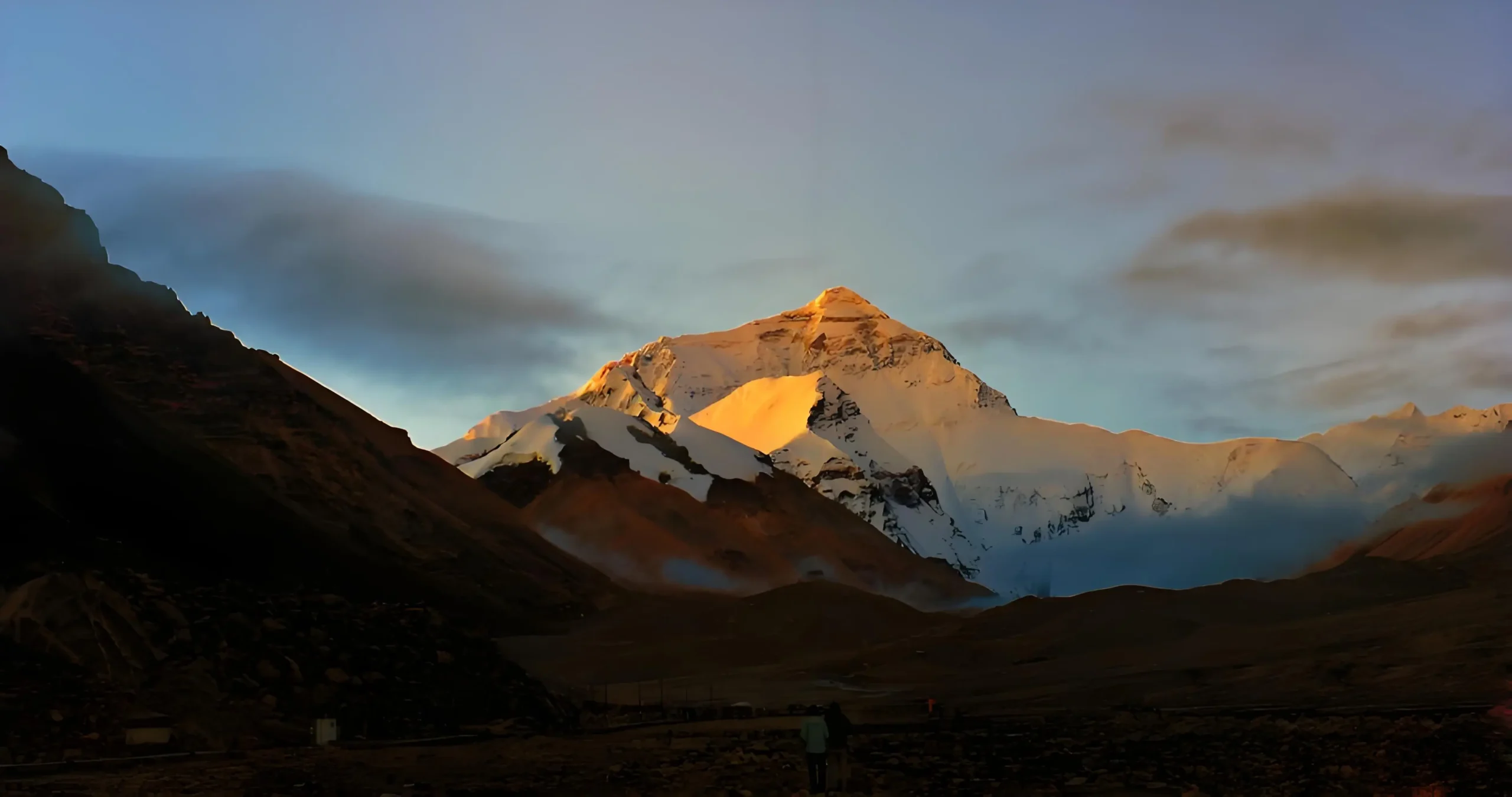
Set your alarm for before dawn. In the cold darkness before sunrise, step outside and look south. The mountain is at first only a darker shape against the night sky. Then the horizon pales, and the summit — the highest point on earth — catches the day’s first light while the valleys below remain in deep shadow. The colours move quickly across the north face: violet, rose, amber, gold. Many people find this moment unexpectedly moving — the full realisation of where they are and what they are seeing landing only now.
After the sunrise, the drive begins its long return east across the plateau to Shigatse. The same landscapes that accompanied yesterday’s approach now unfold in reverse — Pang La, the grasslands, the wide river valleys — with the quiet satisfaction of a journey completed. Arrive in Shigatse in the early evening for a comfortable overnight before tomorrow’s monastery visit and return to Lhasa.
Day6
Shigatse – Tashilunpo Monastery – Lhasa
An early start for a visit to Tashilunpo Monastery — one of the most important and best-preserved monastic complexes in Tibet, founded in 1447 and the traditional seat of the Panchen Lamas. Its gilded rooftops, vast assembly halls, and the remarkable Chapel of the Maitreya — housing a 26-metre gilt bronze image of the future Buddha — make for a visit of genuine depth. Monks still conduct daily prayers and study here, giving Tashilunpo a living atmosphere quite different from more touristic sites.
After the monastery, the return to Lhasa is aboard the famous Qinghai–Tibet Railway — train Z8804 rolls east through the plateau valley, offering a final panorama of the landscape you have been travelling through. The train reaches Lhasa in the early afternoon; the rest of the day is free for a last walk on Barkhor Street, souvenirs, or a quiet hour watching Lhasa from a rooftop café.
Day7
Lhasa Departure
Seven days that covered the full sweep of central Tibet — Lhasa’s sacred landmarks, the turquoise plateau lakes, the glaciers of the Karola, and a night at the foot of the world’s highest mountain — now come to their close. After breakfast, your guide transfers you to Lhasa Gonggar Airport or the train station. The kata ceremony of Day 1 feels a long time ago, and the Tibet that greeted you as a stranger now feels in some quiet way like a place you have earned the right to know.
Meals: Breakfast Tibet Permit — Required for All Visitors Every visitor to Tibet must hold a Tibet Tourism Bureau (TTB) permit. It is mandatory, cannot be obtained on arrival, and differs by nationality. We handle the full application once you book — please allow at least 15 days before your departure date.
What is included
Included
- Tibet Entry Permit and Alien’s Travel Permit
- All ground transportation
- Environment-friendly local bus between Rongbuk and EBC
- Hot water bottle and sleeping bag provided in winter while travelling to EBC
- Oxygen provided while travelling to EBC
- Professional Tibetan English-speaking tour guide
- Travel agency service charge
- Accommodation as listed in the itinerary
- One welcome dinner in Lhasa
Not included
- Single room supplement — free of charge for any group booking 5 rooms or travelling with 10 or more.
- China visa, international air tickets and train tickets to/from Tibet
- Sightseeing not listed in the itinerary
- Meals not listed in the itinerary (all lunches and dinners unless specified)
- Personal expenses such as laundry, drinks, telephone calls and optional activities
- Gratuities and tips to guides, drivers and hotel staff
- Excess baggage charges
Photos from this route
Questions travellers ask
Is 7 days really enough time to see Tibet and reach Everest Base Camp?
Yes — if the itinerary is planned correctly, and this one is. By visiting all of Lhasa’s key landmarks (Potala Palace, Jokhang Temple, Sera Monastery, and Barkhor Street) in one well-organised full day and following an optimised route westward, every essential highlight of this classic Tibet journey can be completed comfortably in 7 days.
The trade-off is a brisker pace in Lhasa, without a dedicated second day for acclimatization. For most fit travellers, this is not a problem. However, if you have experienced altitude sickness before, are travelling with older companions, or simply prefer not to feel rushed, the 8-day version of this tour — which adds a gentler second day in Lhasa — is the safer and more relaxed choice.
Will I get altitude sickness on a 7-day tour?
Altitude sickness is a possibility any time you travel to Tibet — regardless of tour duration. The difference with the 7-day itinerary is that it does not include a dedicated acclimatization day; Lhasa sightseeing begins on Day 2 rather than Day 3.
Most physically fit travellers adjust well within the first 24–48 hours. The key precautions are: drink significantly more water than usual, avoid alcohol entirely for the first two days, eat lightly on Day 1, walk slowly, and rest whenever you feel breathless. We also strongly recommend consulting your doctor before departure about Acetazolamide (Diamox), which many travellers use preventatively.
If you have a history of altitude-related illness, heart conditions, or respiratory problems, we advise choosing the 8-day tour or speaking with our team before booking.
What permits do I need for Tibet, and how long does the application take?
Foreign visitors to Tibet require two key documents in addition to a valid Chinese visa: the Tibet Travel Permit (TTP) and, for the Everest Base Camp area, the Aliens’ Travel Permit. Both are arranged entirely by our team on your behalf — you do not need to visit any government office or handle any application paperwork yourself.
The Tibet Travel Permit typically takes 10–15 working days to process. To apply, you simply need to send us a clear scan of your passport biographical page and your Chinese visa. We then handle everything. Please note: the TTP cannot be applied for independently by travellers — it must go through a licensed Tibet travel agency, which we are.
Your Chinese visa must be obtained before the TTP application begins, so please plan your travel timeline accordingly.
What is the best time of year for this tour?
The best months for this 7-day EBC tour are April to June and September to October. During these windows, weather conditions on the plateau are at their most stable, mountain views are clearest, and the road to Everest Base Camp is fully open and accessible.
July and August coincide with the monsoon season. Rain and cloud cover can reduce visibility significantly, particularly at higher elevations, and occasional road closures are possible. These months are not ideal for EBC views but the tour still operates.
November to March brings cold temperatures across the plateau and the possibility of snow on mountain passes. The tour can still run during this period, but conditions are more demanding and some high-altitude roads may require extra caution. For first-time visitors, spring and autumn are the strongly recommended seasons.
How physically fit do I need to be for this tour?
This tour is rated Moderate. You do not need athletic training or trekking experience — all travel between destinations is by vehicle. There is no multi-day hiking involved.
The main physical demands come from walking at high altitude, where the reduced oxygen level makes even gentle activity feel more tiring than at sea level. A reasonable general fitness level — such as being comfortable walking for two to three hours at a normal pace — is sufficient for most of this itinerary.
Because the 7-day tour does not include a dedicated acclimatization day, we particularly recommend this format for travellers who are in good general health, are under 50 years of age, and have no history of altitude-related illness. If you have heart, lung, or blood pressure conditions, please consult your doctor before booking and inform our team so we can support you appropriately.
Where do I sleep at Everest Base Camp?
Accommodation at Everest Base Camp is in basic guesthouses or traditional tent camps in the Rongbuk valley, a short distance from the base camp itself. The facilities are deliberately simple — shared rooms, basic bedding, limited electricity, and no hot showers. This is considered part of the authentic EBC experience and is fully included in your tour.
The night before EBC is spent in Shigatse (3-star hotel), giving you a comfortable sleep before the high-altitude night ahead. Temperatures at EBC drop sharply after dark — well below zero — so packing a high-quality sleeping bag and thermal layers is essential. Our team will provide a detailed packing list when your booking is confirmed.
Can I extend this tour to Namtso Lake or into Nepal?
Yes, this tour can be extended in either direction. After returning to Lhasa, one or two additional days can be added to visit Namtso Lake — a breathtakingly beautiful sacred high-altitude lake north of Lhasa and one of the highlights of Tibet that this itinerary does not include by default.
Alternatively, if you wish to continue into Nepal after visiting EBC rather than returning to Lhasa, we also offer combined Tibet–Nepal overland tours. The Gyirong border crossing (and the alternative Zhangmu crossing) makes this possible. Speak to our team before your departure date and we will design the right extension for your schedule and budget.
Can I do this tour as a private trip rather than joining a group?
Yes. All of our tours are available as private departures — meaning just you and your travel companions, with your own dedicated Tibetan guide and vehicle, departing on a date that suits you.
Our group tours typically include 4–8 travellers and depart on fixed scheduled dates. Private tours offer more flexibility on timing, a more personal guiding experience, and the freedom to spend more time at sights that interest you most. They are especially popular with couples, families, and small groups of friends travelling together. Contact us for a private tour quotation based on your group size and preferred travel dates.
How do I get to Lhasa — by train or by flight?
Both are excellent options and the right choice depends on your time, budget, and sense of adventure.
The Qinghai–Tibet Railway is the world’s highest railway and is itself one of the great train journeys on earth. Departing from cities including Chengdu, Xining, Beijing, Shanghai, and Guangzhou, the train climbs dramatically over the Tanggula Pass at more than 5,000 metres before descending into Lhasa. The journey from Chengdu takes approximately 36 hours and gives your body a gradual, natural introduction to altitude — a genuine advantage for this 7-day itinerary that does not include a dedicated acclimatization day. The scenery along the route is extraordinary.
Flights to Lhasa Gonggar Airport operate from most major Chinese cities and typically take 2–3 hours. This is the faster option but means a more sudden arrival at altitude. Our guide will meet you at either the train station or the airport, whichever you choose.
Will I be able to see Mount Everest clearly from Base Camp?
On a clear day, the north face of Mount Everest is visible in full, breathtaking detail from Everest Base Camp — and also from the Pang La Pass viewpoint en route, where five of the world’s eight-thousanders can be seen simultaneously.
Visibility depends on the season and daily weather. April to June and September to October are the most reliably clear months. The best viewing window each day is early morning — before atmospheric haze builds and before any afternoon clouds develop. For this reason, the EBC itinerary includes an early sunrise viewing session specifically to maximise your chances of seeing the mountain in its full glory.
On overcast days, cloud cover can obscure the summit — this is beyond anyone’s control. However, even on partially cloudy days, Everest Base Camp itself — the atmosphere, the sheer scale of the surrounding terrain, the Rongbuk Monastery backdrop — is an extraordinary experience that no photograph can fully prepare you for.
Before you send your inquiry
- No deposit — ever. Your dates are held with a free inquiry, and nothing is due until we confirm. On fixed group departures, book early to secure your seats.
- Cancel free before your Tibet Travel Permit is issued — full refund, every dollar.
- After the permit is issued: the USD $100 permit fee is non-refundable, everything else is refunded. Refunds within 7 business days.
- Bring a group of 7 and your spot is free (7+1).
- Single room supplement — free of charge for any group booking 5 rooms or travelling with 10 or more.
- Tell us your dates and route on the form below — you will have a written itinerary and an item-by-item quote within 12 hours, with no obligation to book.
- Prices depend on group size, hotel standard, season and how you travel into Tibet, so we quote each trip individually rather than from a price list.
- Hotel details — the exact hotels we use — come with your quote. Ask below for the standard you would like and we will match it.
- A Lhasa-based Tibet tour operator since 1999 — our own guides, vehicles and office in Lhasa, 7,200+ travellers from 40+ countries, 4.9★ on TripAdvisor.