Private tour — on your dates
27 Days Lhasa to Mount Kailash Cycling — via EBC, Manasarovar & Guge Kingdom
27 Days Custom quote per person Overview Itinerary Tips & FAQ Lhasa — Potala Palace, Jokhang Temple, Sera Monastery Yamdrok Lake via Kamba La Pass (4,794m) Gyantse Kumbum Pagoda Tashilunpo Monastery, Shigatse Everest Base Camp…
- 27 Days / 26 Nights
- Lhasa — Potala Palace, Jokhang Temple, Sera Monastery → Yamdrok Lake via Kamba La Pass (4,794m) → Gyantse Kumbum Pagoda → Tashilunpo Monastery, Shigatse → Everest Base Camp (5,200m) → Peiku Tso Lake — western Tibet wilderness → Mayum La Pass (5,216m) — Yarlung Tsangpo–Indus watershed → Lake Manasarovar (4,588m) — one of the world's most sacred lakes → Mount Kailash Kora — full 52km circumambulation → Dolma La Pass (5,630m) — highest point of the Kailash Kora → Zanda County — Guge Kingdom ruins
- Challenging pace
- Best: May to mid-October (the Kora is snowed in through winter)
- No Deposit — Ever
- Cancel Free Before Permit Issued
- Full Refund except $100 Permit Fee
- Bring 7, Your Spot Is Free
- Our Own Office in Lhasa, Since 1999
The trip at a glance
In 2012, two German cyclists came to us with a route they had designed themselves: a 27-day cycling journey from Lhasa to Mount Kailash, passing through Everest Base Camp and the remote western Tibetan wilderness before completing the Kailash Kora and visiting the ancient ruins of the Guge Kingdom at Zanda. We built the support operation around their plan — an English-speaking guide, a light support truck carrying tents, a cooking tent, field kitchen, food supplies, water, oxygen, tools, and all camping equipment needed for the sections where no guesthouses exist.
The route covers the full arc of Tibet’s most extraordinary landscapes. It begins on the classic Friendship Highway — Yamdrok Lake, Gyantse, Shigatse — before turning south to Everest Base Camp. From EBC, rather than retracing the main road, it continues via a direct mountain valley route to Old Tingri, then heads west into a part of Tibet that most visitors never reach: the Peiku Tso lake shore, the Paryang plains, and the Mayum La checkpoint — the hydrological divide between the Yarlung Tsangpo and the Indus river systems, the invisible border between central and western Tibet. From there the route descends to Lake Manasarovar and Mount Kailash — two of the most sacred sites in Asia — before a final cycling push south to the lost-empire ruins of the Guge Kingdom at Zanda.
We publish this tour not as a fixed product but as a demonstration of what is possible when a cyclist designs their own route and we prepare the support around it. If you have an itinerary of your own in mind — whether it resembles this one or not — share it with us early and we will build the logistics to match.
Pricing for a fully custom journey of this nature is quoted individually based on group size, exact routing, and duration. Contact us with your plan.
- Lhasa → Potala Palace, Jokhang Temple, Barkhor Street
- Lhasa → Sera Monastery, Tibet Museum
- Lhasa to Lhangkatze County via Kamba La Pass (~95km)
- Lhangkatze to Gyantse (~80km)
- Gyantse → Kumbum Pagoda, then cycling to Shigatse (~90km)
- Shigatse to Lhatse County (~120km)
Day by day
Lhasa — Potala Palace, Jokhang Temple, Sera Monastery → Yamdrok Lake via Kamba La Pass (4,794m) → Gyantse Kumbum Pagoda → Tashilunpo Monastery, Shigatse → Everest Base Camp (5,200m) → Peiku Tso Lake — western Tibet wilderness → Mayum La Pass (5,216m) — Yarlung Tsangpo–Indus watershed → Lake Manasarovar (4,588m) — one of the world's most sacred lakes → Mount Kailash Kora — full 52km circumambulation → Dolma La Pass (5,630m) — highest point of the Kailash Kora → Zanda County — Guge Kingdom ruins
Day1
Arrive Lhasa — Rest and Acclimatize
Airport pick-up and hotel check-in. Full rest day at 3,650m. No exertion.
Day2
Lhasa — Potala Palace, Jokhang Temple, Barkhor Street
First cultural day in Lhasa. Visit the Potala Palace and Jokhang Temple. Walk the Barkhor Street pilgrim circuit. Collect and test bicycles in the afternoon.
Day3
Lhasa — Sera Monastery, Tibet Museum
Morning at the Tibet Museum near Norbulingka. Afternoon: attend Sera Monastery’s famous monk debating session (15:00–17:00). Evening: final gear check, bike fitting, and full route briefing with your guide.
Day4
Cycling Day 1 — Lhasa to Lhangkatze County via Kamba La Pass (~95km)
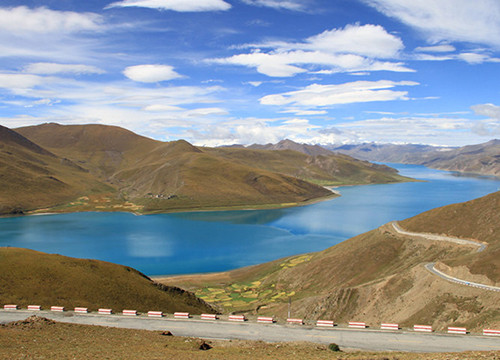
The first and one of the most dramatic cycling days of the entire journey. South from Lhasa through Chushul, then the long climb to Kamba La Pass (4,794m) — and the sudden revelation of Yamdrok Lake’s turquoise waters spread below. Descend to the lake shore and continue to Lhangkatze County.
Day5
Cycling Day 2 — Lhangkatze to Gyantse (~80km)
Continue along the southern shore of Yamdrok Lake, one of Tibet’s three sacred lakes, with extraordinary views at every turn. Pass the Karola Glacier before arriving in Gyantse.
Day6
Gyantse — Kumbum Pagoda, then cycling to Shigatse (~90km)
Morning visit to Gyantse Kumbum — a remarkable nine-storey pagoda with 108 chapels, built in 1427 and one of the finest examples of Tibetan Buddhist architecture. Afternoon: cycle the Nyang River valley to Shigatse.
Day7
Shigatse — Rest Day, Tashilunpo Monastery
Full rest day in Tibet’s second city. Visit Tashilunpo Monastery — seat of the Panchen Lama and home to one of the world’s largest gilded statues. Time to recover before the long plateau cycling sections ahead.
Day8
Cycling Day 3 — Shigatse to Lhatse County (~120km)
Long cycling day west along the Friendship Highway. The plateau opens into vast empty vistas with the Himalayan range on the southern horizon. The longest road day of the Lhasa–EBC section.
Day9
Cycling Day 4 — Lhatse to Shegar, Tingri County (~90km)
Continue west through increasingly high and arid plateau landscape. Arrive in Shegar — the last major town before Everest. The air thins noticeably at this elevation.
Day10
Cycling Day 5 — Shegar to Everest Base Camp via Rongbuk (~65km)
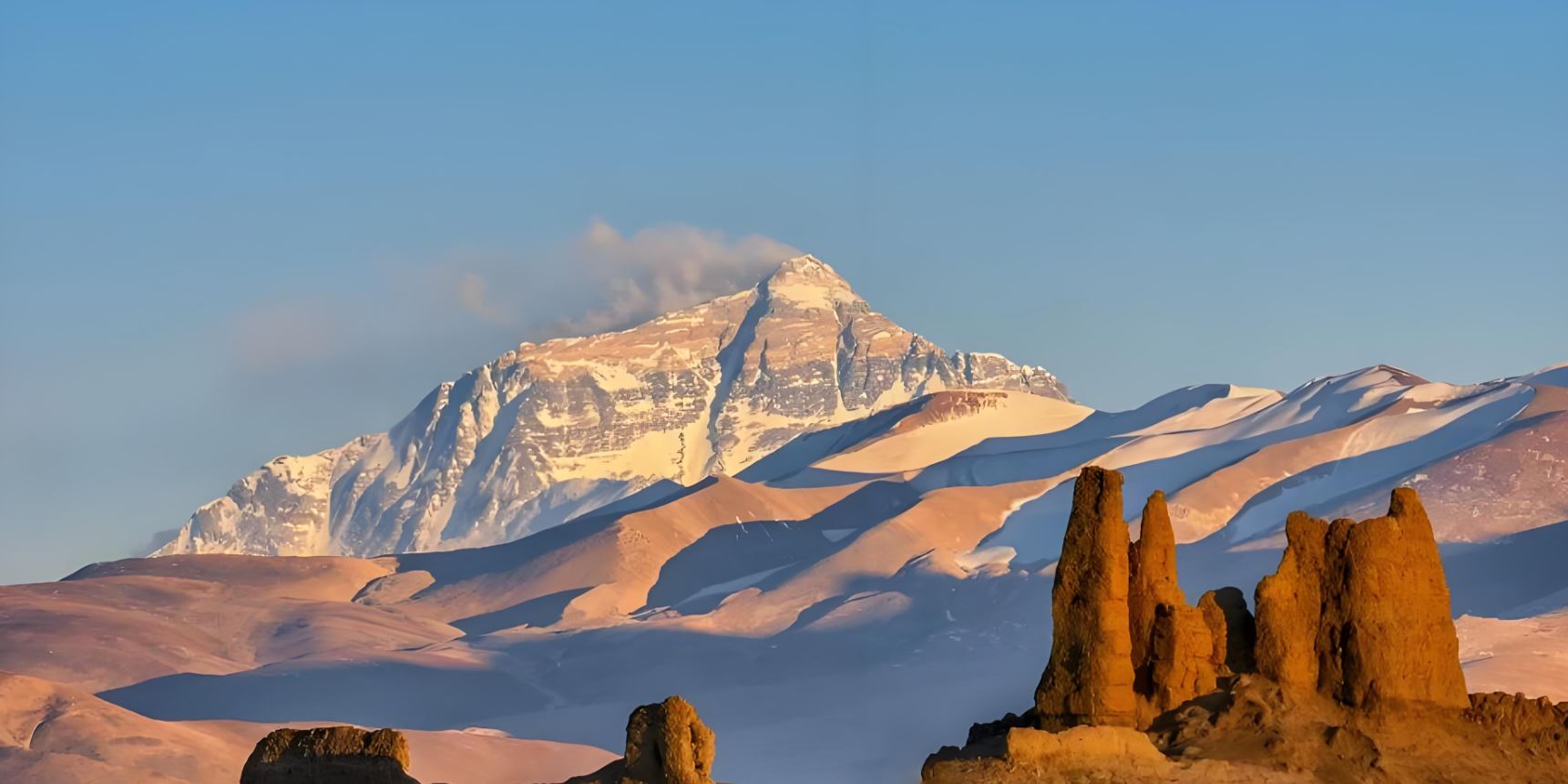
The iconic approach: south from Shegar on the road to Rongbuk, with Everest’s north face growing from a distant triangle to a towering wall of ice and rock. The final 8km from Rongbuk Monastery to EBC (5,200m) is cycled. A moment neither man ever forgot.
Day11
Everest Base Camp — Sunrise and Exploration
Wake before dawn for the pre-sunrise alpenglow on Everest’s summit pyramid. Spend the full day at base camp — exploring the moraine, watching expeditions prepare, absorbing the scale of the north face from 5,200m.
Day12
Cycling Day 6 — EBC to Old Tingri via Mountain Valley (~75km)
Rather than retracing the main road over the Gyatso La pass back to Shegar, the route continues via a direct mountain valley path toward Old Tingri — a more remote and scenically extraordinary option that avoids repeating ground already covered. Old Tingri sits on an open plain with vast Himalayan views.
Day13
Cycling Day 7 — Old Tingri to Peiku Tso Lake (~80km)
Turn north-west from Old Tingri into western Tibet. The landscape opens into the vast remote plateau that most travellers never see. Arrive at the shores of Peiku Tso — a large high-altitude lake reflecting the Himalayan peaks to the south, wild and completely undeveloped.
Day14
Cycling Day 8 — Peiku Tso to Zhongba County (~90km)
Continue north-west across the open western Tibetan plateau. Zhongba is a remote county town — one of the few points of resupply on this section. Wildlife sightings (Tibetan antelope, wild asses, eagles) are common across this uninhabited terrain.
Day15
Cycling Day 9 — Zhongba to Paryang Town (~100km)
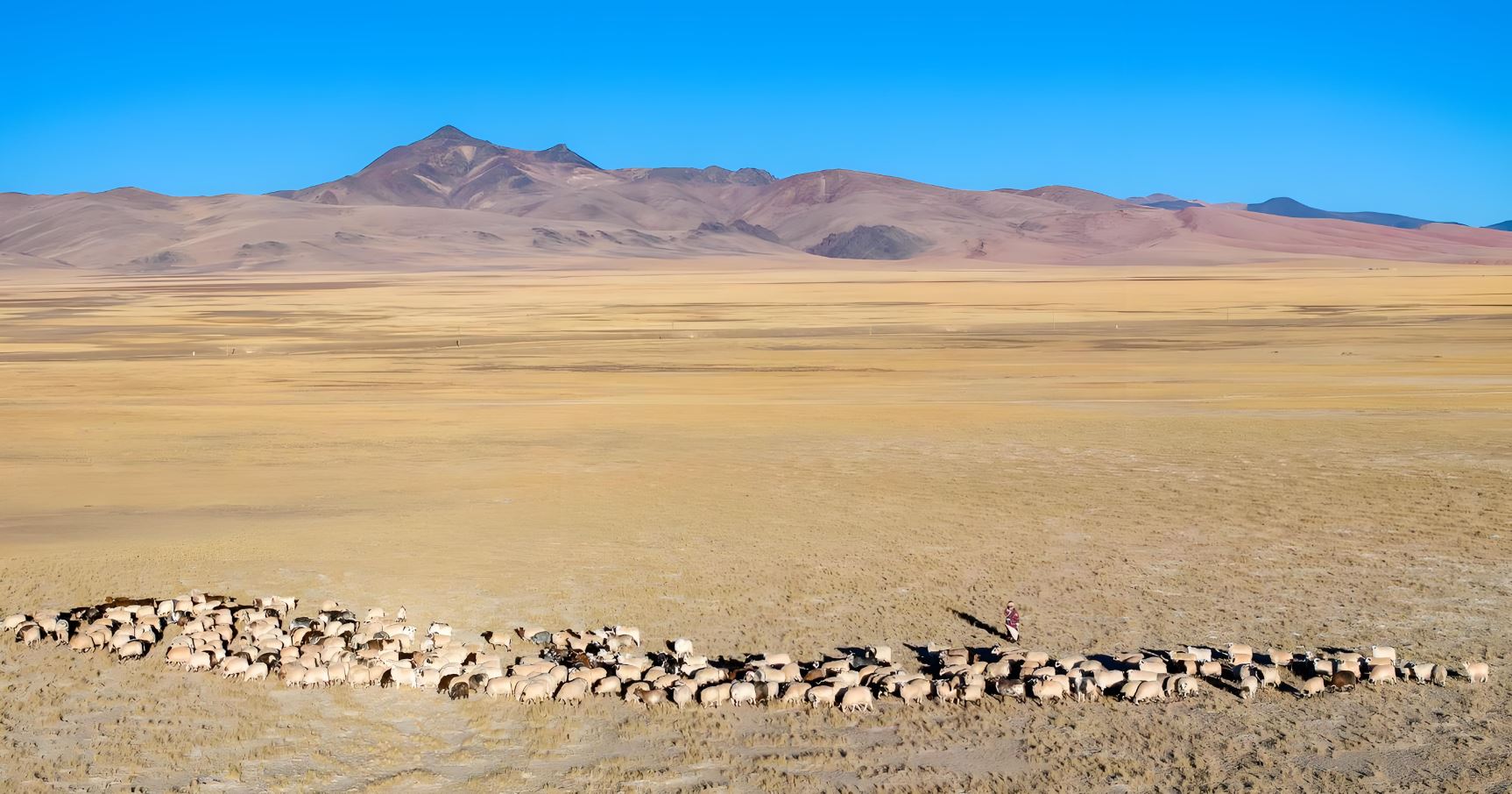
A long day across the high plateau, descending gradually toward Paryang — the last significant stop before entering the Mayum La watershed section. The landscape is harsh and hauntingly beautiful: ochre plains, distant snow ranges, and an enormous sky.
Day16
Cycling Day 10 — Paryang to Mayum La Checkpoint (~80km)
The Mayum La Pass (5,216m) marks the hydrological divide between the Yarlung Tsangpo river system (flowing east to the Bay of Bengal) and the Indus river system (flowing west to the Arabian Sea). Crossing it is crossing an invisible but ancient border — from central Tibet into the Ngari heartland.
Day17
Cycling Day 11 — Mayum La to Gongzhu Tso / Hor Town (~90km)
Descend from the Mayum La into the Ngari plateau. The terrain shifts to a wider, more arid landscape as you approach the Manasarovar basin. Arrive at Gongzhu Tso lake or the small settlement of Hor Town near the lake shore.
Day18
Cycling Day 12 — Hor Town to Lake Manasarovar / Darchen (~60km)
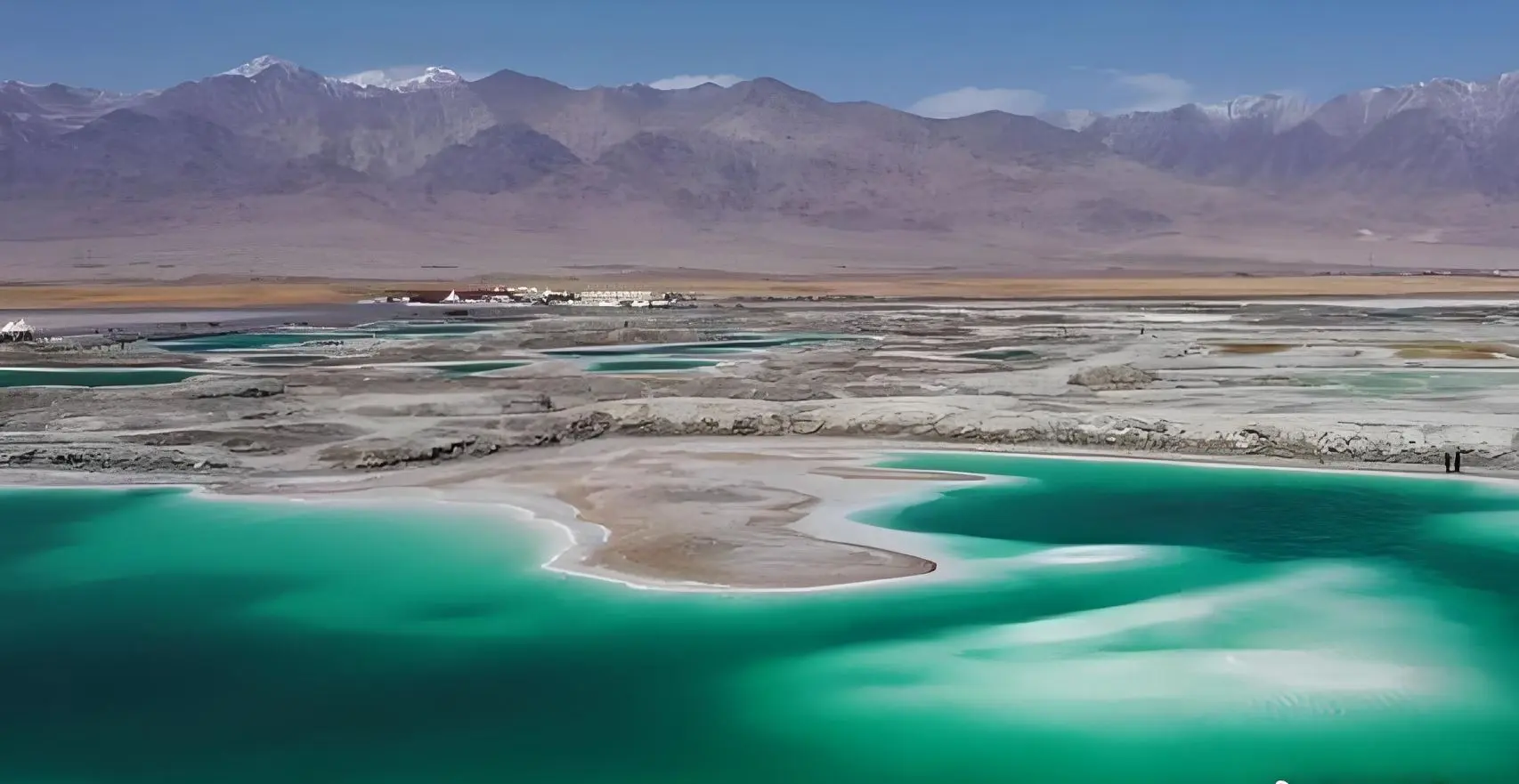
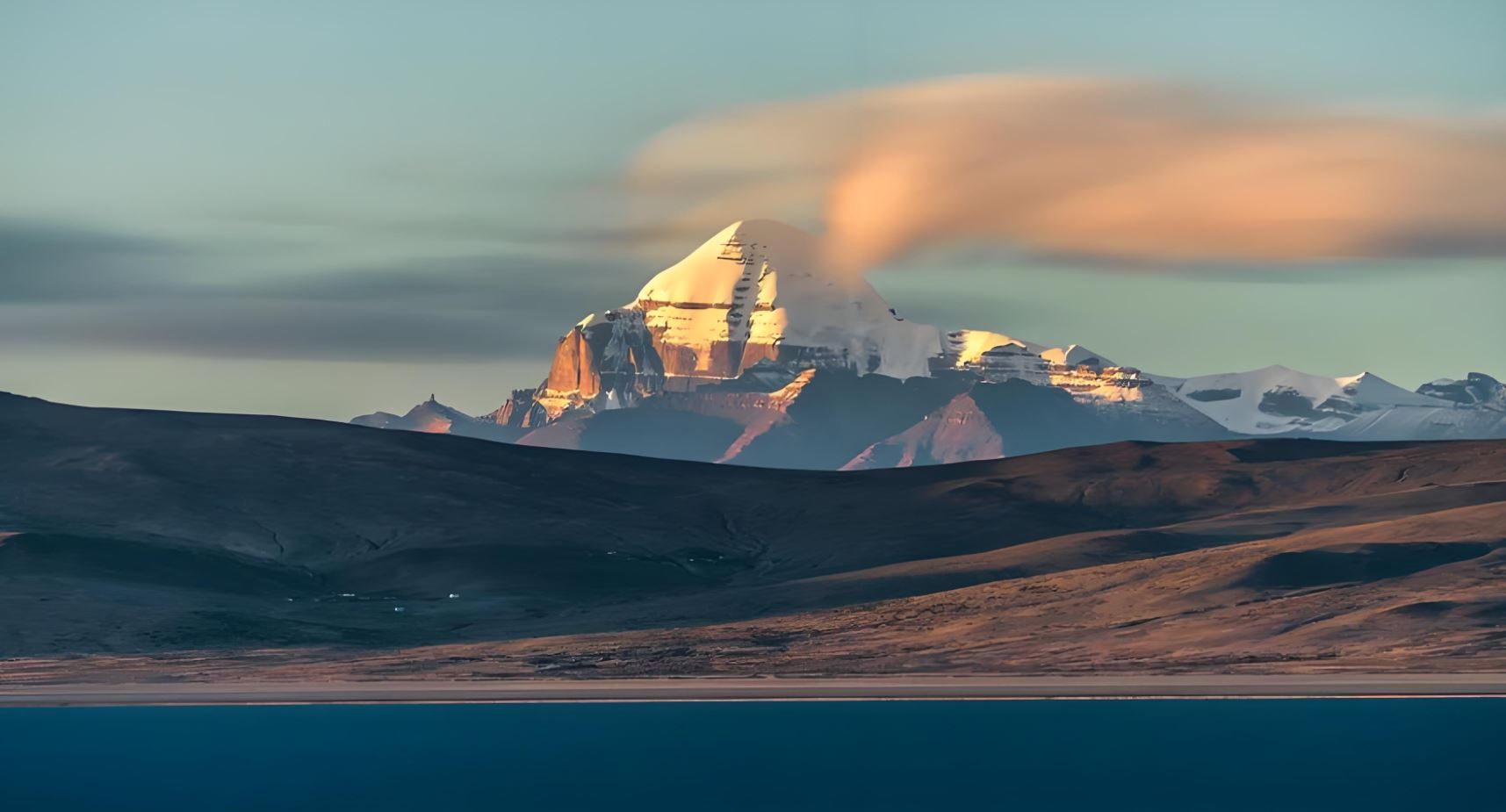
The final cycling approach to the Kailash region. Lake Manasarovar (4,588m) — one of the holiest lakes in Asia, sacred to four religions — appears ahead: a vast, perfectly blue expanse at the foot of Gurla Mandhata. Continue to Darchen, the base town for the Kailash Kora.
Day19
Kailash Kora Day 1 — Darchen to Zutulpuk Monastery (~25km cycling + trekking)
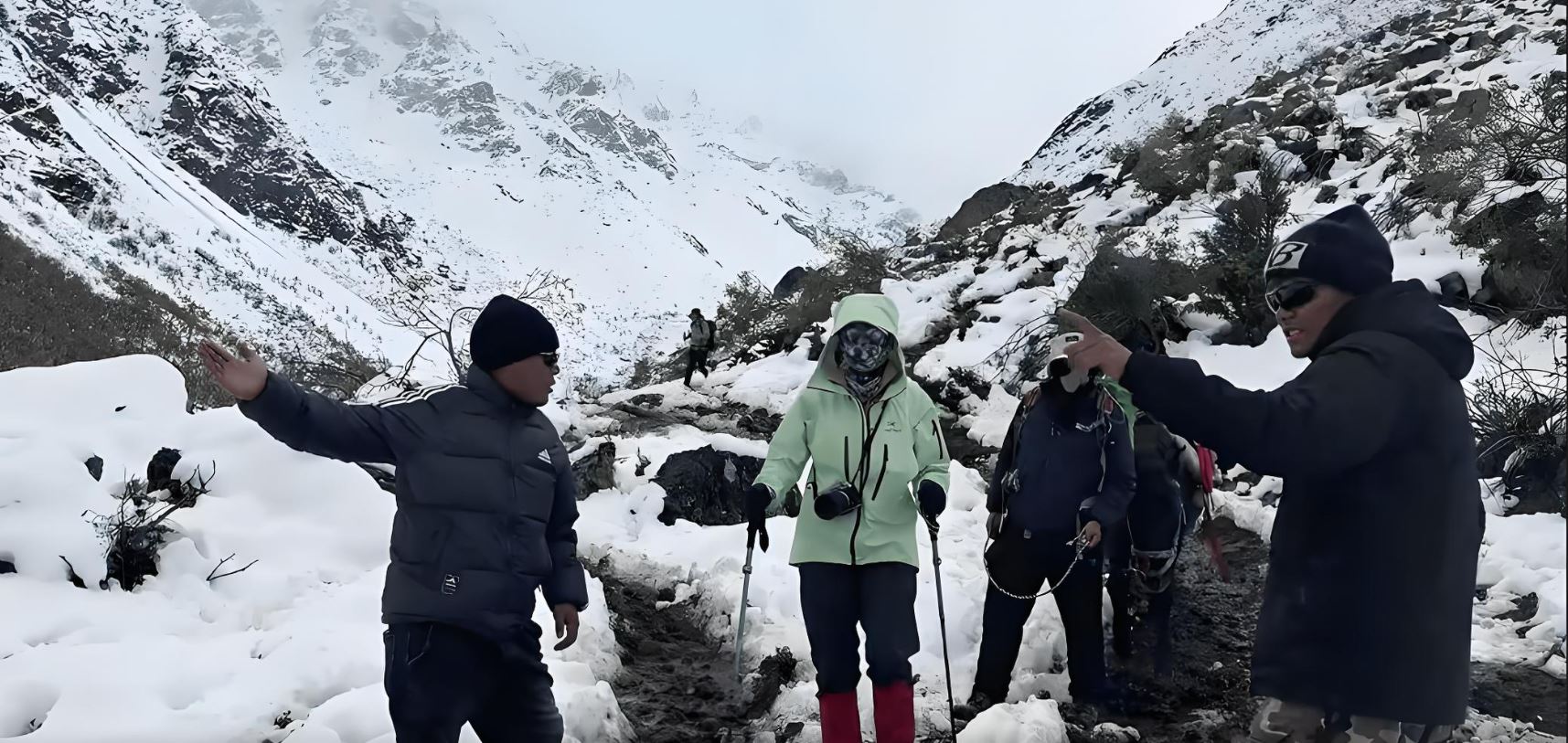
Begin the 52km Kailash circumambulation — a sacred circuit revered by Hindus, Buddhists, Jains and Bön practitioners alike. The first day follows the valley north along the western face of Kailash, climbing over the Dolma La Pass (5,630m) — the spiritual and physical high point of the Kora. Descend to Zutulpuk Monastery for the night. A combination of cycling (where the terrain permits) and trekking on foot.
Day20
Kailash Kora Day 2 — Zutulpuk to Darchen (~18km cycling + trekking)
Complete the eastern arc of the Kailash circumambulation and return to Darchen. The mood of completion at the end of the Kora — combined with the previous 19 days of cycling — is something both men described as unlike anything else they had experienced.
Day21
Cycling Day 13 — Darchen towards Zanda, overnight Montser Town (~90km)
Leave the Kailash region and cycle south-west toward the canyon landscape of Zanda County. The road descends through a dramatic gorge system as the Sutlej River cuts through ancient plateau. Overnight at Montser (Mento) — a small town en route to Zanda.
Day22
Cycling Day 14 — Montser to Zanda County (~80km)
Arrive in Zanda County, dominated by the extraordinary earth forest — an ancient lakebed eroded into thousands of towering mud pillars, spires, and canyons that turn gold and amber at sunset. The Guge Kingdom ruins sit above this surreal landscape.
Day23
Zanda County — Guge Kingdom Ruins
Full day at the Guge Kingdom ruins — a lost Tibetan empire that flourished from the 10th to 17th century before vanishing entirely, its palace-monasteries carved into a sheer 300-metre cliff above the canyon. The site contains extraordinary murals, stucco figures, and carved chambers — largely unknown to the world outside Tibet.
Day24
Drive — Zanda to Paryang County
Begin the long return journey by support vehicle. Drive east from Zanda back through the canyon landscape, retracing the Ngari plateau to Paryang. The drive covers terrain cycled earlier in the journey, seen now from a different perspective.
Day25
Drive — Paryang to Lhatse County
Continue east by vehicle along the southern Friendship Highway through Zhongba and Saga districts back to Lhatse. Long driving day across the high plateau.
Day26
Drive — Lhatse to Lhasa
Final long drive east back to Lhasa along the Friendship Highway. Arrive in the capital in the evening — 26 days after departing on bicycle.
Day27
Lhasa — Departure
Transfer to Lhasa Gonggar Airport or train station. End of the journey.
Meals: Breakfast Tibet Permit — Required for All Visitors Every visitor to Tibet must hold a Tibet Tourism Bureau (TTB) permit. It is mandatory, cannot be obtained on arrival, and differs by nationality. We handle the full application once you book — please allow at least 15 days before your departure date.
What is included
Included
- Tibet Entry Permit, Alien’s Travel Permit, and Ngari (Western Tibet) Special Permit
- All entrance fees for sites listed in the itinerary
- Professional English-speaking guide throughout the journey
- Dedicated support vehicle (light truck) for luggage and camping equipment
- Full camping kit: mountain tents, sleeping bags, cooking tent, field kitchen
- Water supply and emergency oxygen for remote western Tibet sections
- High-quality mountain bike rental
- Helmet, basic cycling safety gear and spare parts kit
- Guesthouse accommodation in towns; camping on remote sections
- Tourist accident/casualty insurance
Not included
- Single room supplement — free of charge for any group booking 5 rooms or travelling with 10 or more.
- Flights or trains to/from Tibet
- All meals (field kitchen and cooking arranged; food costs shared)
- Personal cycling equipment (padded shorts, gloves, cycling shoes)
- Personal camping equipment if preferred over standard kit
- Tips for guide and driver
- Any costs arising from route changes due to weather or road conditions
Photos from this route
Questions travellers ask
How large will my group be?
Join-in departures run with a minimum of 3 travellers — usually 3–8 pax, and never more than 16. You choose the departure date, the starting point and the itinerary length that suits you; guests on different day counts travel together on the shared legs, and each group leaves when their own itinerary ends. If you prefer, this route can also run as a private tour for your own party only. A 3–8 group costs a little more per person and is quieter, with more freedom to change the day on the road; a 3–16 group costs less per person and gives you more people to travel with.
Which permits does this tour need?
We arrange all required Tibet permits for you as part of the booking — you only need a valid passport. Depending on the areas visited this can include the Tibet Travel Permit (TTB), the Aliens’ Travel Permit (PSB), the Frontier Pass and, for sensitive areas, a Military Permit.
How do I get to the starting point of the tour?
The tour starts in Lhasa. You can reach it by flight or by the Qinghai–Tibet railway — either way we meet you on arrival. Many travellers fly in and take the train out (or the other way round) to see both faces of the plateau. We are happy to advise on flights and train tickets as part of your booking.
Can this tour be customized?
Yes — every tour on this site can also run as a private departure with your own dates and pace, arranged by our own office in Lhasa. Send us your dates, group size and interests and we will adapt the itinerary around you.
Before you send your inquiry
- No deposit — ever. Your dates are held with a free inquiry, and nothing is due until we confirm. On fixed group departures, book early to secure your seats.
- Cancel free before your Tibet Travel Permit is issued — full refund, every dollar.
- After the permit is issued: the USD $100 permit fee is non-refundable, everything else is refunded. Refunds within 7 business days.
- Bring a group of 7 and your spot is free (7+1).
- Single room supplement — free of charge for any group booking 5 rooms or travelling with 10 or more.
- Tell us your dates and route on the form below — you will have a written itinerary and an item-by-item quote within 12 hours, with no obligation to book.
- Prices depend on group size, hotel standard, season and how you travel into Tibet, so we quote each trip individually rather than from a price list.
- Hotel details — the exact hotels we use — come with your quote. Ask below for the standard you would like and we will match it.
- A Lhasa-based Tibet tour operator since 1999 — our own guides, vehicles and office in Lhasa, 7,200+ travellers from 40+ countries, 4.9★ on TripAdvisor.